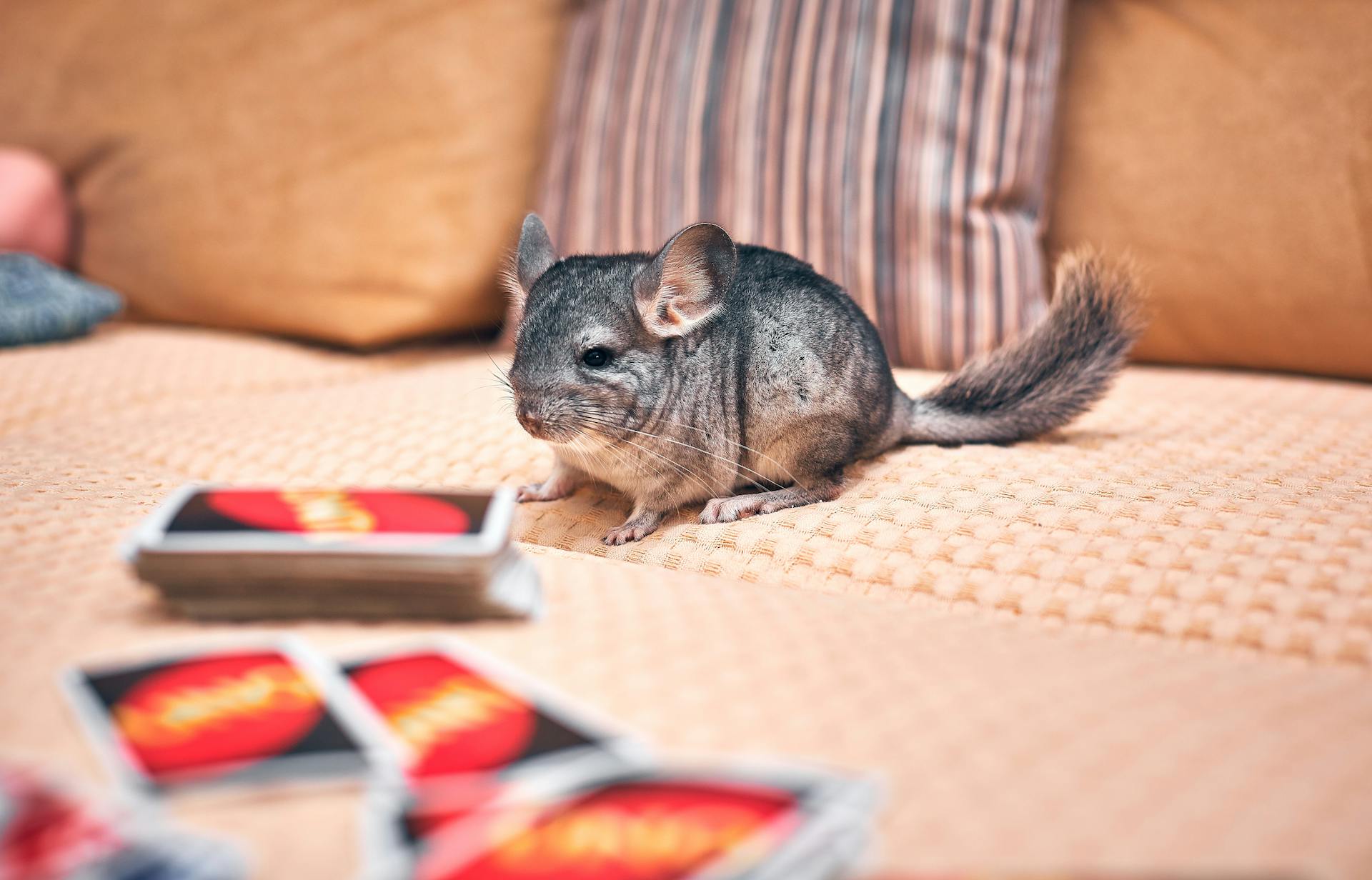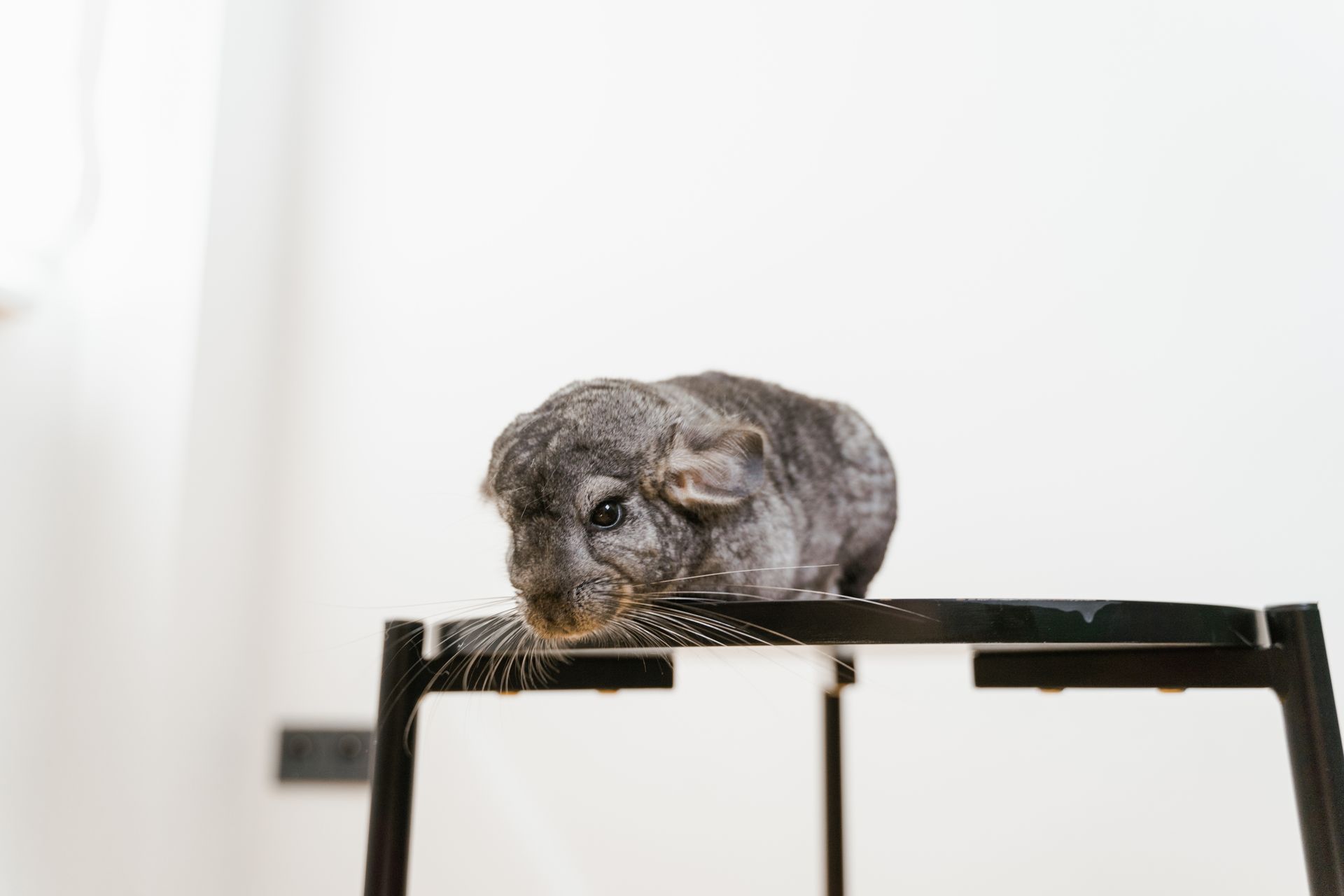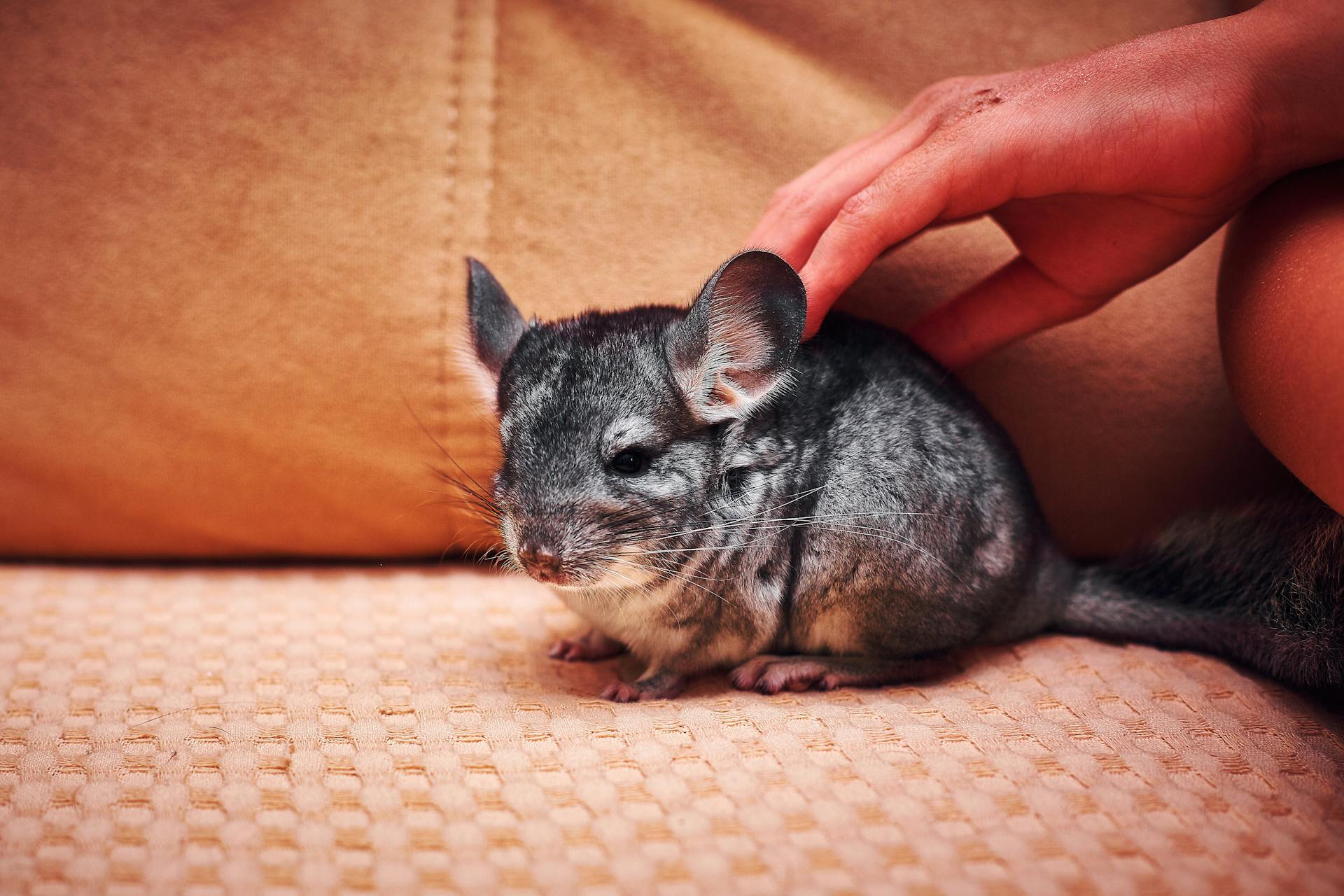
Chinchillas can make wonderful pets for the right owner, but it's essential to understand their unique personalities and needs. Chinchillas are known for their gentle nature, which makes them a great choice for those who want a cuddly and friendly pet.
Chinchillas are crepuscular animals, meaning they are most active at twilight and in the early morning hours. This means they may be more active and playful during these times.
In the wild, chinchillas are known to be social animals, often living in large colonies. This social nature can make them great pets for people who live alone or have a small family, as they can provide companionship.
Chinchillas are also known for their soft, thick fur, which requires regular grooming to prevent matting and tangling. This can be a fun and bonding experience for owners and their pets.
For another approach, see: Are Chinchillas Social
Are Chinchillas Cuddly?
Chinchillas can be cuddly, but it's not a guarantee. Some chinchillas may not enjoy cuddling at all, while others may take time to warm up to it.
A well-socialized chinchilla may enjoy cuddling after getting comfortable with you, but it's possible to end up with one that never enjoys it.
Chinchillas know they're delicate and may not enjoy being held close. They have a unique way of understanding their environment, and being picked up too tightly can be stressful for them.
You can hurt your chinchilla easily if you cuddle it too closely, so it's essential to respect their boundaries. If your chinchilla is scared or agitated, it may bark at you to inform you that it's not in the mood to cuddle.
Chinchillas are smart and can learn to trust you over time, but it's crucial to respect their personality and boundaries. Some chinchillas may enjoy close contact, while others may prefer to keep their distance.
You can learn to read your chinchilla's body language and respect its messages. If your chinchilla is fidgeting or trying to get away, it's likely not enjoying being cuddled.
Chinchillas are high on the cuddle chart, and some may even curl up with you and hang out. However, they can be delicate and require special care, so it's essential to understand their needs before deciding to bring one home.
Chinchillas have a unique way of bathing, using dust to clean themselves, and they're sensitive to heat, requiring a cool environment to thrive.
Chinchilla Temperament
Chinchillas are social pets, but they can be quite shy and fearful, especially in new environments.
In fact, it takes several weeks for a chinchilla to adjust to its new home and surroundings. During this time, they may show affection, but they don't like being handled or held excessively.
My own chinchilla took a week or so to warm up and interact with me more, and it's essential to let them come to you on their own terms. Forcing cuddling or handling can be counterproductive.
Chinchillas have sensitive senses, and new environments can be overwhelming, with unfamiliar noises and smells. It's not uncommon for them to hide or be reserved, especially if they're not used to the sounds of a furnace or other household noises.
In the first week, my chinchilla barely came out of her hiding box, and I had to use a DSLR camera to ensure she was eating and drinking. But with patience and proper conditioning, they can become more affectionate.
See what others are reading: What Noises Do Chinchillas Make
It's also essential to respect their space and not force cuddling, especially during the initial weeks. Chinchillas can get scared easily, and if they're not in the mood for cuddling, it's best to back off and try another time.
Some chinchillas may never become cuddly, and that's okay. They may take years to overcome their fear, or they may never become comfortable with interaction. But with proper care and handling, you can still build a strong bond with your pet.
Do Like to Be Handled?
Chinchillas are social animals that thrive on interaction, but they have a unique personality that can make handling a challenge. Chinchillas can be comfortable with being pet and scratched, but not necessarily picked up.
Some chinchillas are more trusting than others, and can let you handle them even without taming. Others may need to be tamed over time, and will only grow to like handling with patience and respect. It's essential to treat your chinchilla with kindness and respect, especially if you're getting a baby chinchilla (a kit).
New owners may not realize that chinchillas have distinct personalities, and some may never trust their owners. If that's the case, it's crucial to give your pet space and respect their boundaries. You can't force a chinchilla to like handling.
Chinchillas are delicate animals, and their thin, fragile bones can be easily bent or snapped if handled roughly. This is why it's essential to handle them gently and carefully, especially when they're young or skittish. Some chinchillas may never get used to being picked up, but they can still enjoy interaction and playtime.
In fact, playtime is essential for chinchillas, and it can help them learn to trust you. You should aim for playtime sessions that last between half an hour and an hour, and interact with your chinchilla every day if they live alone, or every other day if they have a cage-mate.
Showing Affection
Chinchillas are highly social animals and have developed several ways to show friendship and trust. They have a unique way of communicating with each other, which is essential for building a strong bond with your pet.
They use scent marking to establish a sense of familiarity and comfort with their surroundings, which is a sign of trust. This behavior is also a way for them to show affection to their owners.
Chinchillas will often rub their faces and bodies against their owners, which is a sign of affection and trust. This behavior is similar to how they show affection to each other.
They will also nuzzle and snuggle with their owners, which is a clear indication of their affection and comfort level around you.
Chinchilla Behavior
Chinchillas are known to lick their owners, but why they do it is a point of debate. Some owners think it's because chinchillas can taste the salt in human sweat.
Chinchillas do groom each other as a show of trust, which might be an extension of this behavior. This suggests that chinchilla licking can be a sign of affection.
Chinchillas are intelligent animals that respond well to kindness and understanding. What kind of chinchilla you have largely depends on how kind and understanding you are towards it during its formative years.
Chinchillas don't lick their owners because they don't like them.
Getting to Know Your Chinchilla
Getting to know your chinchilla is key to building a strong bond with them. Lulu, a chinchilla from Example 1, is a great example of this. She has her own unique personality and quirks.
Lulu's favorite hiding place is under the filing cabinet, but since it's been blocked off, she enjoys roaming around freely. This shows that chinchillas are curious creatures that need space to explore.
Chinchillas have different physical capabilities, and Lulu's is her "oblivious grace", making her a happy-go-lucky darling. She's also an occasional high jumper, which is a fun fact to observe.
Some chinchillas are very quiet, like Lulu, who only squeaks on rare occasions. This is a great example of how chinchillas communicate in their own way.
Building trust with your chinchilla takes time, and it's essential to respect their boundaries. Lulu gets all her cuddles from her sister, Fifi, and doesn't need human snuggles. However, she will accept light petting, but not scratches or massages.
Chinchillas have specific preferences when it comes to being picked up, and Lulu is no exception. She expects full support from the torso, legs, and base of the tail, and will not lift a paw to help.
Socialization is crucial for chinchillas, and Lulu gets along with most of the other chinchillas in her group. However, she has a nemesis in Koko Bear, who she can't stand due to her scent.
With patience and understanding, you can build a strong bond with your chinchilla. As seen in Example 2, chinchillas can become very cuddly over time, especially when they feel comfortable and secure.
On a similar theme: Do Chinchillas Need Beds
Ownership and Experience
As a chinchilla owner, you'll quickly realize that gaining their trust is a process that takes time. Chinchillas aren't fully tamed or domesticated, so they don't naturally trust humans.
New owners often make the mistake of thinking their chinchilla is unfriendly or aggressive when it's not used to them yet. But that's not entirely accurate - chinchillas simply need time to get used to people.
Chinchillas take time to learn to trust different people individually, and they recognize people by scent rather than sight. Your chinchilla might learn to associate your scent with treats or outside-the-cage time, but it won't know what to expect from someone else's scent.
To gain your chinchilla's trust, be a kind and conscientious owner by moving slowly and calmly around your pet. If your chinchilla doesn't want to be picked up, respect its boundaries and don't force it.
Final Thoughts
It's possible to get your chinchilla to enjoy being cuddled with some effort, consistency, and love.
They will eventually come around and realize you're the boss, but also that you love them.
Almost all chinchillas will learn to love you too and enjoy your company and time out of the cage with you.
Set aside time each day to let your chinchilla play and interact with you and the family, and you'll be on your way to a cuddly and loving relationship.
Frequently Asked Questions
What are the downsides of owning a chinchilla?
Owning a chinchilla comes with some challenges, including a messy environment and noisy behavior at night. They also require a lot of space, a specific diet, and can be destructive if not properly cared for
Featured Images: pexels.com