The Ardennes Draft Horse is a majestic breed that originated in the Ardennes region of Europe. They're known for their impressive size, with stallions typically standing between 17 and 19 hands high.
These gentle giants have a calm and even temperament, making them an excellent choice for families and beginners. They're intelligent and willing to please, which makes training a breeze.
Ardennes Draft Horses are a relatively rare breed, but their unique characteristics and gentle nature make them a popular choice among horse enthusiasts. They're not as demanding as some other breeds, but they do require regular exercise and proper care to thrive.
Their distinctive appearance features a compact body, short back, and well-muscled legs.
Additional reading: Large Draft Horses
History of Horses
The Ardennes draft horse has a rich history that spans thousands of years. It's speculated to descend from ancient horses from Solutré that roamed the area during the Palaeolithic era, around 50,000 years B.C.
Julius Caesar was the first general to use Ardennes horses for military purposes. They were used by Roman legions, medieval knights, and even Napoleonic soldiers.
In the late 19th and early 20th centuries, Napoleon ordered the crossbreeding of Ardennes horses with Arabians to increase their resilience. This was done to make them more suitable for military purposes.
The breed was initially a medium-height horse, but as people's needs changed, they began to crossbreed Ardennes with Belgian horses to create a massive, heavy animal. This is the type of Ardennes you see today.
The first official registry of the breed was created in 1929.
Breed Characteristics
The Ardennes draft horse is a majestic breed with a rich history. They are significantly taller and heavier than their ancestors from the Roman age, thanks to centuries of selective breeding.
Their massive, muscular, and compact body is a testament to their impressive pulling power. This is made possible by their heavy muscling, which gives them the strength needed for modern jobs.
Ardennes horses stand between 15.3 to 16 hands tall, but their short stature belies their significant weight. They weigh more than most light breeds with similar heights, making them a force to be reckoned with.
Characteristics
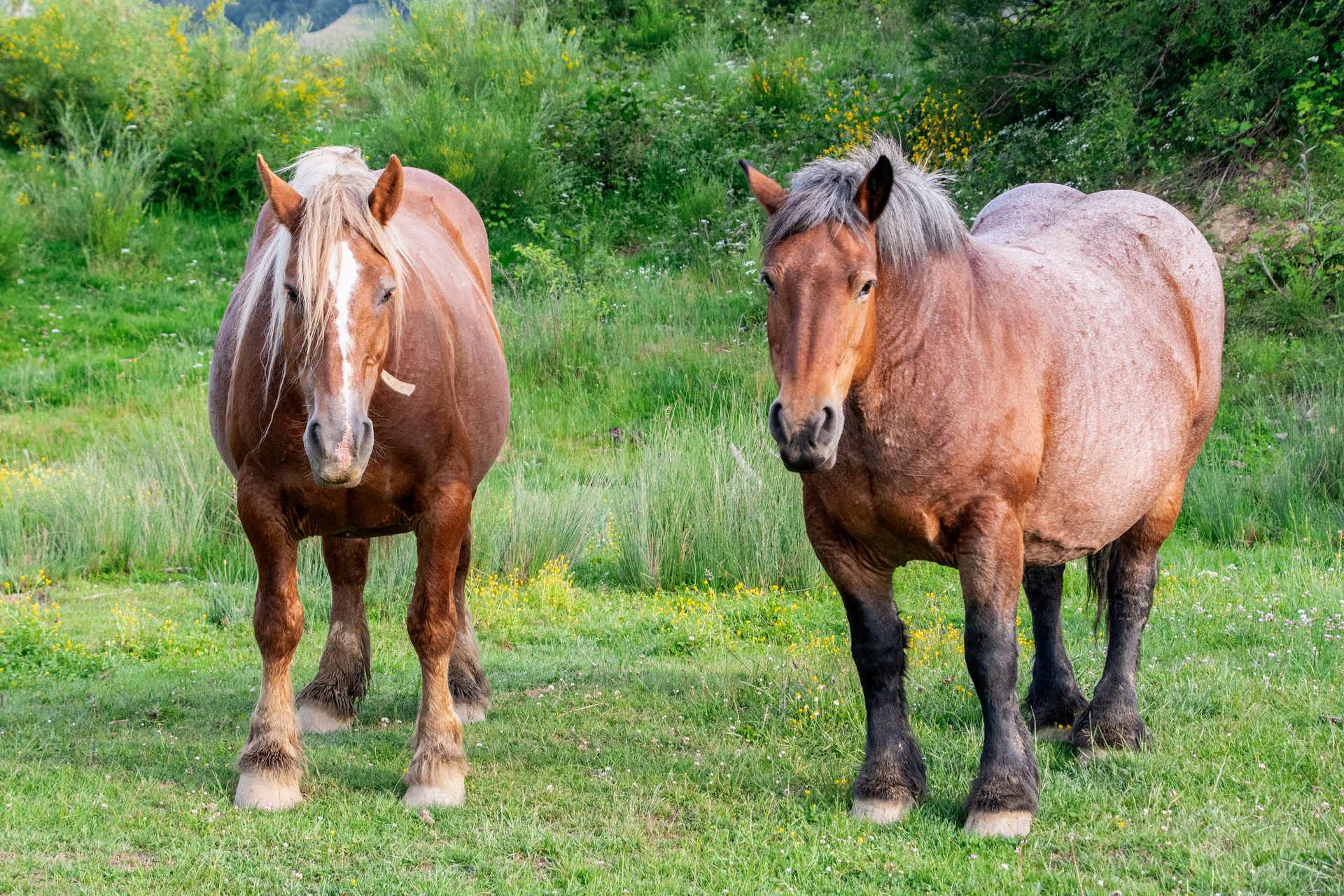
The Ardennes breed is characterized by its massive, muscular, and compact body.
These horses have convex or straight heads with disproportionately small, upstanding ears.
Their distinctly wide, massive body comes with a short yet strong neck, as well as short, and thick legs with lush feathering and big, and hard hooves.
The Ardennes have extremely muscular and sloping croups, which is typical for draft breeds.
Their shoulders are long and sloping, increasing the horse's pulling strength.
Ardennes horses are significantly taller and heavier than their ancestors from the Roman age.
Breeding in recent centuries selected for horses with heavy muscling, giving them impressive pulling power for modern jobs.
Temperament
Ardennes horses are known for their calm and tolerant disposition, making them a pleasure to be around.
Their gentle nature is a result of their hard-working and adaptable personality, which allows them to thrive in various environments.
They are willing to learn and enjoy working with their humans, but their size and power can be intimidating to inexperienced handlers.
Ardennes horses are not recommended for beginners, as they require a certain level of experience and expertise to handle safely and effectively.
Importance and Uses
The Ardennes draft horse is a breed that's been around for centuries, and its importance lies in its incredible strength and resilience. They were used in agriculture and transportation for a long time due to their low maintenance and immense pulling strength.
Their calm temperament and amazing gait made them perfect for war horses, carrying cavalry and pulling heavy artillery. The breed was even recommended by Julius Caesar for heavy horse cavalry units.
In fact, the Ardennes horses were used as war horses during the Crusades and artillery horses during the French Revolution. They even played a crucial role in Napoleon's Russian campaign in 1812, pulling the army's wagon train during the winter retreat from Moscow.
Despite the decline of draft horses with the mechanization of agriculture and warfare, the breed is becoming more popular for recreational owners. Today, they're used in carriage driving, recreational riding, and even hippotherapy.
Suggestion: Draft Horses
Importance
The Ardennes breed is known for their immense pulling strength, making them a valuable asset in agriculture and transportation.
Their low maintenance and resilient nature means they can thrive in various environments.
The Ardennes were frequently used as war horses, both as cavalry mounts and as draft horses for pulling wagons and artillery.
Their calm temperament is still an important trait today, making them suitable for carriage driving and recreational riding.
Their fluid, draft movements make them a pleasure to ride, and they're often used in hippotherapy as well.
Check this out: Dog Draft
Uses
The Swedish Ardennes is a versatile breed that has found a niche in modern times.
Despite the increasing use of machinery in farming and forestry, the Swedish Ardennes is still used as a cart horse, particularly on remote hill farms.
Its strength and endurance make it well-suited for hauling timber in mountain areas inaccessible by machinery.
In fact, the Swedish Ardennes makes up the largest proportion of Sweden's registered purebred stallions.
Polish Draft Horses
Polish Draft Horses are a type of draft horse known for their impressive size, with stallions reaching up to 19 hands high.
Their strong build and muscular physique make them well-suited for heavy labor and pulling heavy loads.
They have a distinctive head shape with a straight or slightly convex profile and a well-defined stop.
Their ears are large and mobile, and their eyes are expressive and alert.
Development
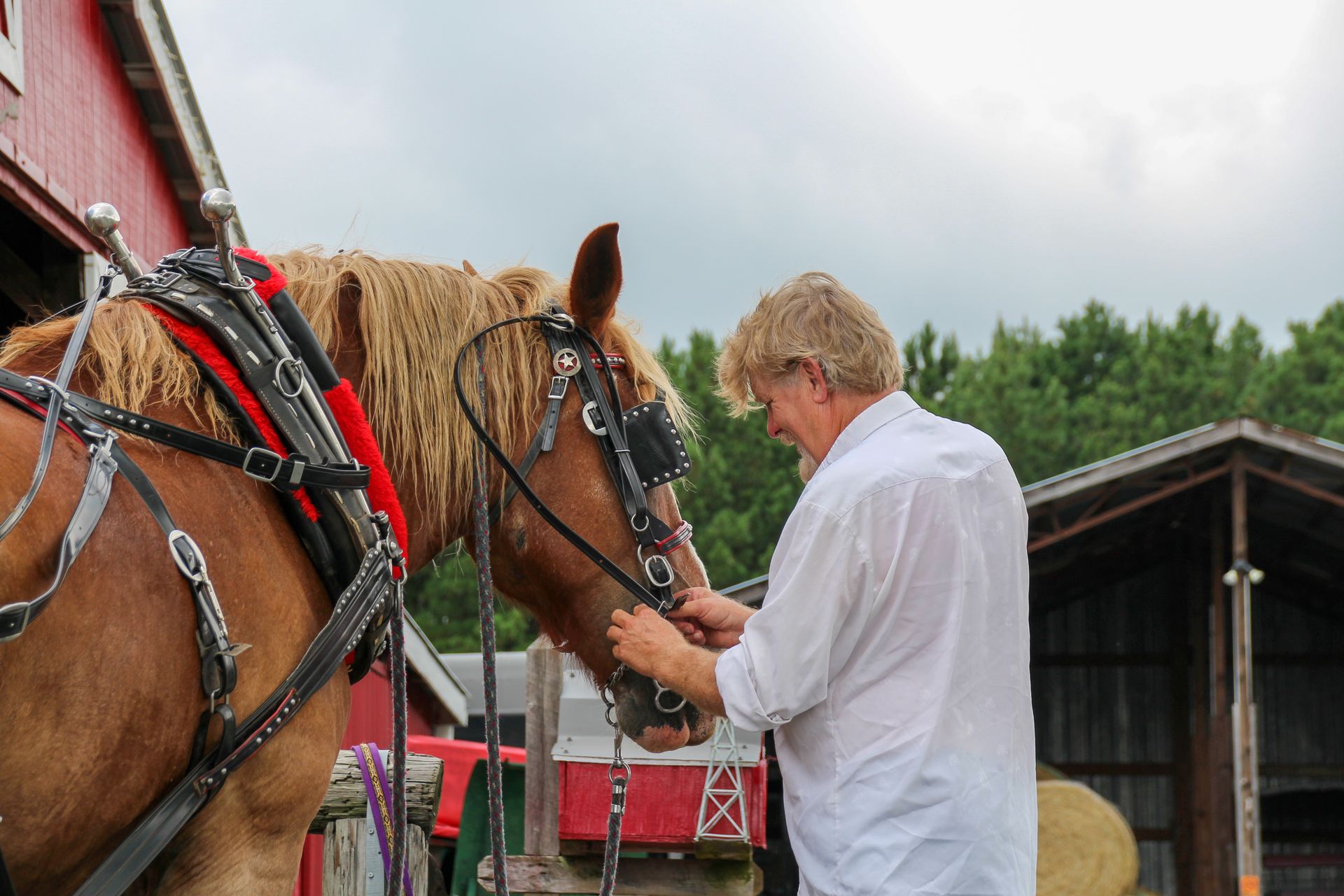
The Ardennes breed has a rich history, and its development is a fascinating story. The breed is believed to have descended from the ancient Solutre horses, which roamed the Meuse, Saone, and Rhone river basins during the Paleolithic period.
Originally, the Ardennes stood only 14 hands high, but its height, strength, and endurance were improved with the addition of Arabian blood in the early-19th century. The breed's conformation was later influenced by the addition of Belgian draft blood in the 19th century.
The breed registries were formed in 1929, and three separate studbooks are now maintained in Belgium, France, and Luxembourg. The Ardennes Horse Society of Great Britain was set up in the 20th century for the preservation and promotion of the breed.
The earlier Ardennes horses brought to the US were registered with the now nonfunctioning "French Draft Horse Society" or the "National French Draft Horse Association of America."
Polish Draft Breeds
Polish draft breeds have a rich history and some of them have Ardennes genes, thanks to the frequent export of Ardennes horses in the past.
Ardennes is one of the most popular draft breeds that influenced many other existing breeds, including Polish draft breeds.
In Poland, local mares were bred with Ardennes stallions, which is why breeds such as Sokolski horses have some of the Ardennes' DNA in them.
This crossbreeding resulted in strong and resilient horses that could withstand the harsh Polish climate.
The Sokolski horse breed, for example, is a direct result of this crossbreeding and has become a popular draft breed in Poland.
Ardennes horses were originally bred for their strength and resilience, and it's no wonder that they had a lasting impact on Polish draft breeds.
Today, many Polish draft breeds continue to inherit the qualities of the Ardennes breed, making them perfect for heavy work and harsh conditions.
Horse Care and Nutrition
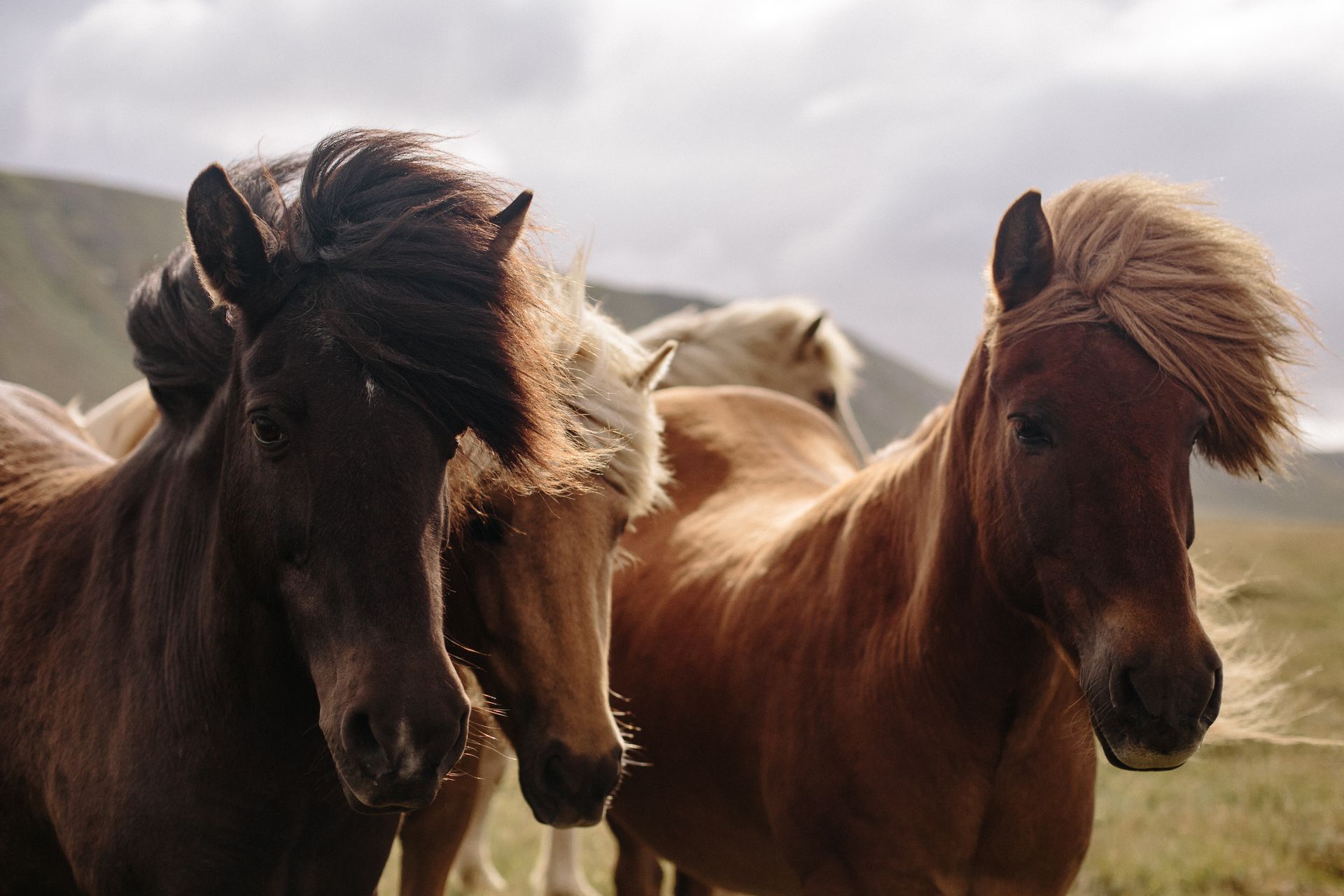
Ardennes horses are a heavy draft breed that requires a specific diet to maintain their health and performance. Many owners underestimate the amount of forage their horses need.
They need a diet rich in fiber and calories to support their large size and muscle mass. This can be achieved through a combination of high-quality hay and grains.
Care and Management
Regular veterinary care is crucial for maintaining the health and longevity of your Ardennes horse. Implement a preventative wellness plan that includes routine vaccinations, deworming, and dental exams.
Providing regular farrier care is essential to maintain good hoof balance in your draft horse. This helps distribute their heavy body weight evenly, reducing loading forces on their joints and soft tissues.
The feathering on an Ardennes horse's fetlocks can predispose them to pastern dermatitis, also known as mud fever. This can lead to painful skin infections if not addressed promptly.
Draft horses typically require more spacious stalls than average-sized horses to accommodate their size and minimize the risk of becoming cast. Becoming cast can be a potentially dangerous situation in which a horse is unable to stand up after lying down in a confined space.
Take a look at this: Cast Horse
To maintain healthy circulation in your draft horse, ensure they have ample opportunities for unrestricted movement in large paddocks. This can help prevent stocking up and impaired lymphatic drainage in their lower limbs.
In hot weather, draft horses are more susceptible to overheating due to their increased muscle mass. Monitor them for signs of heat stress and provide adequate drinking water to keep them cool and comfortable.
Horse Nutrition
When feeding your Ardennes horse, it's essential to understand their unique dietary needs. Many heavy draft horses require more forage than their owners realize.
Most Ardennes horses don't need commercial concentrates in their diet, so it's best to stick to a forage-based diet. This will help prevent muscle and digestive complications caused by excess starch and sugar.
If your Ardennes has PSSM, a low-starch, low-sugar diet is crucial to prevent muscle issues. You can safely add up to 20% of their dietary energy from fat supplements, which are a safe source of calories for these horses.
Additional reading: Prevent Enteroliths
However, be cautious not to overdo it on the fat, as there are anecdotal reports of horses developing insulin resistance and laminitis on very high fat diets.
Prioritizing gut health is key when feeding draft horses. To reduce the risk of colic, try these simple strategies:
- Avoid feeding large volumes of pelleted feeds
- Add loose salt to your horse's ration
- Provide your horse with ample water
- Use raised feeders to prevent sand and dirt intake
Draft horses need plenty of water to stay hydrated, so make sure your Ardennes always has access to fresh water. Monitor them closely for signs of dehydration, especially in hot weather.
Feeding 2-3 ounces of loose salt daily can help ensure your Ardennes gets enough sodium. This will also stimulate their thirst and promote hydration.
Horse Health and Cost
The price of an Ardennes horse can range from 10 thousand PLN to 20 thousand PLN, depending on the horse's age, sex, and training.
This relatively low price is due in part to the low demand for the breed.
The price for the breed can vary significantly, with some older, less common horses selling for much higher prices, up to 20 thousand PLN.
It's worth noting that the price of an Ardennes horse is not necessarily a reflection of its value or quality as a working animal.
Horse Health
Ardennes horses are a relatively rare breed, which means there's limited research on genetic diseases and health problems specific to them.
Most issues found in Ardennes horses are common in all draft horse breeds, so owners can look to general draft horse health guidelines for guidance.
Heavy draft horses, like Ardennes, require more forage than their owners often realize.
This means providing plenty of high-quality hay and grass to meet their nutritional needs.
Ardennes horses are draft horses, and as such, they're prone to common draft horse health issues.
Readers also liked: Horse Health
Cost of Horse Purchase
The cost of buying a horse can be a significant investment. The price of an Ardennes horse ranges from 10 thousand PLN (around 1900 pounds) to 20 thousand PLN (around 3900 pounds).
The price depends on the horse's age, sex, and training. This is a key factor to consider when purchasing a horse, as it can greatly impact the overall cost.
Some Ardennes horses in the old type are highly valued by professional breeders due to their rarity. This can drive up the price, making them more expensive than other Ardennes horses.
Colours and Registry
Ardennes horses come in a variety of coat colours, with bay and roan being the most common.
The breed also accepts chestnut, gray, and palomino colours, although these are less common.
Their minimal white markings are typically limited to a star or blaze, giving them a distinctive appearance.
Breed Registry
The Ardennes breed has a unique breed registry situation. In Europe, the first breed registry for Ardennes was established in 1929.
In France, Belgium, and Luxembourg, studbooks for Ardennes are maintained to this day. The Ardennes Horse Society of Great Britain works to preserve and promote the breed across the United Kingdom, although it's not an official breed registry.
Early imports of Ardennes horses to North America were often registered as Belgian draft horses. Unfortunately, no official breed registries for the Ardennes exist in North America.
Working Ardennes horses are still used for farm and draft work in some areas. They're also helpful for forestry work to remove trees in areas not accessible for machinery.
Colours
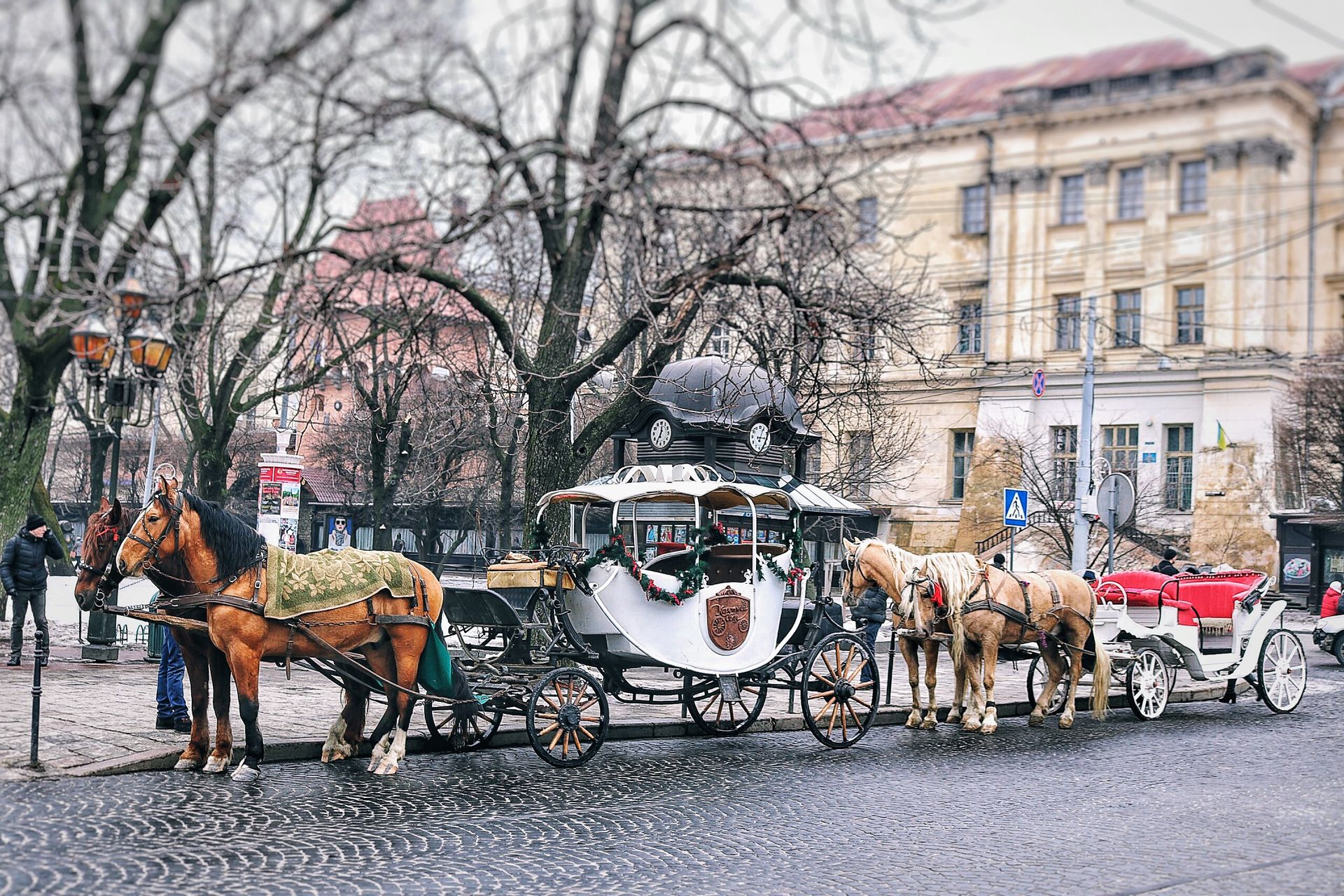
Ardennes horses are known for their striking coat colours, with bay and roan being the most common.
Their coat colours can also include chestnut, gray, and palomino, making each horse unique.
Minimal white markings are typical for Ardennes horses, limited to a star or blaze.
The breed's flaxen manes and tails are usually full, although some owners may choose to dock their horses' tails.
Frequently Asked Questions
What is the difference between Ardennes and Belgian draft?
The Ardennes is a lighter, mountain-bred version of the Belgian Draft, bred for agility and endurance in hilly terrain. Unlike the Belgian Draft, the Ardennes was influenced by Arabian breeding, resulting in a distinct difference in size and strength.
Can you ride an Ardennes horse?
Yes, Ardennes horses are suitable for riding, known for their gentle nature and ease of handling. They make great companions for riders of all levels.
Featured Images: pexels.com