Animal welfare and rights in China have become a pressing global concern. The country's vast animal population, estimated to be over 1 billion, is often subjected to inhumane treatment and cruel practices.
In China, the majority of animals are raised for food, with over 50% of the global pork supply coming from the country. This has led to widespread animal suffering in the pork industry, where pigs are often confined to small spaces and subjected to brutal slaughter methods.
Animal welfare organizations have documented numerous cases of animal cruelty in China, including the forced feeding of ducks for foie gras and the blinding of bears for entertainment. These practices are not only inhumane but also a threat to global animal welfare standards.
China's animal welfare laws are still in their infancy, with many laws and regulations failing to protect animals from cruelty and abuse.
Curious to learn more? Check out: Animal Neglect Laws
Animal Welfare in China
In October 2010, China's Ministry of Housing and Urban-Rural Development announced a ban on animal performances in zoos and wildlife parks.
The ban was a response to a scathing report by Animals Asia, which exposed the abuse of animals in China's zoos, safari parks, and circuses.
Better management and healthcare for animals topped the list of suggestions made by the ministry, along with a firm assertion that zoos should remain non-profit.
The ban went into effect in January 2011, and zoos were also required to stop selling animal parts in their shops and zoo restaurants were forced to stop serving dishes made from rare animals.
However, the closure of the shows could push some zoos towards bankruptcy, leaving many animals with an uncertain future.
Related reading: How to Stop Cruelty towards Animals
Legislation
Legislation in China has a long way to go in protecting animal welfare.
There are currently no nationwide laws that explicitly prohibit the mistreatment of animals in China, except for a law protecting wildlife.
In 2006, a proposal for a nationwide animal-protection law was introduced, but it didn't move forward.
The first comprehensive Animal Protection Law of the People's Republic of China was drafted in 2009, but it has not made any progress as of 2013.
China received a low grade of E on the World Animal Protection's Animal Protection Index in 2014, indicating a lack of adequate animal welfare laws.
However, in 2014, the law was amended to drop the mandatory requirement of testing cosmetics on animals for Chinese-made products.
The COVID-19 pandemic led to a temporary ban on the transportation and sale of wildlife in China in 2020, followed by an indefinite prohibition on consumption and trade in late February.
The Chinese government also raided and shut down wet markets that sold wild or live animals, closing loopholes in the wildlife trade law.
In April 2020, the city of Shenzhen banned the sale and consumption of cat meat and dog meat, citing public health concerns and evolving moral and ethical values.
The Chinese National Medical Products Administration also announced the end of mandatory animal tests on imported cosmetics, approving non-animal based testing methods instead.
For more insights, see: Korean Dog Meat Trade
History
Taoist Zhuang Zhou taught compassion for all sentient beings, emphasizing the importance of caring for animals in traditional Chinese worldviews.
Several traditional Chinese philosophies, including Taoism and Buddhist vegetarianism, have a long history of emphasizing animal welfare.
Mao Zedong's campaigns against what he considered "bourgeois sentimentality" led many in mainland China to become indifferent to animal suffering, as focusing attention to animal welfare was regarded as "counter-revolutionary".
This shift in focus was meant to prioritize the broader push for Communism, which aimed to deliver equality for all.
Since 1978, China has emphasized growth and avoidance of famine, which the government considered important for political stability, leading to less concern for animal welfare.
The younger generation, however, is generally far more sensitive to suffering, including that of animals, as they were not as influenced by the past ideology and hardship during that time.
Establishment of Government Bodies
The establishment of government bodies in China to address animal welfare is a complex issue. There is no overall responsibility designated for improving animal welfare in the country.
The Ministry of Agriculture has an animal welfare working group, established in 2008, which has been assigned governmental responsibility for farm animal protection and welfare. This group has made some progress, such as funding research programs like "Livestock environment stress response in production and transportation and control technology research".
However, responsibility for animal welfare in zoos has not been officially assigned, despite guidelines from the Ministry for Housing and Urban-Rural Development. This lack of clear responsibility is a significant barrier to improving animal welfare.
The Ministry of Agriculture has passed a non-binding guideline, the general principle of animal welfare, which is a positive step forward. However, the lack of supportive legislation specifically addressing animal welfare and protection in China restricts the outcome of work undertaken by the working group.
The Animal Protection law of the People’s Republic of China was drafted in September 2009, but has not been enacted into law, which is a missed opportunity.
Animal Welfare in China
In China, eating endangered animals is a serious offense. A Chinese food blogger was fined $18,514 for eating a two-meter-long great white shark in April 2022.
The ban on buying, selling, and eating wild animals was introduced in February 2020, following the COVID-19 pandemic. This led to a crackdown on influencers streaming mukbang videos involving endangered animals.
A food blogger from Hainan was detained for eating an endangered sea snail in May 2021. The blogger had 7.8 million followers on Douyin, the Chinese version of TikTok.
Conditions at Chinese zoos are often appalling. Animals are kept in filthy enclosures with no place to escape the hot summer sun.
Tigers with all their teeth removed, bears punched in the head by their trainers, and animals whipped, beaten, and prodded with metal hooks are just a few examples of the mistreatment of animals in Chinese zoos.
The State Forestry Administration issued orders to zoos and parks to clean up their act after several incidents, but nothing was really done as there are no laws regarding captive animals in China to back up the orders.
Many marine parks in China import live dolphins and whales from Japan, where they are caught in the infamous Taiji dolphin hunt. China alone imported more than 200 live dolphins and whales from Japan in 2017 and 2018.
See what others are reading: Killer Whales in Captivity
Animal Cruelty and Incidents
Animal cruelty and incidents have been widely reported in China. In 2008, more than 40 animal activists in Beijing protested the reported cooking of live cats in the Guangdong province.
The cat-meat industry has been exposed through documentaries, with the 2010 film San Hua showing cats crammed into cramped wooden cages and beaten with a wooden stick before being boiled.
Reports from 2013 and 2015 suggested that cat meat was still consumed in some rural and southern regions, despite being widely considered taboo in China.
A 2016 video of a greyhound-type dog being forced into a barrel of boiling water was widely shared online, sparking outrage and condemnation from animal-rights activists.
Since 2015, there has been little evidence to support allegations of intentional torture to improve the taste of dog meat, but the dog and cat meat trade has still seen a decline in supply and demand.
Consider reading: Animals Dogs and Cats
Cruelty
Cruelty is a harsh reality in some parts of China, where animals are subjected to inhumane treatment for food.
Animal activists in Beijing protested the reported cooking of live cats in the Guangdong province in 2008.
The documentary San Hua by Guo Ke exposed the cat-meat industry, showing cats crammed into cramped wooden cages and beaten with a wooden stick before being boiled alive.
A cook at Fa's Cat Restaurant in Kaiping claimed that the worse you treat them, the better they taste, making sure the blood gets into the meat and it tastes delicious.
Online tabloid newspapers shared a disturbing video in September 2016 of a greyhound-type dog being forced into a large barrel of boiling water.
Dogs are allegedly tortured in such ways to improve the taste of their meat, although some reports suggest this practice may have declined since 2015.
Yin Yang fish involves deep-frying fish while it is still alive, a practice condemned by animal-rights activists.
A Chinese food blogger was fined $18,514 in January 2023 for buying, cutting up, cooking, and eating a two-meter-long great white shark, violating wildlife protection laws.
The blogger, known for posting mukbang videos, had previously streamed herself eating crocodiles and ostriches, and had 7.8 million followers on Douyin.
Explore further: Lychee and Dog Meat Festival
Dogs PasSED Off as Big Cats
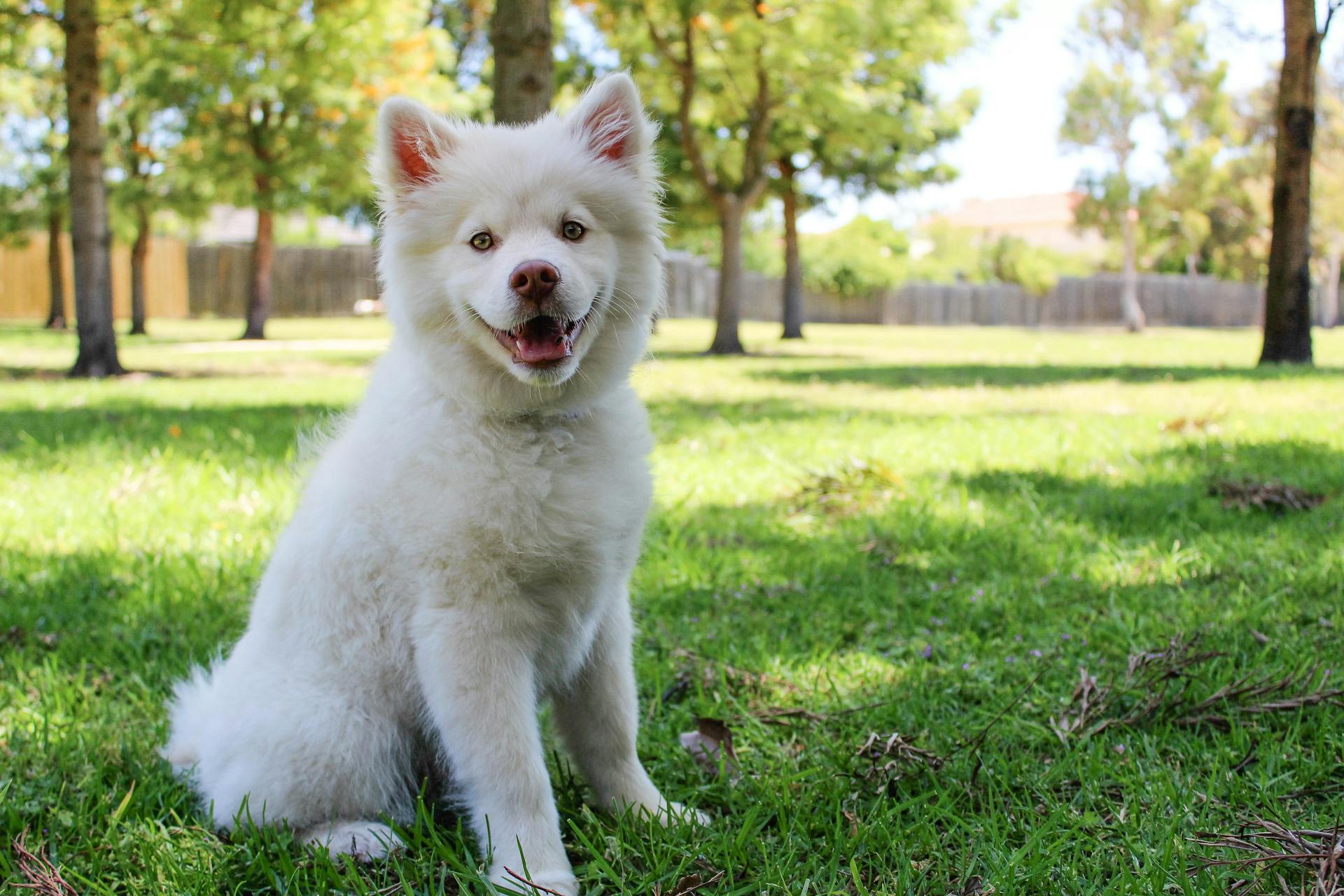
Some people have been known to dress up their dogs in lion or tiger costumes, often for photo shoots or as a form of entertainment.
This can be quite misleading, especially for children who might not understand the difference between a real big cat and a dog in a costume.
In some cases, these costumes can be quite elaborate and convincing, making it difficult to tell that the animal is actually a dog.
This can lead to confusion and even fear in some individuals, especially if they are not familiar with the animal.
Dogs, no matter how big or fluffy, are still domesticated animals and should not be mistaken for wild big cats.
It's essential to educate people, especially children, about the differences between various animal species to avoid such misconceptions.
In the article, we'll explore more instances of animal cruelty and incidents, highlighting the importance of responsible pet ownership and animal welfare.
For another approach, see: People for the Ethical Treatment of Animals
Chinese Zoo Denies Sun Bears Are Costumed People
A zoo in eastern China was recently accused of using people dressed in bear costumes instead of real sun bears. This incident has sparked public outrage and raised questions about animal welfare in Chinese zoos.
In 2023, a video of a Malayan sun bear standing on its hind legs went viral, fueling speculation that a human imposter might be masquerading in its place. Many online users noted the animal's upright posture and loose fur, which made it look somewhat odd.
Wildlife biologist Wong Siew Te explained that sun bears can stand on their hind legs to reach higher ground and investigate their surroundings. This behavior is not unique to sun bears, but it's a crucial part of their natural behavior.
The zoo in question denied the allegations, releasing a statement from the perspective of a sun bear named "Angela." In the statement, Angela reassured the public that she is indeed a real sun bear, not a human in a costume.
Sun bears are known for their distinctive appearance, with loose, saggy skin that serves as armor from predators. This skin also helps protect them from deeper bites and injuries when food is scarce.
The incident highlights the need for transparency and accountability in zoos, especially in China where animal welfare practices are often criticized.
Tigers Maul Each Other at Chinese Zoo
In 2019, two tigers got into a fight at the Fuzhou Zoo in China, resulting in one of them being severely injured.
The incident highlights the importance of proper enclosure design and management to prevent such conflicts.
The tigers were housed in a small enclosure that was deemed inadequate by animal welfare experts.
This incident is just one example of the many animal cruelty incidents that occur in zoos worldwide.
The Fuzhou Zoo has faced criticism for its handling of the situation, with some calling for better care and more space for the animals.
The incident serves as a reminder of the need for improved animal welfare standards in zoos.
The injured tiger was later euthanized due to the severity of its injuries.
This tragic event could have been prevented with better enclosure design and management.
Zoo Worker Attacked by Seven Lions on First Day
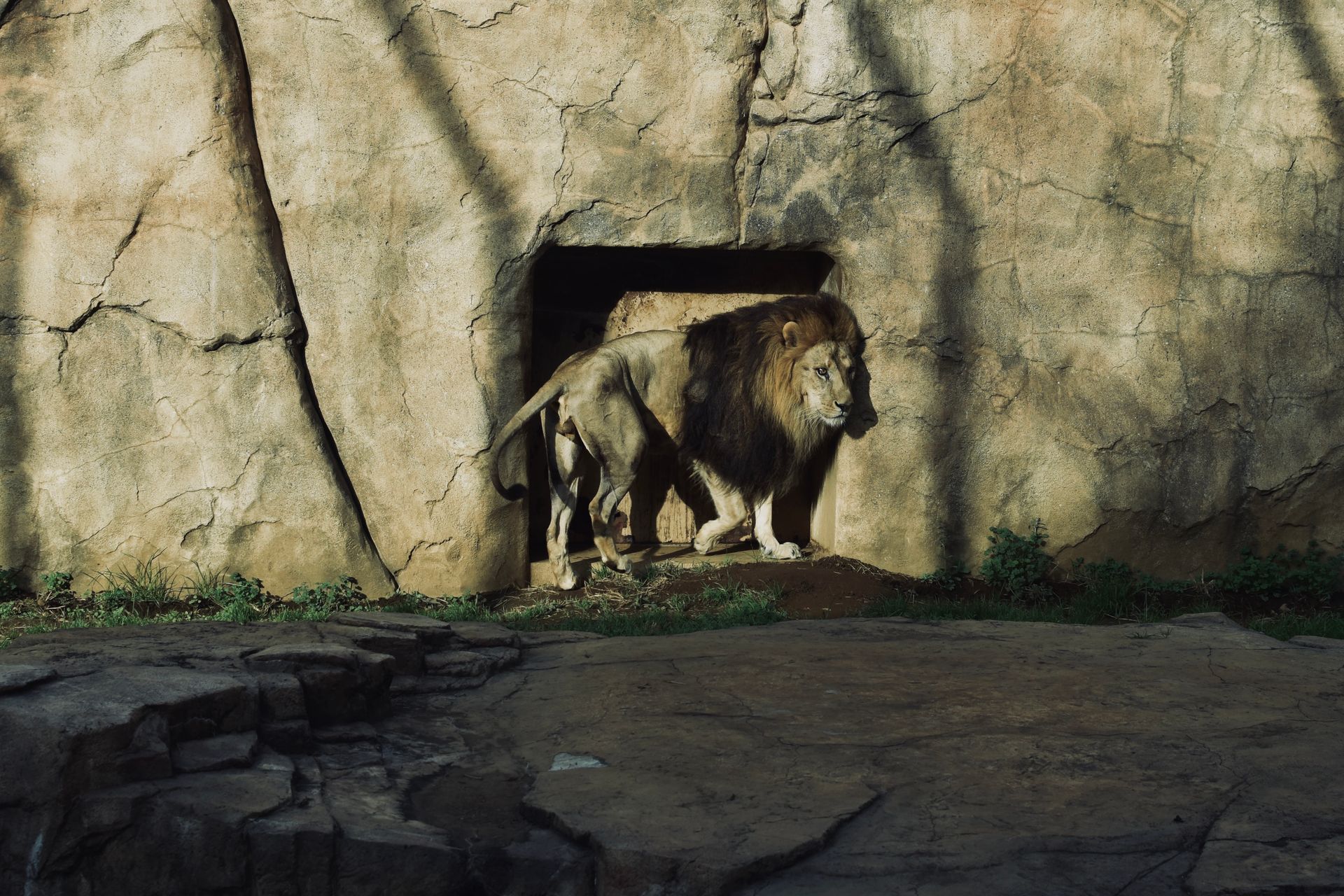
In October 2005, a cleaner named Zhang Huabang was attacked by up to seven lions on his first day of work at Shanghai Wildlife Park.
Zhang was 34 years old and from Sichuan Province, and he was reminded by a colleague to be careful because a river where they were working was very close to the animal enclosures.
The gate leading to the lions' enclosure was supposed to be locked, but it wasn't, and Zhang took a shortcut through it, hoping to save time.
At least one lion leapt on him, sinking its claws into his body and mauling his legs, and the exact number of lions involved in the mauling is unknown, with local media citing numbers between three and seven.
Zhang received emergency surgery at Pudong Renji Hospital for wounds to his face, shoulders, and legs, and his wife said that the muscles in his legs were seriously damaged where he had been mauled down to the bone.
The park had already paid some of Zhang's medical fees, but his wife said that no one had raised the issue of compensation, and the park was investigating the cause of the accident.
Zhang was stable but not out of danger, according to a nurse at the hospital, and he was being treated in the hospital's intensive care unit.
Animal Exploitation
Animal exploitation is a significant issue in China. The country's massive fur trade, which is worth billions of dollars, relies heavily on the cruel practice of fur farming.
Many animals are subjected to inhumane conditions, with some being kept in tiny cages and subjected to physical abuse. In some cases, animals are even skinned alive for their fur.
The Chinese government has been criticized for its lack of effective regulations and enforcement on animal welfare, allowing these inhumane practices to continue.
Fur
Fur production is a significant issue in the animal exploitation world. China has been reported as the biggest fur-producing nation, and the second largest producer next to Europe.
The country's fur industry has a dark side, with reports of fur animals being beaten to death with sticks on small farms or skinned alive. This is not unique to China, as similar issues have been reported in other countries producing fur.
However, there is some progress being made. The Chinese government has been working to standardize slaughtering procedures, which has improved the welfare of fur animals. This is a step in the right direction, but more needs to be done to address the cruelty and exploitation in the industry.
The public has also played a role in pushing for change. A viral video released by PETA in 2013 showed a live angora rabbit in northeastern China having its fur torn off, sparking outrage and prompting UK retailers to stop imports from China of products using angora wool. The video received 200,000 views on China's video site Youku within a month.
Chinese Food Blogger Fined for Eating Shark
A Chinese food blogger, known as Tizi, was fined $18,514 for eating a two-meter-long great white shark in April 2022.
This incident highlights the severity of wildlife protection laws in China, which were broken by the blogger.
In February 2020, China banned the buying, selling, and eating of wild animals to prevent the spread of zoonotic diseases.
Tizi, who had 7.8 million followers on Douyin, is known for posting mukbang videos, where influencers film themselves eating extreme amounts of food.
She had previously streamed herself eating crocodiles and ostriches, before consuming the great white shark.
The ban on eating wild animals was introduced at the start of the COVID-19 pandemic, leading to a crackdown on influencers streaming mukbang videos involving endangered animals.
In May 2021, a food blogger from Hainan was detained for reportedly eating an endangered sea snail, according to China Central Television.
For your interest: China Eating Dogs
Specific Animal Issues
China has a significant issue with animal welfare, particularly in the context of animal testing and product use.
The country's animal testing laws require cosmetics and pharmaceuticals to be tested on animals before being sold in the market.
In some Chinese zoos, animals are kept in small, unsanitary enclosures that are detrimental to their health and well-being.
The use of bear bile in traditional Chinese medicine has also been a long-standing issue, with some bears being kept in cages for their bile.
Consider reading: Should We Keep Animals in Captivity
Zoos
Zoos have a long way to go in terms of animal welfare, with many remaining "outdated" and having poor conditions.
Some Chinese zoos are improving their practices, but many still use live feeding as a spectacle for crowds.
The Grandview Aquarium made significant improvements in 2016, with the help of organizations like the Animals Asia Foundation.
Unfortunately, some zoos still employ animals for performances.
Bile Bears
Bile bears are a shocking example of animal cruelty in China.
China farms about 10,000 Asiatic black bears for bile production.
The bears are permanently kept in cages, and bile is extracted from cuts in their stomachs.
In January 2013, Animals Asia Foundation rescued six bile bears, which had broken and rotted teeth due to gnawing at their cages.
Over 40,000 shops in all of China sold bear bile in 2013.
The Chinese government reportedly agreed to stop issuing legal licenses for bear farmers in 1994 due to pressure from animal rights groups.
Jackie Chan and Yao Ming have publicly opposed bear farming.
In 2012, an IPO application by Fujian Guizhentang Pharmaceutical Co. caused social media outrage in China due to the company's selling of bear-bile medicines.
Over 1,900 Chinese medicine stores have committed to not selling bear bile since 2014.
A 2016 online survey indicated that 98% of Chinese respondents regarded the bile farming as cruel, with 90% saying they would never use or buy the product.
Animal Rights Movement
The animal rights movement in China has developed rapidly in recent years, with groups like the Beijing Human and Animal Environmental Education Center gaining influence. This trend is attributed to the increasing affluence of the Chinese, who are becoming more sensitive to animal welfare.
One activist noted that as people's lifestyles improve, they're becoming more concerned about animal rights, making it a universal value like Western classical music. The government is also taking steps to curb practices like feeding live animals to wild beasts at theme parks and skinning animals alive for the fur trade.
In 2009, China drafted its first law to protect animals from abandonment and abuse, with severe violators facing prison sentences. Today, China is home to 168 million pet dogs, with many Chinese activists working to prevent practices like bullfighting and live feeding in zoos.
Other Rights Issues
In the mid-2010s, vendors in Beijing sold fish, turtles, and amphibians as key rings and mobile-phone decorations, which received condemnation from both within China and overseas.
Animal-rights activists pointed out that these animals may run out of air and die quickly.
This practice also posed hazards to human health.
In addition, animal-rights activists condemned the use of animals as decorations, highlighting the cruelty and inhumane treatment involved.
Rights Movement
The animal rights movement in China is gaining momentum, particularly among young people in urban areas. This movement is driven in part by the increasing affluence of the Chinese population, which has led to a growing sensitivity towards animals.
In recent years, the Chinese government has taken steps to curb the practice of feeding live animals to wild beasts at theme parks and the skinning alive of animals at restaurants and for the growing fur trade. The government drafted its first law to protect animals from abandonment and abuse in 2009, with severe violators facing prison sentences.
The animal rights movement in China is also influenced by the growing number of pet owners, particularly in urban areas. A 2011 survey found that 65.8% of respondents expressed at least partial support for animal-welfare laws, and more than half were willing to pay more for humane animal products.
One notable example of the impact of the animal rights movement in China is the case of Paul McCartney, who denounced China's animal cruelty practices in 2005 and vowed never to perform there. The footage of dogs and cats being brutalized and killed for their fur was "horrific" and "barbaric", according to McCartney.
The animal rights movement in China is also driven by the Internet and social media, with many activists using platforms like Weibo to raise awareness about animal welfare issues. International NGOs have played a role in igniting the movement, but local groups are increasingly taking over.
Here are some key statistics on the animal rights movement in China:
The animal rights movement in China is a complex and multifaceted issue, but one thing is clear: it's gaining momentum and will continue to shape the country's approach to animal welfare.
Featured Images: pexels.com