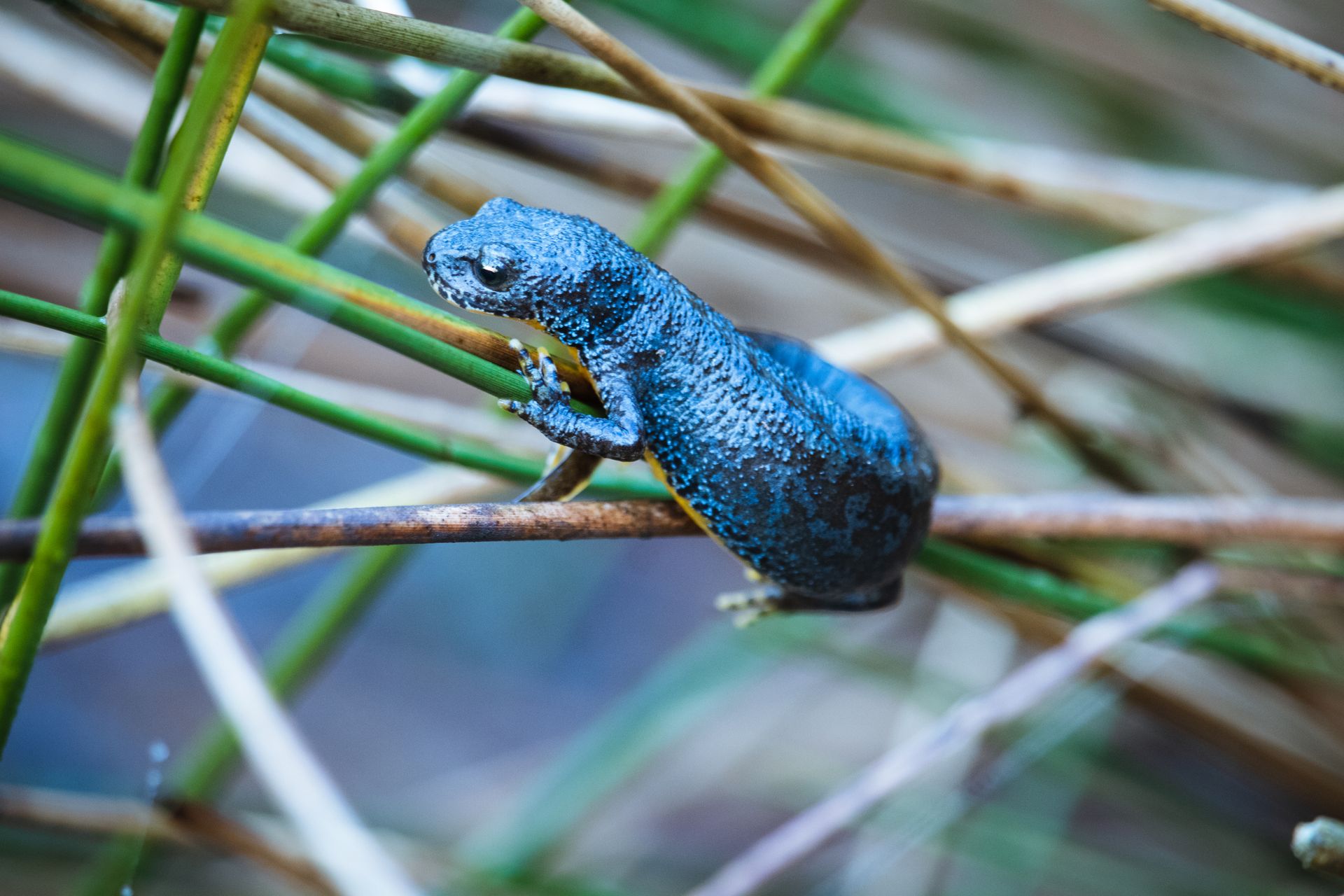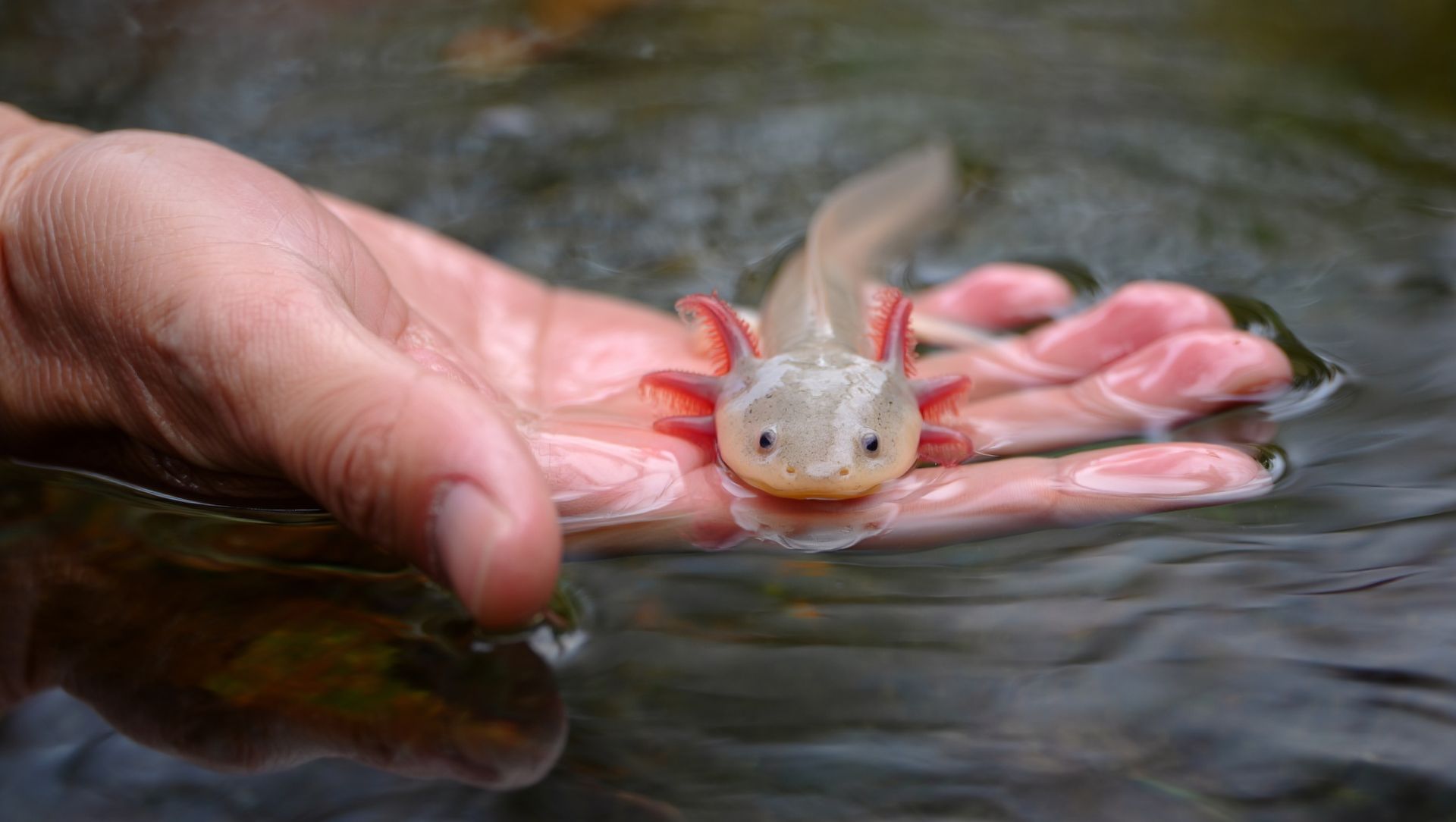
Ambystoma mavortium is a fascinating species that's worth getting to know. It's a type of salamander that's native to the southeastern United States.
These salamanders have a unique life cycle, spending their early years in aquatic environments before transitioning to a terrestrial lifestyle. This adaptation allows them to thrive in a variety of habitats.
Ambystoma mavortium is typically found in areas with abundant moisture, such as forests, grasslands, and wetlands. They often occupy shallow pools of water, where they can feed on small invertebrates.
Take a look at this: Ambystoma Maculatum Spotted Salamander
Physical Characteristics
Ambystoma mavortium, also known as the barred tiger salamander, is a large and impressive creature.
They can grow up to 35.6 cm in length, with an average length of 20.3 cm.
Their bodies are flat and broad, with blunt noses and small eyes.
Male tails are about equal to body size, while females have tails a few centimeters shorter.
Both sexes have four non-webbed toes on their front feet and five non-webbed toes on their back feet.
As hatchlings, they are 13 to 17 mm long and dark yellow-green with dark brown spots and black lateral stripes.
Here are some key physical characteristics of the barred tiger salamander:
- Average mass: 126 g (4.44 oz)
- Range length: 15 to 35.56 cm (5.91 to 14.00 in)
- Average length: 20.32 cm (8.00 in)
- Physical features: ectothermic, bilateral symmetry, poisonous
Adults and juveniles have a light-grey to grayish-black dorsum with scattered black or yellow dots, and yellow bars and lines along their body.
Habitat and Distribution
The barred tiger salamander is found in western Canada and the western half of the United States, but it's less common in California and Nevada. It's native to North America, and its range extends from as far north as Canada to as far south as the U.S./Mexico border.
In the United States, you can find them in the southernmost tip of Texas, but they don't venture further east than the Dakotas and Oklahoma. They've even been introduced to southern Arizona, where their larvae are used as fish bait.
As adults, barred tiger salamanders live in lowland deciduous forests, coniferous forests, and woodlands. They also inhabit open fields, rough ground, upland meadows, grasslands, deserts, semideserts, and streams.
They commonly use ponds as breeding grounds and sometimes slow-moving streams. Fast streams, however, make it harder for larvae to find food, reducing their survival rates.
As terrestrial animals, they live near water sources to breed and stay cool and moist. When hibernating, they live in cool, moist burrows, which can be new or pre-existing, created by salamanders or other animals. Burrow depths range from 15 to 60 cm.
Here's a breakdown of their habitat regions:
- Habitat Regions:
- terrestrial
- Terrestrial Biomes:
- forest
Behavior and Life Cycle
As an adult, the barred tiger salamander is terrestrial, but interestingly, its larvae are aquatic. These larvae go through a process of metamorphosis before becoming terrestrial, which can take around four to six months.
During this time, they develop lungs to breathe air and begin to grow legs and feet. It's not uncommon for some larvae to overwinter in the pond, hibernating and developing into terrestrial adults in the spring.
As adults, barred tiger salamanders are nocturnal, which means they're most active at night. They also have a unique behavior of burrowing into the ground to hibernate during winter, with burrows reaching depths of about 60 cm near breeding ponds.
Here are some key behaviors of barred tiger salamanders:
- fossorial
- nocturnal
- motile
- sedentary
- hibernation
It's worth noting that some barred tiger salamanders are neotenic, meaning they never go through metamorphosis and remain fully aquatic as adults. These neotenic salamanders can grow up to 10 cm longer than their terrestrial counterparts.
You might like: Spotted Salamanders
Development

The development stage of a barred tiger salamander's life cycle is quite fascinating. They go through stages of metamorphosis before becoming terrestrial.
Juvenile salamanders are quite small, measuring 180 to 250 mm in length, and have two gills and a tail fin. They remain in the pond where they hatched until they become terrestrial.
It takes these larvae four to six months to become subadults, at which point they still have a tail fin but begin to develop legs and feet. They also develop lungs to breathe air.
Barred tiger salamanders remain in the pond for an additional two to three months before becoming fully terrestrial. However, some juvenile salamanders may overwinter as larvae, hibernating and developing into terrestrial adults in spring.
Some barred tiger salamanders are neotenic, meaning they never go through metamorphosis. These salamanders are mostly found at high altitudes in western North America.
Here's a summary of their development stages:
- Juvenile salamanders (4-6 months): have two gills and a tail fin, remain in the pond
- Subadults (4-6 months after juvenile stage): begin to develop legs and feet, develop lungs
- Fully terrestrial (2-3 months after subadult stage): have fully developed legs and feet, can breathe air
Barred tiger salamanders reach sexual maturity between the ages of four and five.
Behavior
Barred tiger salamanders are nocturnal, meaning they're active at night. This is a common trait among many salamander species.
As adults, these salamanders are terrestrial, but their larvae are aquatic. This aquatic stage is crucial for their development.
Some larvae become cannibalistic, especially when ponds start to dry up and food becomes scarce. This is known as the cannibal morph, and it's becoming more common.
Cannibal morphs are larger than average and develop into adults more quickly. This is a survival mechanism for the salamanders.
During winter, adult barred tiger salamanders burrow themselves into the ground to hibernate. These burrows can be up to 60 cm deep and are usually located near breeding ponds.
Male barred tiger salamanders can get quite aggressive during mating season, fighting other males and sometimes interrupting breeding processes.
Here are some key behaviors associated with barred tiger salamanders:
- fossorial (meaning they burrow)
- nocturnal
- motile (meaning they can move from one place to another)
- sedentary (meaning they don't move around much)
- hibernation
Barred tiger salamanders typically burrow 3 to 17 m away from their ponds, but they always return to the same pond. They don't defend territories, which is unusual for many animal species.
Predation
Predation plays a significant role in the lives of barred tiger salamanders.
Their cannibalistic morphs contribute to the decline of some populations.
Other predators include raccoons, coatis, and river turtles from the family Emydidae.
Birds and other large reptiles have also been known to attack tiger salamanders.
Barred tiger salamanders have evolved anti-predator adaptations, such as being cryptic.
Here are some known predators of barred tiger salamanders:
- Raccoons
- Coatis
- River turtles
- Birds
- Other large reptiles
Lifespan/Longevity
Barred tiger salamanders have a relatively short lifespan in the wild, living only 2 to 3 years.
Their lifespan can vary greatly depending on their environment, with a much longer lifespan in captivity, ranging from 12 to 15 years.
In the wild, their short lifespan is likely due to high mortality rates, which can be a challenge to overcome.
Here's a comparison of their lifespan in different environments:
- Wild: 2 to 3 years
- Captivity: 12 to 15 years
Diaboli
Diaboli are a type of fungus that can be found in various environments.
They are known to be parasitic, meaning they obtain their nutrients by breaking down and absorbing the tissues of other organisms.

Diaboli have a unique life cycle that involves multiple stages of growth and development.
In the early stages, they produce spores that can survive in harsh conditions, allowing them to spread and colonize new areas.
As they mature, they develop a complex network of hyphae that allow them to break down and absorb nutrients from their surroundings.
Diaboli are often found in association with other organisms, such as insects or plants, which they can use as a food source.
Classification and Conservation
The barred tiger salamander, Ambystoma mavortium, is a fascinating species found in the Nearctic biogeographic province, which includes Greenland, the Canadian Arctic islands, and parts of North America as far south as central Mexico.
Its classification is straightforward: it belongs to the kingdom Animalia, phylum Chordata, subphylum Vertebrata, class Amphibia, family Ambystomatidae, genus Ambystoma, and species Ambystoma mavortium.
Here's a breakdown of its conservation status:
- IUCN Red List: Not Evaluated
- US Federal List: No special status
- CITES: No special status
- State of Michigan List: No special status
In Canada, however, it is listed as an endangered species due to a 30-year population decline caused by extirpations at breeding sites and habitat loss, as well as pollution and acid rain.
Classification
Classification is a fundamental concept in biology that helps us understand the relationships between living organisms. It's a bit like creating a family tree, but instead of names and dates, we use scientific terms to group species based on their characteristics.
The Animal Diversity Web, a reputable online resource, provides a clear classification of the Barred Tiger Salamander (Ambystoma mavortium). According to their information, the Barred Tiger Salamander belongs to the kingdom Animalia.
Here's a breakdown of its classification:
- Kingdom: Animalia
- Phylum: Chordata
- Subphylum: Vertebrata
- Class: Amphibia
- Family: Ambystomatidae
- Genus: Ambystoma
- Species: Ambystoma mavortium
The classification of the Barred Tiger Salamander is a testament to the complexity and diversity of life on Earth. By understanding its place in the grand scheme of things, we can better appreciate the interconnectedness of all living organisms.
Note that the Animal Diversity Web only provides information on a limited number of species, and their accounts may not be comprehensive or up-to-date.
Conservation Status
The conservation status of barred tiger salamanders is a pressing concern. They are listed as endangered in Canada due to a 30-year population decline caused by extirpations at breeding sites and habitat loss.
In the United States, there is no special status listed for barred tiger salamanders. However, their subspecies, the Sonoran tiger salamander, is considered threatened due to factors like cattle grazing, habitat loss, and introductions of non-native species.
Only 57 occupied breeding sites in British Columbia have been identified since 2005, highlighting the urgent need for conservation efforts. Steps are being taken to protect these sites, including monitoring for non-native species and limiting human disturbance.
Here is a summary of the conservation status of barred tiger salamanders in different regions:
- IUCN Red List: Not Evaluated
- US Federal List: No special status
- CITES: No special status
- State of Michigan List: No special status
It's essential to protect the habitats around these breeding sites to prevent further decline of the species. By taking proactive measures, we can help ensure the long-term survival of the barred tiger salamander.
Symbol
The tiger salamander is the state amphibian of Kansas, thanks to a petition from the second grade class of 1993 at O-K Elementary in Wichita, Kansas.
Students Timothy Boyd and Kristofer Voorhees initially proposed the idea, which was presented to their teacher.
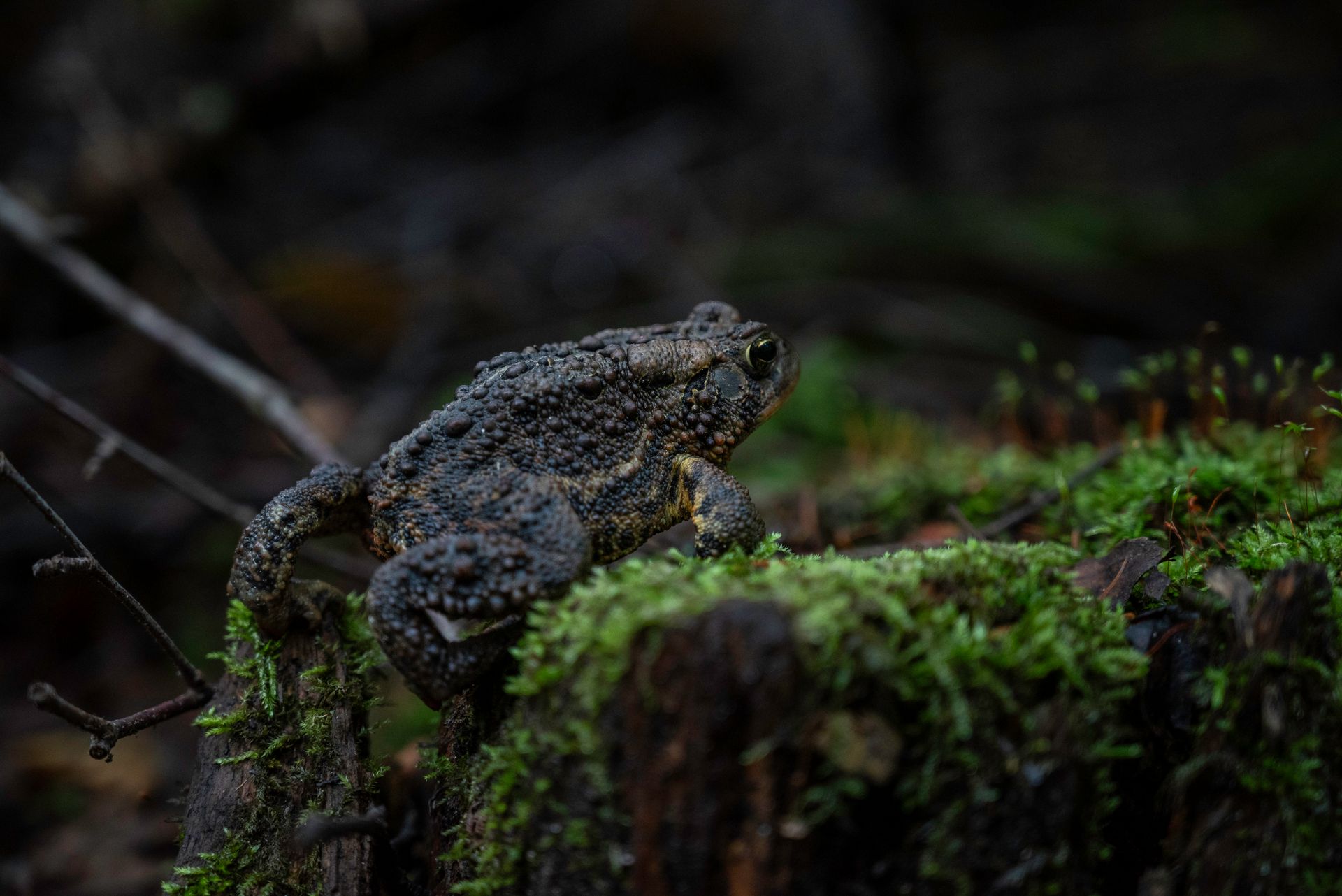
The tiger salamander is also recognized as the state amphibian of Colorado, after being recognized by the Colorado legislature on March 16, 2012.
These two states have officially designated the tiger salamander as an important symbol of their natural heritage.
Here are some key facts about the tiger salamander's classification:
- Eden et al. (2007) studied the accuracy of skeletochronology in the Arizona tiger salamander (Ambystoma tigrinum nebulosum).
- Collins (1981) researched the distribution, habitats, and life history variation in the Tiger salamander, Ambystoma tigrinum, in east-central and southeast Arizona.
Similar Species and Biology
Tiger Salamanders are long-lived, and individuals may live over 25 years.
Some individuals of Ambystoma mavortium retain larval features as adults and remain aquatic their entire life (neoteny).
Males generally reach sexual maturity in two years, while females may not reach maturity until they are three to five years old.
Similar Species
The Gray Tiger Salamander is often confused with the Eastern Tiger Salamander and the Blotched Tiger Salamander. These salamanders are all closely related and can be tricky to tell apart.
The Gray and Blotched Tiger Salamanders are both sub-species of the Western Tiger Salamander, making them very difficult to differentiate based on appearance. The Blotched Tiger Salamander has blotches on its body, but the Gray Tiger Salamander's appearance varies by location.
For another approach, see: Cave Salamanders
The ranges of the Gray and Blotched Tiger Salamanders do not overlap, making location a key factor in identifying them. This is a good reminder that understanding the habitat and distribution of different species is crucial for accurate identification.
The Eastern Tiger Salamander has smaller light spots on a dark background, which is a key distinguishing feature from the Gray and Blotched Tiger Salamanders. This is a good example of how subtle differences in appearance can be important for identifying different species.
Biology
Gray Tiger Salamanders migrate to breeding wetlands on rainy nights in the early spring just after the ice cover recedes from the breeding habitats.
The number of eggs that each female lays can range from 100 to 5000, depending on geographic location and female body size.
Females attach eggs singly or in small clusters to submerged sticks or other vegetation at least 30 cm below the surface of the water.
Larvae hatch into aquatic larvae after two to three weeks, and then transform into terrestrial juveniles in late summer.
Some individuals retain larval features as adults and remain aquatic their entire life, a process known as neoteny.
Males generally reach sexual maturity in two years, while females may not reach maturity until they are three to five years old.
Females may only breed every two years.
Tiger Salamanders are long-lived, and individuals may live over 25 years.
Adults spend most of their time in underground burrows and cavities, making them difficult to find during the summer and fall.
They are opportunistic predators and eat a wide variety of insects, spiders, worms, and other terrestrial invertebrates, as well as small vertebrates like mice.
Larvae prey on aquatic invertebrates, larval frogs, and salamander larvae, including other Tiger Salamander larvae.
Western Tiger Salamander
The Western Tiger Salamander is a fascinating creature, found in Canada and the United States, specifically in Arizona, California, Colorado, Idaho, Kansas, Minnesota, Montana, North Dakota, Nebraska, New Mexico, Nevada, Oklahoma, Oregon, South Dakota, Texas, Utah, Washington, and Wyoming.
It's the state amphibian of Colorado and Kansas, and can be both fully aquatic and terrestrial. Some adult salamanders never go through metamorphosis and keep their gills, a process called neoteny.
These salamanders spend most of their life underground, but come to the surface to breed in ponds. The terrestrial salamanders are quite the travelers, moving around to find suitable breeding grounds.
There are 4 commonly identified subspecies of the Western Tiger Salamander, each with its own unique characteristics. The Sonoran tiger salamander is found in the Huachuca and Patagonia Mountains of southeast Arizona, and is a protected species.
The International Union for the Conservation of Nature (IUCN) Red List assesses the Western Tiger Salamander as Least Concern for Extinction, which is great news for these amazing creatures.
Family: Ambystomatidae
The Gray Tiger Salamander is a subspecies of the Western Tiger Salamander (Ambystoma mavortium). This classification tells us that it belongs to the Ambystomatidae family.
The Ambystomatidae family is home to several species of tiger salamanders. The Gray Tiger Salamander is just one of them.
Ambystomatidae family members are known for their distinctive characteristics and habitats.
See what others are reading: Eastern Gray Treefrog
Frequently Asked Questions
What is the common name for Ambystoma mavortium?
The common name for Ambystoma mavortium is the Western Tiger Salamander.
Featured Images: pexels.com