The alligator lizard is a unique creature that plays a vital role in Oregon's ecosystem. They are found in the southwestern part of the state, particularly in the high-desert region.
These lizards are primarily insectivores, feeding on ants, beetles, and other small invertebrates. Their diet is a crucial part of maintaining the balance of their ecosystem.
The alligator lizard's habitat is characterized by rocky outcroppings, scrublands, and juniper woodlands. This specific environment provides them with the necessary shelter and food sources.
In Oregon, the alligator lizard is listed as a species of special concern, highlighting the need for conservation efforts to protect their habitat.
Physical Characteristics
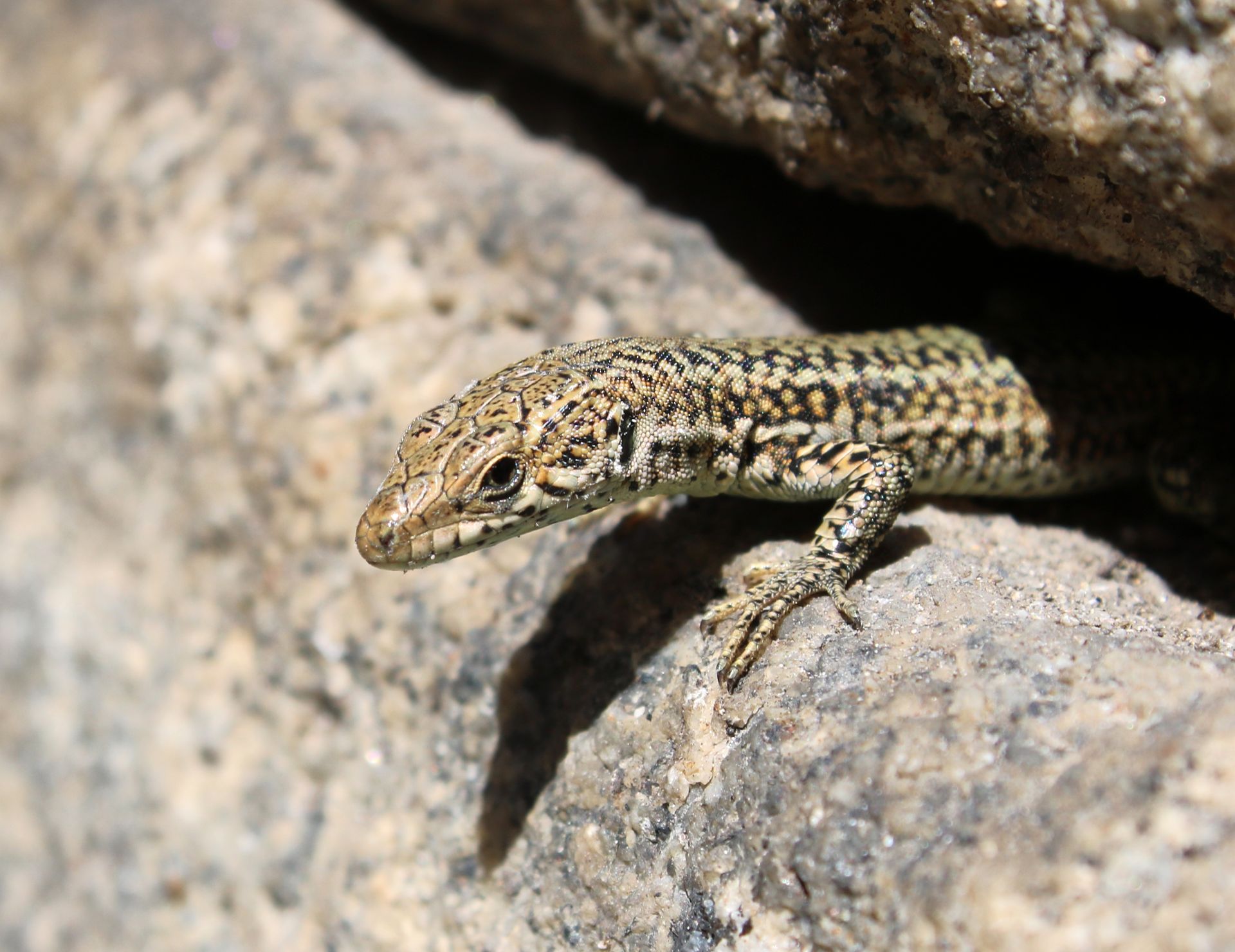
The southern alligator lizard is a large, slim lizard with a distinctive appearance. An adult grows to 5.6 inches snout to vent length with a tail that is twice the body length.
The dorsal (topside) scales are rectangular, and the ventral (underside) scales are also rectangular. The overall dorsal coloration is brown with black spots forming transverse bands across the dorsal surface.
Males have a head that is broader and more triangular than females. The eyes are yellow or gold, and the tail is easily shed.
Here's a comparison of the southern and northern alligator lizards:
Physical Description
The Northern alligator lizard is a relatively small creature, measuring between 2.75-5.5 inches long from snout to vent. The length does not include the tail.
The color of the Northern alligator lizard is variable, with common colors being gray, olive, brown, rust-red, greenish, or blue. Dark crossbands are also common, and sometimes a middle stripe is present.
The Northern alligator lizard has a specific pattern of scales on its body, with dark pigmentation on the lateral edges of the ventral scales. This is a key distinguishing feature between the Northern and Southern alligator lizards.
In terms of overall coloration, the Northern alligator lizard's dorsal surface can be a range of colors, including gray, olive, brown, and rust-red. The underside is typically light colored with no dark pigmentation on the lateral edges of each scale.
Southern Lizard
The Southern alligator lizard is a carnivorous lizard that feeds primarily on small invertebrates like slugs, spiders, centipedes, and scorpions.
It also eats insects like beetles, grasshoppers, and crickets, as well as bird eggs, nestlings, other lizards, and small mammals.
This lizard requires thickets, brush heaps, downed logs, or rock piles for cover, and is found in a variety of habitats including grassland, chaparral, oak woodlands, and riparian zones.
It's most dependent on the presence of rock outcrops, boulders, or talus slopes in desert shrub vegetation types.
These rock features provide the lizard with the shelter it needs to survive.
Oregon Alligator Lizard
Oregon is home to a unique species of alligator lizard, the Northern alligator lizard. This lizard prefers humid areas, such as the edges of meadows in coniferous forests, and is also found in riparian zones.
Its diet consists of small invertebrates like termites, beetles, ticks, spiders, millipedes, and snails, as well as occasional small birds, mammals, and other lizards. The Northern alligator lizard is the only lizard found in the cool coastal forests of northern Oregon.
This lizard can grow to a length of 2.75-5.5 inches from snout to vent, excluding the tail. Its coloring is variable, with common colors including gray, olive, brown, rust-red, greenish, or blue, often with dark crossbands.
For another approach, see: Northern Fence Lizard
Ecology and Life History
The Oregon Alligator Lizard is typically found in rocky, grassy or brushy openings within open forested landscapes, primarily Oregon oak-ponderosa pine.
They are active during the day and much less secretive than the northern alligator lizard, making them easier to see and hear as they move along the ground. They also climb with assistance from their prehensile tail and can be seen on the lower portions of tree trunks and in shrubs.
This species is aggressive and will bite when captured, so be careful if you encounter one.
The tail is easily shed when the lizard is threatened, a behavior that can be life-saving but also has negative consequences, such as lower reproductive fitness and survival rates until the tail regenerates.
The species' activity starts in early April, depending on location and weather conditions, and may continue into October or early November.
Breeding behavior starts soon after surface activity commences, and females lay eggs in talus in June.
In Oregon, hatchlings start to appear in September and October, and overwintering most likely occurs in rock features such as talus.
Geographic Range
The Oregon alligator lizard is found in various habitats, including the edges of meadows in coniferous forests and riparian zones. It's worth noting that the Northern alligator lizard is the only lizard found in the cool coastal forests of northern Oregon.
The Southern alligator lizard, on the other hand, has a broader range and can be found in a variety of habitats from grassland and chaparral to oak woodlands and edges of open coniferous forests.
The Southern alligator lizard is also found in the East Cascades Ecoregion, which is a specific geographic area.
You might enjoy: Southern California Alligator Lizard
Frequently Asked Questions
Are alligator lizards rare?
Alligator lizards are relatively rare in certain environments, such as deserts and high mountain elevations above 6,000 ft. However, they can be found in more abundance in specific regions, including parts of the western United States.
Featured Images: pexels.com