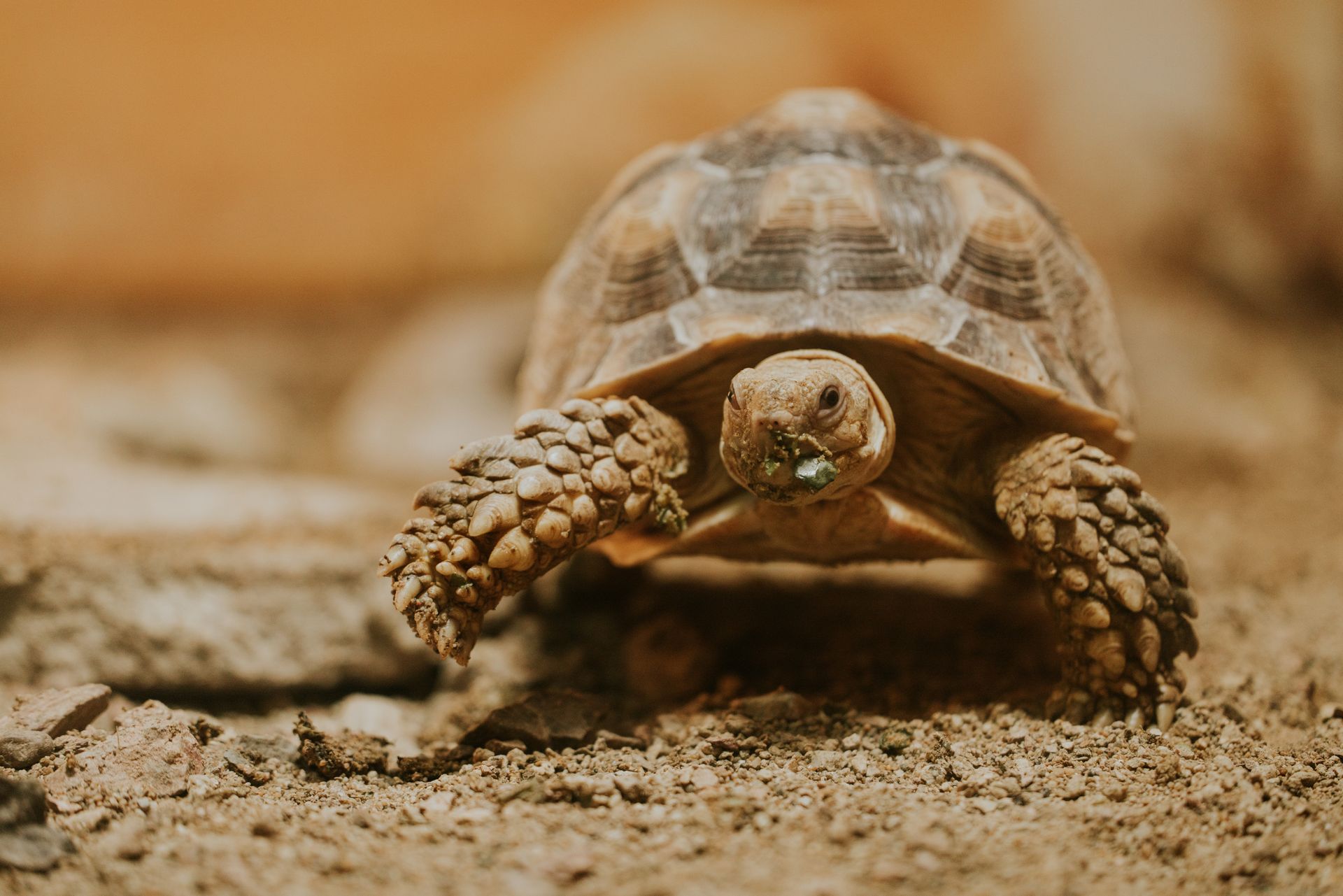
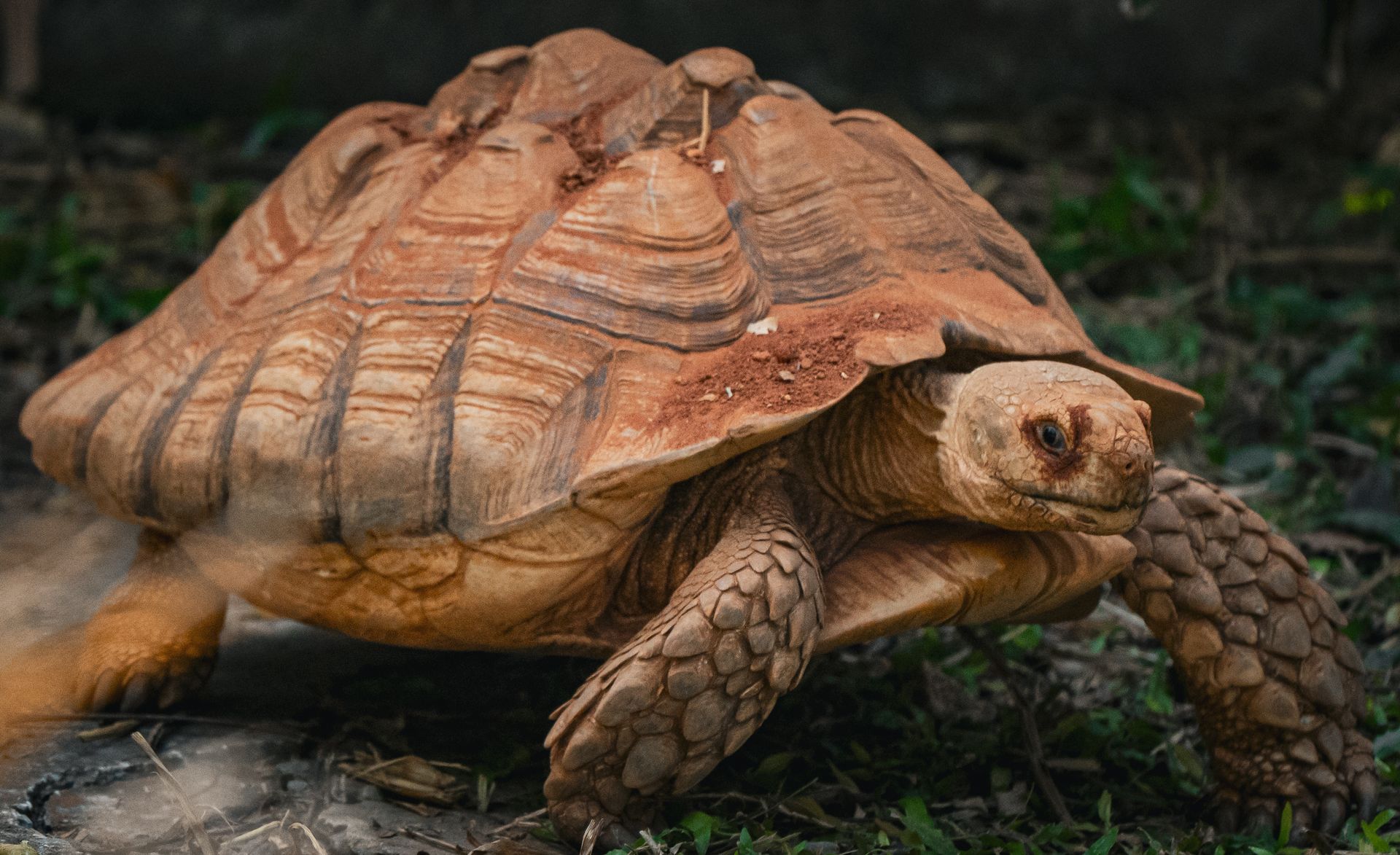
African Sideneck Turtles are relatively small, reaching a maximum length of about 20 inches, including their tail. They have a distinctive sideneck posture, where they tilt their head sideways to look at their surroundings.
African Sideneck Turtles are semi-aquatic, spending most of their time in water but also coming onto land to bask and nest. They require a suitable enclosure that provides both aquatic and terrestrial areas.
In the wild, African Sideneck Turtles can live up to 20 years, but their lifespan in captivity can be significantly shorter if not properly cared for. With proper care, they can live into their teens.
Aquarium Setup
To set up a suitable aquarium for your African sideneck turtle, you'll want to start with a large enough enclosure. The minimum size for one adult turtle is 90-110 gallons of water, no deeper than 1.5x the length of the turtle itself.
This will provide your turtle with ample space to swim and thrive. If you have the option to house your turtle outdoors in a pond, make sure it's no deeper than 1.5x the length of the turtle and has a retaining wall at least 24” tall and buried at least 6” into the ground to prevent escape.
You should also consider providing a turtle basking platform, which should be at least as large as the turtle itself and tall enough to allow for complete drying off. This platform is essential for semi-aquatic turtles like African sideneck turtles.
For decoration, you can use a variety of items, such as live or artificial plants, driftwood, hollow logs, and fine-particle aquatic substrate like sand. These will not only create an attractive enclosure but also boost its functionality.
To create a secure environment, make sure to provide at least a couple of places where your turtle can hide from view. This will help them feel more secure and relaxed in their new home.
Water and Temperature
African sideneck turtles need a specific temperature range to stay healthy. The basking area should be around 95°F, while the water should stay under 85°F, but no cooler than 70°F.
For juveniles, the water temperature may need to be higher, between 80-85°F. It's essential to measure both basking and water temperatures accurately using a digital probe thermometer and a high-quality aquarium thermometer.
A heat lamp and UV-emitting light are vital for maintaining a healthy internal body temperature and day-night schedule. An ambient temperature of around 80 degrees Fahrenheit is usually sufficient, with the "sunbathing" area staying significantly warmer, in the 90 to 95-degree range.
Best Temperature

African sideneck turtles need a specific temperature range to stay healthy, and it's not as simple as just keeping them warm. Unlike mammals, these turtles rely on external sources to regulate their body temperature and metabolism.
The ideal basking area temperature for African sideneck turtles is around 95°F. This is crucial for their overall health and well-being.
Water temperature is also important, and it should stay under 85°F, but no cooler than 70°F. Juveniles may require higher water temperatures of 80-85°F.
You'll want to use a digital probe thermometer to measure the basking temperature and a high-quality aquarium thermometer to measure the water temperature.
Halogen flood heat lamps are a great way to provide heat for your turtle, and you should cluster at least two of them on one side of the enclosure, positioned over a sturdy basking branch or rock.
Some heat sources to avoid using are ceramic heat emitters (CHEs), red bulbs, and blue bulbs, as they're not as effective.
If you're housing your turtle outdoors in an appropriate climate, heating equipment is not required. However, if you're housing them indoors or in an area with cold winter temperatures, they'll need to be kept indoors during this time.
Here's a summary of the ideal temperature range for African sideneck turtles:
Maintaining Aquarium Water
You'll need a canister-style filter capable of handling at least 2x the amount of water in the enclosure to keep the water clean.
African sideneck turtles are semi-aquatic reptiles, and they spend most of their time in the water, so it's essential to keep the water clean.
For filtration, you'll need a filter rated for at least 2-3x the amount of water in the enclosure, depending on how messy your turtle is.
To make water changes easier, use a siphon or water pump, and remove and replace approximately 30% of the aquarium/pond's total water volume every 1-2 weeks.
Both indoor and outdoor enclosures require filtration and routine water changes to keep the water clean and the turtle healthy.
Diet and Nutrition
African sideneck turtles are omnivores, which means they need a balanced diet of both plant- and animal-based foods.
To prevent overfeeding, feed your adult sideneck as much as they will eat in a few seconds, once every second or third day. This will help maintain a healthy weight and prevent digestive issues.
In the wild, African sidenecks eat insects, plants, and fish, so variety is key to a successful feeding routine. Feed your sideneck a mix of meat proteins and greenery to ensure they get all the necessary nutrients.
Here's a rough guide to feeding your African sideneck:
Some examples of animal-based foods include crickets, earthworms, dubia roaches, and small fish. Leafy green plant material like collard greens, dandelion greens, and romaine lettuce are also great options.
Diet
African sideneck turtles are omnivores, which means they need a balanced diet of both plant- and animal-based foods. This is crucial for their overall health and well-being.
Young African sideneck turtles need a diet that's 50% protein and 50% vegetables. Their protein food intake should be daily, and they'll eat as much as they can in 5-10 minutes. You should also provide vegetable food daily, roughly the same amount as their shell size.
Turtle pellets should be given every other day, roughly the same amount as their head size. Some good options for protein food include crickets, earthworms, dubia roaches, and freeze-dried shrimp/krill.
As your turtle grows older, its diet should shift to 25% protein and 75% vegetables. Protein food intake should be reduced to 1-2 times a week, and vegetable food should still be provided daily.
Some good options for vegetable food include collard greens, dandelion greens, endive, green leaf lettuce, kale, and red leaf lettuce. You can also feed your turtle raw grated squash, carrots, green beans, and raw grated sweet potato.
Here's a rough guide to help you determine how much food to give your turtle:
- Protein food: as much as they'll eat in 5-10 minutes
- Vegetable food: roughly the same amount as their shell size
- Pellets: roughly the same amount as their head size
Remember to always provide a variety of foods to prevent your turtle from developing a fixation on a single food type. And don't overfeed your turtle – adult sidenecks should be fed as much as they'll eat in a few seconds, once every second or third day.
Size
African sideneck turtles can grow quite large, reaching an adult size between 7 and 12 inches in length.
The females tend to be larger than the males, with males reaching a maximum length of about 10 inches.
Since they can grow quite big, it's essential to provide a spacious enclosure that meets their needs, such as a minimum of 90-110 gallons of water.
Handling and Care
African Sideneck Turtles are hardy, but they're best left to intermediate and advanced keepers due to their environmental requirements and long lifespan.
To care for your African Sideneck Turtle, you'll want to be consistent and educated on their physiology and nutritional needs. Knowing what to feed them, how to keep them warm, and how to keep them clean and healthy are all vital components in their care.
Be sure to never feed your turtle land-dweller meat like beef or chicken, as they wouldn't eat that in the wild.
How to Handle

Handling your African sideneck turtle requires a gentle approach. It's best to stay hands-off most of the time, as they tend to tolerate handling better than most reptiles.
Tong-feeding is a great way to bond with your pet. Try it to see how your turtle responds.
African sideneck turtles aren't like other reptiles that you can handle regularly. They're more suited to a hands-off approach.
Broaden your view: Small Reptiles as Pets
Do You Like to Be Handled?
Handling your turtle can be a great way to bond with it, but it's essential to remember that they don't like to be handled as a general rule.
Turtles often withdraw instead of biting, but African sideneck turtles are more tolerant of handling than most.
It's best to keep handling to a minimum, as excessive handling can stress them out.
If you want to interact with your turtle, try hand-feeding it with a pair of feeding tongs for a more enjoyable experience for both of you.
Care Level
African Sideneck turtles are best left to intermediate and advanced turtle keepers due to their environmental requirements and long lifespan.
They can thrive in captivity, but may not be the best fit for beginners.
West African mud turtles/sideneck turtles are hardy and can withstand periods of deprivation, making them a good option for those willing to learn and adapt.
However, they still require a moderate level of care, which can be a challenge for some owners.
General Information
African sideneck turtles are relatively small, typically growing to about 6-8 inches in length.
They are native to sub-Saharan Africa, specifically in countries such as South Africa, Namibia, and Botswana.
In the wild, they inhabit shallow pools of water, often with a muddy or sandy bottom.
These turtles are primarily herbivores, feeding on aquatic plants, algae, and occasionally, small insects.
African sideneck turtles are social animals and can be kept in pairs or groups in captivity, but males may fight for dominance.
They are also known to be quite active, spending a significant amount of time basking in the sun or swimming in their enclosure.
African sideneck turtles are relatively long-lived, with a lifespan of up to 20-30 years in captivity.
They require a well-balanced diet that includes a mix of vegetables, fruits, and leafy greens.
African sideneck turtles need a large enough enclosure to accommodate their active lifestyle, with plenty of space for swimming and basking.
Health and Behavior
African sideneck turtles are extremely hardy creatures, but it's still important to provide the proper lighting, heating, and dietary requirements to keep them healthy.
They require regular exposure to high-quality UVB lighting, which gives them the vitamin D their body needs, stimulates a better appetite and activity, and strengthens their immune system.
A reptile veterinarian on hand is a wise idea before bringing your pet turtle home, and if you suspect any ailments, contact them as soon as you can. Some common illnesses include respiratory infections, metabolic bone disease, and shell rot.
African sideneck turtles can be curious almost to the point of aggressive, and may use their claws to try to escape if they're nervous. They can also be aggressive with each other, especially when eating, mating, or kept in a small or dirty habitat.
Here are some guidelines for UVB lighting:
- Use high-quality UVB bulbs like Zoo Med Reptisun T5 HO 5.0 or Arcadia Forest 6%
- Place the lamp close to the heat lamps, about 13-14” above the basking platform
- Replace the UVB bulb every 12 months
Health
African sideneck turtles are hardy creatures, but they still need proper care to stay healthy. Providing the right lighting is crucial for their overall well-being.
UVB lighting is essential for African sideneck turtles, as it gives them all the vitamin D they need and stimulates better appetite and activity. This type of lighting also strengthens their immune system.
You'll want to use high-quality UVB bulbs, such as the Zoo Med Reptisun T5 HO 5.0 or Arcadia Forest 6%. These bulbs should be half the length of the enclosure and housed in a reflective fixture.
It's also a good idea to provide a strong LED or T5 HO 6500K daylight lamp for additional illumination. This helps better replicate daylight and is also good for any live plants you may be using.
Don't forget to replace your UVB bulb every 12 months to maintain good performance. If you're housing your turtle outdoors in an appropriate climate, supplementary lighting is not required.
Lights should be on for 12 hours/day. This will help your turtle feel more comfortable and active.
Here are some common illnesses that your African sideneck turtle may experience throughout its life:
- No specific illnesses are listed in the article sections, but it's recommended to have a reptile veterinarian on hand before bringing your pet turtle home.
Health and Behavior
African sideneck turtles are known to live a long life, with some species living for more than 50 years in captivity. This means that owning one of these turtles is a significant commitment.
These hardy aquatic turtles can live for upwards of twenty years on average, making them a long-term investment. Proper care is essential to ensure they reach their full lifespan potential.
Given proper care, African sideneck turtles can easily live for a few decades. This is great news for turtle enthusiasts who are willing to provide the right environment and attention.
Behavior
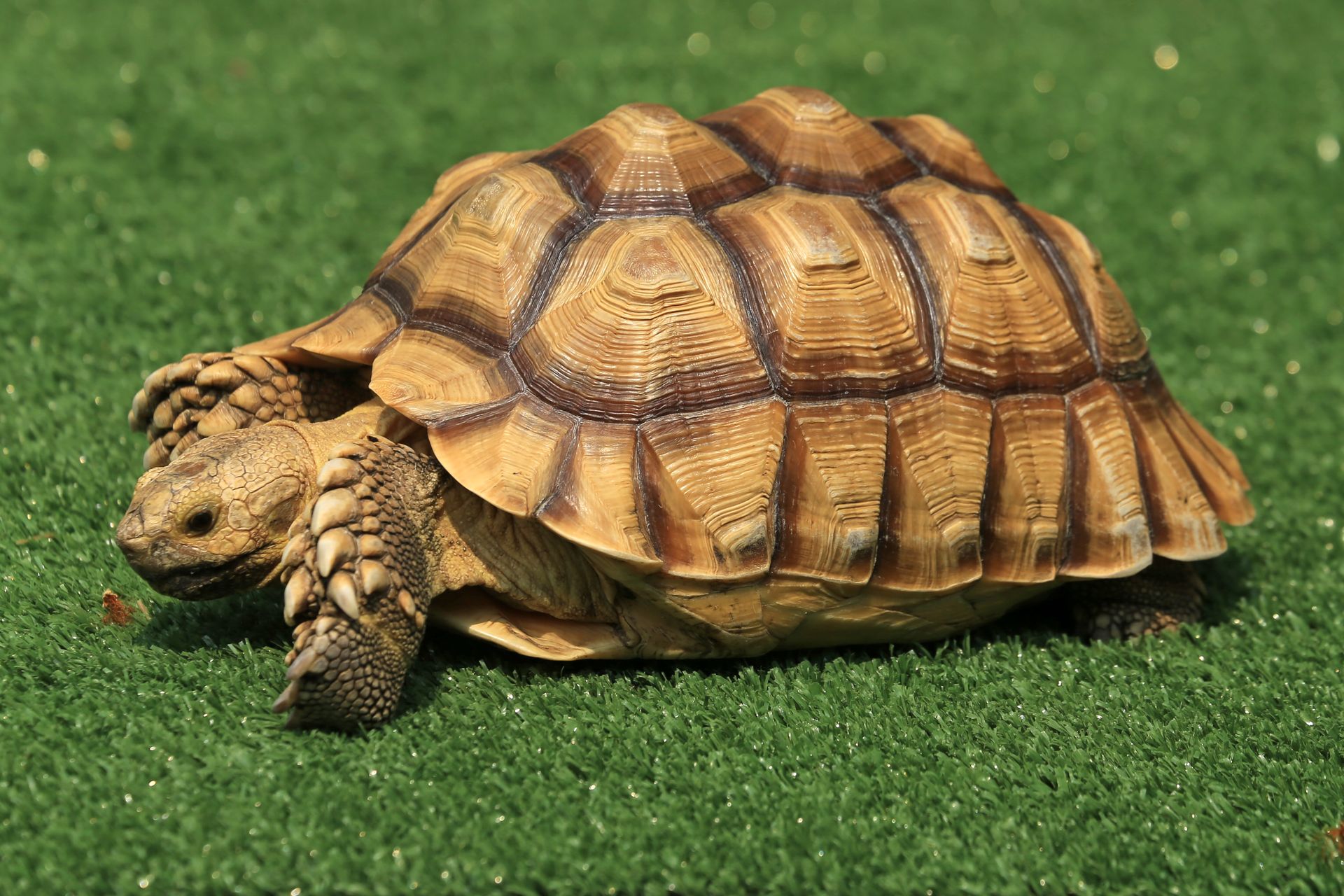
African sideneck turtles are generally hardy and active, making them a great pet choice. They can be quite curious, almost to the point of being aggressive.
Their natural abundance and moderate size make them a relatively low-maintenance pet. Almost.
In the wild, they can be aggressive with each other, especially when competing for food, mates, or living space. This can be a challenge to replicate in a home environment.
However, they are not typically aggressive towards people, unless they feel nervous or threatened. In that case, they might use their claws to try and escape.
It's worth noting that a small or dirty habitat can exacerbate their natural aggression. Providing a spacious and well-maintained environment can help minimize this behavior.
For another approach, see: California King Snake as a Pet
Appearance
African sideneck turtles have a unique appearance that's both cute and fascinating. Their dark-colored shells often have a grayish black plastron with a wide, poorly defined yellow area.
Their olive-to-brown heads feature black markings on top, giving them a distinctive look. They also have two barbels that protrude from the lower jaw, which are like sensory organs.
For more insights, see: South African Mastiff Black
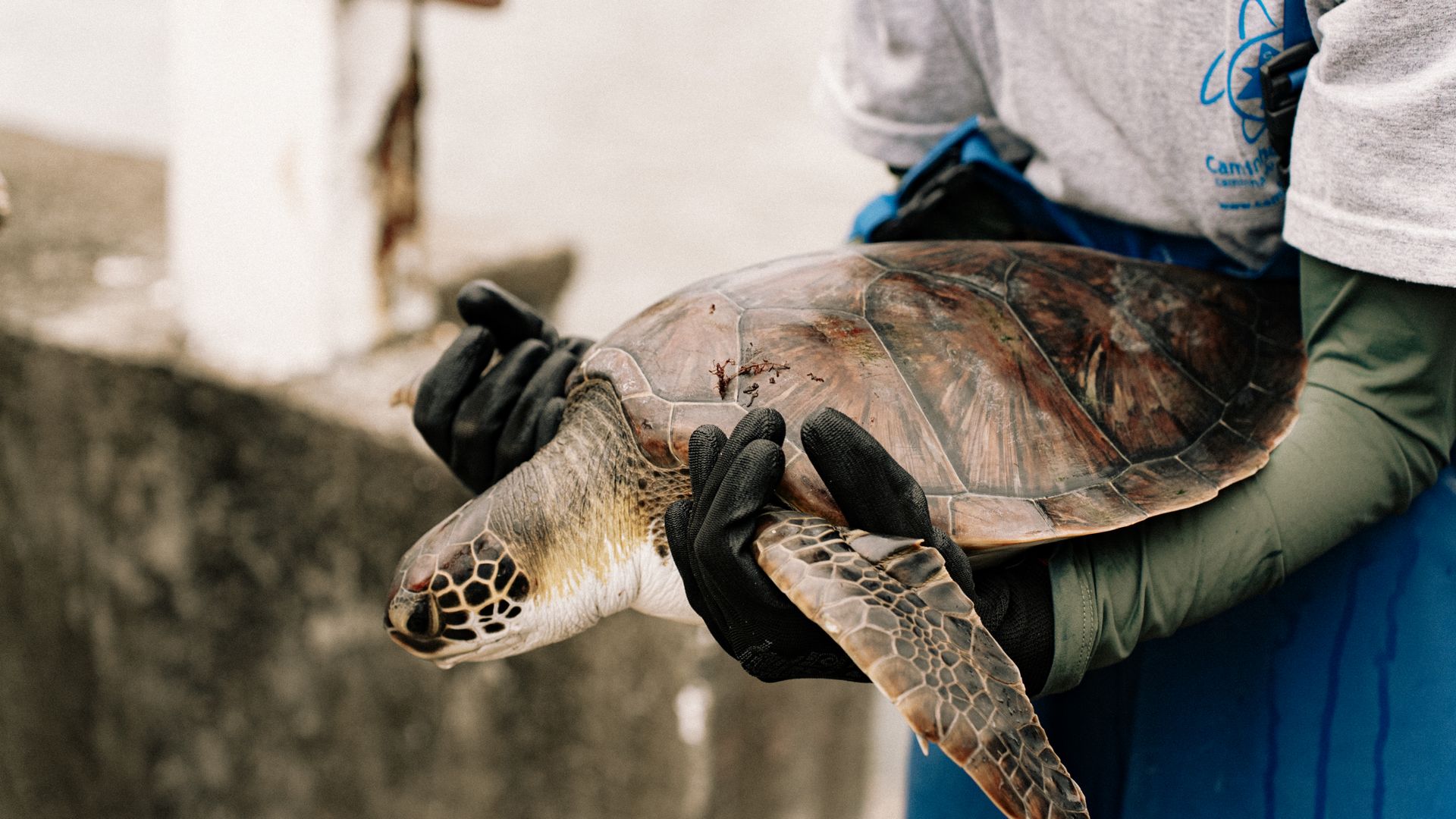
Their feet are lightly webbed with long, sharp claws that are perfect for grasping and climbing. The image of a young African sideneck turtle shows the two barbel nubs on its chin, which is a sweet feature.
African sideneck turtles have a fixed, smiling mouth and big round eyes that make them look endearing. Their appearance is so charming that it's hard not to smile when looking at them.
Storage and Tank
When choosing a tank for your African sideneck turtle, it's essential to consider the space it needs to thrive. A minimum of 90-110 gallons of water is required, with a depth no greater than 1.5x the length of the turtle itself.
African sideneck turtles are large and active, so a spacious tank is a must. Housing them outdoors in a pond can be a convenient and cost-effective option, but make sure the pond is securely fenced with a 18" tall retaining wall buried 6" into the ground to prevent escape.
To create a comfortable environment, consider adding a turtle basking platform that's at least as large as the turtle itself and tall enough to allow it to dry off completely. This will provide a safe space for your turtle to bask, walk around, and burrow.
Suggestion: Actinemys Marmorata
Tank
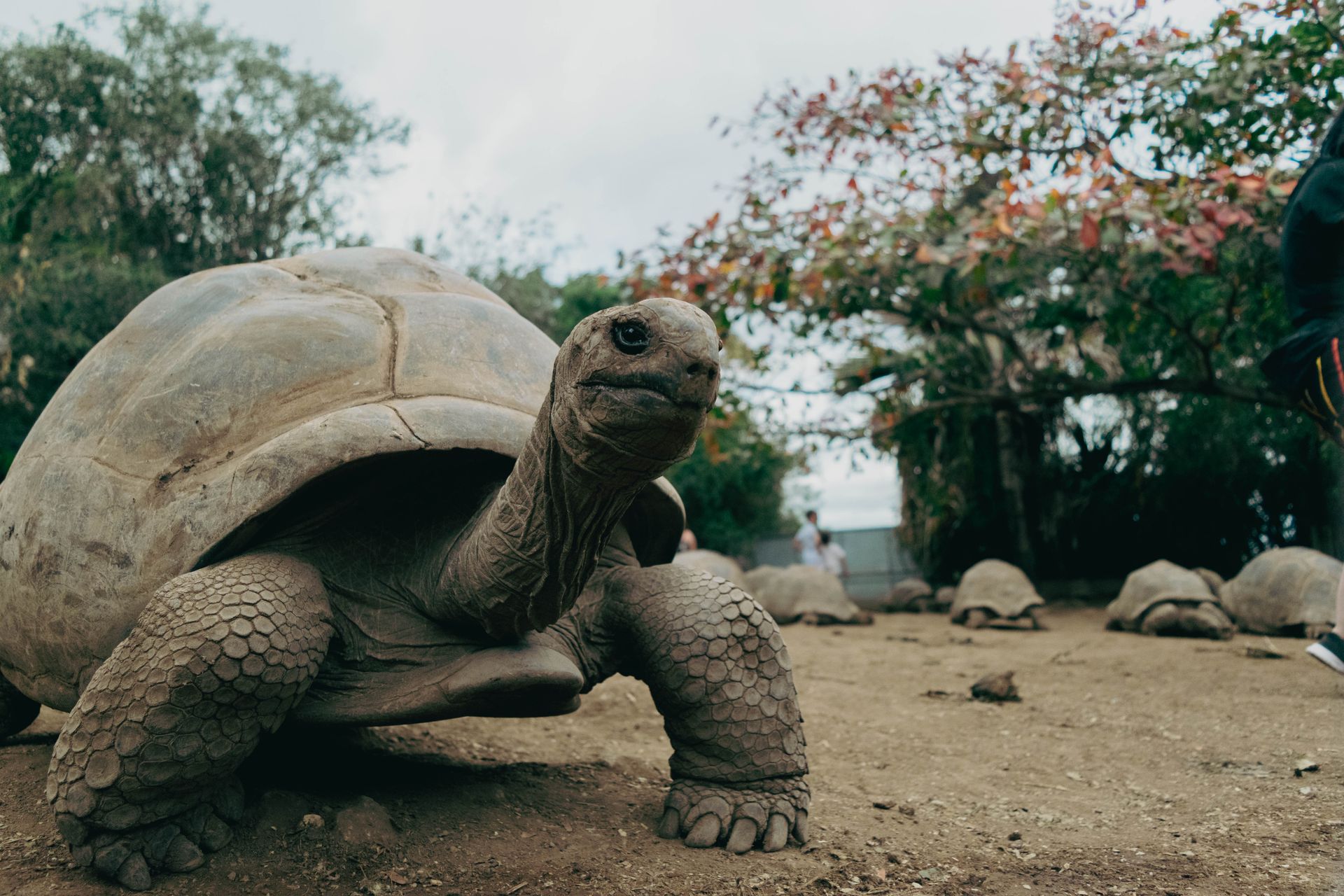
African sideneck turtles need a spacious tank to thrive. The minimum tank size for one adult turtle is 90-110 gallons of water, with a depth no greater than 1.5 times the length of the turtle.
You can choose to house your turtle outdoors in a pond if local climate permits. This is a convenient way to provide a large pond and natural heating and lighting for your turtle.
To prevent escape, the pond should have a retaining wall at least 18 inches tall and buried at least 6 inches into the ground.
African sideneck turtles are best kept alone in their enclosure, as they can be aggressive towards other turtles in their territory.
You should cover the tank with a metal mesh screen lid to keep your turtle safe and secure.
Fill the tank with a substrate, such as sand or large pebbles, to mimic the turtle's natural habitat.
For another approach, see: African Sideneck Turtle Tank Size
Aquarium Decoration
African sideneck turtles need a basking platform that's at least as large as the turtle itself, and tall enough to allow the turtle to completely dry off.
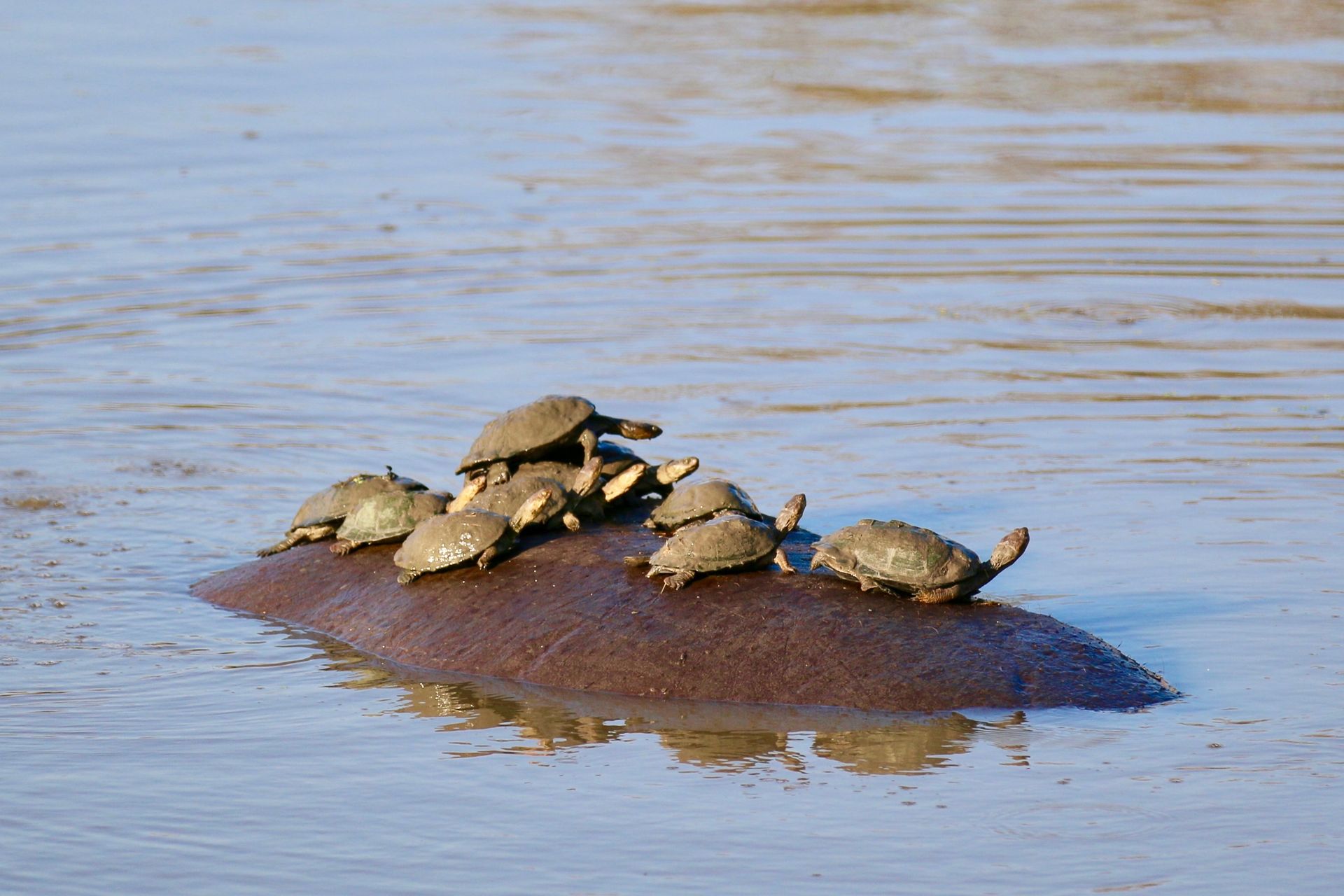
To create a functional and attractive enclosure, you'll want to add some live or artificial plants, such as water lilies or artificial plants that mimic their natural habitat. This will not only boost the enclosure's aesthetics but also provide your turtle with a safe place to hide.
Driftwood and hollow logs can also be great additions to your turtle's aquarium, as they mimic their natural habitat and provide a place for your turtle to explore and burrow.
Fine-particle substrates like sand or large pebbles can be used to line the bottom of the tank, but be sure to choose a substrate that's safe for your turtle to dig in and won't cause any harm if ingested.
Here are some essential decoration ideas for your African sideneck turtle aquarium:
- Live or artificial plants
- Driftwood
- Hollow logs
- Fine-particle substrate (ex: sand)
Remember to create at least a couple of places where your turtle can hide from view to help them feel more secure in their enclosure.
Frequently Asked Questions
Are African sideneck turtles easy to take care of?
African sideneck turtles require moderate care and may be suitable for beginners with dedication, but it's essential to research their specific needs before bringing one home. With proper care, they can thrive in a well-maintained environment.
Featured Images: pexels.com