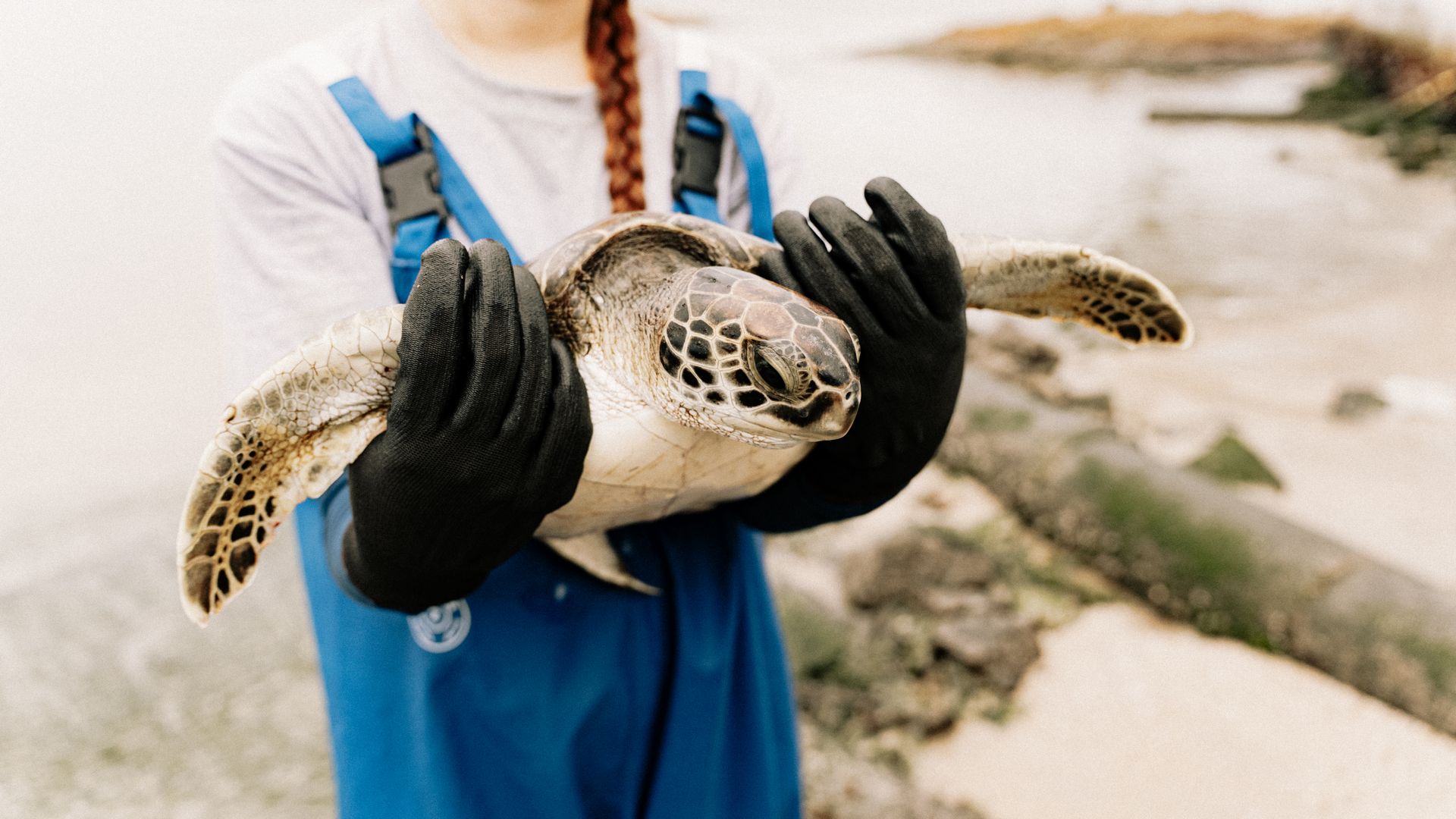
Wildlife rehabilitation in the United States is a vital process that helps to nurse injured or orphaned wildlife back to health. The process typically begins with a phone call or visit to a licensed wildlife rehabilitation center.
There are over 500 licensed wildlife rehabilitation centers in the United States, providing care for a wide range of species. These centers are staffed by trained volunteers and professionals who work tirelessly to rehabilitate injured and orphaned wildlife.
The most common species brought into these centers are birds, such as songbirds, waterfowl, and raptors. Some centers also specialize in caring for mammals, like raccoons, opossums, and bats.
For your interest: United Kingdom Wildlife
Regional Wildlife Rehabilitation
If you're interested in wildlife rehabilitation, you're probably wondering where to start.
In Arkansas, the Arkansas Game and Fish Commission oversees a system of rehabilitators that take in sick, injured, or orphaned animals and rehabilitate them for release back into the wild.
These wildlife rehabilitators must be experienced in the care of wild animals and have a veterinarian working with them to provide advice. A wildlife rehabilitation permit is required to provide medical care for injured wildlife or to raise orphaned wildlife for release back into the wild. The Arkansas Game and Fish Commission regulates rehabilitation of wildlife other than birds, and the U.S. Fish and Wildlife Service regulates rehabilitation of birds.
Consider reading: Extinct Fish
Rehabilitators are not AGFC employees; they are volunteers who receive no compensation for their services. They do this out of the goodness of their hearts and pay for care out of pocket.
Some towns and counties in Arkansas have rules prohibiting the possession of wildlife, so be sure to check if it's legal in your area before getting started.
If you're still interested in helping, here are some ways to get involved:
- Volunteer at a wildlife rehabilitation facility to help transport or care for animals.
- Donate to a wildlife rehabilitation facility to help with operating expenses, supplies, and/or medical care.
- Host a supply drive to collect items that rehabilitators use most often.
Some essential items to collect for a supply drive include:
- Milk Replacement Formulas (e.g. Kitten Milk Replacer, Puppy Esbilac)
- Syringes and latex nipples for feeding (e.g. Miracle Nipple)
- Baby foods and cereals
- And many other items listed in the table below:
Some of the other essential items to collect for a supply drive include baby foods and cereals, dry dog or cat food, fresh fruits, vegetables, and nuts, and many more.
National Organizations and Resources
If you're interested in wildlife rehabilitation, there are several national organizations that can provide guidance and support. The National Wildlife Rehabilitation Association (NWRA) is one such organization.
You can also reach out to Animal Help Now for help with identifying and assisting baby wild animals. They can help you determine if the animal is hurt, abandoned, or perfectly fine.
If you're looking for resources to help you get started in wildlife rehabilitation, there are several reports and forms available. The 2020 Arkansas Wildlife Rehabilitator Survey Report is a valuable resource for learning more about the field.
For those interested in becoming a wildlife rehabilitator, the Fact Sheet | How Do I Become a Wildlife Rehabilitator is a great place to start. It provides a clear outline of the steps you need to take.
Here are some online resources that can be helpful:
- Federally Protected Migratory Birds
- International Wildlife Rehabilitation Council
- IWRC/NWRA Minimum Standards for Wildlife Rehabilitation
- National Wildlife Rehabilitators Association
- U.S. Fish and Wildlife Service Migratory Bird Permits
Wildlife Rehabilitation Process
Wildlife rehabilitation is a complex process that requires specialized knowledge and training. It involves a series of steps that ensure the animal receives the best possible care.
The process begins with rescue, where an animal is found and reported to a wildlife rehabilitator, or seized from the illegal wildlife trade or a poacher. This is a critical step, as interacting with the animal yourself can be dangerous or even illegal.
Upon arrival, the animal is examined by a trained wildlife rehabilitator or veterinarian to determine the extent of the injury and the probability of successful rehabilitation. This examination can involve treating injuries, administering medication, and providing supportive care such as fluids and nutrition.
Once stabilized, the animal is placed in an appropriate setting where it can recover, such as an aviary, enclosure, or pool, depending on the species. This setting is carefully chosen to meet the animal's specific needs.
The rehabilitation process involves helping the animal regain its strength, mobility, and survival skills. This can take time, patience, and careful attention to the animal's needs.
In some cases, animals may not be able to be rehabilitated and are euthanized humanely. This is a difficult decision, but it is often necessary to prevent suffering and promote public safety.
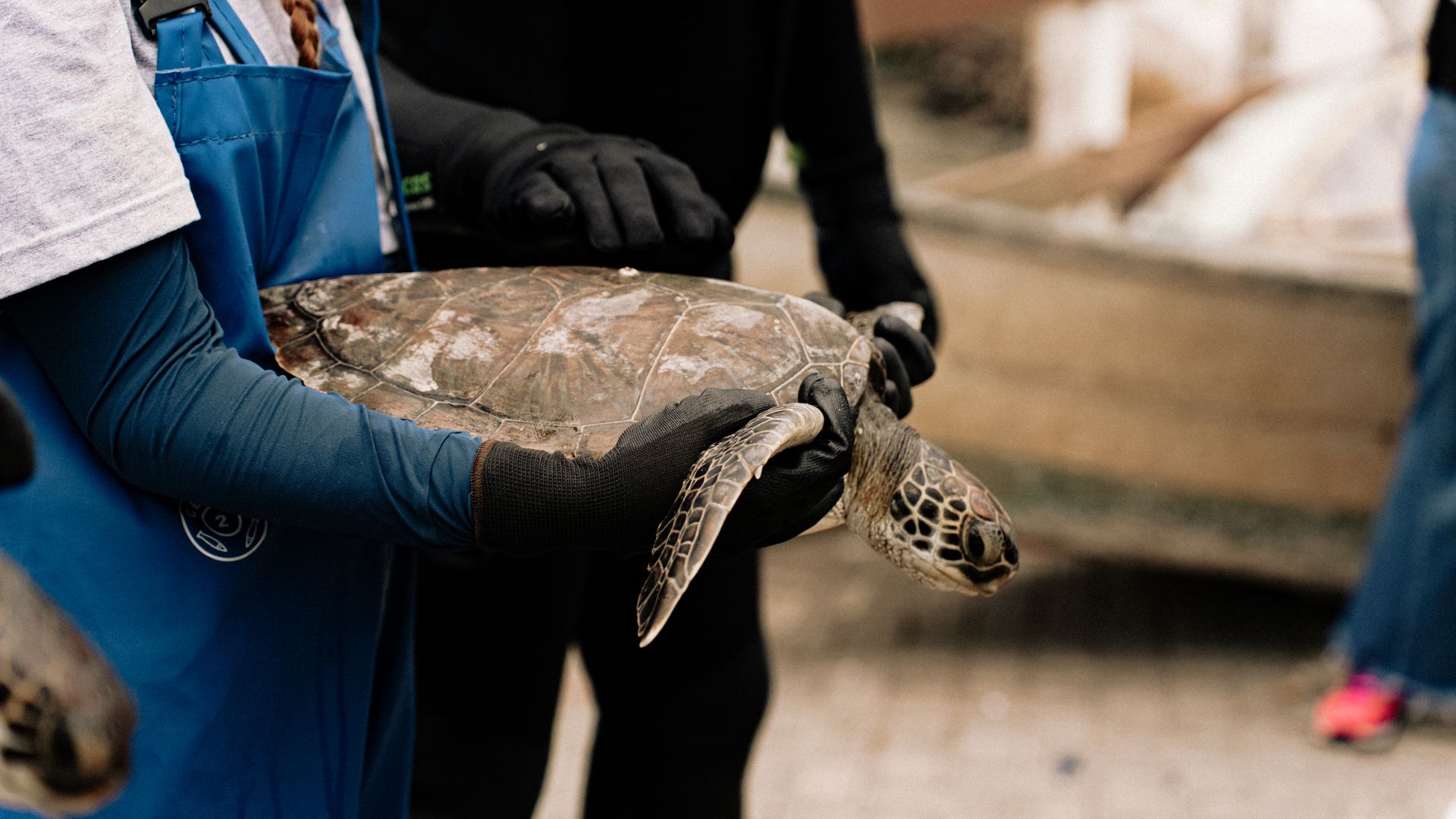
Rehabilitators must also be mindful of imprinting and habituation, which can occur when a young animal begins to see the rehabilitator as its primary caregiver. This can be a challenge, especially when caring for young birds, as imprinting is often permanent.
To prevent imprinting, rehabilitators take caution when caring for young animals, including wearing masks and gloves around them or covering their cages with towels to prevent contact with humans. This helps establish and maintain boundaries between the rehabilitator and the animal.
You might like: When Did Seaworld Stop Swimming with Orcas
Rehabilitation in Specific States
In Arkansas, the Arkansas Game and Fish Commission oversees a system of rehabilitators that take in sick, injured or orphaned animals and rehabilitate them for release back into the wild.
Rehabilitators in Arkansas are not AGFC employees, but rather volunteers who receive no compensation for their services. They pay for care out of pocket and accept donations to offset costs.
To become a wildlife rehabilitator in Arkansas, you'll need to consider factors such as having adequate space, money, and time to care for wild animals. You'll also need to be prepared to euthanize animals that cannot be effectively treated.
Volunteering at a wildlife rehabilitation facility is a great way to get hands-on experience and learn about the process. You can also donate to a facility to help with operating expenses, supplies, and medical care.
If you're looking to donate to a wildlife rehabilitation facility in Arkansas, some items that are often needed include milk replacement formulas, syringes, and latex nipples for feeding.
On a similar theme: Wild Australian Dog Crossword Clue
Here's a list of some common items needed by wildlife rehabilitation facilities in Arkansas:
- Milk Replacement Formulas (Ex. Kitten Milk Replacer, Puppy Esbilac, Zoologic®Milk Matrix 33/40, etc.)
- Syringes and latex nipples for feeding (Ex. Miracle Nipple® in multiple sizes)
- Baby foods and cereals
- Dry dog or cat food
- Fresh fruits, vegetables and nuts (a variety, raw and unseasoned)
- Nutritional supplements and probiotics (ex. Nutri-Cal®, Bene-Bac®)
- Grass hays (ex. timothy hay, alfalfa, etc.)
- Puppy housetraining pads or newspaper
- Soft blankets, towels or pillowcases
- Unscented baby wipes
- Cotton swabs (ex. Q-tips)
- Pet hammocks
- Adjustable heating pads
- Disposable gloves
- Paper towels
- Trash bags
- Disinfection and deodorizing products
- Pet carriers and kennels
- Pet food/water bowls (heavy bowls preferred to prevent spilling)
In other states, you can find wildlife rehabilitation facilities through lists provided by state wildlife agencies. For example, in Colorado, you can find a list of wildlife rehabilitators on the Colorado Parks and Wildlife website. In Florida, you can call the South Florida Wildlife Center at 954-524-4302 or 866-SOS-WILD for assistance.
For more insights, see: Colorado Parks and Wildlife Wolf Reintroduction
People and Organizations
The National Wildlife Rehabilitation Association is a great resource for learning about wildlife rehabilitation and finding local rehabilitation centers.
Animal Help Now is another organization that provides information and support for helping injured or orphaned wildlife.
If you're unsure about how to care for a baby wild animal, it's best to contact a local wildlife rehabilitation center or organization for guidance.
Annie Beliles
Annie Beliles is a Licensed Wildlife Rehabilitator through the PA Game Commission, a credential she earned a few years after completing her internship at the Wildlife Rehabilitation Center.
She received her Bachelor of Science degree in Biology from Saint Francis University in 2015.
Annie has completed fieldwork in the Galapagos Islands and St. Lucia, and developed her passion for wildlife during her internship at the Wildlife Rehabilitation Center.
Her favorite animals to treat are bats, and she enjoys working with a variety of species.
In her free time, Annie enjoys spending time with her daughter, Willow, as well as her rescue dogs Freya, Loki, and Fenrir, and two ferrets, Odin and Pepper.
Contact Taylor Czyscon
Taylor Czyscon is an Assistant Wildlife Rehabilitation Specialist with a background in Wildlife Management.
She is dedicated to helping animals in need.
Taylor can be contacted for assistance with wildlife-related matters, drawing from her expertise in wildlife management and rehabilitation.
You can reach out to Taylor for guidance on how to care for injured or orphaned wildlife, or for advice on how to create a wildlife-friendly habitat in your own backyard.
Here are some ways to get in touch with Taylor:
- Assistant Wildlife Rehabilitation Specialist
- Wildlife Management
Temporary and Paused Intake
We're temporarily pausing intake of young raccoons. This decision is a rare occurrence, but it's essential to prioritize the well-being of our patients.
Our Wildlife Rehabilitation Center has a long history of providing expert care to sick, injured, and orphaned wild animals. We've been doing this since 1997!
Our staff has over 35 years of combined rehabilitation experience with wildlife. This extensive knowledge and expertise enable us to provide the best possible care for our patients.
We're invested in continuing education and staying up to date on the best practices possible at our facility. This ensures that our patients receive the most effective treatment and care.
Our clinic admits over 4,200 patients spanning over 140 different species every year. This includes helping over 40,000 animals since opening!
Broaden your view: Best Place to See Wildlife in Costa Rica
Historical and Professional Development
The field of wildlife rehabilitation has a fascinating history. It began to take shape in the 20th century as conservationists and animal welfare advocates recognized the value of rescuing and rehabilitating injured wildlife.
In the early 1900s, private individuals and veterinarians started caring for wild animals in their homes with little formal training or regulatory oversight. This marked the beginning of wildlife rehabilitation as a specific practice.
The 1980s and 1990s saw a significant shift towards professionalization, with organizations like the International Wildlife Rehabilitation Council and the National Wildlife Rehabilitators Association playing a crucial role in developing training programs, certifications, and best practices.
Intriguing read: Spca Free Dog Training
Early Practices
In the early 1900s, conservationists and animal welfare advocates started to recognize the value of rescuing and rehabilitating injured wildlife.
Private individuals or veterinarians would often care for wild animals in their homes, but with little formal training or regulatory oversight.
The first wildlife rehabilitation efforts were informal and unstructured, but they marked the beginning of a growing movement to care for injured animals.
Conservationists and animal welfare advocates were motivated by a growing awareness of the importance of protecting wildlife and their habitats.
This early work laid the groundwork for the more organized and structured wildlife rehabilitation efforts that would follow in the coming decades.
You might like: Essential Foot Care for Horses
Professionalization
Professionalization of wildlife rehabilitation began to take shape in the 1980s and 1990s as more people became involved in the field.
The International Wildlife Rehabilitation Council (IWRC) and the National Wildlife Rehabilitators Association (NWRA) played a crucial role in developing training programs, certifications, and best practices for wildlife rehabilitation.
These organizations provided education, support, and networking for wildlife rehabilitators, helping to establish wildlife rehabilitation as a recognized profession.
The IWRC and NWRA collaborated to publish the Minimum Standards for Wildlife Rehabilitation in 1984, a significant milestone in the professionalization of the field.
As scientific understanding of wildlife behavior and veterinary medicine advanced, wildlife rehabilitators began to adopt more sophisticated techniques for treating injured animals.
Trends and Challenges
Wildlife rehabilitation is a global practice with centers and trained rehabilitators operating in many countries.
Rehabilitators work closely with veterinarians, government agencies, and conservationists to care for animals and address the impact of human activities on wildlife populations.
Climate change, habitat destruction, and pollution continue to drive the need for wildlife rehabilitation.
Rehabilitators often care for animals affected by oil spills, wildfires, and other environmental disasters, such as those caused by climate change.
Despite these challenges, wildlife rehabilitation remains an essential part of modern conservation efforts.
Changes to Procedures
The Wisconsin DNR has temporarily modified rehabilitation procedures to protect against the potential introduction of SARS-CoV-2 into wild animal populations.
This year, there are increased biosecurity requirements for all bat, felid, mustelid, red fox, and white-tailed deer rehabilitation.
Space may be limited due to these new requirements.
Call a licensed rehabilitator before handling any of these species this spring.
Intriguing read: Wildlife Rehabilitator Education Requirements
Trends and Challenges
Wildlife rehabilitation is a global practice with centers and trained rehabilitators operating in many countries. Rehabilitators work closely with veterinarians, government agencies, and conservationists to care for animals and address the impact of human activities on wildlife populations.
Climate change, habitat destruction, and pollution are major drivers of the need for wildlife rehabilitation. Rehabilitators often care for animals affected by oil spills, wildfires, and other environmental disasters.
Rehabilitators play a key role in managing wildlife diseases like West Nile virus, avian influenza, and the spread of white-nose syndrome in bats. These diseases can have devastating effects on wildlife populations.
Despite the importance of their work, wildlife rehabilitators face ongoing challenges, including limited funding and lack of resources. This can make it difficult for them to provide the care and treatment that animals need.
Rehabilitators also face the difficult decision of when to euthanize severely injured or diseased animals. This is an ethical dilemma that can be emotionally challenging for those involved in the field.
Legal Considerations
Wildlife rehabilitation is heavily regulated by governmental agencies to ensure the safety and welfare of both animals and rehabilitators.
In many countries, including the United States and Australia, a license and/or permit(s) are required to rehabilitate wildlife.
The United States Fish and Wildlife Service oversees the rehabilitation of migratory birds under the Migratory Bird Treaty Act.
State and local agencies regulate the care of other species, and rehabilitators must obtain permits to handle and care for wild animals.
Rehabilitators must follow strict guidelines regarding the treatment and release of wild animals.
Recommended read: Animals in Captivity vs Animals in the Wild
It is against the law to rehabilitate (or in some cases possess) a wild animal without permits in many countries.
Common birds considered to be introduced invasive species, such as rock doves, European starlings, and house sparrows, are the only birds that can be admitted without a federal permit.
Many licensed rehabilitation facilities cannot accept introduced species due to the conditions of their licensing.
Releasing non-native wildlife is not only against the law for many licensed wildlife rehabilitators, but it can also harm native species and ecosystems.
Here's an interesting read: World Wildlife Foundation Endangered Species
Frequently Asked Questions
What degree is needed for wildlife rehabilitation?
For a career in wildlife rehabilitation, a college degree in biology or ecology is typically recommended, with coursework in ornithology, mammalogy, and related wildlife and environmental subjects. This foundation in wildlife biology and ecology is essential for a successful rehabilitation career.
Can you make a living as a wildlife rehabilitator?
While pay for wildlife rehabilitation work may not be high, it can be a living wage depending on location and employer, making it a viable career option for those passionate about animal care. However, salaries vary widely, so further research is necessary to determine the feasibility of making a living in this field.
Do wildlife rehabilitators charge?
Wildlife rehabilitators typically do not charge for their services, but may accept donations to support their work. Donations help cover the costs of caring for injured or orphaned wildlife.
Featured Images: pexels.com