It's not uncommon for a dog to favor one family member over another, and it's not just a coincidence. According to studies, dogs tend to form stronger bonds with people who have similar energy levels and personalities.
This can be attributed to the fact that dogs pick up on our emotions and energy, and they often mirror our behavior. For example, if one family member is more energetic and playful, the dog may respond more positively to them.
However, this doesn't mean that the dog has a personal vendetta against the other family member. In fact, research suggests that dogs are more likely to bite someone they feel is a threat or is trying to take food or attention away from them.
Here's an interesting read: Training a Dog Not to Bite
Causes of Dog Aggression
Dog aggression can be a complex issue, and there are several reasons why a dog may bite only one person in a family. A dog's aggression is not necessarily a reflection of hate, but rather a response to fear, pain, or learned behavior.
Check this out: Dog Fence Aggression
Many factors can contribute to a dog's aggression, including poor socialization, fear from a past experience, or even an unwelcome interaction from puppyhood. If a dog is not well-socialized with different people, such as men with beards or different voices, it may become fearful and aggressive.
Growling is a normal behavioral response for a dog, and it's often a warning that something is making them uncomfortable. Dogs growl to protect their resources, such as food or toys, or to stop someone from touching them in a way that's uncomfortable or painful.
Aggression can also be caused by dominance, anxiety, or pain. Dominance aggression is a common reason for aggression in dogs, where they feel the need to assert their dominance over others. Anxiety-induced aggression can also occur when a dog becomes anxious or stressed, leading to aggressive behavior.
Here are some common causes of dog aggression:
- Poor socialization
- Fear from a past experience
- Learned behavior
- Dominance
- Anxiety
- Pain
It's essential to address aggression in dogs promptly and seek professional help from a positive reinforcement trainer. They can help you identify the underlying causes of the aggression and develop a plan to address it.
Explore further: Dog Aggression Biting
Symptoms and Signs
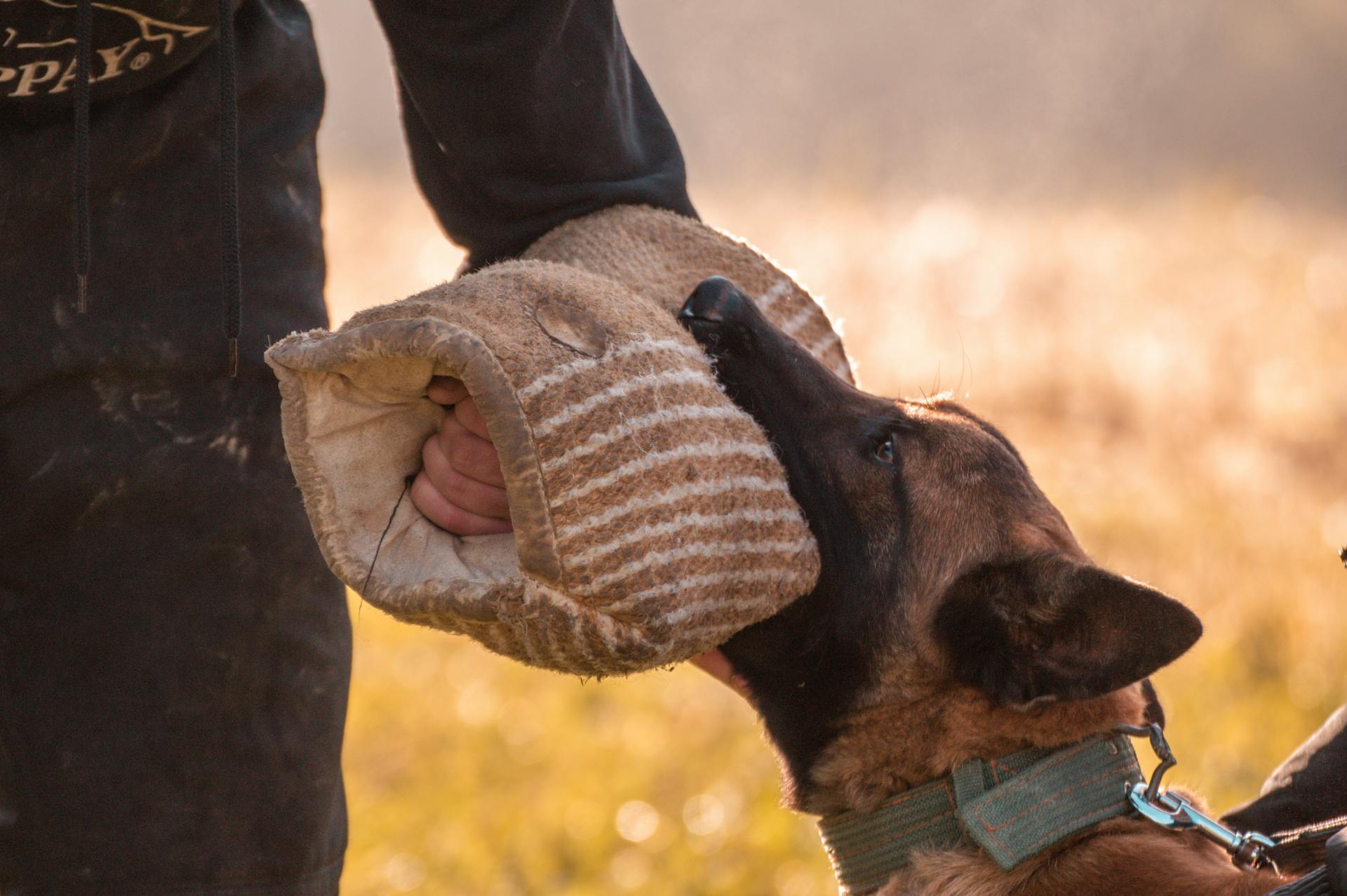
If you notice your dog only bites one person in the family, it's essential to recognize the symptoms and signs that might indicate aggression.
Snarling and lip licking are common signs of aggression in dogs, and they can be subtle or overt behaviors.
Barking, growling, and lunging are also warning signs that your dog may be feeling threatened or anxious.
A tense or stressed demeanor, inability to relax in certain situations, and being unhappy or seemingly irritated are all potential indicators of aggression.
Your dog may also display moodiness, avert their gaze, or appear restless and anxious.
Here are some specific types of aggression to look out for:
Treatment and Recovery
Recovery from dog aggression takes time, often years, and requires dedication from the whole family.
Follow-up visits with the veterinarian and behavioral therapist are necessary to ensure the dog is on the path to recovery.
There is no "cure" for dog aggression, but with the right therapy and care, recurrences can be drastically minimized.
Treatment of Aggression in Dogs
Treatment of aggression in dogs requires a tailored approach. A veterinarian will usually recommend a behavioral therapy program to address the underlying issue.
Behavioral therapy is often the main form of treatment and may include modification of the dog's behavior, desensitization, eliminating triggers, and training. The behavioral therapist will work with you and your family to develop a plan.
A thorough history and assessment of aggressive episodes are essential for a proper diagnosis and treatment plan. This will help identify the root cause of the aggression.
A behavior modification program will generally include avoidance of triggers, teaching new responses, and positive reinforcement for desirable behaviors. This can help reduce aggression over time.
If your dog is suffering from anxiety, the veterinarian may prescribe medication. However, addressing the underlying issue is crucial in dog aggression.
Making sure your home environment is calm and predictable is also important. A consistent and proper routine management can help reduce aggression.
A head halter and leash can be used to control your dog's behavior, especially in situations where aggression is triggered. Training exercises for response substitution and desensitization can also be effective.
For another approach, see: Will Cockroach Poison Kill My Dog
Recovery of Aggression in Dogs Toward Familiar People
Recovery and management of aggression in dogs toward familiar people depends on the severity of the aggression.
Recovery can take time, perhaps years, and requires dedication and persistence from the whole family.
The dog's chances of recovery are much higher if he is taken to the veterinarian and started on therapy early on.
A thorough history and assessment of aggressive episodes and your dog's behavioral history are essential for a proper diagnosis and treatment plan.
Behavior modification programs will generally include avoidance of triggers, teaching new responses, positive reinforcement for desirable behaviors, control with a head halter and leash, training exercises for response substitution, and desensitization for the dog's significant triggers.
Symptoms of aggression can include snarling, lip licking, biting, barking, growling, lunging, having a tense or stressed demeanor, and being unhappy or seemingly irritated.
It's essential to keep a documentation of any regular "times" or "triggers" that are leading to any negative change in behavior of the dog.
The following are some common types of aggression: dominance aggression, aggression related to an incident, competitive aggression, conflict aggression, maternal aggression, anxiety-induced aggression, and pain-related aggression.
To help your dog recover, you should work with a veterinarian and a behavioral therapist to develop a customized treatment plan.
Understanding Dog Behavior
Dogs can't feel emotions as complex as hate, so when they growl, snarl, or bite, it's usually due to fear, pain, or learned aggression.
Reactions like growling and snarling typically stem from a past experience or poor socialization, which can be a challenge to identify, especially in adopted dogs.
A dog's past experiences can play a significant role in their behavior, and if they've been abused or neglected, they may growl at certain family members who remind them of their past.
Resource guarding is a common reason for a dog to growl at other family members, especially if they perceive those individuals as a threat to their valuable resources.
Dogs may also growl at someone they're afraid of, which can be triggered by various factors, including a person's size, voice, or appearance.
Desensitizing your dog to specific triggers, such as a family member's voice or appearance, can help manage their behavior and reduce growling incidents.
Check this out: Dog Growling at Familiar Person
Consistency and routine management are essential in helping dog aggression, and a calm and predictable home environment can go a long way in reducing stress and anxiety.
Behavioral therapy is often the main form of treatment for dog aggression, and it may involve modification of the dog's behavior, desensitization, and training to address underlying issues.
Recovery from dog aggression takes time, dedication, and persistence from the whole family, and follow-up visits with a veterinarian and behavioral therapist are crucial to ensure the dog is on the path to recovery.
A guarding dog and a child who doesn't recognize guarding behavior is a recipe for disaster, so it's essential to seek out a positive reinforcement trainer to address this issue.
Growling is a normal behavioral response for dogs, and it's essential to understand that it's a warning sign that something is making them uncomfortable.
Help and Advice
If you're wondering why your dog might be targeting only one person in your family, it's likely due to a combination of factors, including dominance and resource guarding.
Dogs often establish a hierarchy within their pack, and this can manifest as aggression towards specific family members.
In some cases, your dog may feel the need to protect food or toys from a particular person, leading to biting.
Resource guarding is a common reason for dog bites, especially if your dog has a history of food aggression.
If you notice your dog growling or snapping when someone approaches their food, it's essential to address the issue immediately.
Dogs that are not well-socialized as puppies may be more prone to aggression towards specific family members.
Socialization plays a critical role in shaping a dog's behavior and temperament.
If you've noticed that your dog is more aggressive towards a particular family member, try to identify any triggers that may be contributing to the behavior.
By understanding the underlying causes of your dog's aggression, you can take steps to prevent future incidents.
Worth a look: Fda Warning on Dog Food Brands
Featured Images: pexels.com