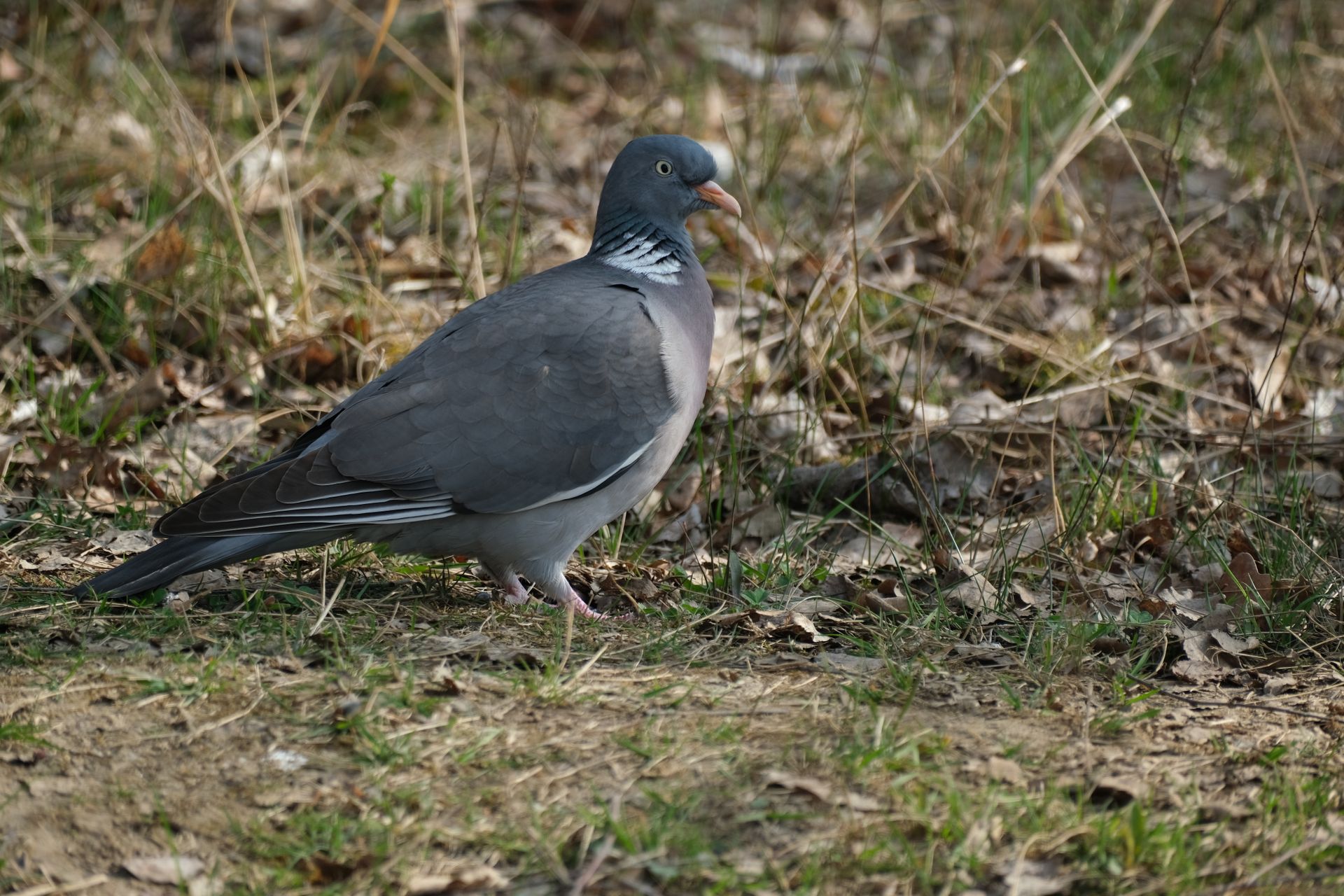
The White-Crowned Pigeon is a large and majestic bird, with a distinctive white crown on its head. It's a species that's native to the Caribbean and parts of Central America.
These birds can grow up to 24 inches in length and weigh up to 13 ounces, making them a significant presence in their natural habitats. Their wingspans can reach up to 3 feet, allowing them to soar through the skies with ease.
Their diet consists mainly of fruits, leaves, and seeds, which they forage from trees and bushes. They're also known to visit gardens and backyards in search of food, making them a welcome sight for bird enthusiasts.
Classification and Taxonomy
The white-crowned pigeon has a rich history of classification and taxonomy. Carl Linnaeus was the first to give this bird its scientific name, Columba leucocephala, in 1758.
Linnaeus chose the name leucocephala because it comes from Ancient Greek words. Leukos means "white", and -kephalos means "-headed", which perfectly describes the bird's white head.
The name Columba leucocephala has been used to describe this bird for over two centuries. However, in 1853, the German naturalist Ludwig Reichenbach introduced a new genus called Patagioenas, with the white-crowned pigeon as the type species.
Today, scientists place the white-crowned pigeon in the genus Patagioenas. This genus is monotypic, meaning there are no recognized subspecies of this pigeon.
Physical Characteristics
The white-crowned pigeon is a medium-sized bird, reaching a length of 14 inches (35.6 centimeters) with a wingspan of 23 inches (58.4 centimeters).
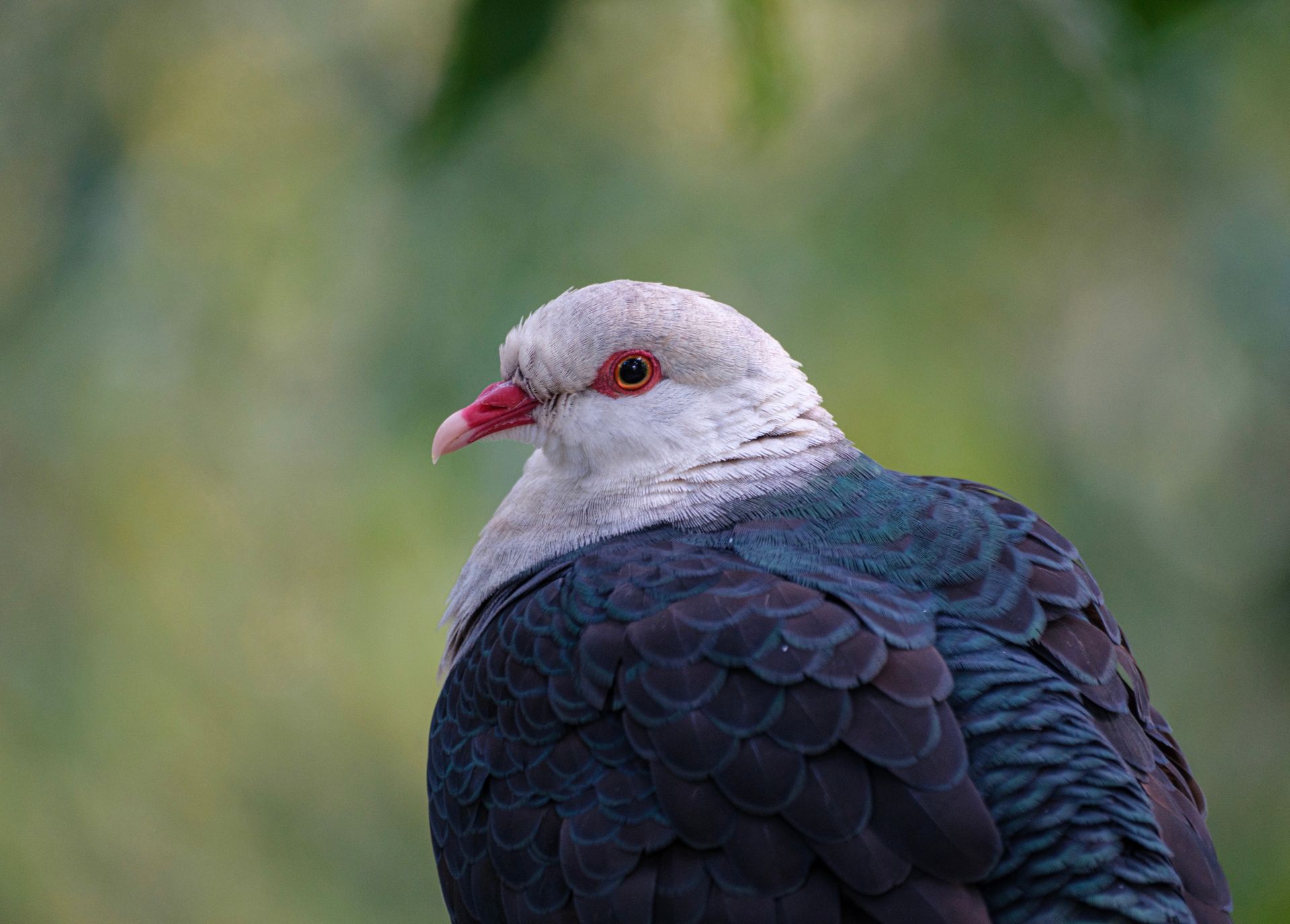
They have a distinctive appearance, with a white head and a gray body, featuring green feathers on the back side of the neck.
Adult birds are usually a dark gray color, sometimes almost black, and have a special patch on their neck that shines with green and white patterns in good light.
The white patch on their head, called the crown, can be bright white in males, while in most females it's a more grayish-white.
Young pigeons are a lighter gray-brown color and don't have the neck pattern or white eyes of the adults.
Their eyes are a striking white, and they have a red beak with a pale tip.
Their call is a loud, deep sound that sounds like coo-cura-coo or coo-croo.
Habitat and Distribution
The white-crowned pigeon is found in a variety of habitats, including low-lying coastal areas with mangrove forests.
It primarily lives and breeds in the Bahamas, Cuba, Jamaica, and Antigua, with smaller numbers breeding in Hispaniola, Puerto Rico, the Virgin Islands, the Cayman Islands, Anguilla, and other Caribbean islands.
In the United States, they are only found in the Florida Keys, the Everglades, and the southern tip of mainland Florida.
White-crowned pigeons usually live and nest in large groups, often in isolated mangrove islands that are flooded by tides, which helps protect them from predators like raccoons.
These islands provide a safe haven for the pigeons to breed and raise their young.
However, some pigeons have recently started nesting in busy city areas, like downtown Key West and Miami, Florida, possibly due to habitat loss from hurricanes or increased predation pressure in their historic nesting habitat.
They also require isolated mangrove islands with limited disturbance for breeding, but will travel inland to feed on fruits and seeds from a wide variety of plants.
Consider reading: White Crowned Sparrow
In Florida, they have historically nested on remote, tidally inundated mangrove islands in wildlife refuges, but recent observations have confirmed nesting on the southern tip of mainland Florida.
Here are some of the specific locations where white-crowned pigeons have been spotted:
- The Bahamas
- Cuba
- Jamaica
- Antigua
- Hispaniola (Dominican Republic and Haiti)
- Puerto Rico
- The Virgin Islands
- The Cayman Islands
- Anguilla
- The Florida Keys
- The Everglades
- The southern tip of mainland Florida
Threats and Conservation
The white-crowned pigeon is a threatened species due to loss of habitat. Its two distinct habitats, one for nesting and one for feeding, are being destroyed due to deforestation and habitat degradation.
The main threat to its nesting habitat is the clear-cutting of coastal red mangroves for crops such as sugarcane. In Florida, the bird's feeding grounds are also being destroyed due to agriculture and deforestation.
The white-crowned pigeon is a very shy bird and will abandon its nest if it feels threatened. In Florida, it often eats the fruit of poisonwood, a plant that can cause severe human dermatitis and is often removed.
White-crowned pigeons are also hunted, often illegally, throughout their range. Although hunting regulations have changed in the Bahamas, illegal hunting is still a problem for these birds.
Other dangers to these pigeons include collisions with man-made objects, such as buildings or power lines, and the use of pesticides.
Here are some of the major threats to the white-crowned pigeon:
- Loss of habitat due to deforestation and habitat degradation
- Hunting, often illegally
- Collisions with man-made objects
- Use of pesticides
The white-crowned pigeon's situation highlights an important principle of conservation biology: it's not always necessary to kill the last pair of a species to force it to extinction.
Conservation and Management
The white-crowned pigeon is protected by the U.S. Migratory Bird Treaty Act.
As a State-designated Threatened species by Florida's Endangered and Threatened Species Rule, this bird is given some level of protection.
The white-crowned pigeon is listed as a near threatened species by the IUCN.
A significant portion of Puerto Rico's land, 16.8 percent or 343 km2, is protected habitat for the white-crowned pigeon.
In Florida, the white-crowned pigeon is threatened by the slaughter of nesting birds on its Caribbean breeding grounds.
The current population trend of the white-crowned pigeon is described as decreasing.
Description and Breeding
The white-crowned pigeon is a fruit and seed-eating species of bird in the dove and pigeon family Columbidae, primarily found in the Caribbean.
It's a social bird that generally nests in colonies, building a flimsy twig nest in mangroves or dry scrub, but also in trees around towns.
Both sexes share the building of the nest and egg incubation, with the male doing most of the incubation during the day and the female incubating mostly at night.
Breeding occurs primarily from March to August, but can sometimes extend as late as September, and the breeding season may vary with location on the island.
Intriguing read: Pigeon Fever
Description
The white-crowned pigeon is a fruit and seed-eating species of bird in the dove and pigeon family Columbidae.
It's primarily found in the Caribbean, where its unique characteristics allow it to thrive in its native habitat.
Breeding Habits
The White-crowned Pigeon is a social bird that breeds in colonies.
They build flimsy twig nests, often in mangroves or dry scrub, and sometimes even in trees around towns.
Both males and females share the building of the nest and egg incubation, with the male taking on most of the incubation duties during the day.
The female, on the other hand, incubates mostly at night.
Breeding season for the White-crowned Pigeon can vary depending on the location on the island, but it typically occurs from March to August.
However, breeding activity has been observed throughout the year, with a peak in May and mostly taking place within the subtropical moist forest life zone.
A significant portion of breeding activity takes place in the lowlands within the subtropical moist forest life zone, accounting for 67 percent of the hexagons.
They also breed in the subtropical dry forest life zone, but to a lesser extent, making up 27 percent of the hexagons.
Patagioenas Leucocephala
The White-crowned Pigeon, specifically Patagioenas leucocephala, is a large pigeon with a length of 13 inches.
This species has a distinctive appearance, with a dark gray overall color and a white crown. Its bill is a dark pinkish color with a paler tip, and its back of neck has an iridescent greenish color with a scaled appearance. Its legs and feet are also pinkish.
The White-crowned Pigeon's wingspan is 24 inches, making it a notable sight in the air.
In terms of its habits, this pigeon species is non-resident in South Dakota, which means it doesn't stay there year-round.
The White-crowned Pigeon typically nests in coastal areas of southern Florida during the summer, and often relocates to inland areas to feed when its preferred food sources, such as fruits and berries, become less available.
Frequently Asked Questions
Are white crowned pigeons rare?
White crowned pigeons are considered vulnerable, with a declining population due to habitat loss and overhunting. Their numbers are estimated to be around 7,500 pairs in Florida.
Can you keep a crowned pigeon as a pet?
Yes, crowned pigeons can make great pets, but they require a lot of space and attention. A minimum aviary size of 20x10x8 feet is recommended for a single pair.
Featured Images: pexels.com