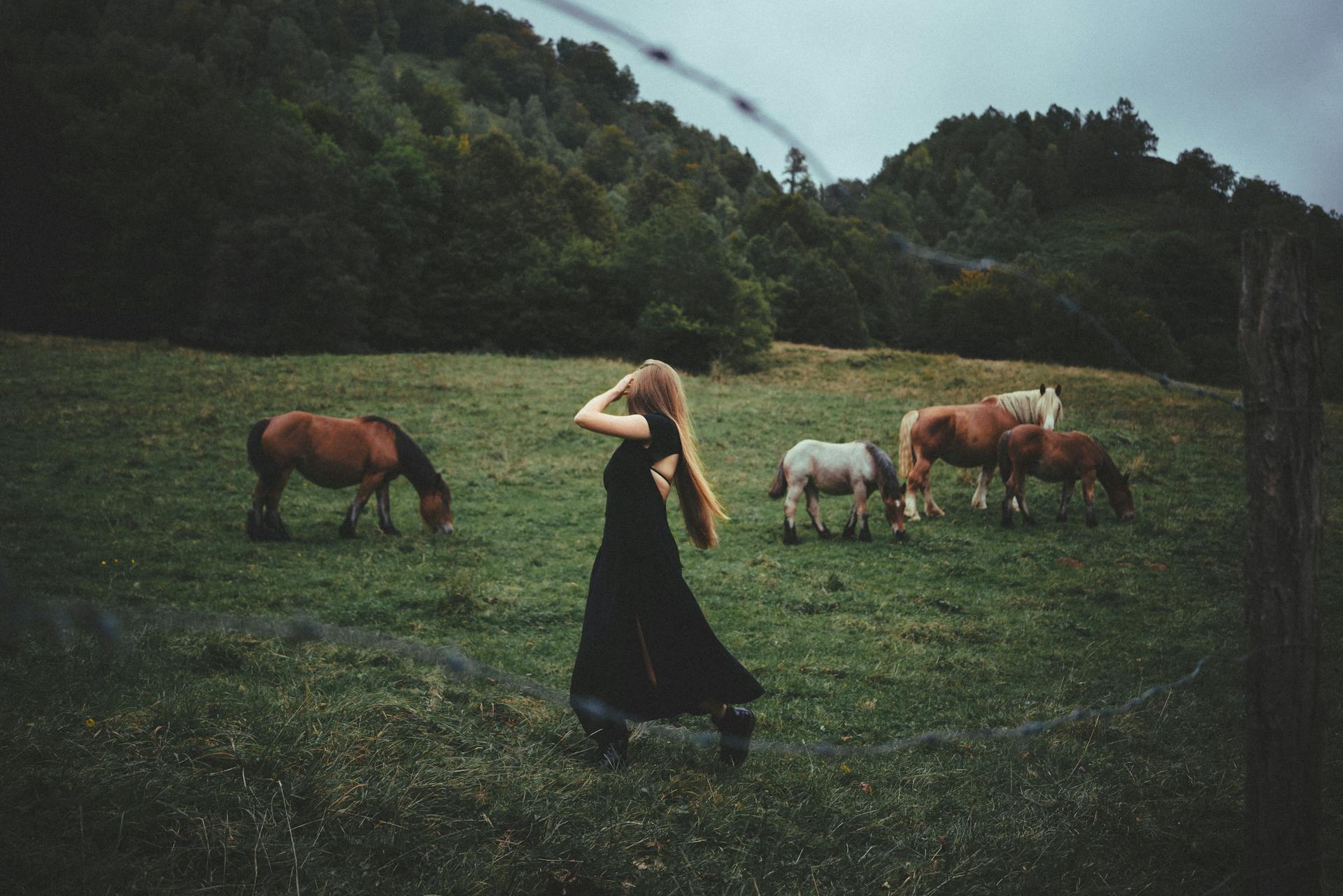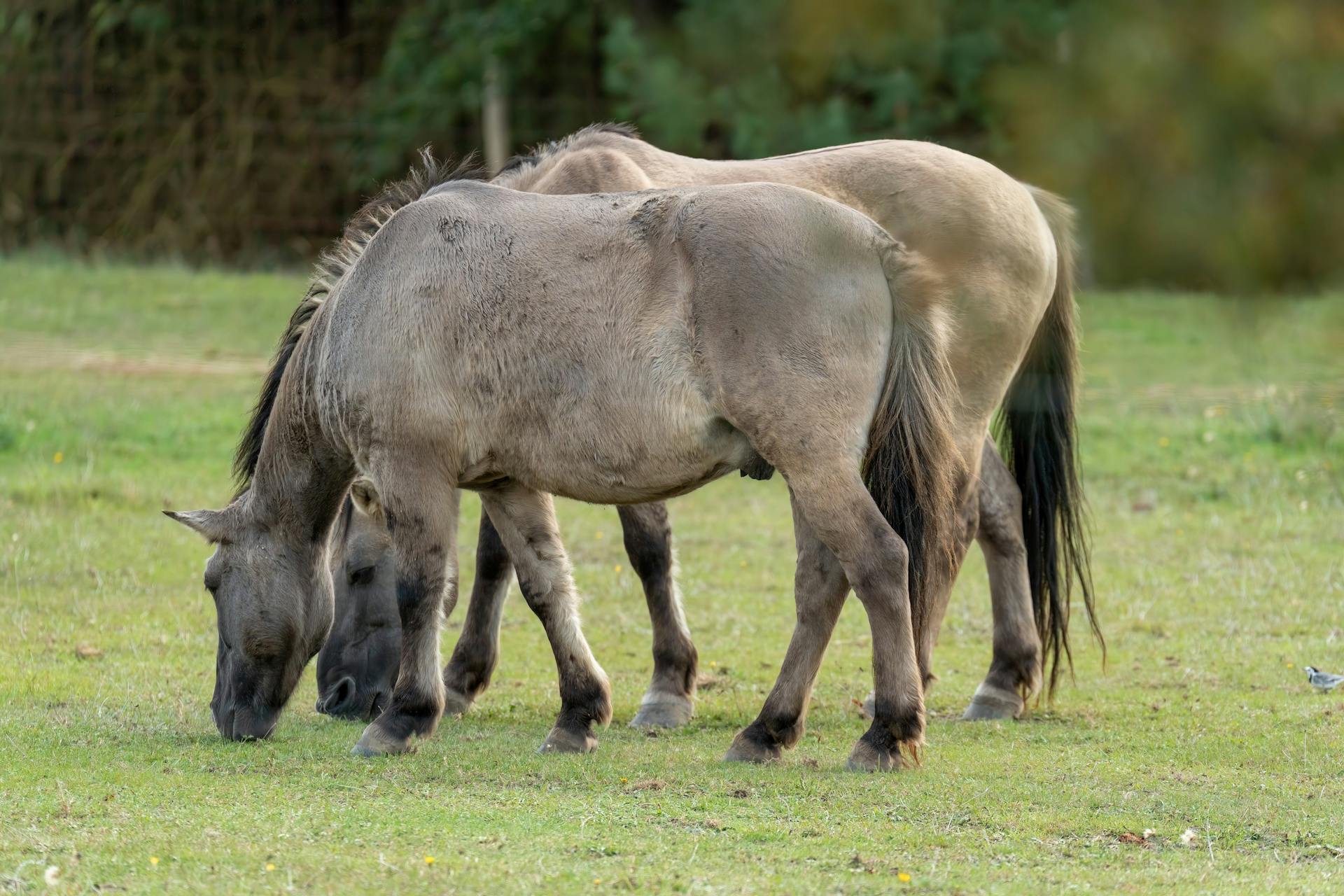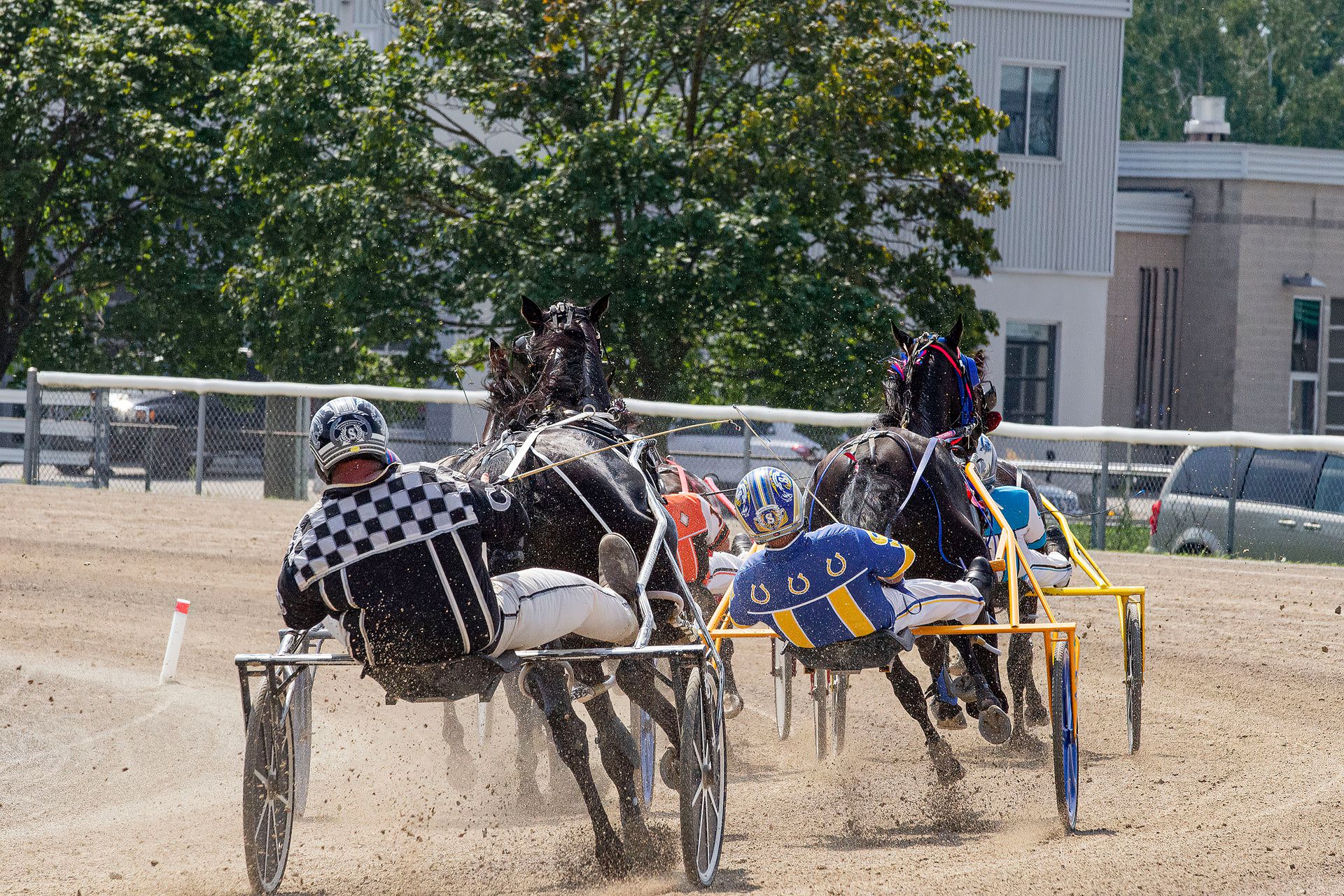
Morgan horses have been a popular choice for equestrian disciplines due to their versatility and athletic ability. They excel in a variety of activities, including driving, jumping, and trail riding.
Morgan horses are often used for driving due to their intelligence, willingness to please, and strong work ethic. They can be trained to pull a carriage or sled with ease.
Morgan horses are also well-suited for jumping due to their agility, balance, and athleticism. They can navigate complex courses with ease and precision.
One of the most popular equestrian disciplines for Morgan horses is trail riding. Their strong endurance and sure-footedness make them an ideal choice for long-distance riding.
A unique perspective: Horse Driving
What Morgan Horses Are Used For
Morgan horses are used for a variety of purposes, including riding, driving, and therapy work. They excel in disciplines such as dressage, jumping, and western riding.
Their strength and stamina make them ideal for endurance riding and carriage driving. They're also used in therapeutic riding programs due to their calm nature and intelligence.
Morgans have a history as cavalry mounts and coach horses, and today they continue to shine in harness racing and as show horses. Their adaptability means they can transition between different roles with ease.
Whether as a family pet or a competitive athlete, Morgan horses consistently demonstrate their versatility and charm. They're known for their distinctive traits and versatile abilities.
Morgan horses are used for pleasure riding, trail riding, and competitive showing. They compete in dressage, jumping, and western riding events, as well as carriage driving competitions.
Some Morgans work on farms or ranches due to their strength and stamina. They're also used as therapy horses, due to their gentle temperament and ability to work with children or individuals with special needs.
Here are some benefits of having a Morgan horse as a companion:
- Unwavering loyalty and devotion
- A calming presence in stressful situations
- Opportunities for bonding and forming a deep emotional connection
- Suitable for riders of all experience levels
- Can participate in various equine activities and competitions
Breed Characteristics and Care
Morgan horses are known for their versatility, strength, and intelligence. They're compact yet powerful equines.
These traits make them popular for various disciplines and activities. They're naturally athletic and thrive on physical activity.
Providing them with high-quality hay, grains, and supplements helps balance their nutritional intake. Regular exercise also keeps them physically fit and mentally stimulated.
Training and handling Morgans requires patience and skill as they possess high intelligence levels that require constant stimulation. Pairing these traits with positive reinforcement can create an unbreakable bond between you and your horse.
Physical Traits
Morgan horses typically stand between 14.1 and 15.2 hands high.
Their broad forehead and well-arched neck make them a striking breed.
Their coat colours include bay, black, chestnut, and brown.
Morgan horses are sturdy and long-lived, often remaining active well into their twenties.
They are generally easy keepers, meaning they maintain good condition on less feed than some other breeds.
Caring for Your Pets
A healthy diet is crucial for your pet's well-being, and for Morgans, high-quality hay or pasture should be the primary source of roughage. This should be supplemented with feed as needed, depending on their activity level and individual needs.
Regular exercise is just as important, and Morgans are naturally athletic, thriving on physical activity like riding, lunging, or ground work. However, it's essential to gradually increase their workload over time to avoid injury.
Providing clean water at all times is vital, and incorporating mental stimulation into your pet's routine can help maintain their energy levels. This can include trail rides or introducing new obstacles during arena work sessions.
A balanced diet consisting mainly of hay or grass alongside some grain feed is essential for your Morgan's health. This will give them the additional nutrients they need to stay healthy and happy.
Training and Handling
Training a Morgan horse requires patience and consistency. They are intelligent and eager to please, making them excellent candidates for training in various equestrian disciplines.
Establishing trust between horse and handler is crucial. Morgans respond well to positive reinforcement techniques such as clicker training or rewards-based systems. Consistency is also key, establishing a routine that includes regular exercise and training sessions will help your horse learn faster and develop good habits.
For your interest: Gsd Guard Dog Training
Morgans have a natural athleticism that benefits from varied exercises such as jumping, trail riding, or dressage. By introducing different activities into their routine, you can challenge their minds while keeping them physically fit and engaged.
It's essential to remain patient during the training process since every horse learns at its own pace. Pushing too hard or moving too quickly through the levels may cause stress on both horse and handler.
Here are some tips to keep in mind when training your Morgan horse:
- Use positive reinforcement techniques such as clicker training or rewards-based systems.
- Establish a routine that includes regular exercise and training sessions.
- Introduce varied exercises such as jumping, trail riding, or dressage to challenge their minds and keep them physically fit.
- Remain patient and don't push too hard or move too quickly through the levels.
By following these tips and being consistent, you can develop a strong bond with your Morgan horse and help them reach their full potential.
Equestrian Activities
Morgan horses excel in both English and Western disciplines, making them ideal choices for a wide range of activities, from competitive sports to pleasure riding.
Their unique combination of power, agility, and temperament makes them well-suited for various events, including dressage, show jumping, western pleasure, cutting, and endurance riding.
Morgans are highly trainable and can be ridden in different styles, such as dressage, Western pleasure, driving, and even jumping, thanks to their strong and muscular build.
Their temperament is often described as intelligent, willing, and friendly, making them a joy to work with and creating a rewarding partnership with their owners.
Morgan horses can compete in various classes, including halter, pleasure, and equitation, where their elegance and presence shine through.
Their natural beauty and charisma often captivate the judges, making them stand out among other breeds.
Morgans are also known for their adaptability, which allows them to transition between different roles with ease, whether as a family pet or a competitive athlete.
In addition to their physical capabilities, Morgans have a strong desire to please their riders, making them well-suited for various equestrian disciplines.
Their exceptional athleticism and well-rounded abilities make them a popular choice for riders and show enthusiasts alike.
Morgans can excel in a variety of activities, including trail riding, where they can display their endurance on long rides through rugged terrain.
Their agility and willingness to please make them top contenders in any competition they enter into, whether it's participating in competitive events or working on a farm.
Morgans are also used in therapeutic riding programs, where their calm nature and intelligence make them well-suited for this important work.
Their versatility makes them valuable partners in endurance riding, where the qualities of soundness, determination, and resilience are highly sought after.
Morgans have proven themselves in endurance riding competitions, where their stamina, strong build, and endurance shine.
Their combination of strength and agility allows them to excel in show jumping and eventing competitions, making them a popular choice for riders who enjoy these disciplines.
Morgans are also well-suited for driving sports, such as combined driving, which involves multiple phases, including dressage, marathon events, and obstacle courses.
Their athletic ability and calm temperament make them well-suited for driving a carriage or harness, requiring not only physical strength but also mental focus and obedience from the horse.
History and Development
The Morgan horse breed has a rich history that dates back to the late 18th century in New England, Massachusetts.
Justin Morgan, a schoolteacher, owned a small but remarkable stallion named Figure, who possessed exceptional strength, endurance, and intelligence.
Figure's descendants became the foundation for the Morgan horse breed, establishing its reputation for versatility and stamina.
Morgan horses played a significant role in the development of the United States, serving as trusted companions and reliable workers in various industries.
Their reputation grew rapidly as they became popular for their ability to work on the farm, pull carriages, and excel in various equestrian disciplines.
Farmers relied on Morgan horses for their strength and agility, using them to plow fields, transport goods, and herd livestock.
Morgan horses also found favor with the military, with their intelligence, bravery, and adaptability making them valuable assets during times of war.
Figure, the foundation sire of the breed, sired numerous offspring that inherited his distinctive traits.
The Morgan horse breed has contributed to the development of other popular breeds, including the American Quarter Horse, the Tennessee Walking Horse, and the Saddlebred.
Explore further: Horse Breed
Care and Ownership
Caring for a Morgan horse is essential to ensure their longevity and well-being. Providing them with high-quality hay, grains, and supplements helps balance their nutritional intake.
Morgan horses are naturally athletic and thrive on physical activity, whether it be riding or other forms of training. They require regular exercise to stay physically fit and mentally stimulated.
A healthy diet for a Morgan horse should consist of high-quality hay or pasture as the primary source of roughage, with supplemental feed as needed depending on the horse's activity level and individual needs. Clean water should be provided at all times.
Regular veterinary check-ups are important to ensure that vaccinations are up-to-date while detecting early signs of illness or injury. Brushing their coat regularly helps distribute natural oils throughout the skin that prevent dryness or irritation.
Training and handling Morgans requires patience and skill as they possess high intelligence levels that require constant stimulation. Pairing these traits with positive reinforcement can create an unbreakable bond between you and your horse.
Incorporating mental stimulation into your Morgan's routine can help maintain their energy levels. This can include trail rides or introducing new obstacles during arena work sessions.
If this caught your attention, see: Training a Sheep Dog
Unique Traits and Abilities
The Morgan horse is known for its unique traits that make it a versatile and valuable breed.
Their intelligence is one of their most notable characteristics, making them easy to train and work with.
Aside from their physical attributes, the Morgan horse possesses a range of unique traits that contribute to their remarkable reputation.
Their strong work ethic and willingness to please make them a favorite among horse owners and riders.
They are known for their athletic ability and can excel in a variety of disciplines, from driving to jumping.
Their intelligence and trainability also make them a popular choice for therapeutic riding programs.
Featured Images: pexels.com