Whale conservation efforts are making a real difference. The Marine Mammal Protection Act of 1972 has been instrumental in protecting whales and their habitats.
Many organizations, such as the World Wildlife Fund and the Ocean Conservancy, are working together to reduce plastic pollution in our oceans. This is crucial because whales can get entangled in or ingest plastic debris, causing harm to their health.
By reducing plastic use and promoting sustainable fishing practices, we can help protect whale populations. For example, the Sea Shepherd Conservation Society has been successful in reducing bycatch, or the catching of non-target species, by working with fishermen.
The impact of these conservation efforts is already being seen, with some whale populations starting to recover.
Whale Conservation Status
The Atlantic population of gray whales was made extinct around the turn of the eighteenth century, likely due to whaling.
At least five of the 13 great whales are listed as endangered due to whaling and other threats.
Curious to learn more? Check out: Whaling in the Faroe Islands Are They Endangered
Some whale populations are recovering, such as southern right whales, humpbacks in many areas, gray whales in the eastern North Pacific, and blue whales in both the eastern North Pacific and central North Atlantic.
The common minke whale has never been considered endangered, unlike many other whale species.
The North Atlantic states have argued that fin whales should not be listed as endangered anymore, citing studies showing that more than 40,000 individuals are present in the North Atlantic Ocean around Greenland, Iceland, and Norway.
Around 370 North Atlantic right whales survive, making them one of the world's most endangered whales.
Threats to Whales
Whales are affected by environmental pollution, including oil, sewage, litter, chemicals, and plastics. Some whales are also under threat of starvation.
Fishing gear entanglements are a major threat to whales, accounting for 82% of documented North Atlantic right whale population mortalities. In 2021, there was an increase in whale entanglements, with 70 occurrences recorded in the U.S.
It's recommended that members of the public not attempt to disentangle entangled whales, but rather report entanglements to a local entanglement response network.
Whaling
Whaling is a highly debated topic, with arguments on both sides of the issue. Commercial whaling has been banned since 1986, but some countries continue to hunt whales for their meat, oil, and blubber.
The hunting of whales on an industrial scale began in the 17th century and continued into the 20th century, leading to many whales becoming endangered species. This has led to concerns about the ethics of whaling.
Anti-whaling groups argue that the method of hunting whales is cruel, particularly if carried out by inexperienced gunners, because a whale can take several minutes or even hours to die. Explosive harpoons are often used, which can cause significant suffering.
Pro-whaling nations argue that they should not be expected to adhere to animal-welfare standards that anti-whaling countries do not themselves follow consistently. They point out that some anti-whaling countries allow the commercial shooting of deer without adhering to slaughterhouse standards.
Recommended read: Why Killer Whales Should Not Be Kept in Captivity
In fact, fox hunting, in which foxes are mauled by dogs, is legal in many anti-whaling countries, including Ireland, the United States, Portugal, Italy, and France. This raises questions about the cultural bias behind the anti-whaling movement.
The Norwegian government has responded to criticisms about the humane treatment of whales by saying that they work with the International Whaling Commission to develop the most humane methods. However, official figures suggest that 20% of Norwegian-captured whales and 60% of Japanese-captured whales fail to die as soon as they have been harpooned.
Pro-whalers also argue that the free-roaming lifestyle of whales followed by a quick death is less cruel than the long-term suffering of factory-farmed animals. They point out that the average time taken for a whale to die after being shot in the blowhole is similar to that of animals killed by big game hunters on safari.
Related reading: People for the Ethical Treatment of Animals
Environmental Pollution
Environmental Pollution is a major threat to whales.
Oil spills can have devastating effects on whales, causing them to become entangled in oil slicks or ingest toxic substances.
Some whales are also under threat of starvation, likely due to changes in their food supply caused by environmental pollution.
Whales are also affected by litter, chemicals, and plastics in the ocean, which can cause them physical harm or get trapped in their bodies.
Fishing Gear Entanglements
Fishing gear entanglements are a major threat to whales, accounting for 82% of documented North Atlantic right whale population mortalities.
Fishing gear entanglements currently account for 82% of documented North Atlantic right whale population mortalities, while the remaining 18% are caused by ship strikes.
In 2021, there was an increase in whale entanglements, with 70 occurrences recorded in the U.S.
Removing ropes from fixed fishing gear, particularly for the trap/pot fishery, is one of the most effective approaches to addressing the entanglement problem.
In most cases, it's not recommended that members of the public attempt to disentangle entangled whales, but rather report entanglements to a local entanglement response network.
Conservation Efforts
Conservation efforts are crucial to protect whales and their habitats. The International Whaling Commission (IWC) was created in 1949 to regulate whaling and conserve whale stocks.
The IWC adopted a moratorium on commercial whaling in 1982, and by 1994, they had created the Southern Ocean Whale Sanctuary in Antarctica to protect whales and their breeding grounds. This sanctuary is a significant step towards conservation.
Organizations such as the American Cetacean Society, Ocean Alliance, and the World Wildlife Fund have been actively supporting conservation efforts since the 1970s. These groups have raised awareness about the plight of whales and have worked to protect them from over-exploitation and extinction.
Sea Shepherd Conservation Society has implemented various initiatives to protect whales, including intercepting illegal whaling, safeguarding food sources, and establishing marine protected areas. Their efforts have saved thousands of whales from being caught in whaling quotas.
Suggestion: Wildlife Conservation Society
Conservation Groups
The whaling industry was initially supported by governments of whaling nations, then gradually regulated from 1946 with the International Convention for the Regulation of Whaling, and in 1949 with the creation of the International Whaling Commission (IWC), to conserve whale stocks.
Conservation groups like the American Cetacean Society, Ocean Alliance, and the Whale Center, started the organized and dedicated protection and conservation of whales in 1971. Since then, many organizations and governments have joined the campaign.
The World Wildlife Fund, National Wildlife Federation, Humane Society of the United States, Sierra Club, and National Audubon Society have all joined the campaign to protect whales.
In 1975, Greenpeace started its anti-whaling campaign, and the Sea Shepherd Conservation Society was created in 1977 by Paul Watson to try a different approach using direct action tactics and unconventional methods on the open sea.
Sea Shepherd's Neptune's Navy aims to intervene and prevent whaling activities and other forms of poaching to protect marine life.
The Atlantic Whale and Dolphin Foundation (AWDF) has been operating for 23 years in the protection of cetaceans and raising awareness of the dangers of captivity for whales and dolphins.
The AWDF established the Atlantic Ocean Cetacean Network (AOCN) to bring together individuals and organisations from across the Atlantic Ocean region, working toward the conservation and protection of whales and dolphins.
A unique perspective: National Amphibian Conservation Center
Disentanglement Training
Disentanglement Training is a crucial aspect of conservation efforts. It requires highly trained teams, specialized equipment and supplies, and strong coordination to ensure safety and efficiency for both the whale and the rescue team.
Responders need to be prepared and ready to respond at all times. This is why organizations work in partnership with other groups to support whale disentanglement trainings.
The goal of these trainings is to coordinate the response community, facilitate access to vessels, and provide specialized equipment and supplies. They also test new approaches and technologies to improve future response missions.
By working together and staying prepared, teams can increase their chances of successfully disentangling a whale and reducing the risk of harm to both the animal and the responders.
Innovations and Research
Modifying fishing gear is a crucial step in reducing the risk of large whale entanglement. One such innovation is pop-up or ropeless gear, which would eliminate vertical fishing lines in the water column.
The Foundation is working with fishermen to test different gear innovations in sanctuary areas and areas of concern. This collaborative approach allows for scientifically sound research and the development of innovative solutions.
Collaborative research efforts with scientific communities are also crucial for whale conservation. Sea Shepherd's research expeditions in vital habitats like the Revillagigedo Archipelago provide invaluable data on humpback whale behavior, health, and migration patterns.
Collaborative Research Efforts
Collaborative research is key to understanding and protecting our oceans. Sea Shepherd collaborates with scientific communities to conduct research expeditions, particularly in vital habitats like the Revillagigedo Archipelago.
These studies provide invaluable data on humpback whale behavior, health, and migration patterns. This data informs effective conservation strategies.
Innovative solutions require testing and refinement. In-water testing of gear innovations like pop-up or ropeless gear can provide valuable information and design feedback.
Fishing gear modifications can significantly decrease the likelihood of large whale entanglement. By working with fishermen to test different gear innovations, we can foster cooperative and scientifically sound research.
Great Conveyor Belt
The Great Conveyor Belt is a natural phenomenon that plays a crucial role in the health of our oceans. Migrating whales transport and release thousands of tonnes of nutrients.
These nutrients are vital for phytoplankton, krill, and fish to thrive. Without them, our oceans wouldn't be able to support the diverse array of marine life we see today.
Whales are incredibly efficient at this process, with some species migrating thousands of miles each year to reach their feeding grounds. This is a testament to their importance in maintaining the delicate balance of our marine ecosystems.
Specific Whale Species
Around 370 North Atlantic right whales survive in the Gulf of Maine, USA.
The Southern Resident orcas in the Pacific Northwest, USA, rely on wild salmon as their main food source.
Humpback whales return each spring to the Gulf of Maine, USA, to feed.
Our Adopt an Orca program supports the longest-running orca research project in the world, Orcalab.
Humpback Whales, Gulf of Maine
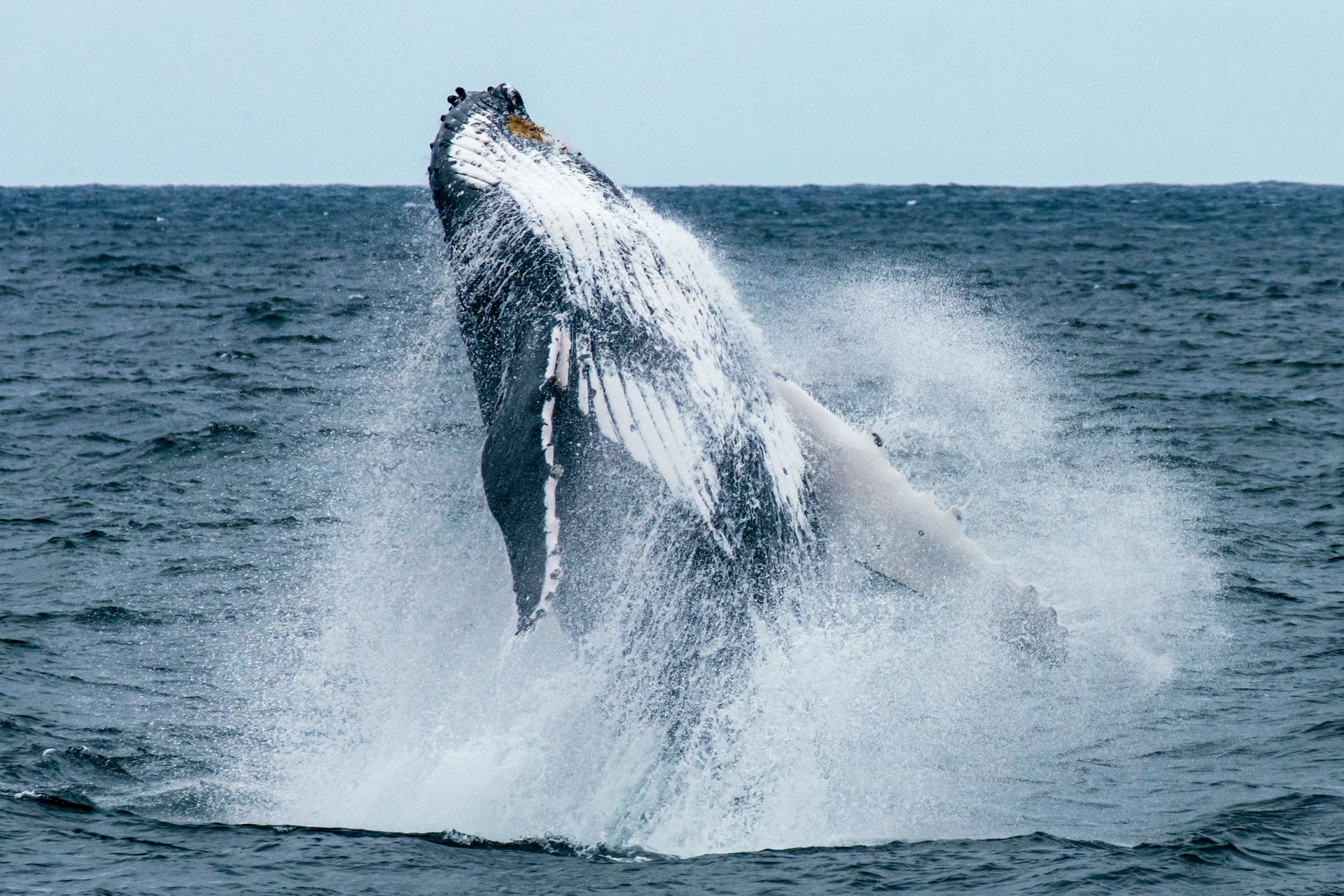
Humpback whales in the Gulf of Maine are a sight to behold, with around 370 individuals surviving in the area. They're one of the most endangered whales in the world.
These incredible creatures return each spring to feed in the Gulf of Maine, making it an important stop on their annual migration.
Their feeding habits primarily consist of krill, which helps regulate the balance of marine ecosystems.
Southern Resident Orcas, Pacific Northwest
The Southern Resident orcas are an endangered group of orcas found in the Pacific Northwest, USA.
Their main food source is wild salmon, and efforts are being made to restore habitat for this crucial food source.
Living in this region can be breathtaking, but it's essential to be aware of the challenges these orcas face.
The Southern Resident orcas are a vital part of their ecosystem, and by supporting habitat restoration, we can help ensure their survival.
Their diet consists mainly of wild salmon, which is a key component of their habitat restoration efforts.
By taking action to protect their habitat, we can help these magnificent creatures thrive in their natural environment.
Expand your knowledge: Killer Whales Captivity vs Wild
Killer
Killer whales are massive, weighing as much as 11 tons.
They can grow up to 32 feet in length, making them the largest oceanic dolphins.
The Southern Resident population of killer whales is declining significantly, with only 73 animals remaining.
These whales are a top marine predator, playing a crucial role in maintaining the balance of their ecosystems.
Their size and strength allow them to hunt a wide variety of prey in the ocean.
Finless Porpoises, Hong Kong
Finless Porpoises, Hong Kong are a special species that researchers are working with local fishermen to learn more about.
These porpoises have been spotted in Hong Kong waters.
Researchers are collaborating with fishermen to gain a better understanding of their behavior and habitat.
This unique partnership is helping scientists to learn more about the Indo-Pacific finless porpoises.
Atlantic Humpback Dolphins - Senegal
The Atlantic humpback dolphin is a critically endangered species found in the waters off Senegal, West Africa. WDC is working with local conservationists to help protect these amazing creatures.
These dolphins are in urgent need of conservation efforts, which is why organizations like WDC are stepping in to make a difference.
Risso's Dolphins UK
Risso's dolphins live in Scotland, where conservation efforts are underway to protect their habitat.
WDC's research has led to a proposal to create a marine protected area in Scotland where these dolphins reside, highlighting the importance of preserving their environment.
Russia Orca Project
The Russia Orca Project is a fascinating initiative that's shedding light on these incredible creatures. Russian researchers are studying orcas in Far East Russia, which is a significant step in understanding their behavior and habits.
These orcas are still a target for marine parks, highlighting the need for continued conservation efforts.
Adopt
Adopting a whale is an amazing way to support their conservation. You can follow the lives of these incredible creatures and stay up-to-date on their well-being.
The Killer Whale Conservation Program has a unique approach to conservation, focusing on strategic partnerships and grant funding to address key needs. By adopting a whale, you'll be contributing to this effort.
One of the program's main goals is to increase prey availability for killer whales. This involves projects that improve the health of salmon runs, which are a crucial food source for these whales.
Here are some specific ways your adoption will make a difference:
By adopting a whale, you'll be supporting these efforts and helping to make a difference in the lives of these incredible creatures.
Frequently Asked Questions
What is the best Save the whale organization?
For effective whale conservation, consider supporting organizations like the Sea Shepherd Conservation Society and the Oceanic Preservation Society, both known for their direct action and documentary efforts to protect marine life.
Featured Images: pexels.com