Tortoiseshell cats are known for their unique and beautiful coat patterns, which can vary in intensity and distribution. They can have a mix of orange, black, and white colors.
One of the most distinctive features of tortoiseshell cats is their predominantly female sex, with only a small percentage of males displaying the same coat pattern.
Tortoiseshell cats can have a variety of markings, including swirling patterns, blotches, and even stripes.
Types of Tortoiseshell Cats
Tortoiseshell cats come in a variety of unique patterns, but one of the rarest is the chimera tortie, where two embryos merge in utero to form one animal. This results in a cat with one color on one side of her body and a different color on the other side.
A well-known example of this is Venus the Two Face Cat. The unique genetic combination behind their signature fur also makes tortoiseshell coats occur nearly exclusively in female cats.
Male tortoiseshell cats are extremely rare, and when they do occur, these males are typically sterile. The Japanese refer to tortoiseshell cats as “mi-ke”, which translates to “triple fur”.
You might enjoy: Types of Cat Hair
Calico
Calico cats are a type of tortoiseshell cat that can be easily confused with torties, but they have a distinct difference. Calico cats typically exhibit tri-color fur of white, black, and red/orange.
One of the key differences between calico and tortoiseshell cats is the presence of white fur. If a cat has white in their fur pattern, they are more likely to be a calico than a tortie.
Calico cats usually have larger patches of color contrasted with white fur, which sets them apart from torties. Each calico cat's fur pattern is unique, just like a tortie's.
Here's a quick breakdown of the colors you might see in a calico cat's fur:
If you're still unsure whether a cat is a calico or tortie, just remember that calicos have white in their fur, while torties do not.
Chimera
Chimera torties are incredibly rare, and they're formed when two embryos merge in utero to create one animal. This unique phenomenon results in a cat with one color on one side of her body and a different color on the other side.
One famous example of a chimera tortoiseshell cat is Venus the Two Face Cat.
Readers also liked: Cat Personality Types by Color
What Kind of Personality?
Torties are known for their bold and bossy behaviors. They're not afraid to speak their minds and demand attention on their terms.
Some people describe them as sassy, fierce, independent, and strong-willed. Even Jackson Galaxy comments that torties have distinct personality traits and tend to be more sensitive to their surroundings.
Torties are not afraid to let you know when they're not happy with their living situation. If their litter box isn't clean, they'll do their business next to it until you get a self-cleaning litter box.
Male torties, in particular, are believed to have a stronger, fiercely independent personality. They're more likely to hiss, bite, chase, and scratch humans.
Here are some key personality traits associated with torties:
- Sassy
- Fierce
- Independent
- Strong-willed
While some studies suggest a link between coat pattern and attitude, the verdict is still out on whether "tortitude" actually exists.
Rarity and Characteristics
Torbie cats are the rarest of all the types of tortoiseshell cats, sharing looks with Tortoiseshell and Tabby cats.
They're often referred to as Reverse Torties or patched tabbies due to their unique tabby stripes and Tortie markings.
Only about 1 in every 3000 torties is a male, making them amazingly rare - around 0.0003%!
Discover more: All about Tabby Cats
Diluted
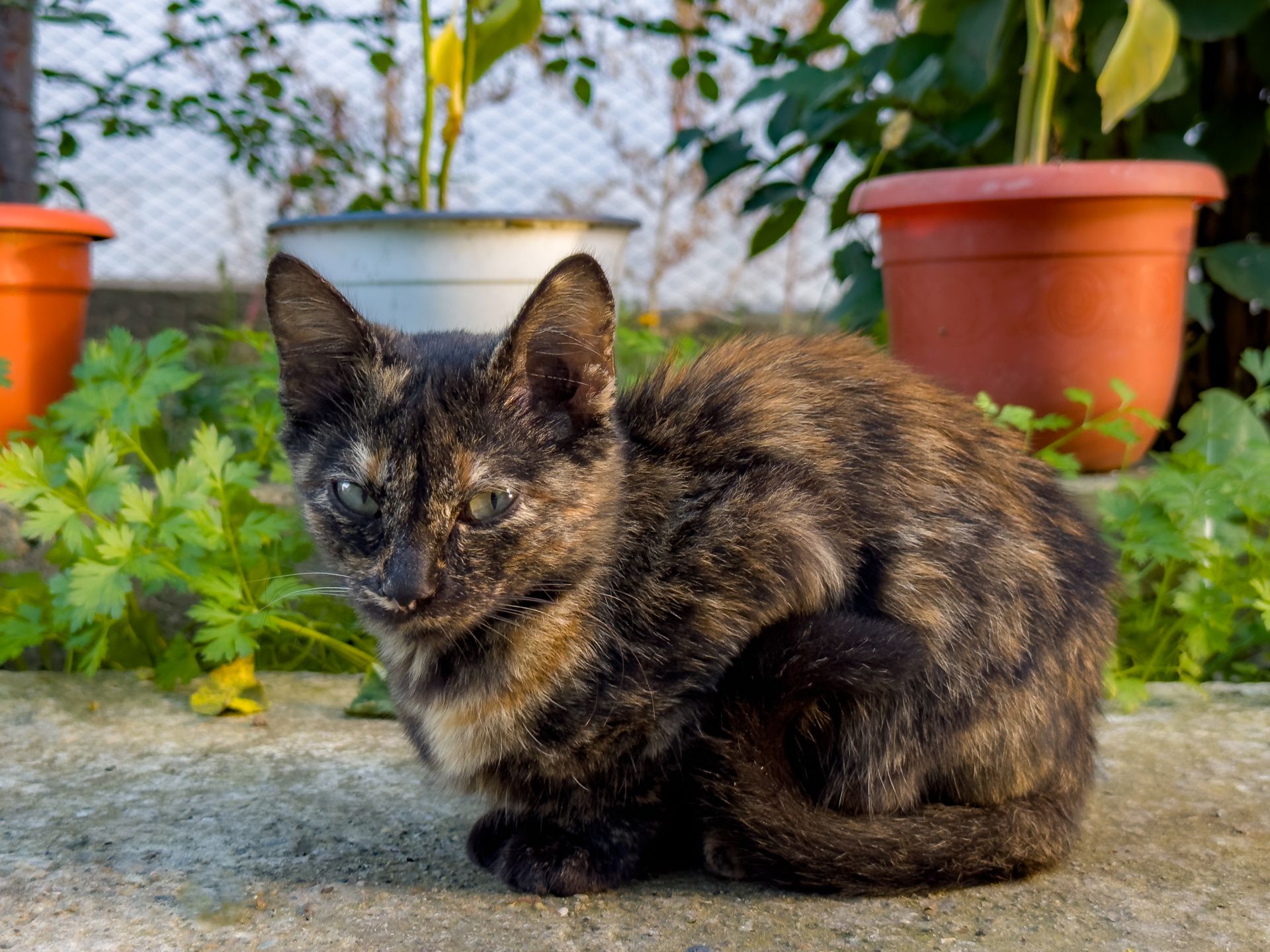
Diluted cats are a result of recessive genes that soften their fur colors. These cats have lighter, pastel-like colors such as cream, lilac, or cinnamon.
Dilute tortoiseshell cats are a prime example of this, with their fur colors appearing more muted than the classic tortoiseshell pattern.
Check this out: Types of Siamese Cat Colors
Almost All Are
Almost all tortie cats are female, with a staggering 99.9% of them being female. This is because the chromosome linked to coloring in cats is the X sex chromosome, giving females two sets of genetic information that can determine their coat color.
Male tortie cats are extremely rare, occurring in only 1 out of 3,000 cases. This is due to the fact that males have one X chromosome and one Y chromosome, limiting their coat color options.
Male tortie cats face significant health problems and are always sterile, making it essential to get your cats neutered to prevent unwanted litters. Even in rare cases, a male tortie cat might not be sterile if he is born a chimera tortie.
The rarity of male tortie cats makes them a true marvel, with only 0.0003% of torties being male. This makes it even more unlikely to come across a fertile male tortie cat.
Breed and Markings
Tortoiseshell cats aren't a specific breed, but rather a color pattern that can appear in various cat breeds.
This distinctive pattern features a mix of black, orange, and sometimes white fur, resembling the shell of a tortoise. The exact distribution of colors is unique to each cat.
Tortoiseshell cats are often female due to the genetic mechanisms that determine their coloration. In fact, the majority of tortoiseshell cats are female.
Tortoiseshell cats are known for their strong, independent personalities, sometimes referred to as "tortitude."
See what others are reading: Types of Cat Fur Patterns
Specific Breed?
Tortoiseshell cats are not a specific breed, but rather a color pattern that can appear in various cat breeds.
The distinctive tortie pattern features a mix of black, orange, and sometimes white fur, resembling the shell of a tortoise.
The exact distribution of colors is unique to each cat, making every tortoiseshell cat one-of-a-kind.
The majority of tortoiseshell cats are female due to the genetic mechanisms that determine their coloration.
Tortoiseshell cats are often described as having strong, independent personalities, sometimes referred to as "tortitude."
Dog Markings
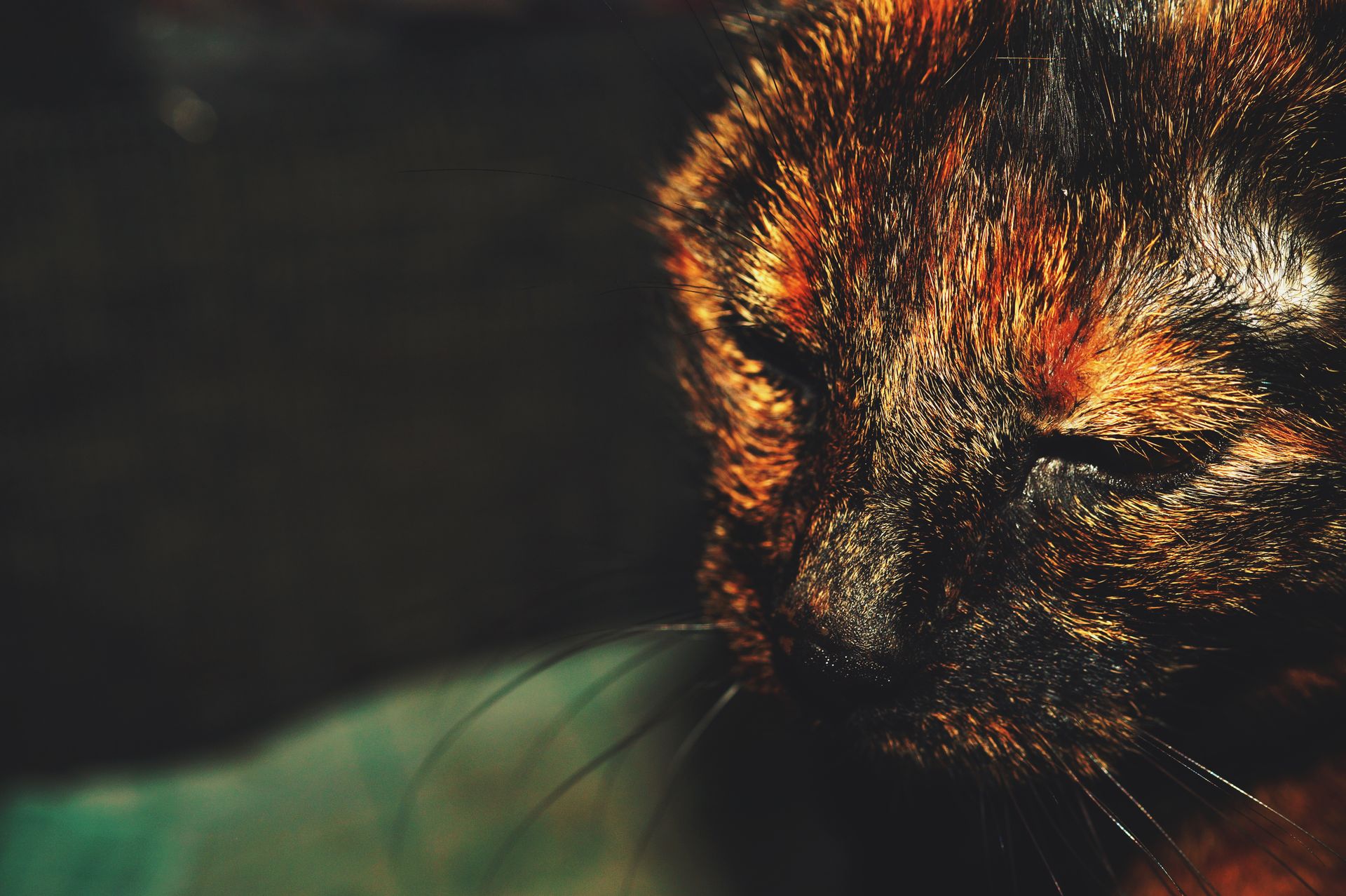
Dog Markings are a bit of a mystery, but I've got some fun facts to share with you.
The truth is, there's not much information about dog markings in our article, but we can look at some dog-like breeds that have tortoiseshell markings, like the Cornish Rex, which is actually a cat breed!
Some breeds that have tortoiseshell markings include the American Shorthair, British Shorthair, and Persian Cat.
These breeds are all known for their unique coat patterns, but it's worth noting that tortoiseshell markings are actually more common in cats than dogs.
Here's a list of some cat breeds that have tortoiseshell markings:
- American Shorthair
- British Shorthair
- Cornish Rex
- Persian Cat
- Maine Coon
- Japanese Bobtail
How to Tell if Your Server is
A complete tortie server will only have two colors, a shade of red and a shade of black, with very little or no white patches.
The colors on a tortoiseshell server will split down the middle, with one half black and the other red, creating a split face.
Suggestion: Types of Ragdoll Cat Colors
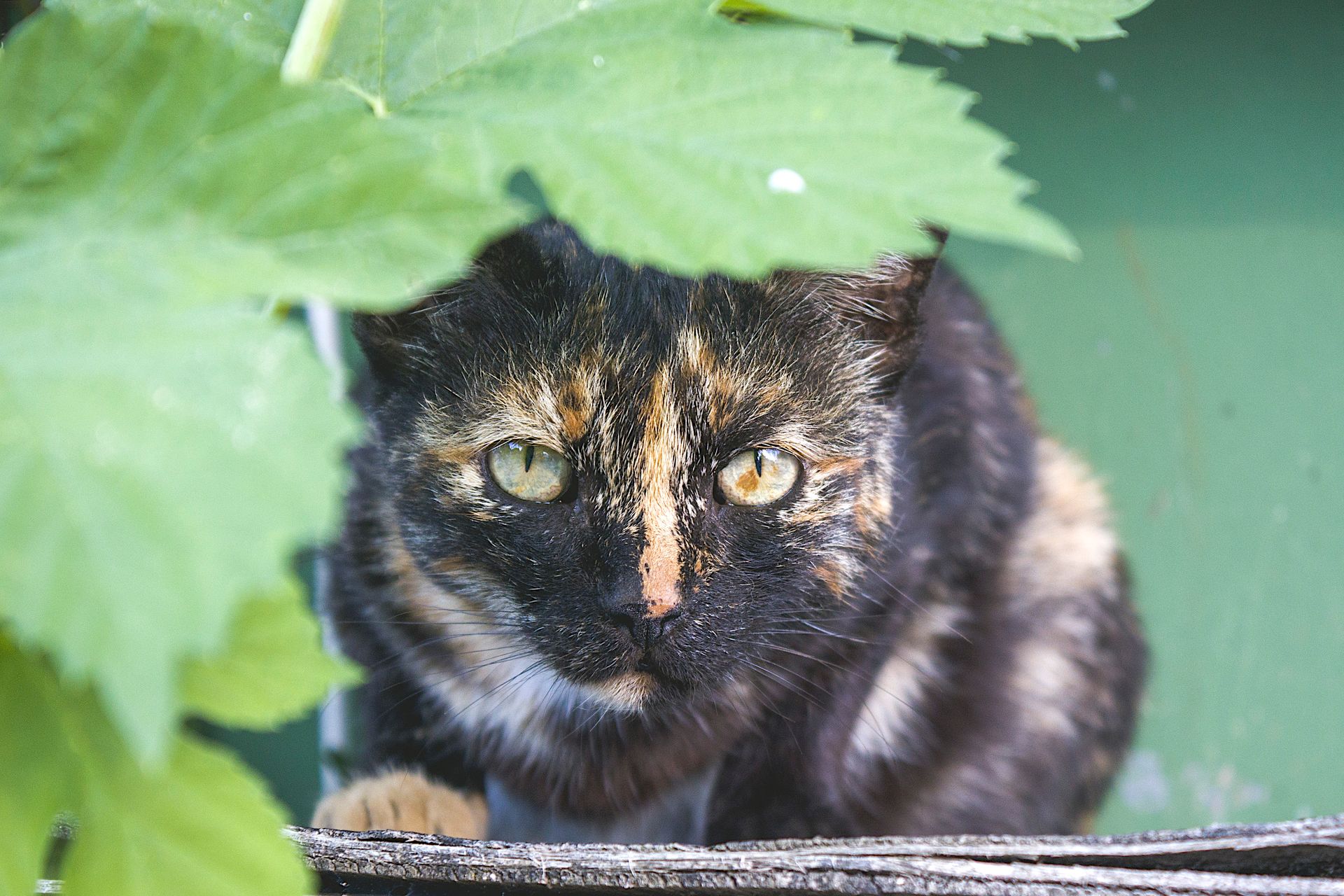
Asymmetry is key, with the colors and patterns not perfectly aligned, creating an interesting and unique look.
The darker colors will gather at the outer extremities, like the face, ears, feet, and tail, creating a point pattern.
If your server has the tortoiseshell pattern but with white patches, it could be considered a tortico, especially if the white patches are small and the majority of the server is black and red.
Tortoiseshell servers can also exhibit the tabby pattern as the "black" in their coat, combining the beautiful tortoiseshell colors with distinct tabby stripes.
Here's a quick guide to help you identify your server's coat pattern:
Frequently Asked Questions
What is the rarest tortie cat?
The rarest tortie cat is the male tortoiseshell, occurring in only about 1 in every 3000 torties, making it a truly exceptional find.
Why are tortie cats so special?
Tortie cats are special due to their unique coat patterns and vibrant personalities. Their distinctive traits are linked to genetics, specifically the genes on the X chromosome
Are tortoise-colored cats rare?
Male tortoiseshell cats are rare, but females are relatively common. If you're interested in adopting one, consider contacting your local shelter or rescue for assistance.
What breed is a tortoise color cat?
Tortoiseshell cats are not a specific breed, but rather a coat color pattern. They are often referred to as 'torties' and have a unique appearance and personality
Why are tortoise shell colored cats almost always female?
Tortoiseshell cats are almost always female because they have two X chromosomes, which carry the genes for the distinctive coloring. Male tortoiseshell cats are extremely rare due to the need for a Y chromosome, making their genetics a fascinating exception
Featured Images: pexels.com