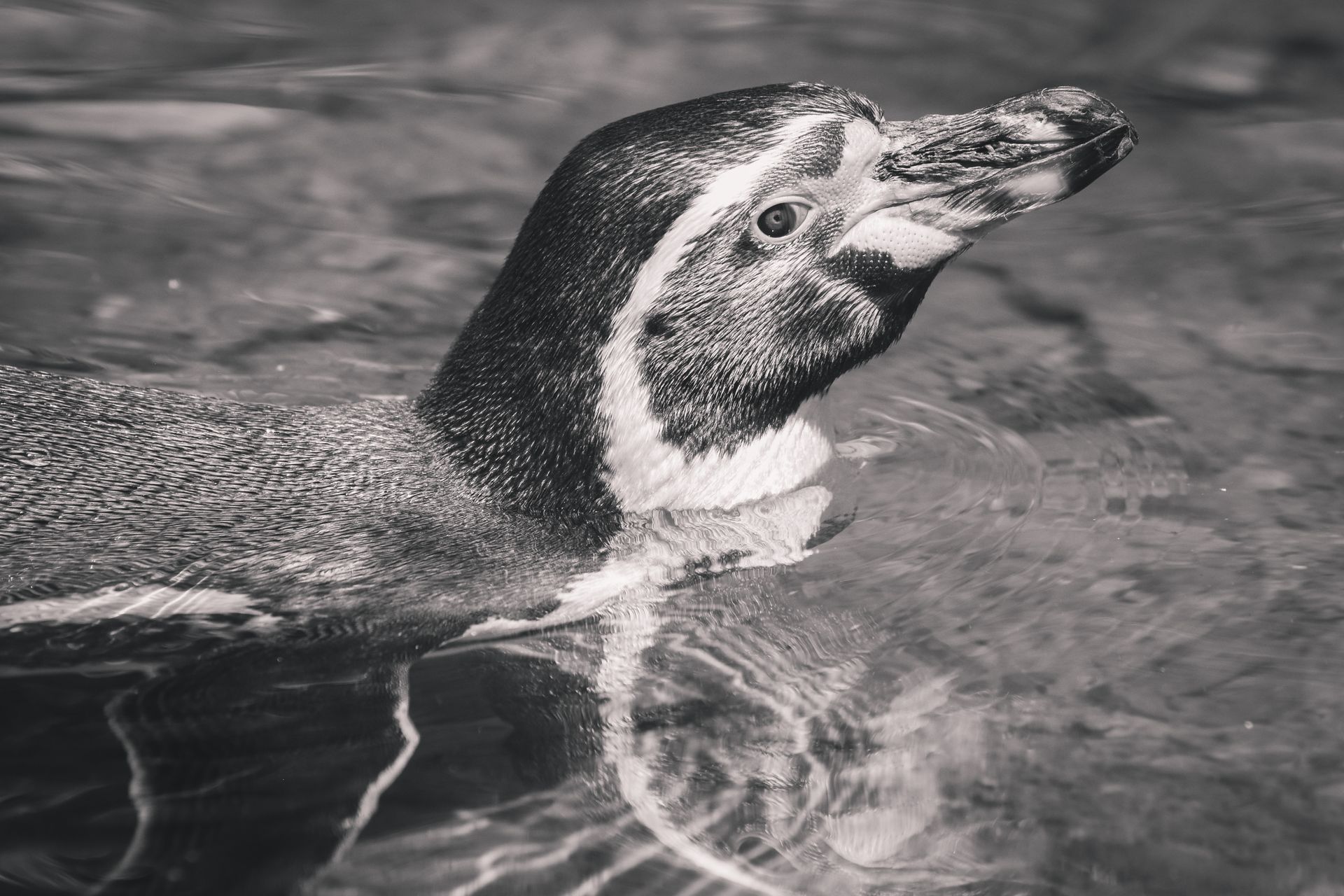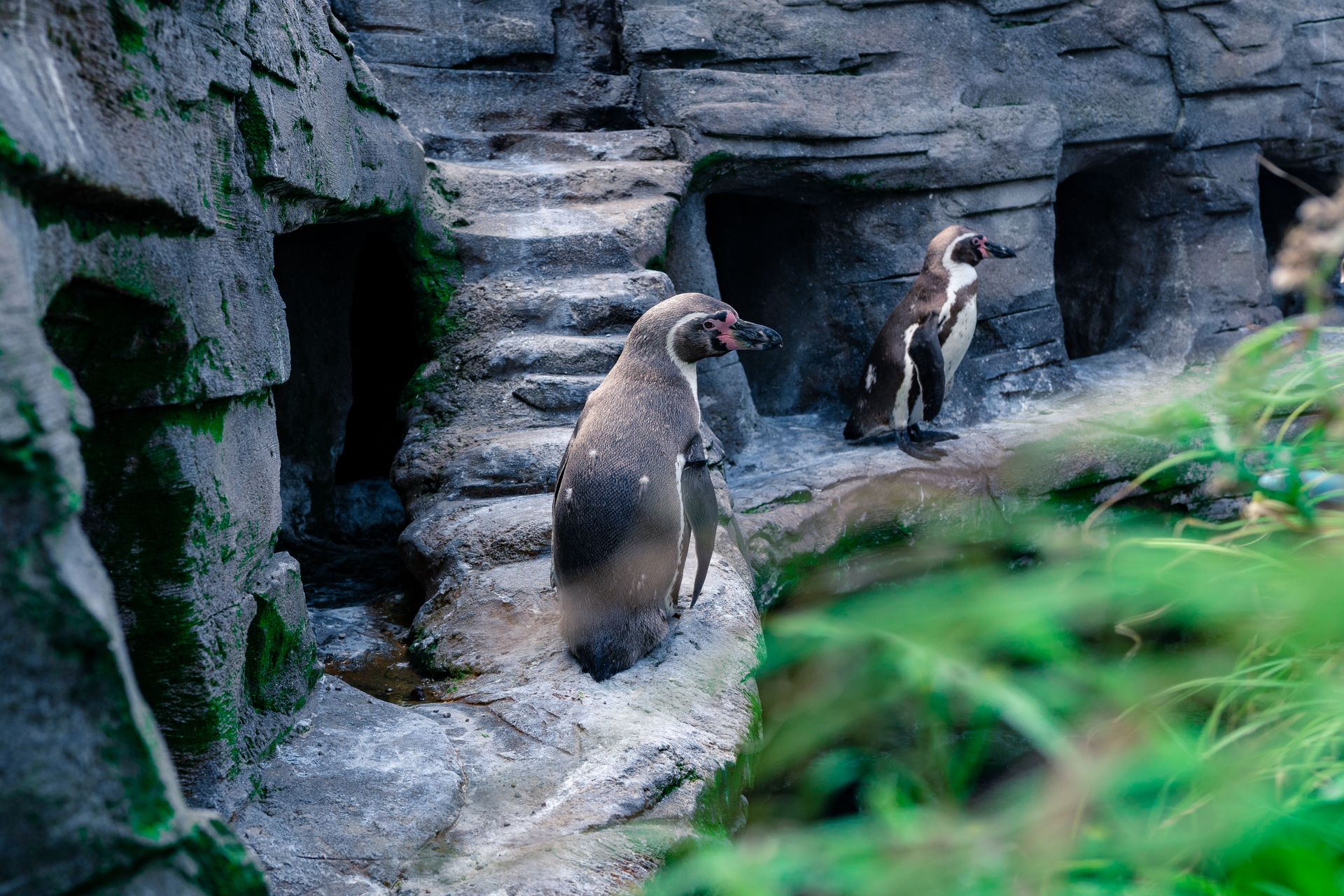
Humboldt Penguins are incredibly social creatures, often living in large colonies that can number in the tens of thousands.
They're known to form long-term monogamous relationships, with some pairs staying together for up to 20 years.
These penguins are also highly vocal, using a variety of calls to communicate with each other.
In the wild, Humboldt Penguins can be found along the coasts of Peru and Chile, where they feed on small fish, squid, and krill.
Recommended read: African Black Footed Penguins
Physical Description
Humboldt penguins are medium-sized birds, ranging from 66 to 70 cm in length.
They have blackish-gray feathers on the back and white feathers on the chest.
Their black heads feature white stripes under the eyes that wrap around the side of their head and connect at the chin, forming a horseshoe shape.
A distinctive feature of the species is a solid, black breast band that helps to differentiate them from Magellanic penguins.
The solid breast band also helps in distinguishing adults from juveniles who have a darker head.
Broaden your view: Facts about Magellanic Penguins
Humboldt penguins are heavier than females, with males averaging 4.7 kg and females averaging 4.05 kg.
Here are some key physical characteristics of Humboldt penguins:
- Average length: 66 to 70 cm
- Average mass: 4 to 5 kg
Their blackish-grey upperparts and whitish underparts make for a striking contrast, and they have a fleshy-pink base to the bill.
Juveniles have dark heads and no breast-band, but as they mature, the distinctive breast band becomes more pronounced.
Habitat and Distribution
Humboldt penguins call the Pacific coast of South America home, specifically the coastal regions of Chile and Peru. They can be found from southern Chile to northern Peru, where the Humboldt Current provides a rich source of nutrients and food.
Their breeding distribution ranges from the dry and arid coastal regions of the Atacama Desert to subtropical Isla Foca in north Peru. In Chile, the most important breeding colony is at Isla Chañaral.
Humboldt penguins spend most of their time in coastal waters, with non-breeding penguins averaging 60.0 hours in the water before returning to land. Breeding penguins, on the other hand, spend less time offshore, averaging 22.4 hours.
To rest, breed, and raise young, Humboldt penguins must come ashore to rocky and guano-rich sites along the Pacific coast. They will occasionally use a cave along the shore.
Here's a breakdown of their habitat regions:
- Habitat Regions: temperate, tropical, terrestrial, saltwater or marine
In terms of depth, Humboldt penguins are found in waters ranging from 10.1 meters (33.14 ft) to 61.8 meters (202.76 ft) deep.
Behavior and Interaction
Humboldt penguins are highly social animals that live in large colonies. They are extremely sensitive to human presence, with their breeding success reduced at sites heavily visited by tourists.
Their behavior is also influenced by their molting process, which occurs in January and lasts for two weeks. During this time, they fast because they are unable to enter the water to forage.
Humboldt penguins are diurnal, meaning they are active during the day, and their foraging behavior changes depending on whether they are raising chicks or not. Penguins not raising fledglings can explore different foraging habitats further away from the colony.
Here are some key behaviors exhibited by Humboldt penguins:
- Natatorial: They are excellent swimmers.
- Diurnal: They are active during the day.
- Motile: They can move around.
- Sedentary: They remain in the same area.
- Colonial: They live in large groups.
Moulting
Moulting is a unique process for penguins, where they shed and replace their feathers within a short period.
Most penguins moult between mid-January and mid-February, although the timing can vary depending on their location and food availability.
Humboldt penguins, in particular, tend to stay on land until they finish moulting.
During the pre-moulting period, these birds become hyperphagic, eating as much as they can to store energy for the process.
The entire moulting process is completed within two weeks, with the old feathers being replaced by new ones.
Behavior
Humboldt penguins are highly social creatures, living in large colonies and forming close bonds with each other. They are considered highly social, except during foraging, when they become solitary hunters.
Their social behavior is influenced by their breeding status, with penguins raising chicks rarely taking overnight foraging trips and exhibiting shallower, shorter dives. In contrast, failed breeders take longer foraging trips with longer and deeper dives.
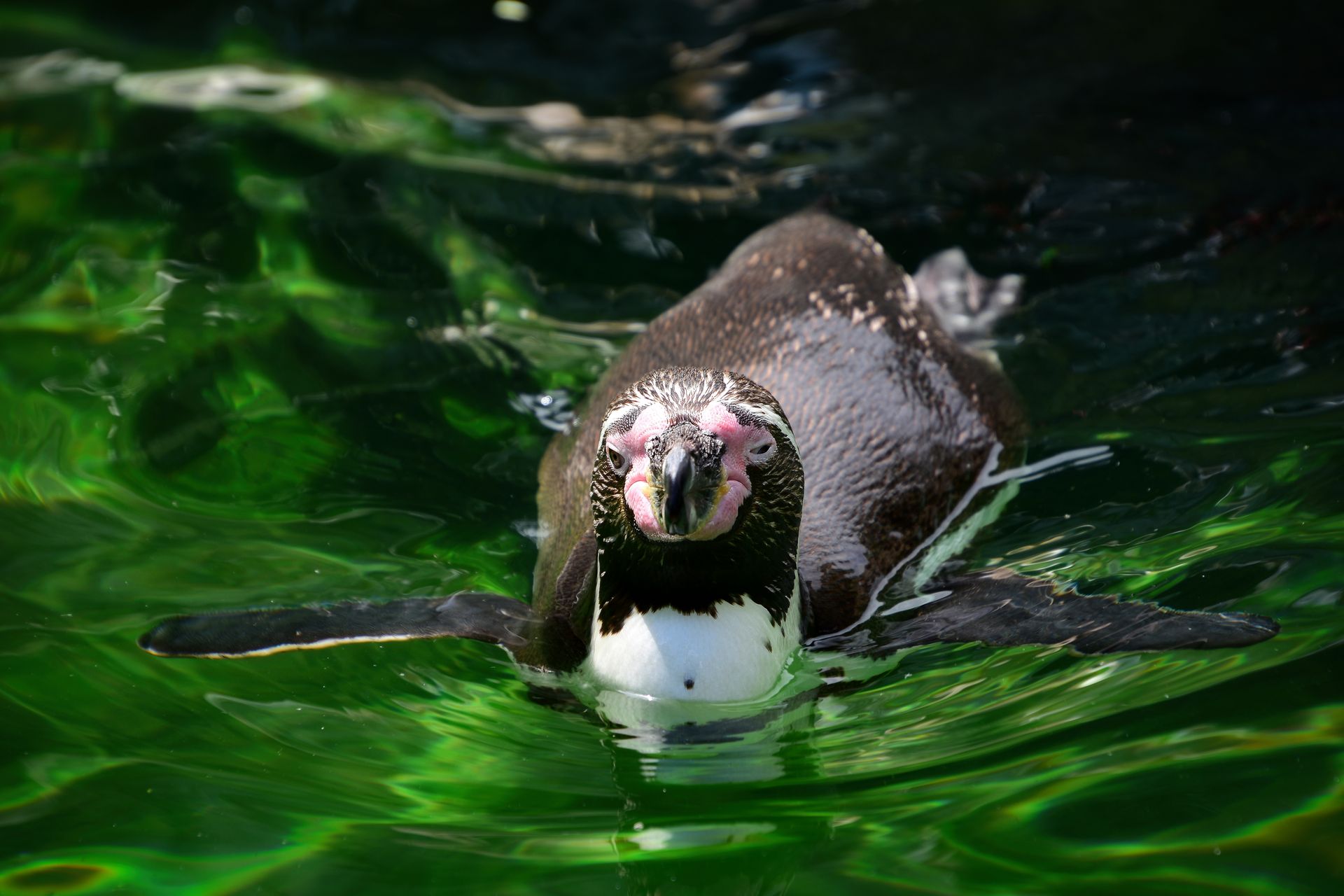
Humboldt penguins are also extremely sensitive to human presence, which can significantly reduce their breeding success. In fact, their heart rate drastically increases with the presence of a human at just 150 meters away, and it takes them 30 minutes to recover.
During molting, Humboldt penguins fast for two weeks, unable to enter the water to forage, as they are replacing old worn feathers with new ones.
Here are some key behaviors associated with Humboldt penguins:
- natatorial
- diurnal
- motile
- sedentary
- colonial
Despite their social nature, Humboldt penguins are able to explore different foraging habitats that are further away when they are not raising fledglings.
Communication and Perception
Humboldt penguins have unique vocalizations that allow them to distinguish between mates. These calls include a contact call, a display call, and a threat call.
Their sense of smell is quite impressive, with studies showing they can detect and distinguish between different scents. In fact, they even have learned preferences for certain smells, particularly those associated with their parents.
Humboldt penguins also have a keen sense of kin recognition, which helps them avoid mating with siblings born in different years. This is thought to be due to natal philopatry, or the tendency to stay in their birthplace.
They can detect familiar scents and will often return to them. This is likely due to prior association, which allows them to recognize nest-mates or colony mates.
In terms of visual perception, Humboldt penguins use the same mechanisms as other penguins. However, they have a unique adaptation that allows them to see equally well in both air and water.
Here are the communication and perception channels used by Humboldt penguins:
- Communication Channels
- visual
- tactile
- acoustic
- Perception Channels
- visual
- tactile
- acoustic
- chemical
Natural History
Humboldt penguins are quite fascinating creatures, and understanding their natural history is essential to appreciating their behavior and interactions.
They grow to be about 26 to 28 inches long and weigh around 10.4 pounds, with distinctive blackish-gray upperparts and white underparts.
Their habitat is highly influenced by the cold, nutrient-rich Humboldt Current flowing northward from Antarctica, which is vital to the productivity of plankton and krill and fosters fish abundance.
They nest on islands and rocky coasts, often digging burrow-like nests among piles of guano in caves and along cliffs.
Their lifespan is about 20 years, which is a relatively long time for a penguin.
Humboldt penguins feed primarily on fish, especially anchovies, herring, and smelt, which they catch in the surrounding waters.
They breed at any time of year, and females lay one or two eggs, which are incubated for about 40 days by both parents, but one chick often dies of starvation.
Predation
In the wild, Humboldt penguins face a range of predators. Humboldt penguins are predated on by sharks, fur seals, and sea lions in the ocean, and on land, their nests are preyed on by feral cats, dogs, foxes, snakes, and rodents.
These predators can attack a juvenile or adult Humboldt penguin if it's of smaller size. In some cases, gulls are also known to predate nests.
Humboldt penguins have adapted to reduce exposure to predators. They use guano to create burrows for their eggs, which helps to protect them from predators.
Living in large colonies provides additional defense by number. In the water, Humboldt penguins' main defense is their ability to swim quickly and with agility.
Breeding and Conservation
Humboldt penguins are sedentary during the breeding season, staying in proximity to their nests and showing fidelity to breeding site.
They breed on cliff tops, as well as in burrows on guano layers, and in caverns, hollows, and beaches. Nests are also found in scrapes covered by vegetation.
The species is listed as Vulnerable on the IUCN Red List, with a declining population of roughly 23,800 mature adults.
Conservation efforts are in place, including the creation of guano reserves to reduce the threat to population viability.
Humboldt penguins are protected by laws in Peru and Chile, and are also protected under the US Endangered Species Act.
Here's a summary of the conservation status of the Humboldt penguin:
- IUCN Red List: Vulnerable
- US Federal List: Threatened
- CITES: Appendix I
Breeding Sites
Humboldt penguins breed on a variety of sites, including burrows on guano layers, caverns, hollows, cliff tops, beaches, and scrapes covered by vegetation.
Nests can also be found on Peruvian islands where true soil can be found for digging.
The majority of penguins breed on cliff tops.
Humboldt penguins show fidelity to their breeding sites and tend to stay in proximity to their nests during the breeding season.
They can cover large distances, particularly in response to food shortages or changes in environmental conditions.
In fact, they are true migrants between Peru and Chile.
Conservation
The Humboldt penguin population is vulnerable due to extreme population size fluctuations, clustered distribution, and major threats not being ameliorated over time. Conservation efforts have been implemented in Peru and Chile, with the species listed in Appendix I of CITES.
Peruvian legislation categorizes the species as endangered and prohibits hunting, possession, capture, transportation, and export for commercial purposes. Chile implemented a 30-year hunting ban in 1995.
The Humboldt penguin population is declining, with approximately 23,800 mature adults as of August 2020. Climate change, commercial overfishing of main prey species, and bycatch in commercial and artisanal fisheries are contributing factors to the decline.
Rats, feral cats, and dog attacks threaten some colonies, while guano extraction has reduced the available habitat for burrowing and nesting. This has historically impacted the Humboldt penguin population.
Here are the conservation statuses of the Humboldt penguin:
- IUCN Red List: Vulnerable
- US Federal List: Threatened
- CITES: Appendix I
Conservation efforts are crucial to protect the Humboldt penguin population. The species is being protected in protected areas, and most penguins breed within these areas.
History and Discovery
The Humboldt penguin, also known as Spheniscus humboldti, has a fascinating history. In 1953, a Humboldt penguin was found in The Bronx, New York, US, but it's unclear whether it had escaped from a private collection or was a vagrant.
This sighting highlights the species' ability to wander away from their usual habitats. The local zoo's population was fully accounted for, leaving the mystery unsolved.
Here's a list of the penguin's taxonomic classification:
- Order: Sphenisciformes
- Family: Spheniscidae
- Subfamily: Spheniscinae
The Humboldt penguin is classified under several other categories, including IUCN Red List vulnerable species, Birds of Chile, and Birds of Peru, among others.
Us Discovery
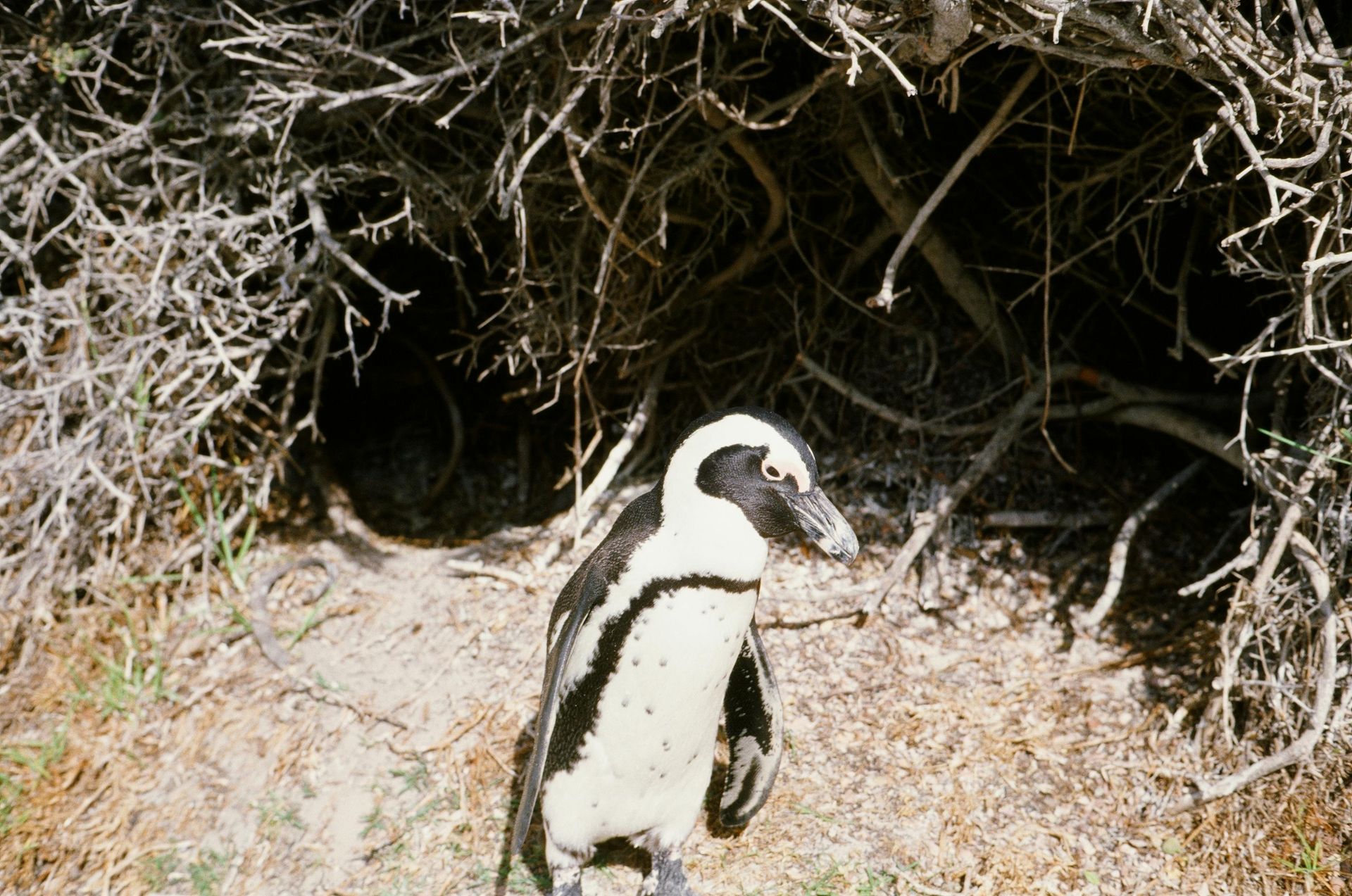
In 1953, a Humboldt penguin was found in The Bronx, New York, US. The local zoo's population was fully accounted for, but it's unclear whether the animal had escaped from a private collection or was a vagrant.
The Humboldt penguin is a species of penguin that can be found in the wild, and their discovery in the US was a notable event. They are native to the coasts of Chile and Peru in the southeastern Pacific Ocean.
A Humboldt penguin's lifespan is about 20 years, and they can breed at any time of year. They dig burrow-like nests among piles of guano in caves and along cliffs, and females lay one or two eggs.
Here's a list of some interesting facts about the Humboldt penguin's discovery in the US:
- The Humboldt penguin was found in The Bronx, New York, US in 1953.
- The local zoo's population was fully accounted for.
- The animal's origins are unclear, but it's possible it had escaped from a private collection or was a vagrant.
The Humboldt penguin's discovery in the US highlights the species' adaptability and ability to thrive in new environments. However, their populations have been declining in recent years due to various threats such as guano mining, commercial fishing, and oil pollution.
Historical vs. Recent Dispersal
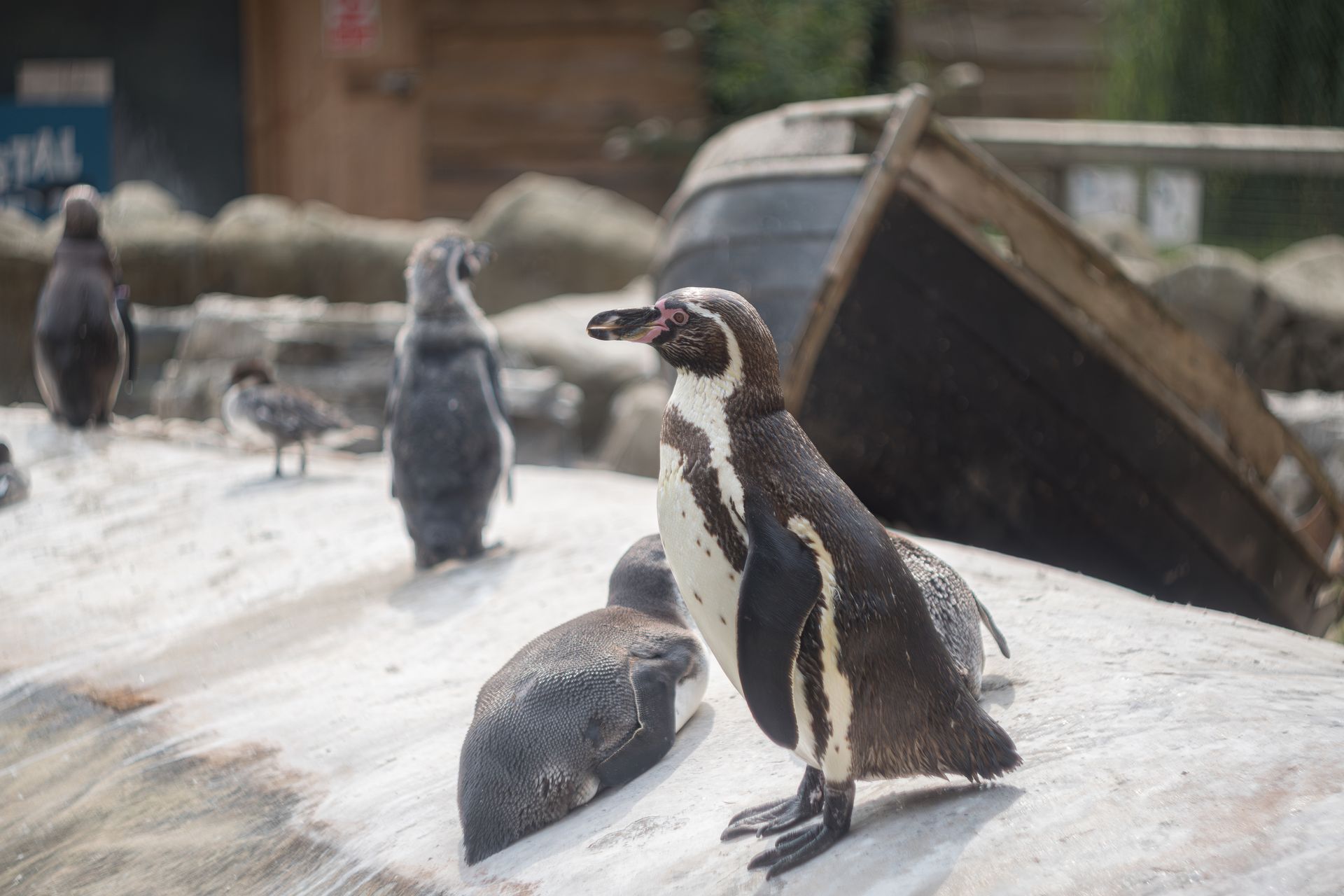
Historical versus recent dispersal of Humboldt penguins is a fascinating topic. Inference of recent migration indicated low, asymmetric and bidirectional gene flow among Humboldt penguin colonies.
A total of 368 Humboldt penguins were sexed, with 190 males and 178 females. This is a significant sample size that helps us understand the genetic makeup of the species.
Females showed lower philopatry than males, which means they are more likely to migrate than males. This is an interesting finding that could have implications for conservation efforts.
Historical gene flow was observed among all colonies, suggesting that Humboldt penguins were once more connected and mobile. This is in contrast to the low gene flow observed in recent times.
Signatures of bottlenecks were detected at several colonies, including Pupuya, Pajaros, Choros, Chañaral, Pan de Azucar, and Punta San Juan. These bottlenecks are thought to have occurred in the past, possibly due to changes in the environment or human activities.
There is evidence of recent expansion of the Humboldt penguin in Punta San Juan and Pan de Azucar. This expansion is thought to have occurred in the past 25,000 years, based on genetic data.
The network of haplotypes in these colonies is shaped like a star, with few haplotypes in high frequency and several in low frequency. This suggests that the population is still recovering from past bottlenecks.
Genetics and Population
The Humboldt penguin has an impressive genetic diversity, with high levels of heterozygosity and a large number of alleles found in each locus. In fact, the mean heterozygosity is 0.72 ± 0.014, with a minimum value of 0.66 from Algarrobo Island and a maximum of 0.76 from Tilgo.
Genetic variability was found mainly within populations rather than among populations, with 96.89% of genetic variability detected within populations and only 3.11% among populations for microsatellite loci. This suggests that Humboldt penguins are not strongly differentiated among different locations.
The population genetic structure of Humboldt penguins is complex, with significant RST values for microsatellite found between the majority of pairwise locations. This indicates that there are distinct groups among the Humboldt penguin population, with Punta San Juan and Pan de Azucar being the most differentiated from the remaining locations.
Genetic Diversity
The Humboldt penguin has a remarkable genetic diversity. For microsatellites, the number of alleles found in each locus ranged from eight to 23, averaging 15.89 over all loci.
In fact, the Humboldt penguin showed high genetic diversity for all markers in all colonies. This is evident in the high haplotype diversity and nucleotide diversity observed in the D-loop HVRI mtDNA and RAG1 fragments.
The genetic diversity of the Humboldt penguin is a testament to its ability to adapt to different environments. The high genetic diversity was observed in all colonies analyzed, with a total of 37 haplotypes in the D-loop HVRI mtDNA and 23 haplotypes in the RAG1 fragment.
The Humboldt penguin's genetic diversity is not limited to the number of haplotypes, but also extends to the frequency of rare alleles. Private and rare alleles were found in almost all breeding colonies, except for Pupuya and Isla Grande de Atacama.
The genetic diversity of the Humboldt penguin is a key factor in its ability to survive and thrive in its environment. With a mean heterozygosity of 0.72 ± 0.014, the Humboldt penguin is well-equipped to adapt to changing conditions and maintain its population.
The analysis of microsatellite data suggests that the existing global population is composed of 3 groups of Humboldt penguins. However, the D-loop region was non-informative, and only one pairwise comparison showed a significant value.
The genetic diversity of the Humboldt penguin is a complex phenomenon that is influenced by various factors. While the exact mechanisms are not yet fully understood, it is clear that the Humboldt penguin's genetic diversity is a vital component of its survival and success.
Molecular Sexing
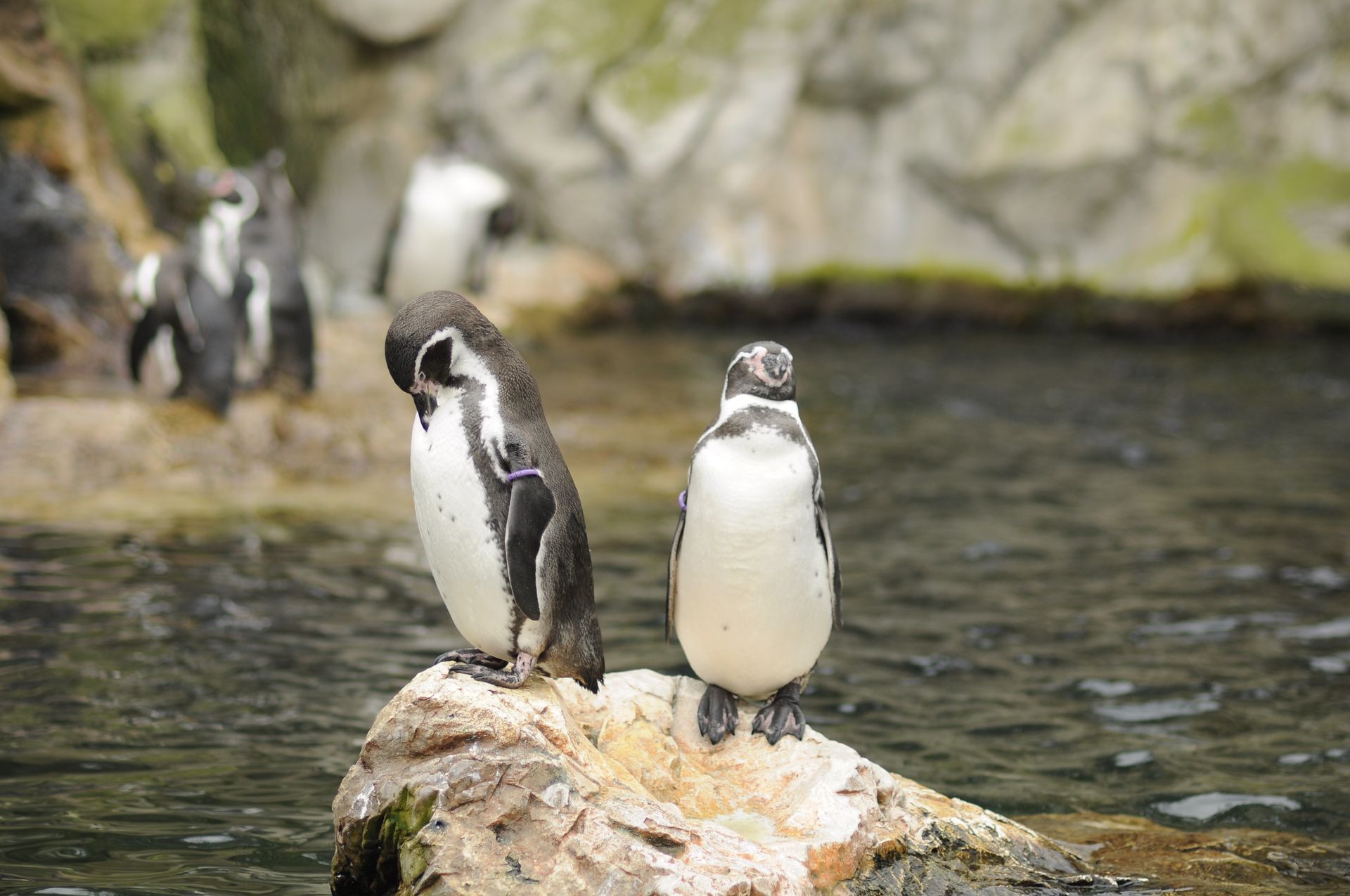
Molecular sexing is a technique used to determine the sex of an organism based on its DNA. This is done by using a specific type of PCR, or Polymerase chain reaction.
The PCR reaction mixture includes 50 ng of total DNA, 1X of Taq buffer, 200 μM of each dNTP, 3.5 mM MgCl2, 0.5 μM of each primer, and 0.5 U of Taq DNA polymerase.
The amplification process involves an initial step at 94°C for 4 min, followed by 40 cycles of 30 s at 92°C, 50°C for 30 s, and 45 s at 72°C, and a final extension of 7 min at 72°C.
The PCR amplifies regions of the CHD1 gene found on the sex chromosomes, and gender identification is based on the number of bands for a given sample visualized on 3% agarose gel.
Males have a single band that corresponds to the intron on Z chromosomes, whereas females have two bands, corresponding to introns on the ZW chromosomes that showed distinct size.
Threats and Impact
The introduction of feral species has a significant impact on the Humboldt penguin population. Feral goats, for example, browse the vegetation that penguins use to build their nests, leading to the collapse of dirt burrows.
The connection of the island to the mainland also allows mammals to move onto the island, further threatening the penguin population. European rabbits and Norway rats graze on the vegetation, while Norway rats and black rats prey on eggs.
Feral cats and dogs are also a major threat, consuming chicks, fledgelings, and adult Humboldt penguins.
Habitat Disturbance and Feral Species
Habitat disturbance and feral species have a devastating impact on the Humboldt penguin population. Feral goats on the Puñihuil islands browse the vegetation the penguins use to build their nests.
The connection of the island to the mainland also led to the introduction of mammals, causing further disturbance. This has resulted in the collapse of dirt burrows used by the penguins.
In central Chile, European rabbits and Norway rats graze on the vegetation, causing significant damage. Norway rats and black rats also prey on eggs, further threatening the penguin population.
Feral cats and dogs on the islands consume chicks, fledgelings, and adult Humboldt penguins, exacerbating the problem.
Human Presence
Human presence has a profound impact on Humboldt penguins. They are extremely sensitive to it, with little habituation potential.
Passing by an incubating Humboldt penguin at a distance of 150 meters can provoke a response. This is the greatest response distance reported for penguins to date.
Humboldt penguins need up to half an hour to recover to normal heart rates after human approach. This time decreases with repeated visitation, but the impact of frequent visits still lingers.
Cumulative stress from frequent visits and delayed return of foraging partners can lead to nest desertion. This, in turn, causes decreased breeding success at frequently visited sites.
Methods and Considerations
To better understand the population structure of the Humboldt penguin, researchers recommend increasing the number of genetic markers and sampling effort to cover the entire species' distribution.
This approach can help avoid simplifying the genetic structure of the population, which can be misleading with low sampling.
In fact, the study found that the Humboldt penguin has three major genetic regions: Punta San Juan in Peru, Pan de Azucar and Isla Grande de Atacama in northern Chile, and the breeding colonies in central-south Chile.
These regions have distinct genetic differences, highlighting the importance of considering the entire species' distribution in conservation efforts.
The researchers also suggest expanding population genetic studies to cover other breeding colonies in Peru to better understand the relationship between Punta San Juan and the other genetic groups in Chile.
This can help inform conservation initiatives and ensure that genetic diversity is maintained.
Conservation efforts should also focus on protecting the Humboldt Penguin National Reserve, which includes Chañaral and Choros, and consider incorporating other islands like Tilgo and Pajaros to maintain a more integral population management system.
The Humboldt penguin faces various threats, including interactions with industrial fisheries, predation by alien species like rats and feral dogs, human perturbations from tourism and guano harvesters, and habitat loss.
Additionally, climate change is predicted to increase rainfall and temperature in South America, which can further impact the species' survival and reproductive success.
Therefore, it's essential to establish solid monitoring systems for breeding colonies that could be affected by these factors.
Discover more: South African Penguin
Frequently Asked Questions
Why do Humboldt penguins yell?
Humboldt penguins yell to warn others of potential threats or territorial intruders. This warning call can escalate to aggressive behaviors like pecking or chasing if ignored.
Featured Images: pexels.com