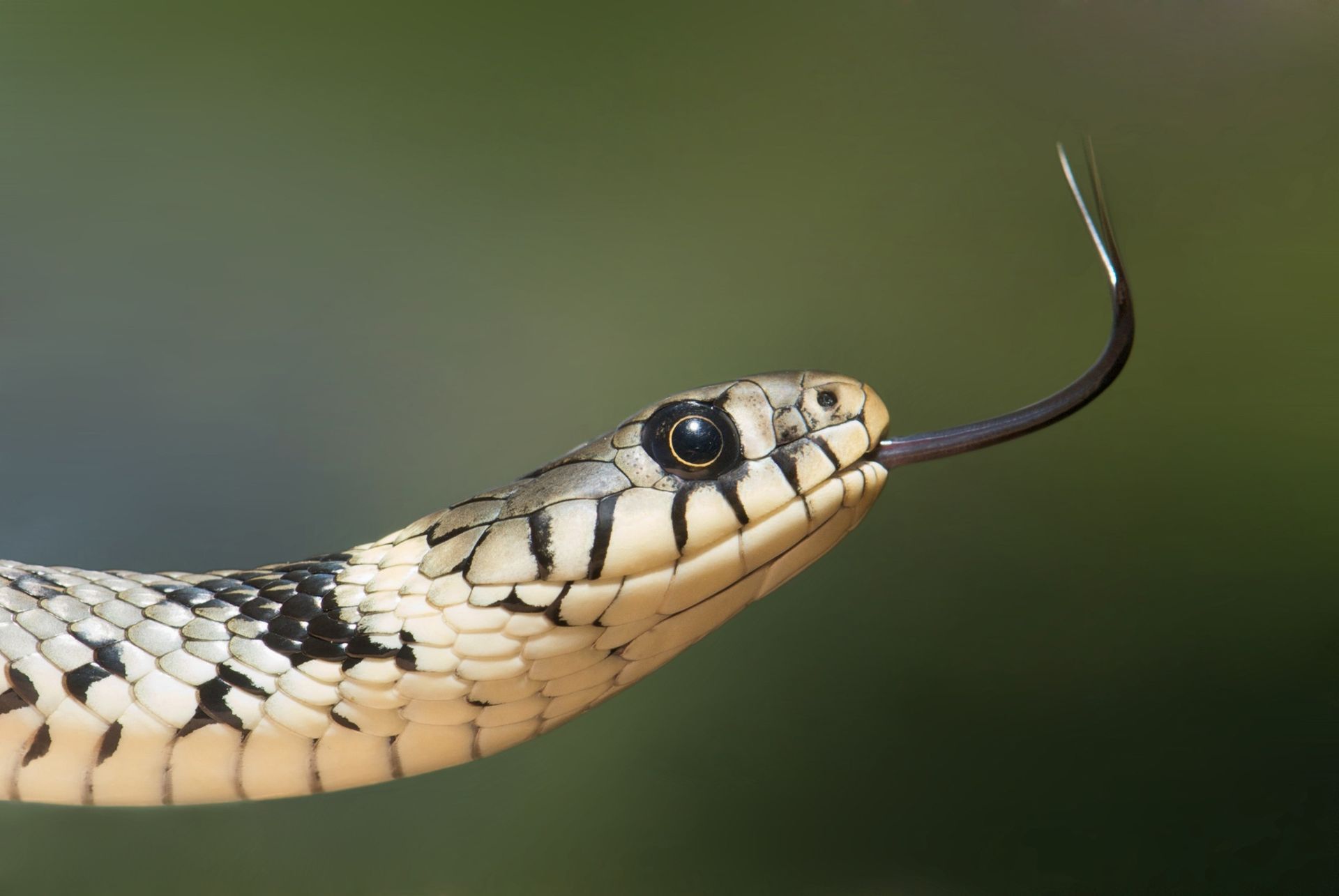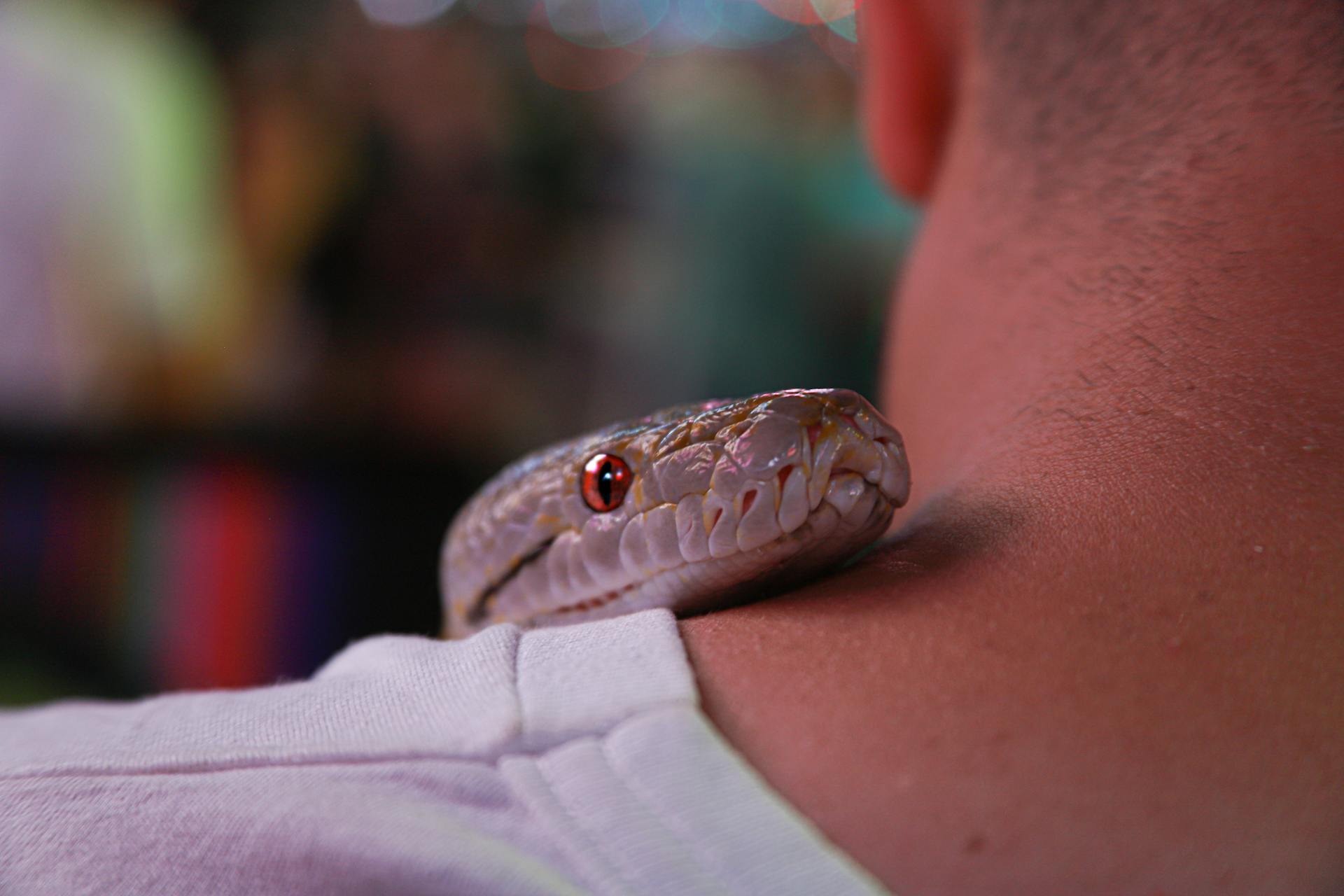
Arabia is home to a diverse range of snake species, with over 90 species found across the region. From the deserts of the Arabian Peninsula to the mountains of Oman, snakes can be found in a variety of habitats.
One of the most iconic snakes in Arabia is the Horned Viper, a venomous species found in the deserts and rocky areas of the region. Its distinctive horns are a defense mechanism to deter predators.
The Horned Viper is a relatively small snake, growing up to 60 centimeters in length. Its venom is highly toxic, making it a snake to be reckoned with.
A fresh viewpoint: Can Snakes Be Found on Every Continent
New Discoveries
A new species of snake has been discovered in Saudi Arabia, filling a gap in our knowledge of snake distribution on the Arabian Peninsula.
This snake was found through intense sampling between 2017 and 2023 in a vast area around the ancient Arabic oasis city of AlUla.
The species was discovered to be mainly nocturnal, with all individuals encountered active at night.
The discovery of this new species is surprising and gives rise to the hope that more undiscovered species might be present in the Kingdom.
Snakes are a diverse group of reptiles but are notoriously hard to detect due to their secretive behavior and rarity.
Reptiles of Saudi Arabia
Saudi Arabia is home to a diverse range of reptiles, including snakes, lizards, and geckos. One of the most venomous snakes in the region is the Carpet Viper, which can be found in the southern parts of the country.
The Carpet Viper, also known as Echis pyramidum, is a highly venomous snake that can deliver a deadly bite. In fact, it's responsible for a significant number of snakebite-related deaths in Saudi Arabia each year.
Some of the most common snakes found in Saudi Arabia include the Puff Adder, which is known for its aggressive behavior, and the Arabian Cat Snake, which is a non-venomous species that's commonly found in deserts and rocky areas.
Here's a list of some of the native reptiles found in Saudi Arabia:
- Saudi Cylindrical Skink (Chalcides levitoni)
- Farasan Racer (Coluber insulanus)
- Saudi Leafnose Snake (Lytorhynchus gasperetti)
- Saudi Pygmy Sand Gecko (Tropiocolotes wolfgangboehmei)
- Manser's Black Racer (Coluber manseri)
- Burrowing Adder (Atractaspis microlepidota)
- Hook-Billed Blind Snake (Leptotyphlops macrorhynchus)
- Puff Adder (Bitis arietans arietans)
- Arabian Cat Snake (Telescopus dhara dhara)
- Carpet Viper (Echis pyramidum)
Snake Species
Snakes in Saudi Arabia are a diverse group, with many species calling the country home. The Arabian Peninsula is a relatively undersampled region, which is why new snake species are still being discovered today.
One such species is the new Arabian desert snake, discovered in Saudi Arabia near the ancient city of AlUla. This snake is mainly nocturnal, and its discovery highlights the importance of continued exploration and sampling of the region's wildlife.
The new snake species was discovered through intense sampling between 2017 and 2023, and it's not the only reptile species found in Saudi Arabia. Some other notable species include the Saudi Cylindrical Skink, Farasan Racer, and Burrowing Adder. Here's a list of some of the reptiles found in Saudi Arabia:
- Saudi Cylindrical Skink (Chalcides levitoni)
- Farasan Racer (Coluber insulanus)
- Saudi Leafnose Snake (Lytorhynchus gasperetti)
- Saudi Pygmy Sand Gecko (Tropiocolotes wolfgangboehmei)
- Manser's Black Racer (Coluber manseri)
- Burrowing Adder (Atractaspis microlepidota)
Carpet Viper
The Carpet Viper is a species found throughout western Saudi Arabia, as well as in North and East Africa. Its venom is extremely poisonous. It commonly inhabits the rocky areas and regions with sparse vegetation. The snake is relatively small, reaching a maximum of around 35 inches in length.
The Carpet Viper is listed as least concern, but its main threat is human persecution. This is a significant concern, as the species is not considered endangered at this time.
Cerastes cerastes
The Arabian Horned Viper, Cerastes cerastes, is a highly venomous snake.
It's found in sandy environments, where it's perfectly camouflaged. The color of the viper varies from red to brown, matching the color of its habitat.
Its body is thick, with a broad and subtriangular head. The tail is relatively short, covered with keeled scales.
Adult Arabian Horned Vipers range in length from 55 to 85 cm. They have a distinctive feature - scales like horns at the top of the head.
The ventral side of the viper is white or yellowish.
Walterinnesia Aegyptia
Walterinnesia aegyptia is a snake species found in many parts of Saudi Arabia. It has been reported in various locations, including Riyadh, Wadi Qatan, and Ain Dar.
This snake has a wide distribution, with previous reports from Al-Mishaab, Rumah, Khurais, Tumair, Ammariyah, and Al-Hasa.
Walterinnesia aegyptia has been documented in multiple regions of Saudi Arabia, highlighting its adaptability and widespread presence.
Recommended read: Wildlife in Saudi Arabia
Snake Families
The Viperidae family is a group of poisonous snakes that are found in Saudi Arabia. They are characterized by their triangle-shaped heads and have a stocky, short body with a clear neck and short tail.
Their bodies are covered in small overlapping dorsal scales, and they have front needle-shaped tusks on the sides of the upper jaw. This family includes the carpet viper, which is one of the most dangerous venomous snakes in Saudi Arabia.
Here's a list of other snake families found in Saudi Arabia:
Note: The Colubridae family includes snakes with a slender build, and the Atractaspididae family includes snakes with a burrowing behavior.
Arabian Cat Snake
The Arabian Cat Snake is native to Saudi Arabia. Its large head and venomous fangs make it a formidable creature.
The snake's body appears reddish-grey or reddish-brown with pale banded markings that can vary. The Arabian Cat Snake is nocturnal, meaning it's active at night.
Its diet consists of rodents, lizards, and fledglings. The snake prefers mountains and hills over open deserts, likely due to the abundance of its prey in these areas.
Family Viperidae
The Family Viperidae is a group of venomous snakes that are found in various parts of the world, including Saudi Arabia. They are characterized by their triangle-shaped heads.
These snakes have thick and short bodies with clear necks and short tails, and their dorsal scales are small and overlapping. They also have front needle-shaped tusks on the sides of their upper jaw.
In Saudi Arabia, three species of snakes belonging to the Family Viperidae were recorded in the Turaif region. Two specimens of the carpet viper were collected from this area.
The carpet viper is a species of snake that is native to Saudi Arabia. It has a stocky, short body with a large and wide head, and it is usually gray or brownish in color.
Here are some key characteristics of the carpet viper:
The carpet viper is considered one of the most dangerous venomous snakes in Saudi Arabia, due to its aggressive behavior and potent venom.
Coloration and Classification
The new snake species, Rhynchocalamus hejazicus, is a stunner with a distinctive head that appears as if dipped in black paint.
The area behind the eyes matches the coloration of the rest of the body.
This snake can appear in a variety of colors, including orange, red, and reddish brown.
A uniformly black melanistic morphotype has also been found in this species.
The researchers believe the snake is nocturnal, as they were all found active at night.
The species is found in a range of habitats, including sandy and stony soils with some vegetation, areas disturbed and inhabited by humans, and large stony wadis in lava fields.
The researchers propose to classify Rhynchocalamus hejazicus as a species of least Concern.
The new species was discovered through field samples collected in Saudi Arabia in 2017, 2021, 2022, and 2023.
Readers also liked: Black Snakes in North America
Discussion
The reptilian fauna of Saudi Arabia is highly diverse and heterogeneous, with snakes occupying specific habitats in different ecozones.
Snakes have been studied in various regions of Saudi Arabia, but the Turaif region was previously unexplored.
A survey of the Turaif region revealed the presence of 11 species of snakes, belonging to four families: Colubridae, Elapidae, Viperidae, and Atractaspididae.
The most abundant family recorded in the survey was Colubridae, with 5 species.
In contrast, 8 species of Colubridae were recorded in the Central region, and 6 species were recorded in the Al-Hasa region.
Three species of snakes, including L. diadema, P. fieldi, and W. morgana, were recorded in the Turaif region for the first time.
These new records highlight the importance of further surveys and research in the Turaif province.
Further intensive surveys and different sampling areas are likely to yield more data and increase the number of records of species occurring in the Turaif province.
Frequently Asked Questions
Are there any poisonous snakes in Saudi Arabia?
Yes, Saudi Arabia is home to venomous snakes, including vipers, which can pose a significant threat to safety in areas with snake activity. Knowing the species and habitats of these snakes can help prevent encounters and ensure a safer environment.
Do snakes live in the Arabian desert?
Yes, the Arabian sand boa, a species of snake, is found in the Arabian Peninsula and Iran, where it buries itself in the sand during the day. This unique adaptation allows it to thrive in the desert environment.
Featured Images: pexels.com