Australia is home to over 100 species of skinks, a type of lizard that belongs to the family Scincidae. These small to medium-sized reptiles can be found in a wide range of habitats, from deserts to rainforests.
Skinks are generally solitary animals and are active during the day, basking in the sun to regulate their body temperature. Their bodies are usually brown or gray, allowing them to blend in with their surroundings.
Some species of skinks are specialized to live in specific environments. For example, the sand skink is found in the sandy dunes of Western Australia's desert regions.
Types of Skinks
Skinks of Australia are incredibly diverse, with over 200 species found across the country. One of the most notable types is the Blue-tailed Skink, which is recognized by its bright blue tail.
The Pygmy Skink is the smallest species, growing to a mere 3.5 centimeters in length. It's a tiny but mighty creature.
The Copper-tailed Skink, as its name suggests, has a distinctive copper-colored tail. This species is found in the eastern regions of Australia.
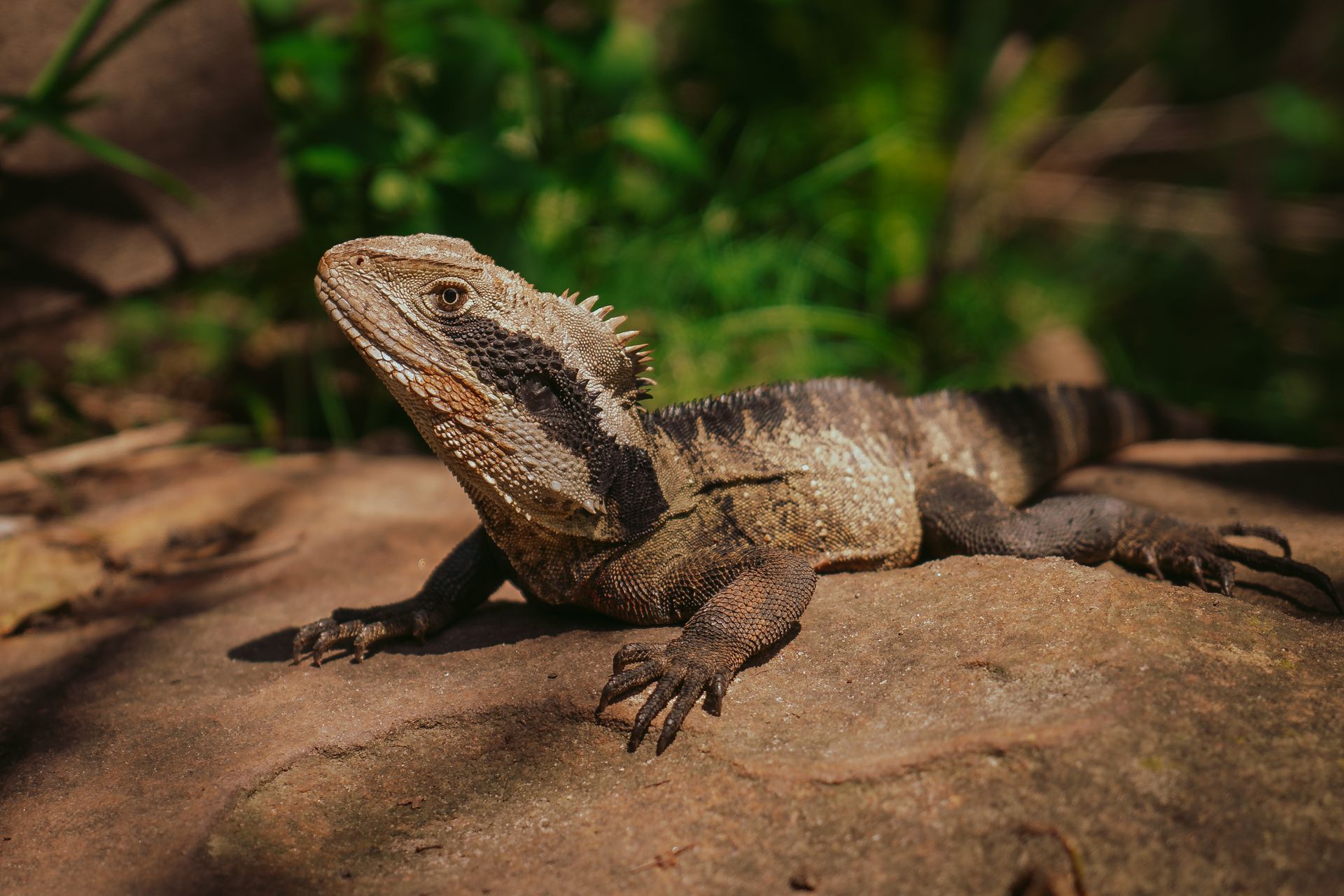
The Eastern Water Skink is a semi-aquatic species, often found near water sources.
Intriguing read: Little Blue Penguin Australia
New Discoveries
A new species of rock skink has been discovered in central Australia by Monash University researchers.
The Central Ranges rock skink, or Liopholis aputja, has an orange, pointed snout and inhabits the hills of the Mann-Musgrave Ranges near the northern border of South Australia.
It's the only skink known to live in the mountains of the Mann-Musgrave Ranges, with other species usually found on surrounding sand plains.
The name "aputja" is a local Aboriginal word meaning "of the hills."
This discovery has important implications for the conservation of the Mann-Musgrave Ranges, emphasizing the uniqueness of the region's fauna and the need to protect it.
The researchers studied the skink's genetics and physical characteristics, finding it has fewer scales above its eyes and more ear lobules than its closest relative.
Australia is rich in biodiversity, but many species remain undiscovered, especially in remote and understudied regions.
Importance and Habitat
Skinks are unsung environmental heroes, varying from almost entirely insectivorous to largely herbivorous, with larger species being more herbivorous.
They're incredibly efficient pest controllers, feeding on crickets, beetles, spiders, grasshoppers, moths, and cockroaches, as well as devouring worms, beetle larvae, and centipedes.
Skinks love fruits and vegies, but also enjoy a meal of snails, which can be a problem in urban settings where garden chemicals can harm their food sources and even kill them.
To encourage skinks back to your garden, reduce garden chemicals and create suitable habitats for them, understanding that some skinks are sun-loving while others prefer to stay under cover.
Lizard in Outback
The lizard in the Australian Outback is a fascinating creature. The Cunningham's Skink, for example, can grow up to 400 mm in length and is native to southeastern Australia.
They have a distinctive keel on each scale, giving them a slightly spiny appearance. Extremely variable in color, ranging from dark brown to black, with or without blotchy patches, speckles, or narrow bands.
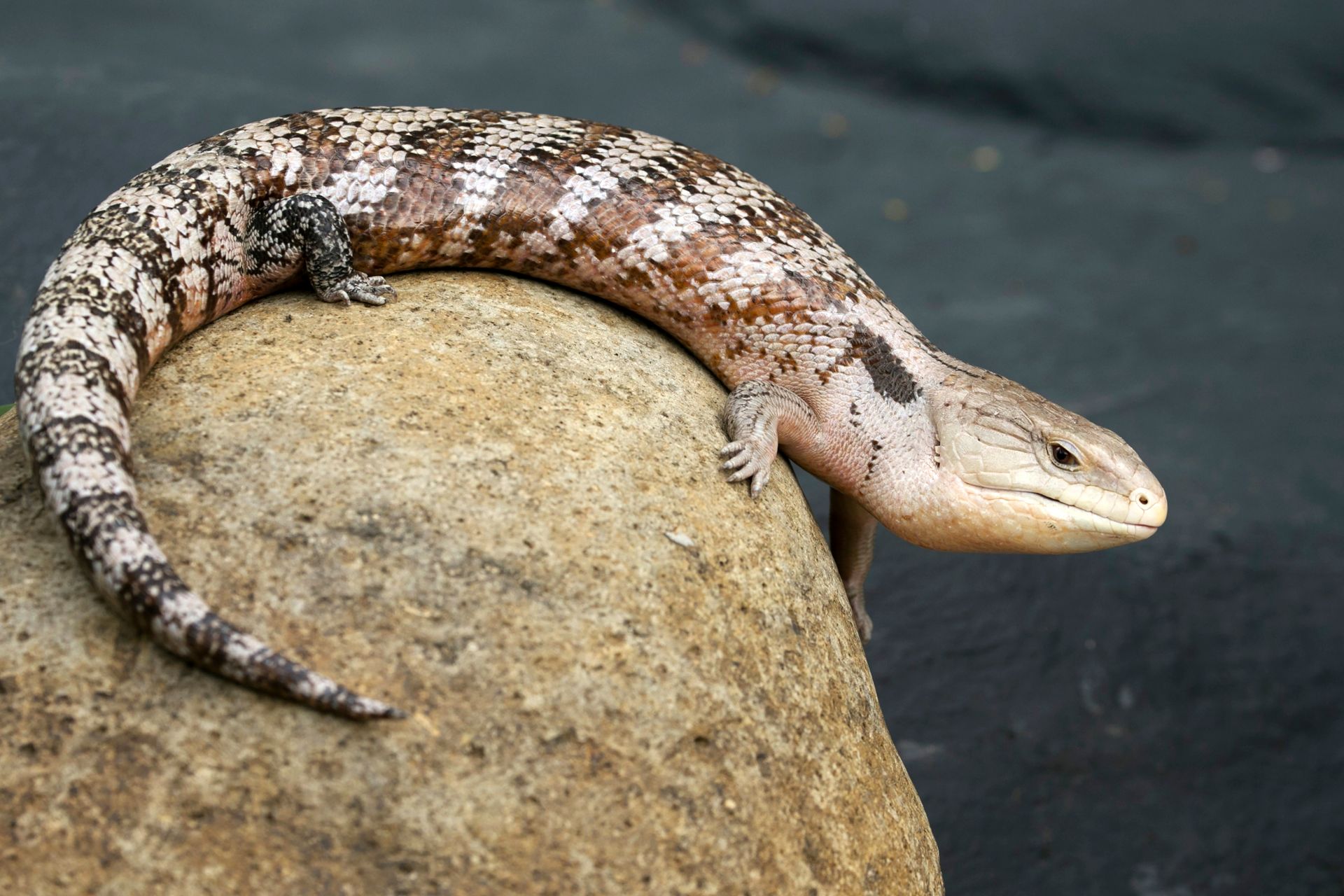
The Shingleback Skink, also known as the Bobtailed Skink, is a short-tailed, slow-moving species of blue-tongued skink endemic to Australia.
Tree skinks live in trees or rock crevices and may be confused with several closely related and similar-looking species. They are often seen basking in the sun and will disappear into a crevice when disturbed.
Tree skinks can form closely knit groups on granite outcrops and occasionally large, mature gum trees.
The Importance
Skinks are unsung environmental heroes of the bush and backyard, and they're actually quite efficient pest controllers, feeding on crickets, beetles, spiders, grasshoppers, moths, and cockroaches.
A handy rule-of-thumb is that the larger a skink species is, the more herbivorous it will be, with bigger skinks like Blue-tongued Lizards eating a lot of plant material.
Skinks are often forced to change their behavior due to the presence of pets, such as dogs and cats, which can abandon their basking sites and lead to harm.
Reduction of garden chemicals is one easy way to encourage skinks back to our gardens, as these chemicals can harm their food sources and even be toxic to them.
Some skinks are sun-loving (heliothermic) while others prefer to stay under cover, using the temperature of the environment to control their body temperature (thigmothermic).
Frequently Asked Questions
What are the biggest Australian skinks?
The largest Australian skink is the land mullet (Bellatorias major), which can grow up to 70 cm long. It's found in eastern Australia's rainforests, from New South Wales to south-eastern Queensland.
Do Australian skinks eat ants?
Yes, Australian skinks, also known as Garden Skinks, are known to eat ants and other invertebrates as a significant part of their diet. This feeding behavior is a fascinating aspect of their natural habits.
How long do Australian skinks live for?
Australian skinks, including Pink and Blue-Tongue Lizards, typically live for 10-15 years with proper care. With a suitable environment and diet, they can thrive for a long and healthy life.
Featured Images: pexels.com