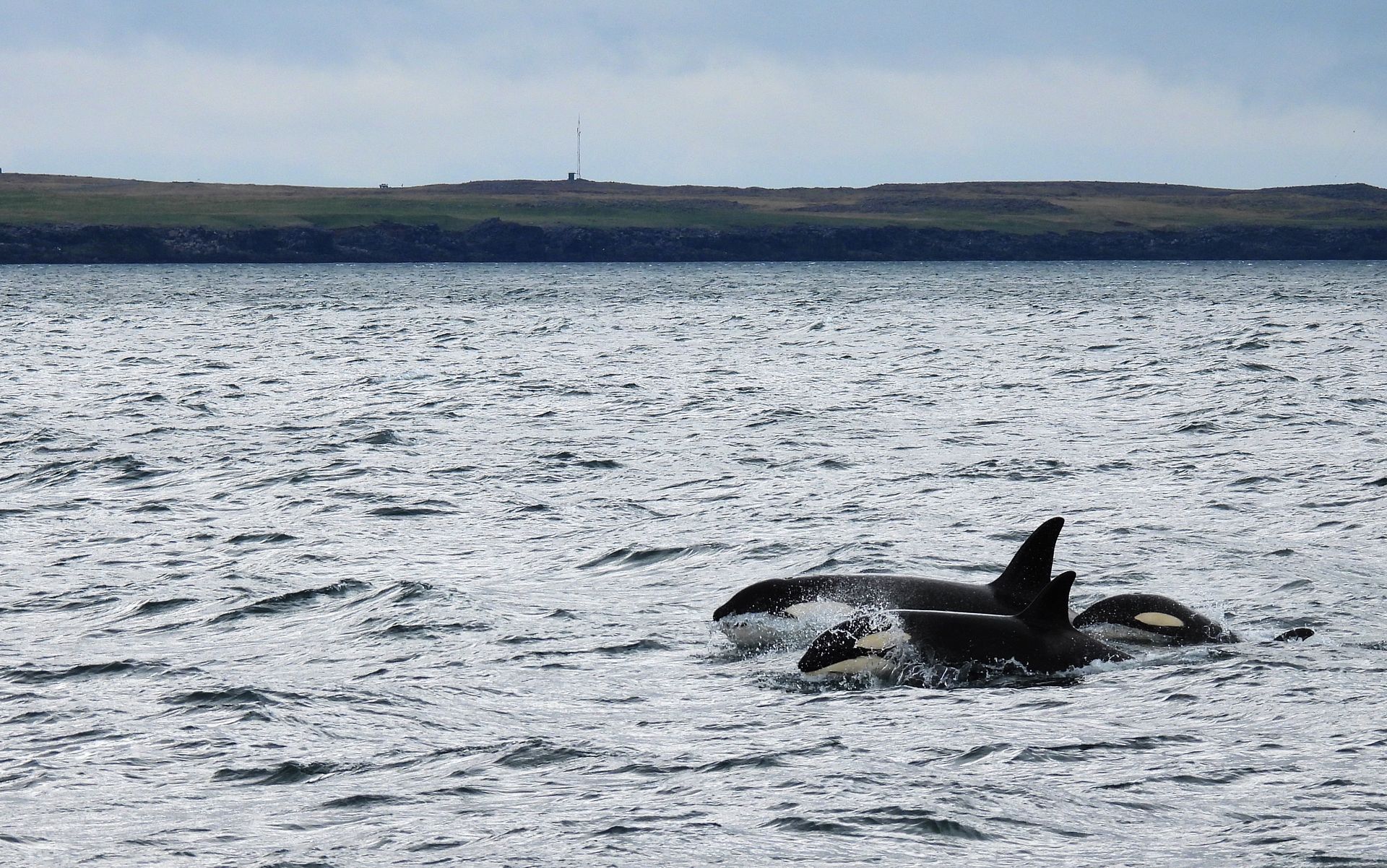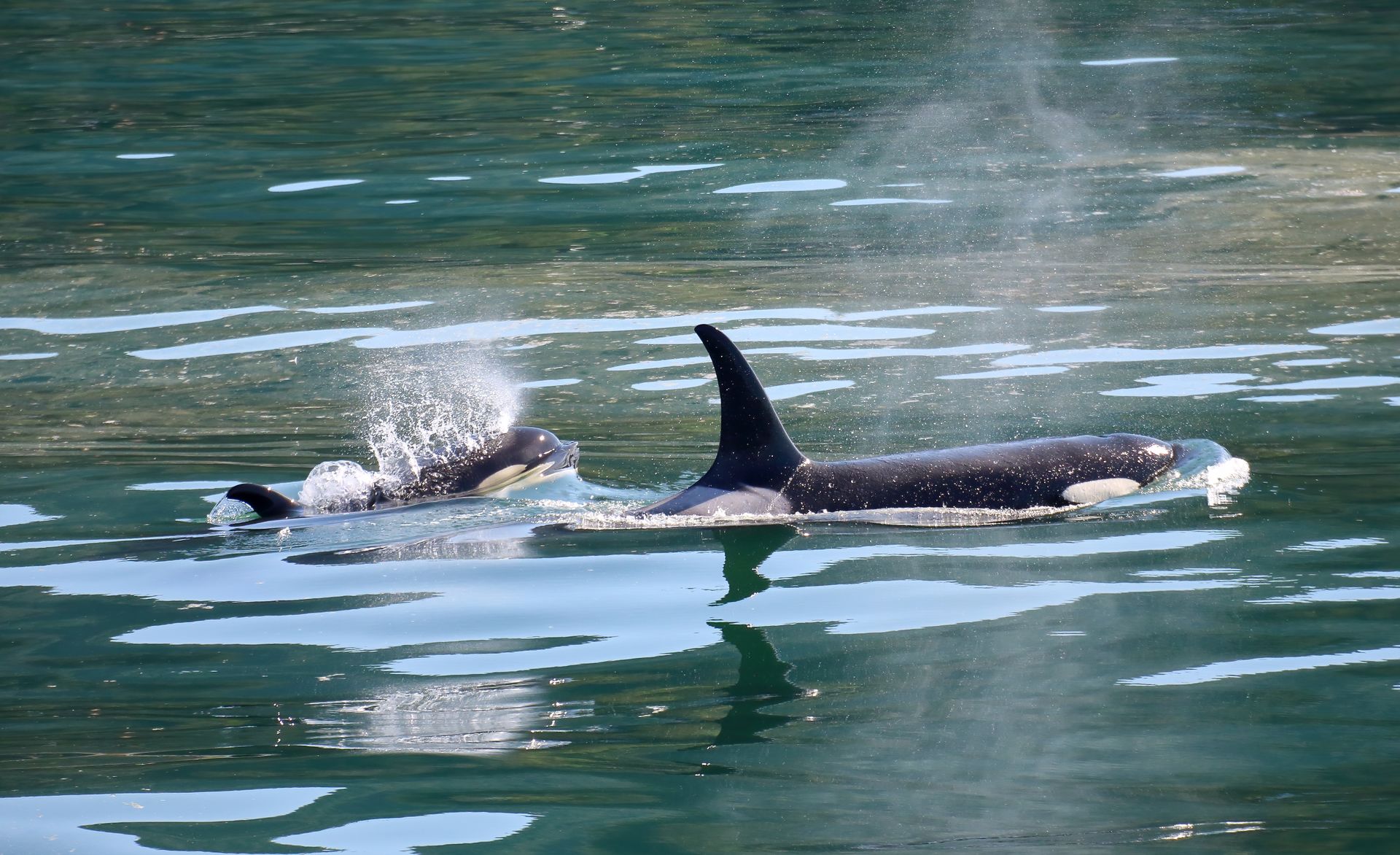
Tilikum, a male orca, was captured in 1983 off the coast of Iceland and was sold to Sealand of the Pacific in Canada. He was later transferred to Seaworld in Orlando, Florida.
Tilikum was involved in the deaths of three people during his time at Seaworld: Daniel Dukes, a 27-year-old man who was found dead in Tilikum's tank in 1999, and two trainers, Dawn Brancheau and Alexis Martínez, who were killed in separate incidents in 1999 and 2010, respectively.
The documentary film "Blackfish", released in 2013, exposed the treatment of orcas at Seaworld and the risks associated with keeping them in captivity. The film's release led to a significant decline in Seaworld's attendance and revenue.
Tilikum died in 2016 at the age of 35, likely due to a bacterial infection.
Tilikum's Life and History
Tilikum was captured when he was two years old, off the coast of Iceland in 1983.
He was taken to the Hafnarfjördur Marine Zoo, where he spent almost a year in a tank before being transferred to Sealand of the Pacific in Canada.
At Sealand, Tilikum lived with two older female orcas, Haida II and Nootka IV, who were both pregnant and behaved aggressively towards him.
As a result, Tilikum was kept in a smaller medical pool for protection.
Tilikum sired his first offspring, Kyuquot, who now lives at SeaWorld San Antonio.
He spent the remainder of his life at SeaWorld Orlando, where he sired 20 more offspring and performed in some of SeaWorld's most popular shows.
Tilikum was kept in a medical module at Sealand of the Pacific that was so small, he couldn't escape the relentless attacks from Haida II and Nootka IV.
The module was 26 feet wide and 20 feet deep, and Tilikum would often emerge with rake marks and other visible injuries.
Tilikum's trainers stated that he would just float in the smaller medical pool, unable to swim, after being kept there for his safety.
In 1991, two eyewitnesses saw Tilikum attack 21-year-old Keltie Byrne after she slipped and fell into the tank at Sealand of the Pacific.
Keltie passed away from the attack on February 20, 1991, from "drowning due to forced submersion by orca."
Curious to learn more? Check out: Should We Keep Animals in Captivity
Deadly Encounters: The Cost of Confinement
Tilikum's history is marked by three tragic fatalities: Daniel Dukes, Dawn Brancheau, and a fourth person whose identity remains unknown.
Daniel Dukes was a 27-year-old man from South Carolina who climbed into Tilikum's pool and drowned in 1999. His body was found severely mutilated by the whale.
Dukes' death was initially downplayed by SeaWorld, who described him as a trespasser and nuisance. However, the documentary Blackfish later revealed the extent of the tragedy.
Dukes was a known drifter with a love of nature and environmentalism, and his death has become a symbol of the lack of dignity afforded to homeless and mentally ill individuals.
Tilikum's third victim was Dawn Brancheau, a 40-year-old SeaWorld trainer who was killed during a Dine with Shamu show in 2010. Brancheau was rubbing Tilikum as part of a post-show routine when the orca grabbed her and pulled her into the water.
Brancheau's autopsy indicated death by drowning and blunt force trauma, and her death led to a contentious legal case over the safety of working with orcas and the ethics of keeping live whales in captivity.
Tilikum's own death came in 2017, when he died from a bacterial infection at the age of 35. His declining health had been a concern for SeaWorld in the years leading up to his death.
Intriguing read: When Did Seaworld Stop Swimming with Orcas
Tilikum's Death and Decline
Tilikum's health began to decline in March 2016 due to a bacterial lung infection.
He was initially thought to have a lung infection due to bacterial pneumonia.
Tilikum's health was reported to be improving in May 2016.
However, his condition took a turn for the worse, and he died on January 6, 2017.
The cause of death was attributed to a bacterial infection.
Tilikum was about 35 years old when he passed away.
SeaWorld San Diego ended its orca performances following the release of the documentary "Blackfish" in 2013.
This decision suggests that the park took the concerns about orca welfare seriously.
Tilikum's death in 2017 was a significant event that highlighted the risks of keeping large marine mammals like killer whales in captivity.
Here's an interesting read: Orca Dog
Performing and Captivity
Tilikum returned to performing on March 30, 2011, after a hiatus, with safety precautions in place to prevent close contact between orcas and trainers.
High-pressure water hoses were used to massage him instead of hands, and removable guardrails were used on the platforms.
He was paired with his grandson Trua and often performed alongside him during the finale of the new One Ocean show.
In December 2011, Tilikum was put on hiatus from the shows following an undisclosed illness, and resumed performing in April 2012.
Tilikum's life at SeaWorld Orlando was marked by captivity and performing, where he sired 20 more offspring and performed in some of SeaWorld's most popular shows.
However, his life was also marred by tragedy, including the death of Keltie Byrne in 1991, which was initially covered up by SeaWorld officials.
Tilikum was captured off the coast of Iceland in 1983, at approximately two years old, and was kept in a small medical module with two female orcas named Haida II and Nootka IV.
Sealand of the Pacific
Sealand of the Pacific was a marine park that housed orcas in captivity.
Tilikum, a male orca, was part of the park's orca exhibit.
On February 20, 1991, a tragic incident occurred when 20-year-old trainer Keltie Bryne fell into the whale pool and was forcibly submerged by Tilikum and two other orcas.
Broaden your view: Orca Lagotto
Keltie Bryne's death marked the first time orcas in captivity had killed a human.
Kyuquot, Tilikum's son, was born after the incident to Haida II, who was pregnant at the time.
The two older female orcas, Haida II and Nootka IV, became aggressive toward Tilikum after Kyuquot's birth, forcing him to be isolated in the medical pool.
Sealand of the Pacific closed shortly after Tilikum was moved to SeaWorld Orlando in 1992.
Return to Performing
After a period of absence from the stage, Tilikum returned to performing on March 30, 2011.
High-pressure water hoses were used to massage him, rather than hands, and removable guardrails were used on the platforms to improve safety precautions.
Tilikum was paired with his grandson Trua and often performed alongside him during the finale of the new One Ocean show.
He occasionally performed with his daughter Malia, or both Trua and Malia at the same time.
In December 2011, Tilikum was put on hiatus from the shows following an undisclosed illness.
He resumed performing in April 2012.
Ending Captive
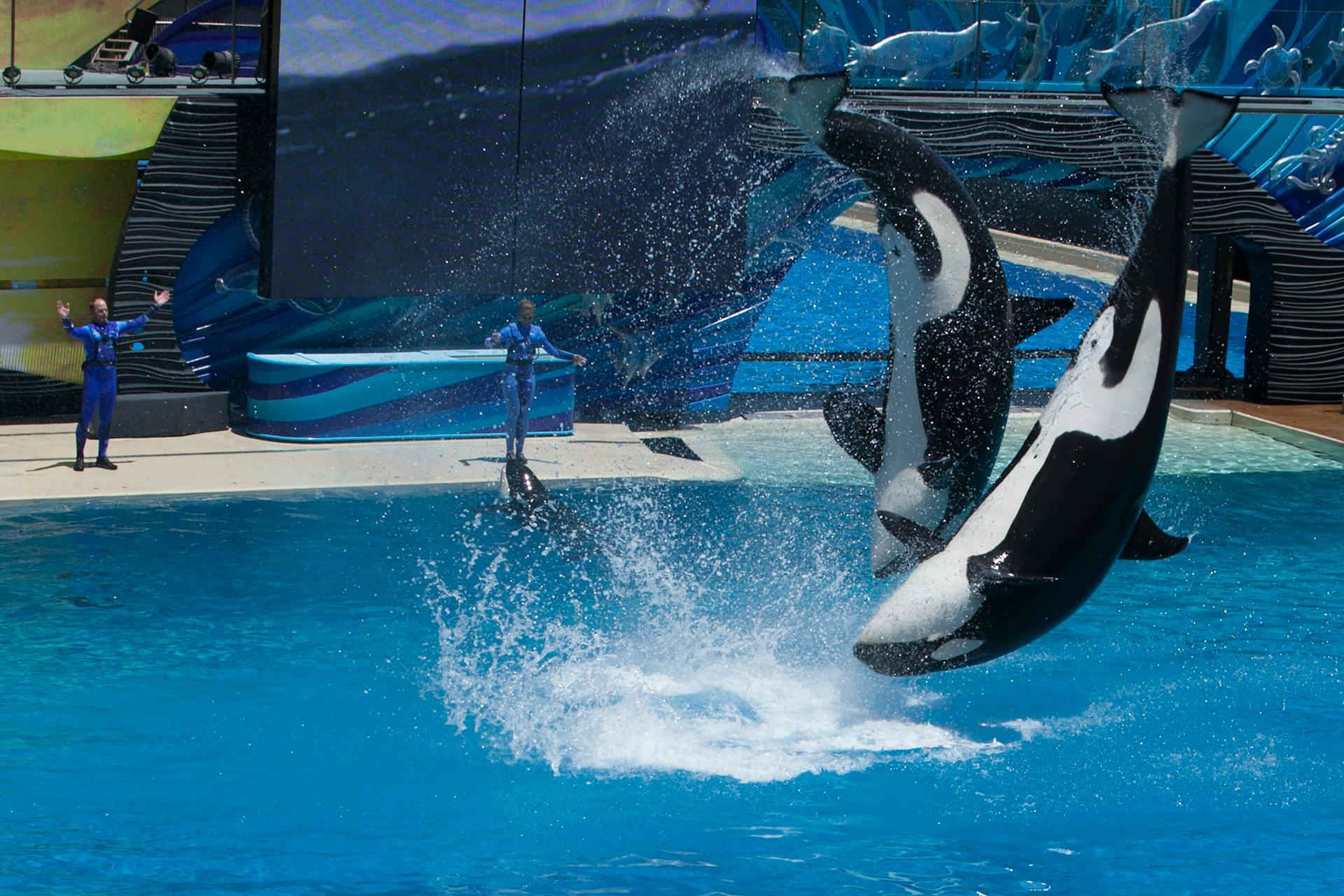
SeaWorld's killer whale breeding program in the US ended in 2016, but orcas are still suffering at their parks worldwide.
The company continues to breed other species, including bottlenose and pacific-sided dolphins, and beluga whales.
In 2019, World Animal Protection US criticized SeaWorld San Antonio for using animals in demeaning and unnatural performances for profit.
This venue still forces animals, including orcas, to perform for entertainment.
The SWIMS Act would phase out the exploitation of orcas, beluga whales, pilot whales, and false killer whales by making it illegal to capture and breed them for public display.
Supporting this act can help protect marine animals further.
Explore further: Breed-specific Legislation
Controversy and Impact
The controversy surrounding SeaWorld's treatment of orcas like Tilikum is quite intense. In 2010, a letter from Mötley Crüe member Tommy Lee to SeaWorld's president, Terry Prather, sparked a heated debate about the park's practices.
Tilikum's treatment at SeaWorld has been a major point of contention. Lee referred to Tilikum as SeaWorld's "Chief sperm bank" and argued that the orca's confinement was frustrating and inhumane.
SeaWorld responded to the letter, denying that their trainers entered the water with Tilikum for any purpose. However, the controversy only intensified with the release of the documentary film Blackfish in 2013, which exposed the dark side of keeping orcas in captivity.
The film had a significant impact on SeaWorld's attendance and revenue. In fact, it led to several popular musical groups cancelling their performances at the park.
Controversy
The controversy surrounding SeaWorld's treatment of orcas like Tilikum is a complex issue. The public's perception of the park's practices was severely impacted by the documentary film Blackfish, which premiered at the Sundance Film Festival in January 2013.
The film exposed the harsh realities of keeping orcas in captivity, leading to a significant drop in SeaWorld's attendance and revenue. Many musical groups cancelled their performances at SeaWorld and Busch Gardens' "Bands, Brew & BBQ" event in 2014.
In response to the film, Mötley Crüe member Tommy Lee wrote a letter to SeaWorld's president, Terry Prather, urging the park to release Tilikum from his tank. The letter was a plea from a concerned citizen, not a professional animal activist.
SeaWorld's VP of Communications responded to Lee's letter, stating that the park's trainers do not enter the water with Tilikum for any purpose, contradicting PETA's claims. The exchange between Lee and SeaWorld highlighted the deep-seated disagreements over the treatment of orcas in captivity.
For more insights, see: K9 Gunner Memorial Dog Park
In Popular Culture
Tilikum has been a subject of fascination in popular culture. Books have been written about him, including "Death at SeaWorld" by David Kirby and "Killer in the Pool" by Tim Zimmerman.
These books delve into the life of Tilikum and the dark side of keeping killer whales in captivity.
Tilikum's story has also been covered in episodes of the true crime podcast "The Last Podcast On The Left". Two episodes, titled "Episode 588- Horrors Of SeaWorld I- The Perfect Killer" and "Episode 589- Horrors of SeaWorld II- Free Tilly", were released on September 6th and 13th, 2024.
Tilikum's history and incidents have been widely discussed in popular culture, making him a well-known figure.
Description and Offspring
Tilikum was the largest orca in captivity, measuring 22.5 feet in length and weighing about 12,500 pounds.
He had distinctive physical characteristics, including pectoral fins that were 7 feet long, a fluke that curled under, and a 6.5-foot-tall dorsal fin that was collapsed to his left side.
Tilikum sired 21 offspring in captivity, with seven of them still alive as of April 2024.
Discover more: Animals in Captivity Statistics
Description
Tilikum was a massive orca, measuring 22.5 feet in length and weighing about 12,500 pounds.
His pectoral fins were incredibly long, reaching 7 feet in length.
His dorsal fin was quite tall, standing at 6.5 feet, but unfortunately, it was collapsed to his left side.
Tilikum's enormous size made him the largest orca in captivity.
Intriguing read: Killer Whale Dorsal Fin Collapse
Offspring
Tilikum sired 21 offspring in captivity, seven of which are alive as of April 2024.
At around eight or nine years old, Tilikum had his first calf at Sealand of the Pacific on December 24, 1991, to Haida II.
Kyuquot, his first son, was born and later transferred to SeaWorld San Antonio in January 1993.
Taku, born to Katina in 1993, was Tilikum's first calf born in Orlando, but unfortunately died on October 17, 2007.
Among his other offspring are Nyar (1993–1996), Unna (1996–2015), Sumar (1998–2010), Tuar (1999), Tekoa (2000), Nakai (2001–2022), Kohana (2002–2022), Ikaika (2002), Skyla (2004–2021), Malia (2007), Sakari (2010) and Makaio (2010).
Tilikum began training for artificial insemination in 1999, which led to the birth of Nakai in 2001 to Kasatka at SeaWorld San Diego.
Tilikum's artificial insemination efforts also resulted in the birth of Trua (2005), Nalani (2006), Adán (2010), and Victoria (2012–2013).
Recommended read: Orcas at Seaworld San Antonio
Complaints and Criticisms
PETA brought a lawsuit in 2011, arguing that SeaWorld's treatment of orcas is a form of involuntary servitude.
The lawsuit claimed that orcas are held in captivity, experiencing extreme physiological and mental stress, and that their lifespans are shortened due to captivity.
PETA alleged that orcas are born free and live in their natural environment until captured and torn from their families.
The complaint stated that orcas in captivity have a lifespan of 8.5 years, compared to up to 65 years in the wild.
SeaWorld dismissed the lawsuit as a "publicity stunt", but PETA argued that the treatment of orcas is a serious issue.
SeaWorld defended its treatment of orcas, claiming to set high standards in husbandry, veterinary care, and enrichment.
Featured Images: pexels.com