The Schnauzer breed standard is a set of guidelines that define the ideal characteristics of a Schnauzer.
The Miniature Schnauzer, the Standard Schnauzer, and the Giant Schnauzer are the three main types of Schnauzers recognized by kennel clubs.
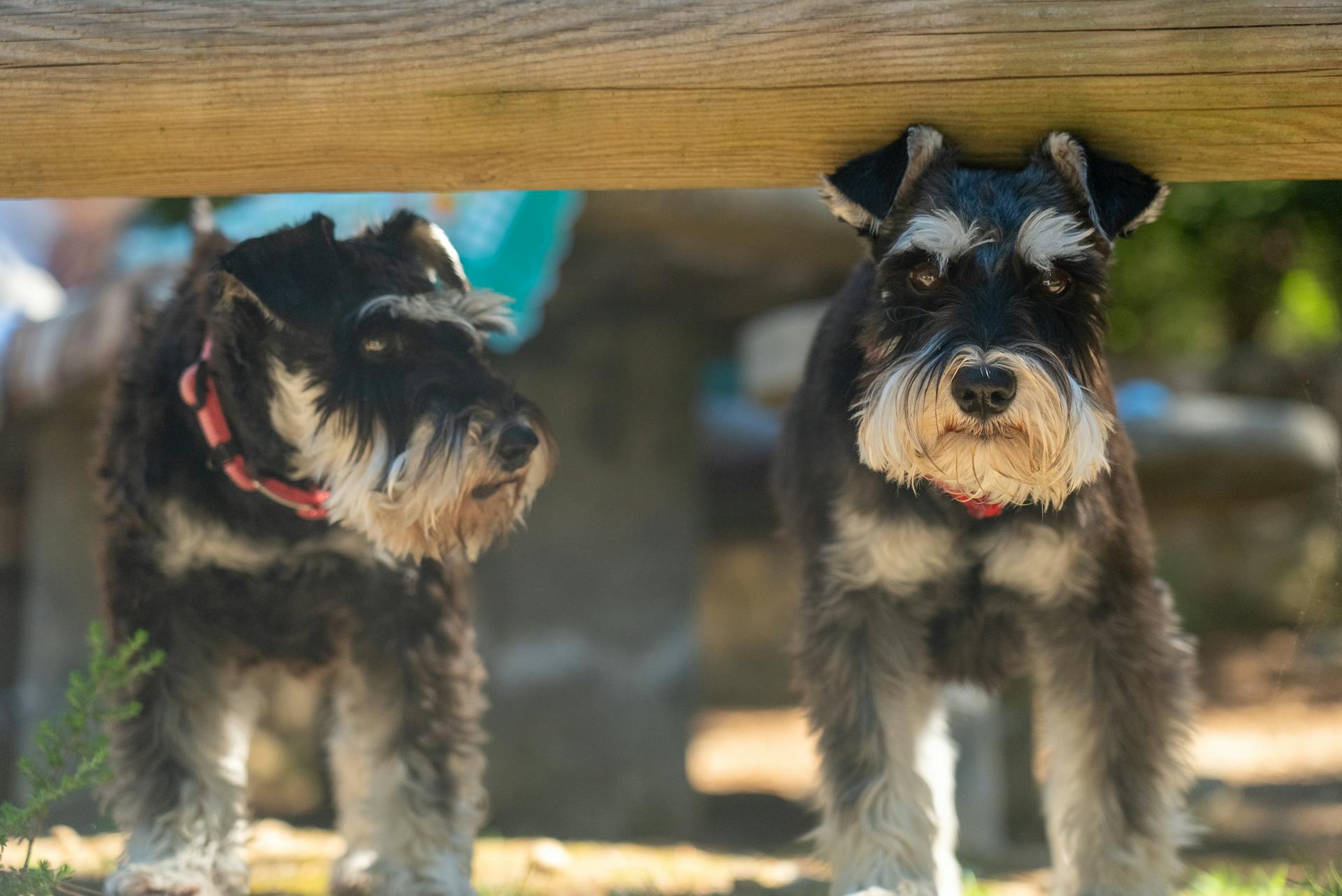
Schnauzers have a distinctive bearded face, which is a key characteristic of the breed. The bearded face is a result of the breed's history as a working dog, where it needed to protect its face from harsh weather conditions.
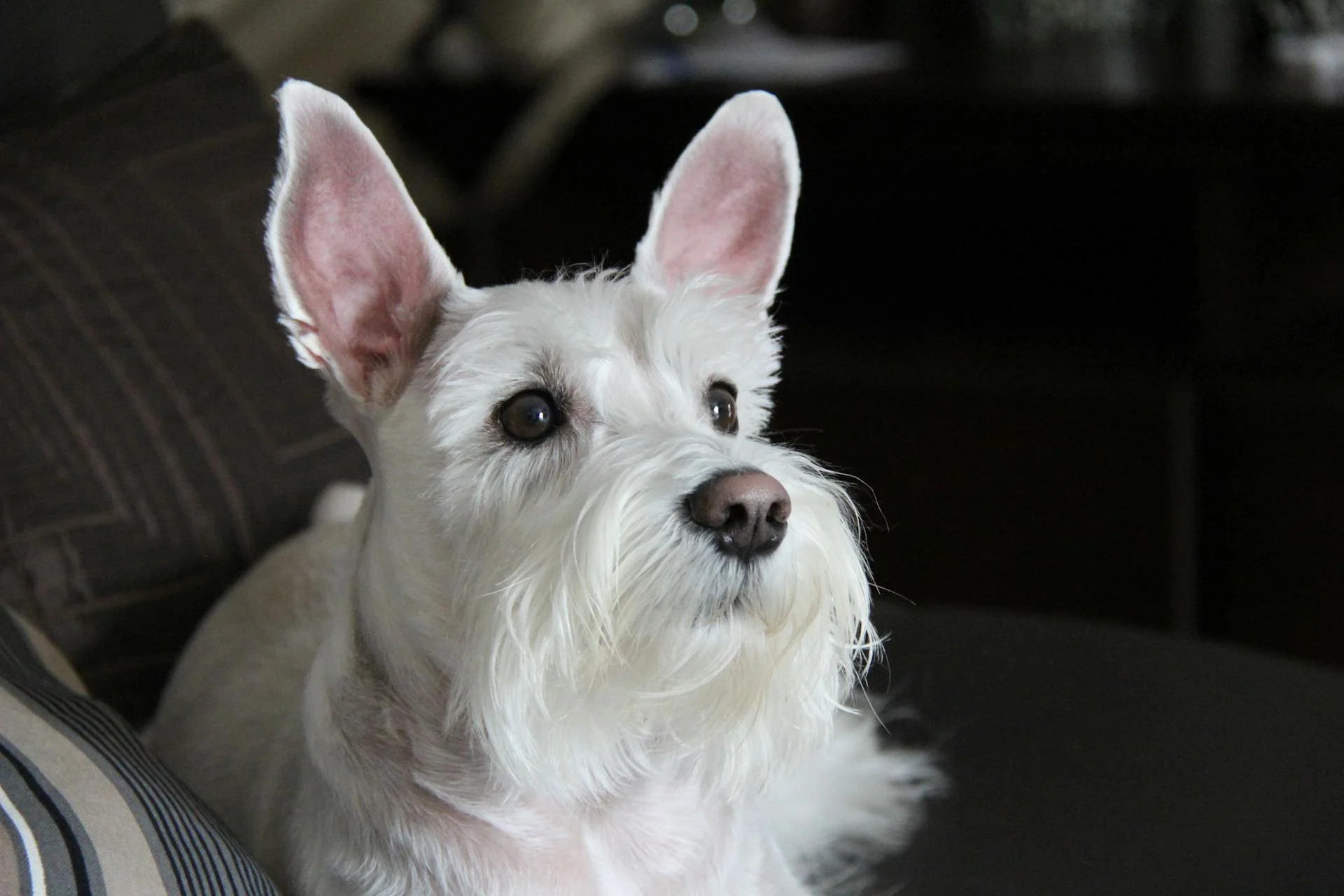
Their coats come in three main colors: salt and pepper, black, and white.
Here's an interesting read: Airedale Terrier Face
General Description
The General Description of the Giant Schnauzer breed is a crucial part of understanding what makes this dog tick. It's a bold and valiant figure, with a robust, strongly built body that's nearly square in proportion of body length to height at withers.
The breed's temperament is a perfect blend of spirit and alertness with intelligence and reliability. It's composed, watchful, courageous, easily trained, deeply loyal to family, playful, and amiable in repose.
The Giant Schnauzer's rugged build and dense, weather-resistant wiry coat make it a highly versatile working dog.
General Appearance
The Giant Schnauzer is a sturdy breed, built for strength and resilience. They are robust and nearly square in proportion, with a length of body equal to their height at shoulders.
Their expression is keen and alert, reflecting their intelligent and active nature. The breed's correct conformation is of more importance than color or purely "beauty" points.
The Giant Schnauzer has a dense, harsh coat, and is characterized by arched eyebrows, profuse whiskers, and a bristly mustache. Both cropped and uncropped ears are acceptable.
Their build is strongly muscular, with a rugged, weather-resistant coat that makes them well-suited for working in harsh environments.
Color
The Giant Schnauzer comes in two main colors: Black and Pepper and Salt.
A truly pure black coat is the standard for the breed, with a small white spot on the chest being the only acceptable marking.
Stray white hairs do not constitute a spot, but an actual spot has white pigmentation in the skin below.
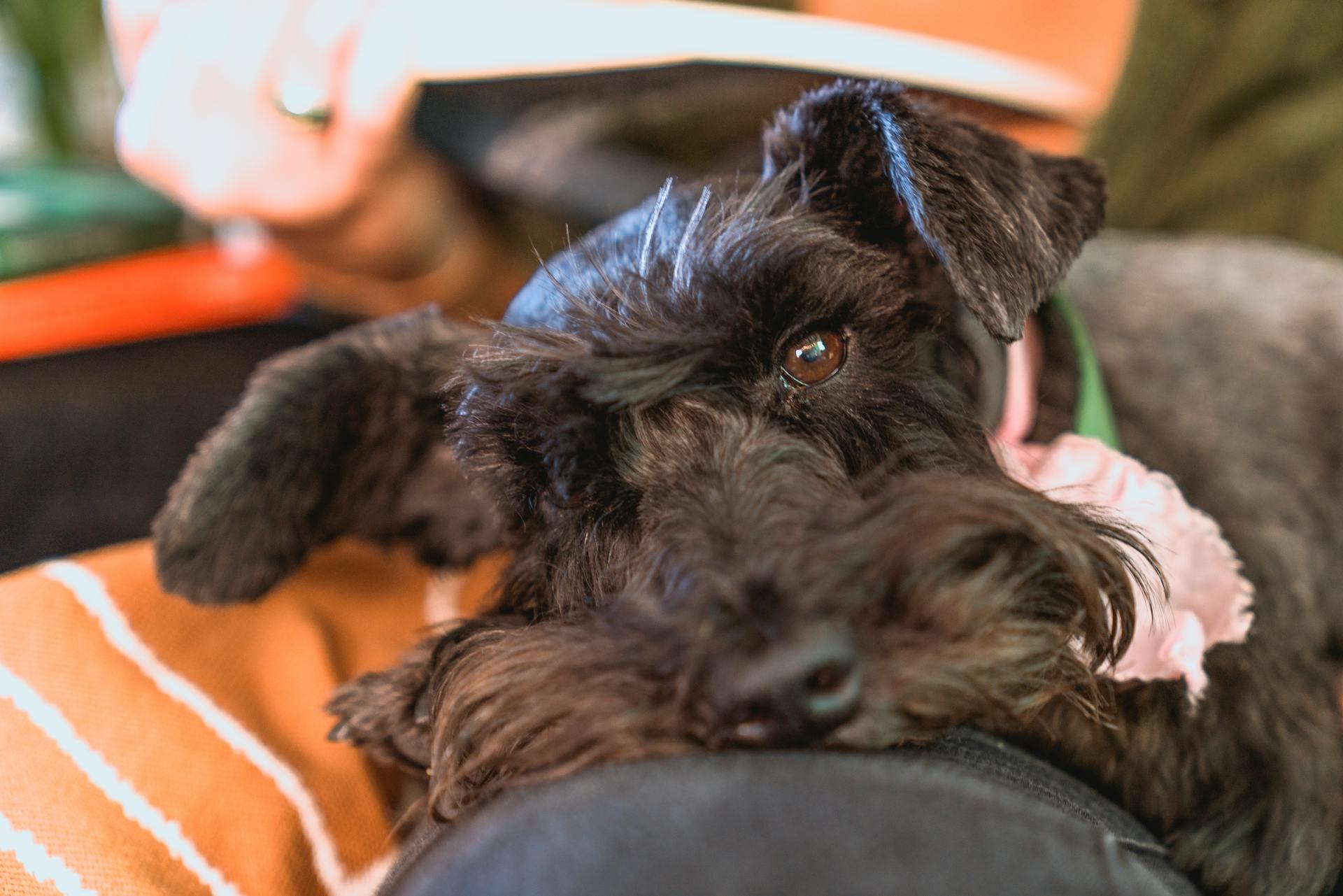
In the Pepper and Salt coat, the outer coat is a combination of banded hairs, black hairs, and white hairs.
These banded hairs, also known as "agouti", produce a gray coloration from a distance.
Any shade of gray is acceptable, but all Pepper and Salt Giant Schnauzers must exhibit a darker gray mask.
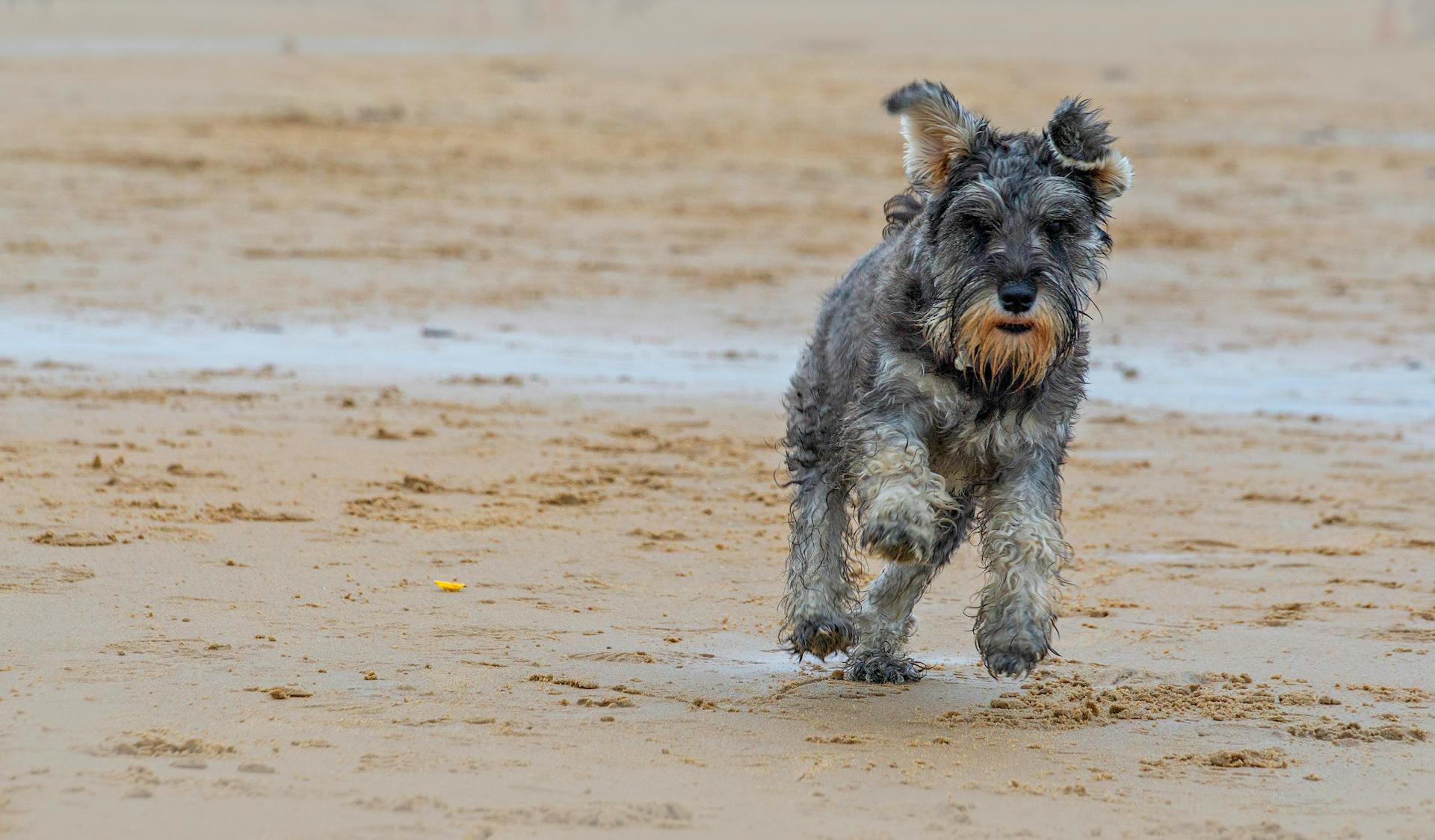
The facial mask harmonizes with the shade of the body coat, and the eyebrows, whiskers, cheeks, throat, chest, legs, and under tail are lighter in color with "peppering" of darker hairs.
See what others are reading: Salt and Pepper Schnauzer Puppies
Physical Characteristics
The Giant Schnauzer is a sturdy breed with a compact, substantial build. Its short-coupled body is strong and agile, making it well-suited for its original purpose of driving cattle through the Bavarian Alps.
A square build is the most efficient for a working dog, but it requires proper angulation of the front and rear assemblies to ensure smooth movement. Over-angulation can create movement faults, while under-angulation is less efficient.
To be effective, a Giant Schnauzer must be strong enough to drive cattle and agile enough to trot across rough terrain all day. Its robust build and moderate size make it well-suited for this task.
For your interest: Portuguese Cattle Dog
The Coat
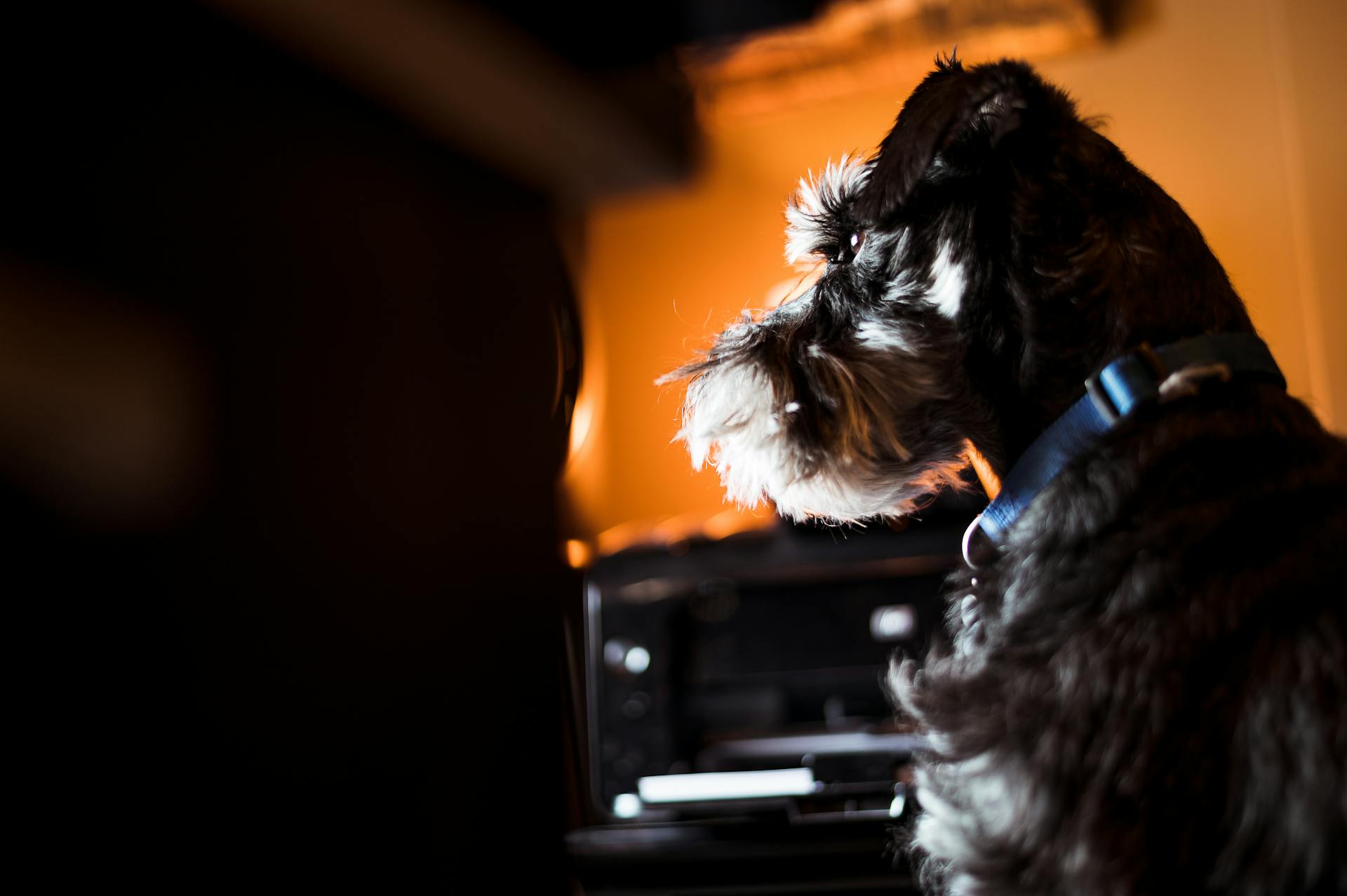
The Coat is a crucial aspect of the Giant Schnauzer breed standard. It's hard, wiry, and very dense, composed of a soft undercoat and a harsh outer coat.
A correct coat is a double coat, consisting of both the softer, insulating undercoat and the harsh, protective outer coat. This combination is necessary to meet the desired effect.
The coat is not just about looks; it's also about functionality. The Giant Schnauzer was developed to drive cattle and protect livestock, and its coat was designed to serve this purpose.
The standard is quite clear in its description of the ideal coat. It states that the coat should be "hard, wiry, very dense; composed of a soft undercoat and a harsh outer coat."
Exclusion of either element is a fault. If a dog is single-coated with only top or outer coat, it's unlikely to have a lot of leg furnishings. If a dog has only undercoat, it's likely to have profuse, soft furnishings.
If this caught your attention, see: Dogs Breeds That Start with B
The standard doesn't mention furnishings or leg hair, so judges shouldn't penalize for their presence or absence. However, if an exhibit has furnishings, it's best to trim them well to avoid interfering with the dog's movement.
A pretty Giant Schnauzer is one that looks like a one-piece dog where all the parts fit together smoothly in a moderate, functional way.
Head & Neck
The head and neck are a vital part of our physical characteristics, and understanding their unique features can be really interesting.
The head is made up of the cranium, which is the upper part of the skull that protects the brain. The cranium is made up of 22 bones that fuse together as we age.
The neck, also known as the cervical spine, is made up of 7 vertebrae that support the head and allow for a wide range of motion. This flexibility is essential for everyday activities like turning our heads to see something or looking over our shoulders.
The head and neck are also home to many vital organs, including the brain, eyes, ears, nose, and throat. These organs work together to help us sense and interact with the world around us.
The shape and size of the head and neck can vary greatly from person to person, with some people having longer or shorter necks, or heads that are more rounded or angular in shape.
Readers also liked: Standard Schnauzer Next to Person
Body
The body of a Giant Schnauzer is a key aspect of its overall physical characteristics. It's compact and substantial, with a short-coupled build that's strong and agile.
This compact build is a result of the breed's history as a working dog, bred to drive cattle through the Bavarian Alps. A square build is the most efficient for a working dog, assuming all aspects are correct.
The height at the highest point of the withers equals the body length from breastbone to point of rump. This unique proportion is crucial for the breed's overall structure and movement.
Expand your knowledge: English Cocker Spaniel Working
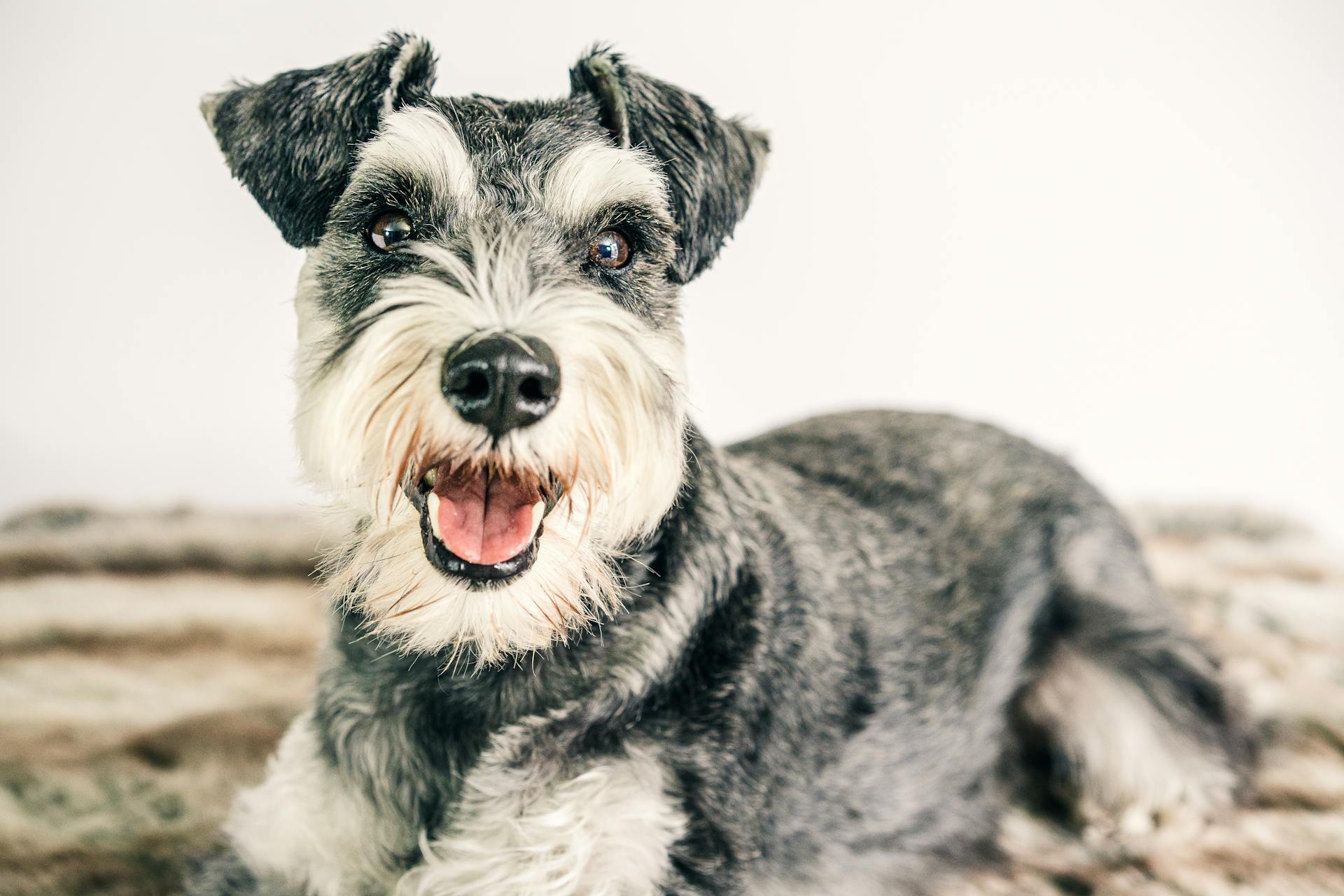
A well-developed loin section is essential for a Giant Schnauzer's build, as short as possible for a compact build. Adequate angulation of both front and rear assemblies is also necessary for proper movement.
Over-angulation can create movement faults, requiring the dog to compensate with extra movement. Under-angulation, on the other hand, is not as efficient and requires extra movement to accomplish the same forward locomotion.
The Tail
The tail of a Giant Schnauzer is set moderately high and carried high in excitement. It should be docked to the second or not more than the third joint.
A docked tail should consist of either two or three joints. The standard doesn't provide a guideline for undocked tails, but it's clear that a full tail is considered a serious fault.
An undocked tail is not a disqualification, but it's a fault that must be overcome with sufficient overall quality and breed type.
Worth a look: Are German Shepherds High Energy
Size and Proportions
The ideal height at the withers for dogs is 48 cms (19 ins), while for bitches it's 45.7 cms (18 ins). Any variations of more than 2.5 cms (1 in) in these heights are undesirable.
For Giant Schnauzers, the height at the withers is a bit different - males should be between 25-1/2 to 27-1/2 inches, while females should be between 23-1/2 to 25-1/2 inches. The mediums in both cases are desired.
Too small or too large dogs can be a problem - they may lack power or agility, which is important for a working dog. Size alone should never take precedence over type, balance, soundness, and temperament.
For more insights, see: Pointing Dogs Volume 1
Back
The back of a Giant Schnauzer is a crucial aspect of their overall build. A poor topline is a common issue in the breed, often resulting from too little angulation in the rear.
Many Giants at one time had a high rear end due to insufficient angulation, leading to a severe dip in the topline. This is a result of a difference in angulation from front to rear.
A Giant's topline should remain flat when moving, but it's okay to have a slightly sloping topline when standing alertly.
Explore further: When Is a Female Dog Ready to Breed
Size and Weight
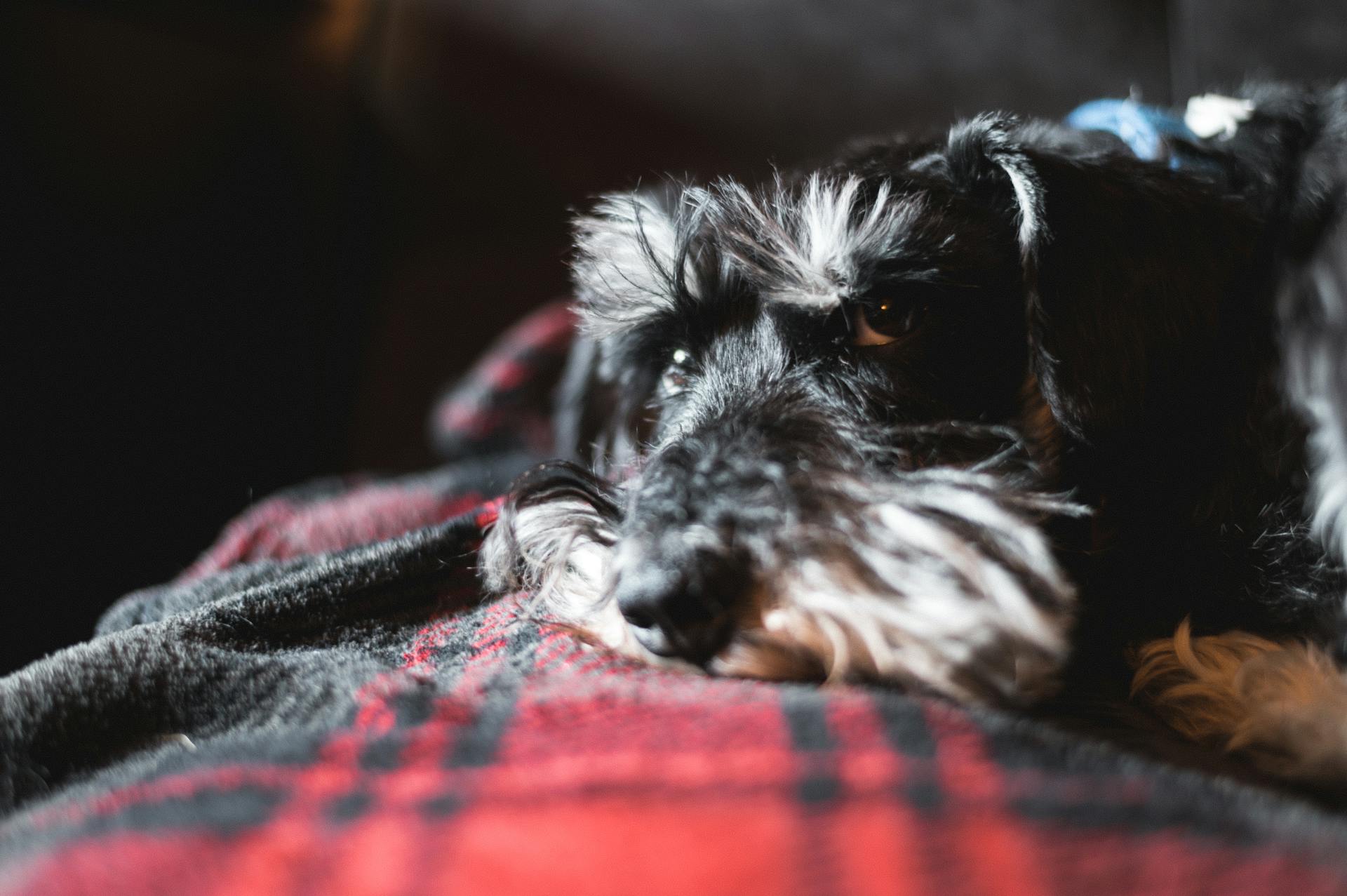
The ideal height at the withers for dogs is 48 cms, or 19 ins, while for bitches it's 45.7 cms, or 18 ins. Any variations of more than 2.5 cms, or 1 in, in these heights are undesirable.
For some breeds, the ideal height is a bit different. Males should be between 18½ to 19½ inches tall, while females should be between 17½ to 18½ inches.
The Giant Schnauzer breed standard specifies a height range of 25-1/2 to 27-1/2 inches for males and 23-1/2 to 25-1/2 inches for females. Size alone should never take precedence over type, balance, soundness, and temperament.
In the Giant Schnauzer breed, being too small can lead to a lack of power, while being too large can result in a lack of agility and maneuverability.
Bitches in the Giant Schnauzer breed should be between 23-1/2 to 25-1/2 inches at the withers, while dogs should be between 25-1/2 to 27-1/2 inches.
For your interest: Xl Bully Height
Movement and Gait
Movement and Gait is a crucial aspect of the Schnauzer breed standard. The trot is the gait at which movement is judged, and it should be free, balanced, and vigorous, with good reach in the forequarters and good driving power in the hindquarters.
Rear and front legs should be thrown neither in nor out, and when moving at a fast trot, a properly built dog will single-track. The back remains strong, firm, and flat, though the topline may appear high-stationed while the dog is standing alert.
The hindquarters are strongly muscled, in balance with the forequarters, with the legs from the hock joint to the feet being short and perpendicular to the ground. Feet should be well-arched, compact, and catlike, turning neither in nor out, with thick tough pads and dark nails.
Hindquarters
The hindquarters of a Giant Schnauzer are crucial for its movement and gait. They are strongly muscled, in balance with the forequarters.
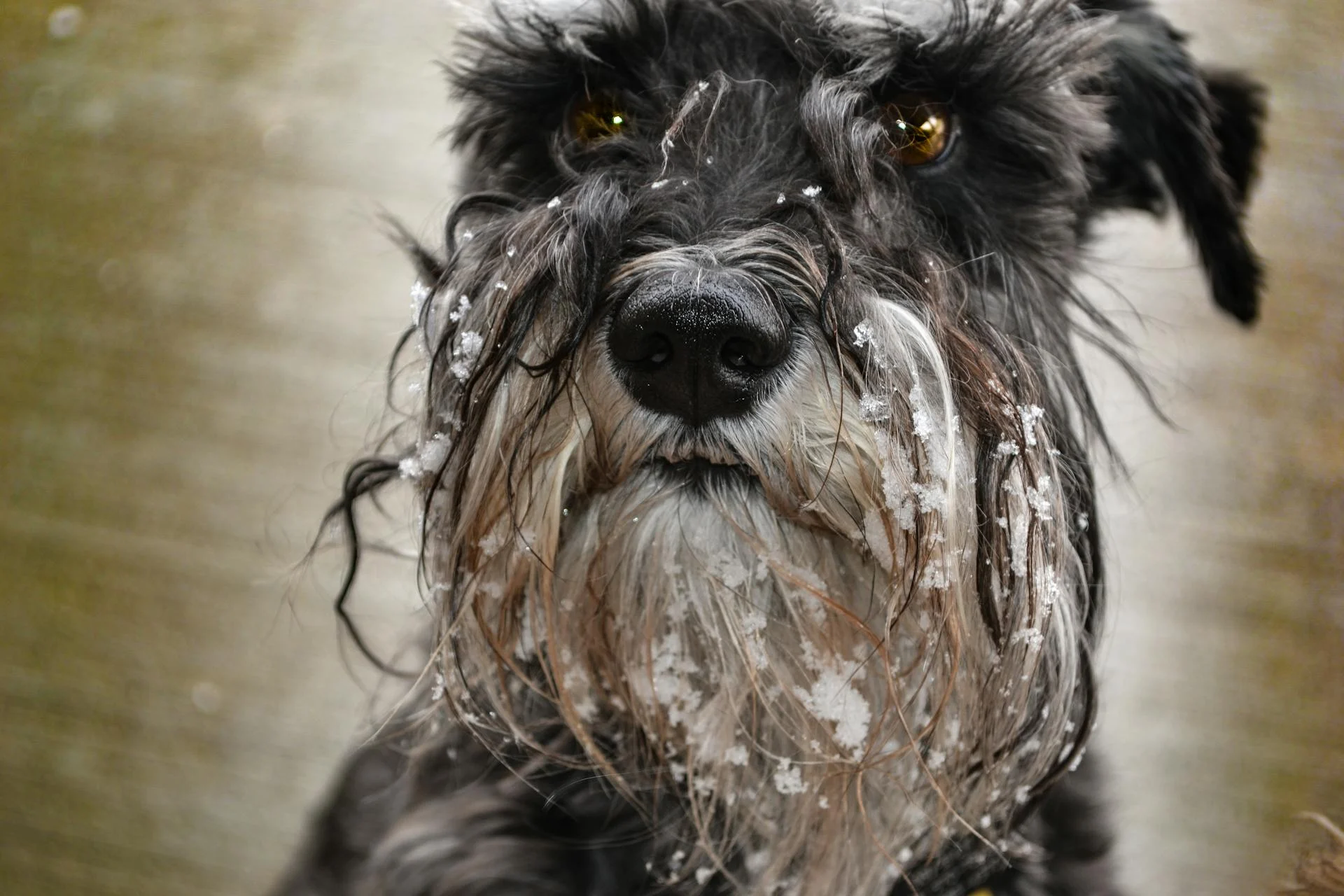
The upper thighs are slanting and well bent at the stifles, with the second thighs (tibiae) approximately parallel to an extension of the upper neckline. This anatomy allows for efficient movement.
A full and slightly rounded croup is essential for the breed's movement. It helps to balance the hindquarters and prevent over-building.
Dogs with weak or over-angulated rears cannot hold up over long days in rough terrain. This is a common fault that affects movement and stamina.
Sickle hocks, a product of incorrect bone lengths, greatly affect movement and stamina. It's a fault that should be avoided at all costs.
Well-arched, compact feet with thick tough pads and dark nails are essential for a Giant Schnauzer's movement. They should turn neither in nor out.
A different take: Fault (breeding)
Gait/Movement
The Giant Schnauzer's gait is a testament to its working heritage. It's free, balanced, and vigorous, with good reach in the forequarters and driving power in the hindquarters.
A properly built Giant Schnauzer will single-track when moving at a fast trot. This means its legs move in a straight line, with the back remaining strong, firm, and flat.
The trot is the working gait of the Giant Schnauzer, bred to work over rough terrain all day long. Efficient movement is essential for this breed.
The top line remains level in action, and the back is more likely to remain firm and flat when the dog is compact and balanced. This balance is crucial for the dog to both reach and drive.
The hindquarters are strongly muscled, in balance with the forequarters, with upper thighs slanting and well bent at the stifles. The legs from the hock joint to the feet are short, perpendicular to the ground while the dog is standing naturally.
Faults and Disqualifications
The Giant Schnauzer Breed Standard is very specific about what constitutes faults and disqualifications. Any deviation from the ideal dog must be penalized to the extent of the deviation.
Shyness is a major fault in the Giant Schnauzer, and a dog shall be judged fundamentally shy if it repeatedly shrinks away from the judge or fears unduly any approach from the rear.
A shy Giant Schnauzer will also shy to a marked degree at sudden and unusual noises. This is not a desirable trait in a breed that's meant to be confident and courageous.
Viciousness is a serious disqualification, and a dog that attacks or attempts to attack either the judge or its handler is definitely vicious. An aggressive or belligerent attitude towards other dogs is not necessarily viciousness, but it's still a major concern.
Overshot or undershot jaws are also considered faults, as are markings other than those specified in the breed standard. These are not just aesthetic issues, but rather a sign of a dog that may not be as healthy or well-bred as it should be.
Judges have some discretion when it comes to determining whether a dog is fundamentally shy, and they may give a puppy more than one chance to stand for examination. However, if a dog is deemed shy or vicious, it will be dismissed from the ring.
A different take: How to Train a Miniature Schnauzer Not to Bark
Summary
The written Standard for any breed, including the Giant Schnauzer, is the blueprint for that breed. It's a crucial document that ensures the traits associated with that breed are maintained.
The purpose of conformation judging is to choose the breeding stock that best exhibits those traits. This is done by a judge who has a working understanding of the breed's Standard.
The Breed Standard used for the Giant Schnauzer was originally written by the Pinscher Schnauzer Klub in Germany. They had a hand in the development of the breed and had a clear vision of what the ideal Giant Schnauzer should look like.
Type is always the main consideration when judging. This means that the judge needs to know what constitutes type to correctly choose the best breeding stock.
The Giant Schnauzer is a square-built dog of medium size with a rough coat, harsh beard and eyebrows, and a frame that supports trotting over rough terrain for hours. This physical description is crucial to understanding the breed's Standard.
Temperament is a vital aspect of the breed's Standard and is featured in the General Description, Size, and Faults sections.
For another approach, see: Smooth vs Rough Collie
Featured Images: pexels.com