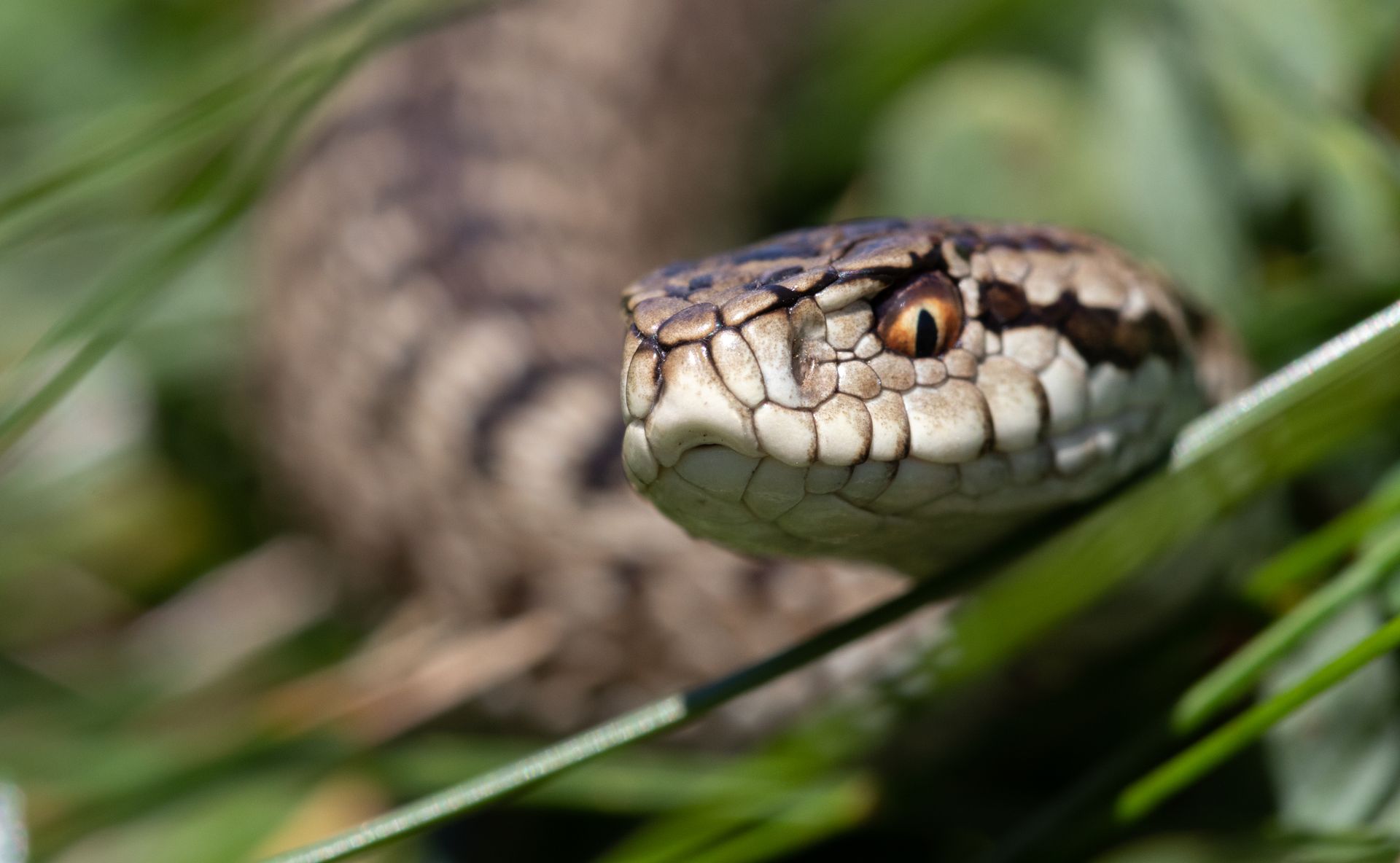
The Saharan Horned Viper is a fascinating creature, and to understand its importance, let's delve into its biology and ecological role. These venomous snakes are found in the Sahara Desert and are known for their distinctive horn-like protrusions on their heads.
They have a relatively small size, with adults reaching a length of about 50-60 cm. Their slender bodies allow them to navigate through dense sand and rocky terrain with ease.
Their diet consists mainly of small mammals, such as gerbils and jerboas, which they hunt using their sharp fangs. This diet plays a crucial role in maintaining the desert ecosystem's balance.
The Saharan Horned Viper's venom is a powerful tool that helps them immobilize their prey quickly, which is essential in their harsh desert environment.
On a similar theme: Desert Horned Lizard
Physical Characteristics
The Saharan horned viper is a small, yet distinctive snake. They average between 30 and 60 cm in length, with hatchlings typically measuring between 12 and 15 cm.
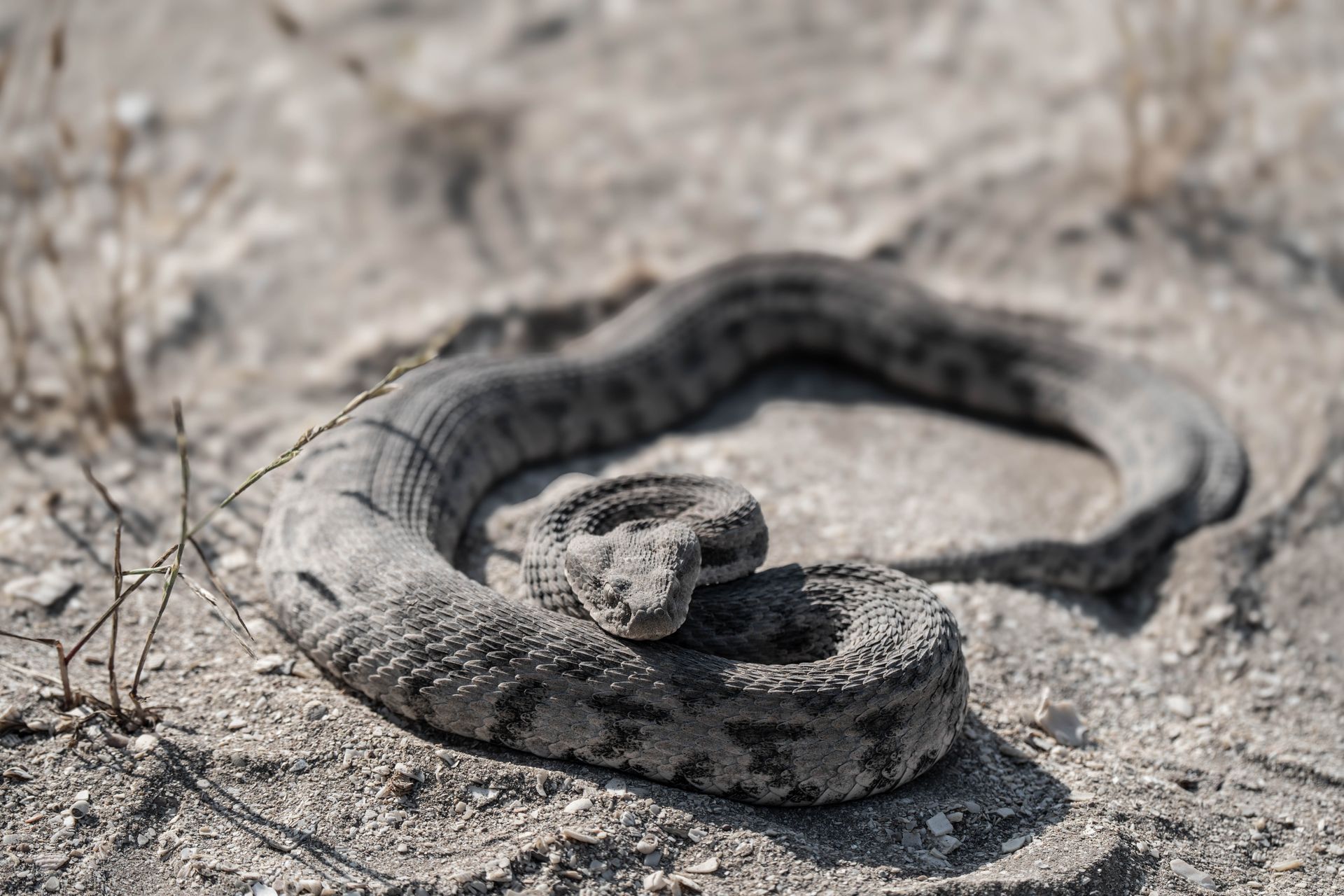
Their body structure is broad and flat, with a short tail that may have a black tip. The head is somewhat flat, broad, and triangular, with eyes positioned on the side of the head, and the neck is thin.
These snakes are covered in approximately 25 to 35 rows of heavily keeled scales. One of their most distinctive features is the presence of supraorbital "horns", which consist of a single scale above each eye, from which a dark line extends towards the back of the snake.
The body is brownish-yellow and gray in color, perfectly blending into the sandy environment in which they live. Dorsally, they have rectangular brown patches that are darker in color than the rest of the body.
Here are some key physical characteristics of the Saharan horned viper:
- Length: 30-60 cm (hatchlings: 12-15 cm)
- Body structure: broad and flat
- Head shape: flat, broad, and triangular
- Eye position: on the side of the head
- Neck: thin
- Scales: 25-35 rows of heavily keeled scales
- Color: brownish-yellow and gray
- Color pattern: rectangular brown patches on the back
Females are larger than males, and both sexes share the same general body structure and color patterns.
Distribution and Habitat
The Saharan horned viper is found in a wide range of countries, including Iraq, Syria, Saudi Arabia, Palestine, Yemen, Jordan, Israel, Qatar, Mauritania, Morocco, and Kuwait. It's also common in parts of North Africa, such as Libya, Egypt, and Sudan.
They prefer dry, sandy areas with sparse rock outcroppings, and tend to avoid coarse sand. They can occasionally be found around oases, and up to an altitude of 1,500 metres (4,900 ft).
These snakes favor cooler temperatures, with annual averages of 20 °C (68 °F) or less. They're usually found in altitudes of up to 1,500m.
They can be found in various habitats within the desert, including rock hills, sandy deserts, and wadis. They sometimes inhabit dunes, but rarely rock pavement and gravel plains.
Here's a list of the different habitats where the Saharan horned viper can be found:
- Rock hills
- Sandy deserts
- Wadis
- Dunes
They prefer humid environments, but temperatures must be high enough for them to bask and obtain heat. They can be found in sub-Saharan Africa (south of 30 degrees north) and Madagascar.
Behavior and Biology
Sahara horned vipers are primarily nocturnal, meaning they're active at night. They're also sedentary, staying in the same area.
Their burrowing skills are quite impressive, allowing them to dig and hide in the sand with ease. They extend their bodies into the sand, exposing only their eyes and nostrils.
As solitary animals, Sahara horned vipers don't have a complex social structure. They're generally even-tempered, but can administer toxic venom if threatened.
Behavior and Movement
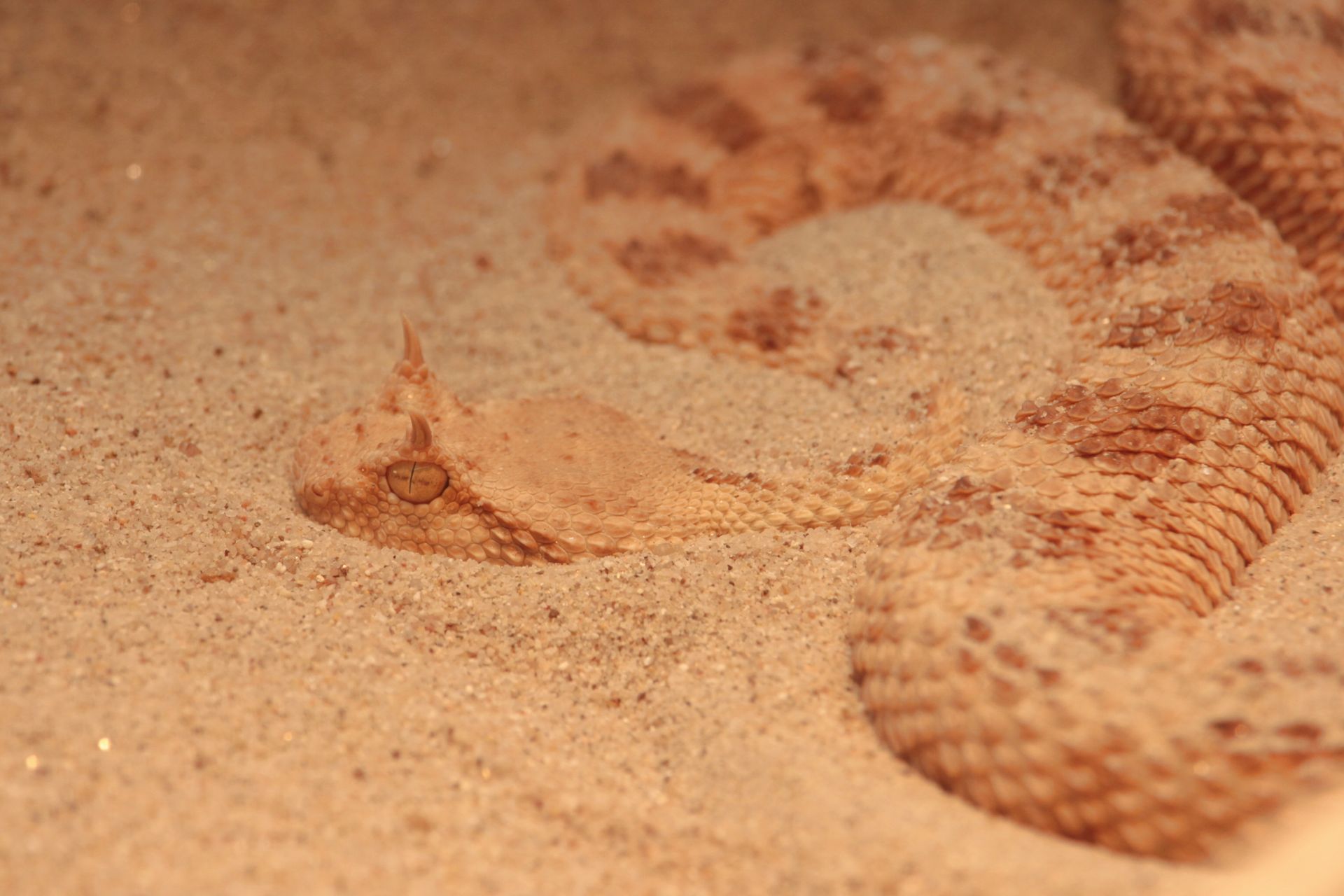
Sahara horned vipers are primarily nocturnal, active at night, and have a sedentary lifestyle, meaning they remain in the same area.
They are also fossorial, meaning they are good at digging and burrowing, which helps them avoid the scorching heat.
Sahara horned vipers can be found buried or partially buried in soft sand, using their camouflage to capture potential prey.
If threatened, they may assume a C-shaped posture and rapidly rub their coils together, producing a rasping noise.
This behavior is similar to that of saw-scaled vipers, and is a warning sign before the snake strikes.
Sidewinding is the primary method of locomotion for Sahara horned vipers, allowing them to move quickly across the desert sands with minimal contact between their belly and the ground.
This movement also helps prevent the snake from overheating, making it an efficient way for them to navigate their environment.
Sahara horned vipers often press their weight into the sand or soil when sidewinding, leaving behind whole-body impressions that can be used to make ventral scale counts.
Senses and Communication
Sahara horned vipers sense their environment using a range of methods, including vision, infrared light, touch, sound, vibrations, and chemicals.
Their vision is particularly important for strike accuracy and distance, and they're still able to capture prey even with hindered vision.
These snakes can detect vibrations, which is a significant factor in their foraging behavior.
They also have pit organs located just behind their nostrils, which allow them to detect warm-blooded animals, even in the dark.
Sahara horned vipers primarily communicate with other members of their species using chemical signals in the form of pheromones.
During the mating season, these chemical signals are used to locate members of the opposite sex.
In addition to pheromones, Sahara horned vipers also use vibrational stimuli to communicate.
Reproduction and Offspring
Sahara horned vipers are oviparous, meaning they lay eggs that hatch outside their bodies.
The breeding season for Sahara horned vipers typically occurs between April and June, with a gestation period ranging from 50 to 80 days.
Males and females reach sexual maturity at around two years old, which is relatively young compared to other species.
Copulation usually happens in the first week of April and takes place while the snakes are buried under the sand, with captive individuals copulating for up to four days.
Sahara horned viper eggs are typically laid in sheltered locations, such as under rocks or in abandoned burrows of reptiles or mammals.
The number of offspring can range from eight to 23, with an average of 15.5, although this number is not always consistent.
Predation and Ecosystem
The Sahara horned viper has a few natural enemies, including honey badgers, monitor lizards, and wild and feral cat species. These predators are able to take down the vipers due to their camouflage, which is provided by the vipers' colors.
The Sahara horned viper's burrowing behavior may also help it avoid predators, as it allows the vipers to hide from potential threats. This behavior is a key adaptation for the vipers, as it helps them stay cool during the day and ambush unsuspecting prey.
Related reading: Variable Bush Viper
The Sahara horned viper is a successful predator, and its diet consists primarily of small rodents, geckos, birds, and lizards. In captivity, adults have been observed feeding on weaver finches, lacertids, and dune geckos.
Here are some known predators of the Sahara horned viper:
- Honey badgers
- Monitor lizards
- Other snakes
- Feral cats
- Wild cats (such as wildcats and sand cats)
The Sahara horned viper's coloring provides good camouflage, which helps both in avoiding predators and surprising prey. This is a key adaptation for the vipers, as it allows them to be successful predators in the Sahara desert.
Conservation and Threats
The Saharan horned viper is listed as a species of Least Concern on the International Union for Conservation of Nature (IUCN) Red List.
Habitat loss and degradation due to human activities are the primary threats to reptiles in the Sahara region.
Pollution, introduction of alien species, and human disturbance also have significant impacts on the Sahara horned viper's ecosystem.
In some areas, local people consider the snake relatively non-threatening and tolerate it around villages.
However, in other places, people fear the snake and believe it has magic powers, even though it doesn't.
The Sahara horned viper plays a crucial role in controlling rodent populations that disturb livestock and agricultural fields.
Consider reading: Elapid vs Viper
Taxonomy
The Sahara horned viper has several subspecies, including Cerastes cerastes hoofieni, found in Saudi Arabia, and Cerastes cerastes karlhartli, which inhabits southeast Egypt and the Sinai Peninsula.
Cerastes cerastes mutila is another subspecies, discovered in southwest Algeria and Morocco.
The Sahara horned viper was previously classified as a subspecies of C. gasperettii.
Here are some of the Sahara horned viper's subspecies:
- Cerastes cerastes hoofieni - Saudi Arabia
- Cerastes cerastes karlhartli - southeast Egypt and Sinai Peninsula
- Cerastes cerastes mutila - southwest Algeria and Morocco
General Information
The Saharan horned viper is a relatively small species of snake, typically growing to an average length of 30-40 centimeters.
They are found in a variety of habitats, including deserts, dry scrublands, and rocky outcrops.
Their distinctive horn-like protrusions on their head are actually modified scales.
These snakes are carnivores and feed on small rodents, lizards, and other invertebrates.
Their diet is crucial to their survival in the harsh desert environment.
They are generally solitary animals and only come together for mating.
Frequently Asked Questions
What happens if you get bitten by a horned viper?
If you get bitten by a horned viper, the venom can cause severe bleeding problems due to issues with blood clotting. In rare cases, a viper bite can be fatal to humans, emphasizing the need for prompt medical attention.
Featured Images: pexels.com