The Ruby Throated Hummingbird Family is a fascinating group of birds, and understanding their habits and characteristics can help you attract them to your backyard. They are the most common hummingbird species in the eastern United States.
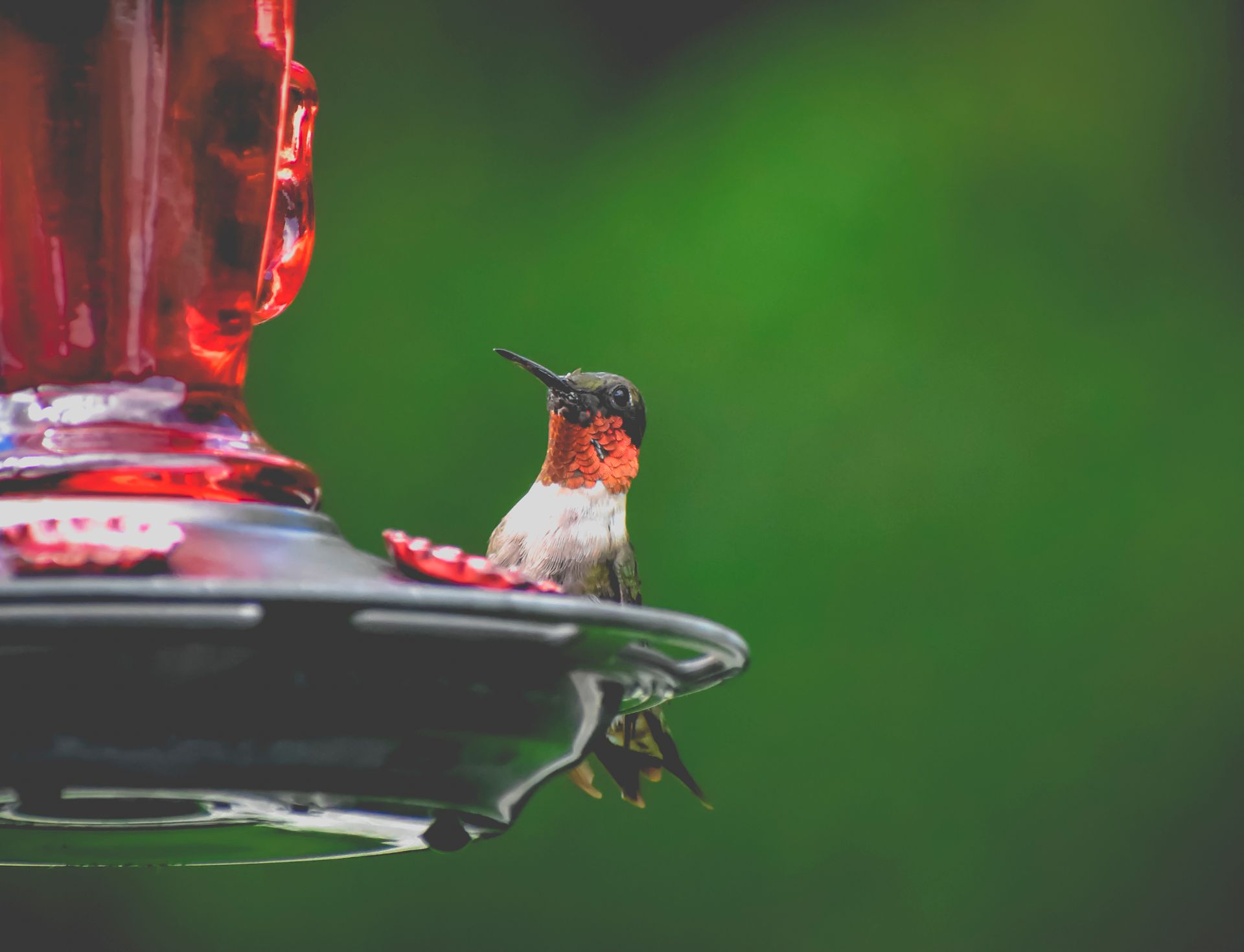
Ruby Throated Hummingbirds are known for their bright red throat patch, which gives them their name. They are also recognized by their iridescent green feathers and long, extendable tongues.
These birds are solitary and only come together during mating season. They are fiercely territorial and will defend their feeding grounds from other hummingbirds.
They are attracted to nectar-rich flowers and can visit up to 2,000 flowers per day.
Physical Characteristics
Ruby-throated hummingbirds are incredibly small, measuring between 7.5 to 9.0 cm in length.
Males weigh around 3.4 grams, while females weigh slightly more, about 3.8 grams.
Both males and females have iridescent green feathers on their back and head, with a white belly.
Males have a distinctive bright red shiny throat patch, which is a key identifier for this species.
Females, on the other hand, have a dull grayish throat and a square, white-tipped tail.
Young ruby-throated hummingbirds resemble adult females in appearance.
Here are some additional physical features of ruby-throated hummingbirds:
- endothermic
- homoiothermic
- bilateral symmetry
One notable difference between males and females is their size, with females being slightly larger.
Males are also more colorful, with their bright red throat patches standing out against the green and white of their feathers.
In terms of shape, males and females have distinct differences, with males having a forked tail and females having a square, white-tipped tail.
Ornamentation, such as the bright red throat patches, plays a significant role in the physical characteristics of ruby-throated hummingbirds.
Check this out: Red Breasted Nuthatch
Habitat and Distribution
Ruby-throated hummingbirds have a broad summer range in the U.S. and Canada, encompassing most of the U.S. east of the Rockies.
In Canada, you can spot them in southern portions of Ontario, Quebec, Alberta, Manitoba, and Saskatchewan. Their summer habitat includes deciduous woodlands, with a preference for areas bordering stream edges, orchards, and meadows.
They're highly attracted to residential yards with flowers and hummingbird feeders, which makes them a delight to have around. If you've spotted a Ruby-throated Hummingbird, log your location in the Hummingbird Migration Map to contribute to their cataloged sightings.
Ruby-throats usually migrate over the Gulf of Mexico, following a route that takes them from the Eastern United States and Canada to Mexico and Central America and back again. This migration pattern is a remarkable feat of endurance.
Here's a rough idea of where you might spot a Ruby-throated Hummingbird:
- Canada: southern portions of Ontario, Quebec, Alberta, Manitoba, and Saskatchewan
- United States: most of the U.S. east of the Rockies
Keep in mind that birds might not be everywhere in the coloured areas, and their distribution can change with seasons and available food.
Behavior and Life Cycle
Ruby-throated hummingbirds are solitary birds, meaning they don't usually stick together in groups. They're also territorial, with males defending their territories using calls.
During the breeding season, males fly in arcs, dive, and show off their plumage to attract females. Females lay one to three eggs at a time and may have several broods in a year. The incubation period lasts two weeks, and mom feeds the babies for three weeks until they leave the nest.
Ruby-throated hummingbirds are diurnal, active during the day. In very cold weather, they save energy by entering torpor, a state similar to hibernation where their heart and other organs slow down and their body cools down while they sleep.
Here are some key behaviors of ruby-throated hummingbirds:
- arboreal
- flies
- diurnal
- motile
- migratory
- daily torpor
- solitary
- territorial
Their behavior
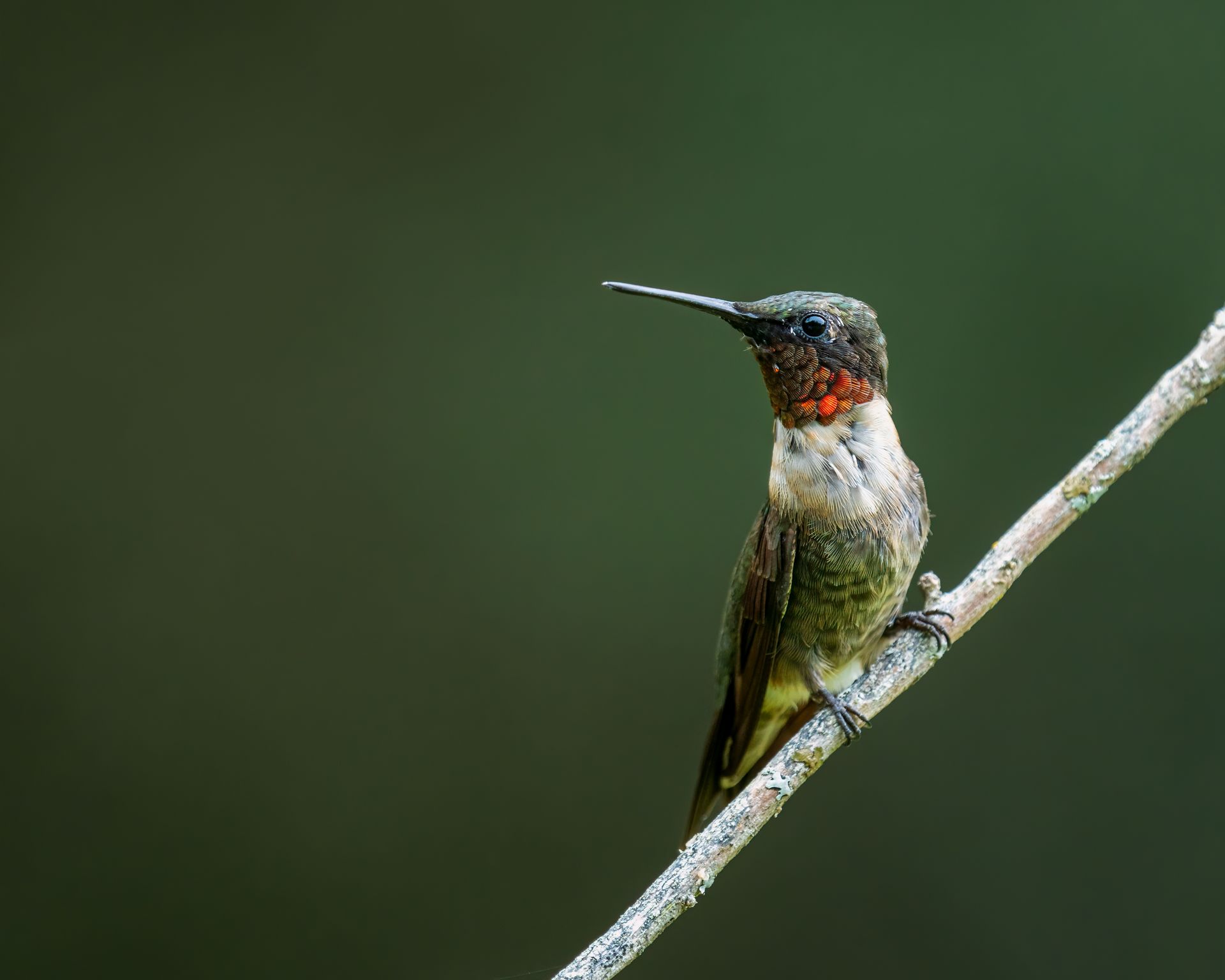
Ruby-throated hummingbirds are pretty fascinating creatures. They're solitary birds, which means they like to be alone, and males are territorial, defending their territories from other males using calls.
If you're lucky enough to have a hummingbird feeder in your yard, you might hear the males calling to each other. They'll also chase away any intruders that enter their territory.
These birds are diurnal, which means they're active during the day. But in very cold weather, they'll enter a state of torpor, similar to hibernation, to save energy.
Torpor is a clever way for hummingbirds to survive cold weather. Their heart rate slows down, and their body temperature drops, helping them conserve energy.
Before migrating to their breeding grounds or wintering areas, hummingbirds store energy in a layer of fat. This can double their weight, giving them the fuel they need for their long journeys.
Here are some key behaviors to keep in mind when thinking about ruby-throated hummingbirds:
- arboreal (they live in trees)
- flies
- diurnal (active during the day)
- motile (they move around)
- migratory (they move to different areas at different times of the year)
- daily torpor (they enter a state of torpor at night to conserve energy)
- solitary (they like to be alone)
- territorial (males defend their territories from other males)
Their vocalizations are also quite interesting. They make a variety of high-pitched sounds, like chirps, squeaks, and twitters, to communicate with each other.
Life Cycle
Male hummingbirds are quite the charmers, flying in arcs, diving, and showing off their stunning plumage to attract females into their territory.
Females lay one to three eggs at a time, and some may even have multiple broods in a year.
The incubation period lasts a relatively short two weeks.
After that, mom hummingbird takes care of her babies for three weeks, feeding them until they're ready to leave the nest.
These birds are generally solitary creatures, only coming together during the breeding season.
Diet and Predators
Ruby-throated hummingbirds have a few predators they need to watch out for. Adult birds are killed by raptors like loggerhead shrikes and sharp-shinned hawks.
Blue jays are also known to eat hummingbird nestlings. House cats are probably the most common predator of ruby-throated hummingbirds.
Here are some known predators of ruby-throated hummingbirds:
- Loggerhead shrikes
- Sharp-shinned hawks
- Blue jays
- House cats
What Do They Eat?
Ruby-throated hummingbirds primarily feed on nectar from flowers, using their long bills and specialized tongues. They also consume small insects and spiders for protein, often catching them in mid-air or plucking them from vegetation.
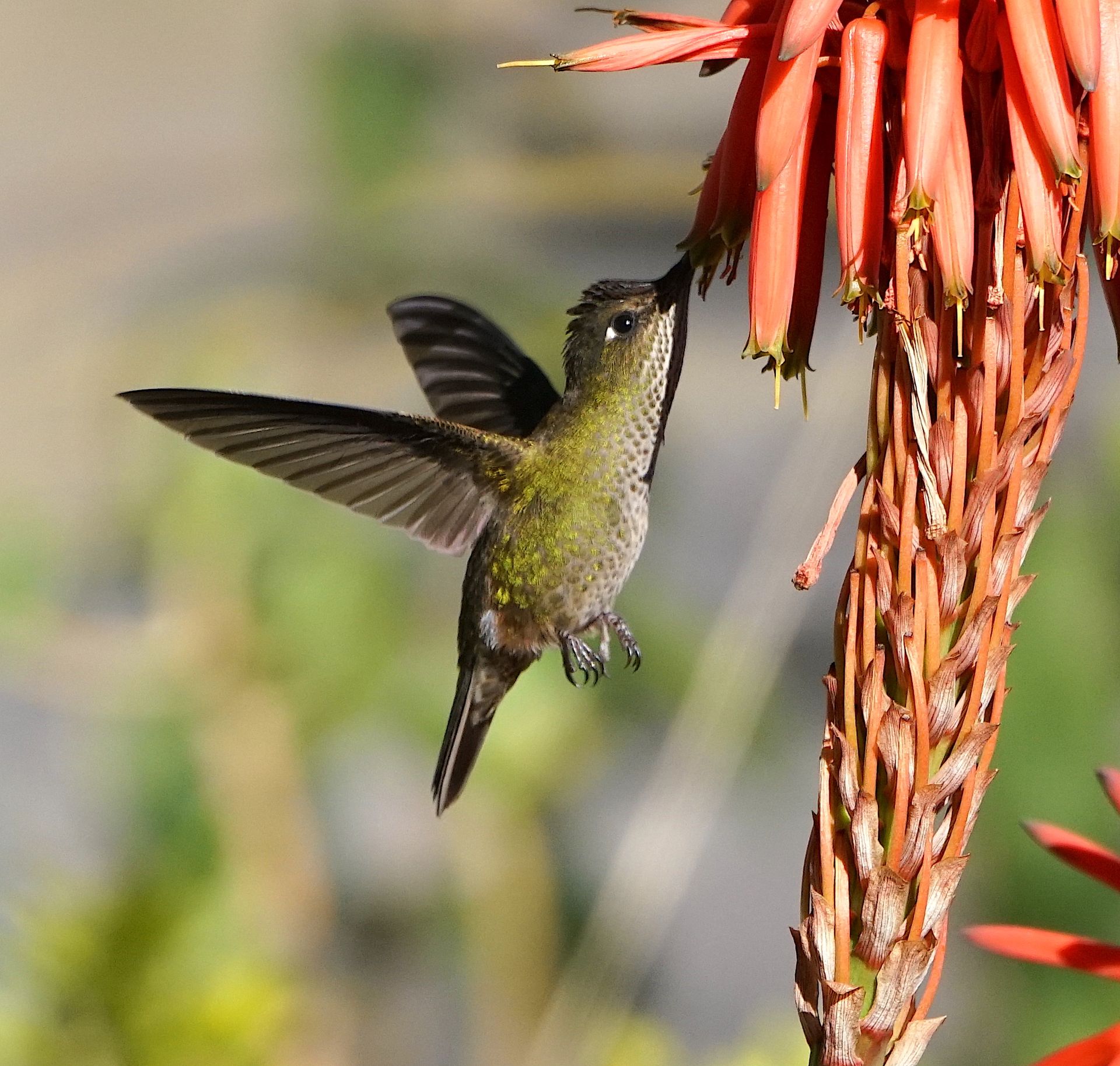
These birds require frequent feeding due to their high metabolism.
Ruby-throated hummingbirds are attracted to plants that produce red flowers, and they consume twice their body weight in food each day.
They get water from the nectar they drink, so they don't need to drink water separately.
Some of the plants that hummingbirds take nectar from include red buckeye, jewelweed, columbine, trumpet creeper, and cardinal flower.
Some of the insects that ruby-throated hummingbirds eat include mosquitoes, spiders, gnats, fruit flies, and small bees.
Here's a list of some of the plants that ruby-throated hummingbirds eat from:
- Red buckeye (Aesculus pavia)
- Jewelweed
- Columbine (Aquilegia canadensis)
- Trumpet creeper (Campsis radicans)
- Red morning-glory (Ipomea coccinea)
- Trumpet- or coral-honeysuckle (Lonicera sempervirens)
- Fly-honeysuckle (Lonicera canadensis)
- Cardinal flower (Lobelia cardinalis)
- Catchflies (Silene)
- Fire-pink (Silene virginica)
What Eats Them and How They Avoid It
Ruby-throated hummingbirds have some fierce predators. Adult birds are killed by raptors such as loggerhead shrikes and sharp-shinned hawks.
House cats are probably the most common predator of ruby-throated hummingbirds. Blue jays also prey on their nestlings.
These birds have a few tricks up their sleeves to avoid being eaten. They pollinate flowers, which is an important ecosystem impact.
Some of their known predators include:
- Loggerhead shrikes
- Sharp-shinned hawks
- House cats
- Blue jays
Conservation and Ecology
The Ruby-throated Hummingbird family is a fascinating topic, and as it turns out, they face some significant threats to their survival.
Currently listed as Least Concern, Ruby-throated Hummingbirds are still vulnerable to habitat loss and climate change.
Conservation efforts are underway to protect them, focusing on preserving nectar corridors along their migration routes and encouraging the planting of native flowering plants in gardens and urban areas.
This is crucial for their survival, as they rely heavily on these flowers for food and shelter.
The Ruby-throated Hummingbird population is estimated to be around 36 million mature individuals.
Here's how you can help spot them in the wild:
- Look for them near nectar-rich flowers or hummingbird feeders
- Listen for their high-pitched squeaks and the distinctive hum of their wings
- Observe their hovering behavior and rapid darting movements
- In the eastern United States, watch for them from spring to early fall
Nesting and Breeding
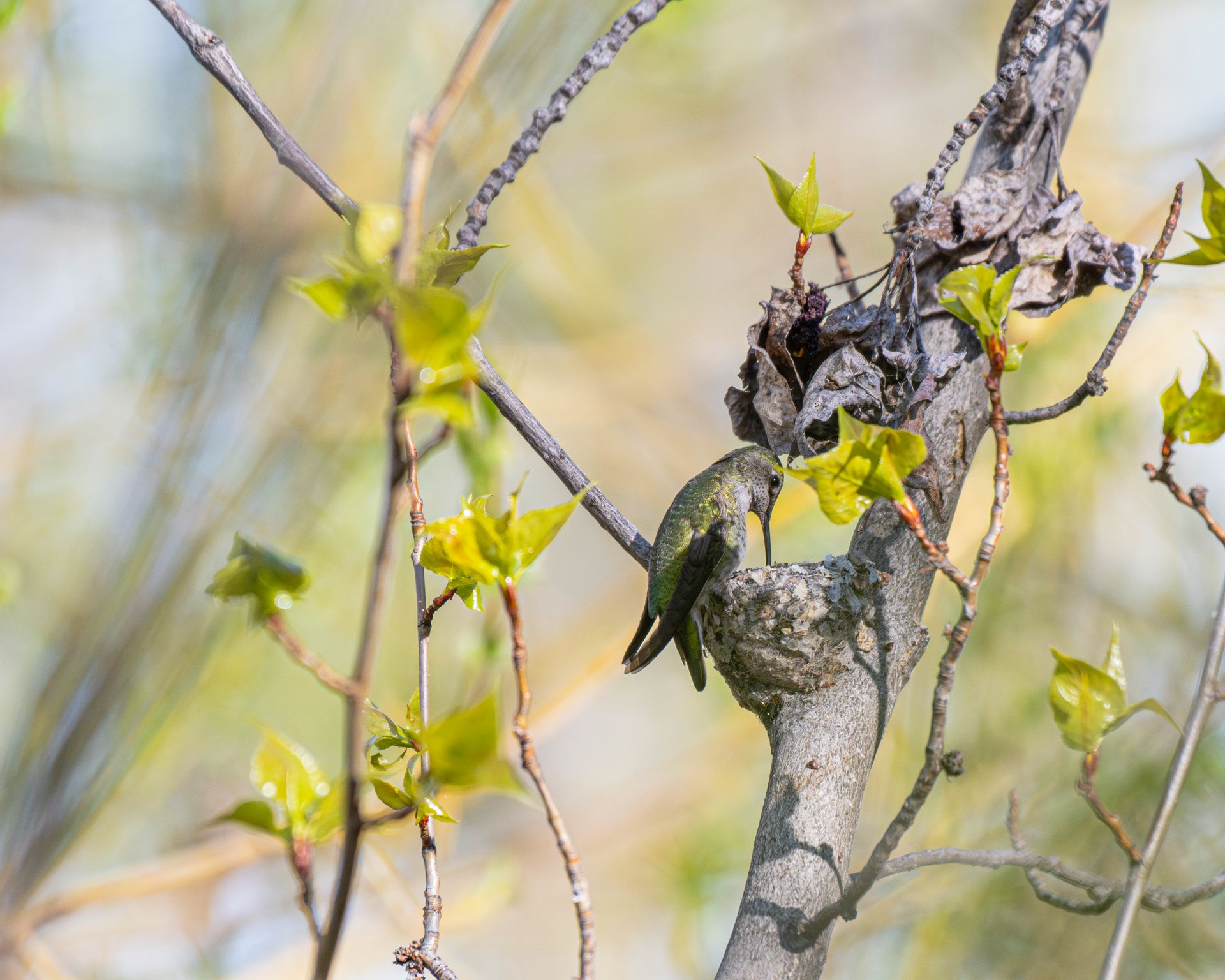
Ruby-throated hummingbirds are solitary nesters, with females building tiny, cup-shaped nests using plant fibers, spider silk, and lichen on slender tree branches.
Females typically lay two white, pea-sized eggs, which incubate for about 12-14 days.
Males play no role in nesting or chick-rearing, leaving the female to raise the chicks alone.
The female builds the nest, lays the eggs, incubates them, broods the chicks, and feeds them until they are 22 to 25 days old.
After the male and female copulate, the male does not provide any parental care.
The female keeps feeding the chicks until they are 22 to 25 days old.
Ruby-throated hummingbirds can raise up to three broods each year.
Here's a breakdown of the reproductive cycle:
In the spring, males return to the breeding area, find a territory, and perform elaborate courtship displays to attract females.
Frequently Asked Questions
Do male and female Ruby-throated Hummingbirds look the same?
No, male and female Ruby-throated Hummingbirds have distinct visual differences, with the female lacking the male's ruby red throat patch. The female has a white throat patch and is slightly larger than the male.
Featured Images: pexels.com