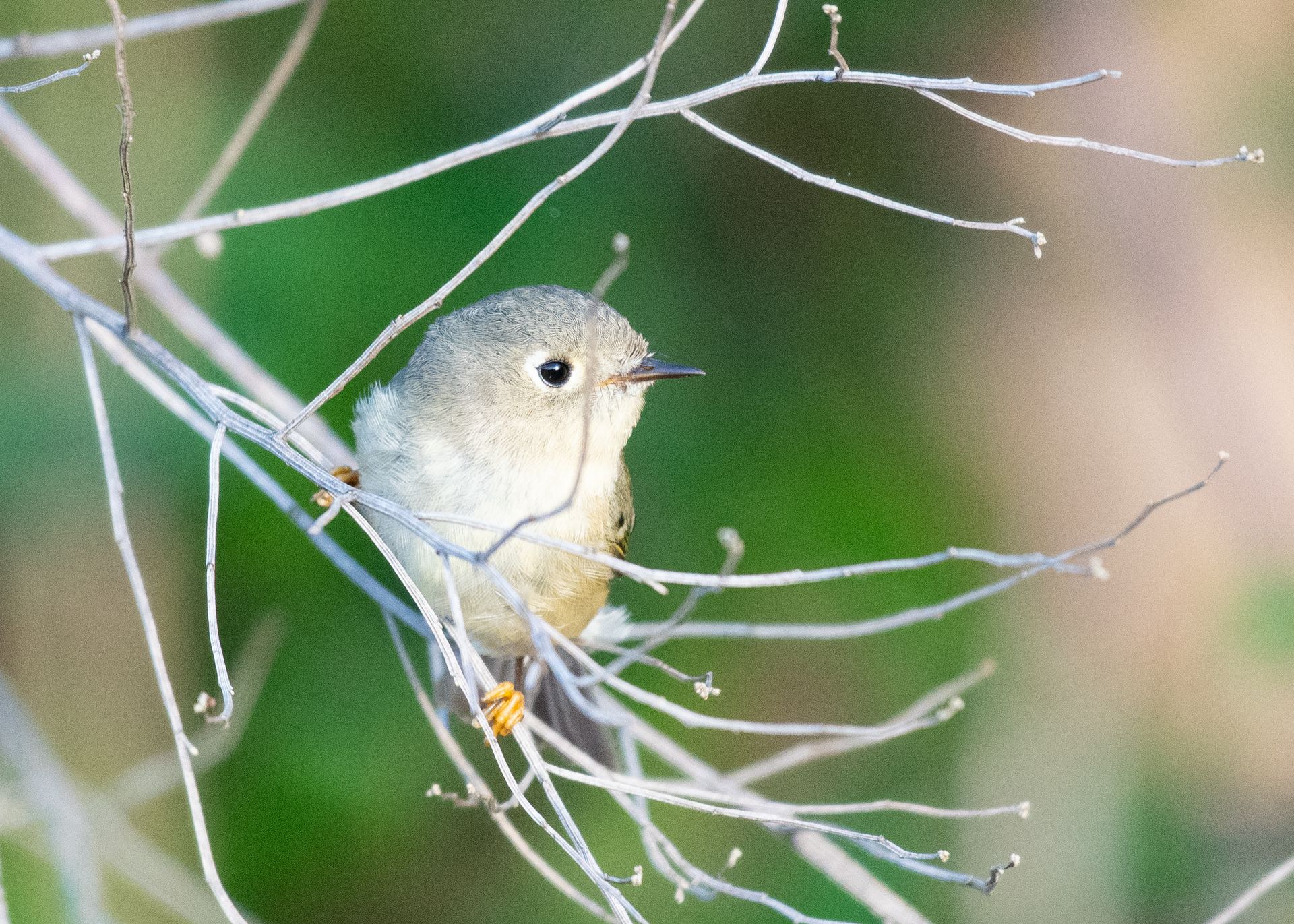
The Ruby Crowned Kinglet is a tiny bird that's incredibly adapted to its environment. They're found in North America, specifically in the western and central regions.
These birds inhabit dense shrubs and coniferous forests, often at high elevations. They're also known to venture into urban areas, particularly in backyards with dense shrubbery.
One of the kinglet's most distinctive habits is its foraging behavior, where they flit from branch to branch, searching for insects and spiders. They're also known to visit bird feeders, especially during the winter months when food is scarce.
Ruby Crowned Kinglets are social birds that often form flocks, particularly during migration and winter. They're also known to be aggressive towards other birds, especially during breeding season.
Take a look at this: Where Do Ruby Throated Hummingbirds Winter
Conservation
Ruby-crowned Kinglets are common and stable in numbers, with a global breeding population of 100 million according to Partners in Flight.
Their numbers were stable between 1966 and 2019, despite some regional increases and declines.
Kinglets seem to handle human disturbance and habitat fragmentation fairly well.
Their wide use of habitats in winter helps them tolerate human disturbances.
Logging and wildfire may reduce their numbers.
Partners in Flight rates them 6 out of 20 on the Continental Concern Score, indicating a species of low conservation concern.
Kinglet Behavior
Ruby-crowned kinglets are social birds that often forage in small groups.
They have a unique foraging style, using their long, pointed beaks to extract insects and spiders from tree bark and foliage.
In the winter months, they've been known to form flocks of up to 20 birds.
Kinglets are also known to be quite aggressive when defending their territory, chasing away other birds that enter their space.
Male ruby-crowned kinglets will often sing from a prominent perch, announcing their presence to potential rivals.
In the breeding season, kinglets are monogamous, with pairs forming during the spring and remaining together for the summer.
Kinglets are also known to cache food, hiding seeds and insects in various spots around their territory for later retrieval.
Frequently Asked Questions
How do you attract a Ruby-crowned Kinglet?
To attract Ruby-crowned Kinglets, offer them small, easily accessible food sources like chipped sunflower seeds or peanut bits in platform feeders or seed trays. They also love suet, so consider adding a suet feeder to your backyard.
Featured Images: pexels.com