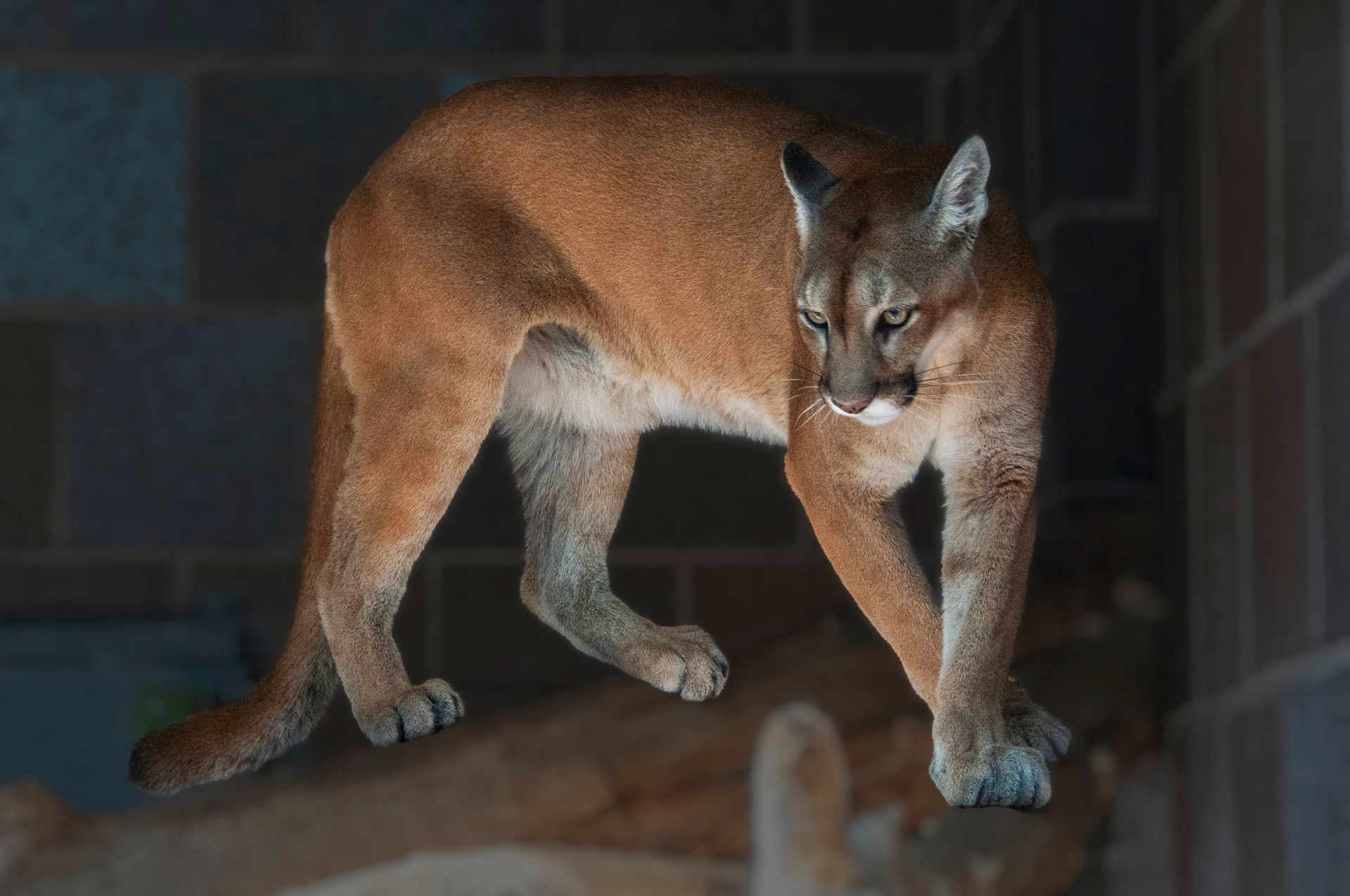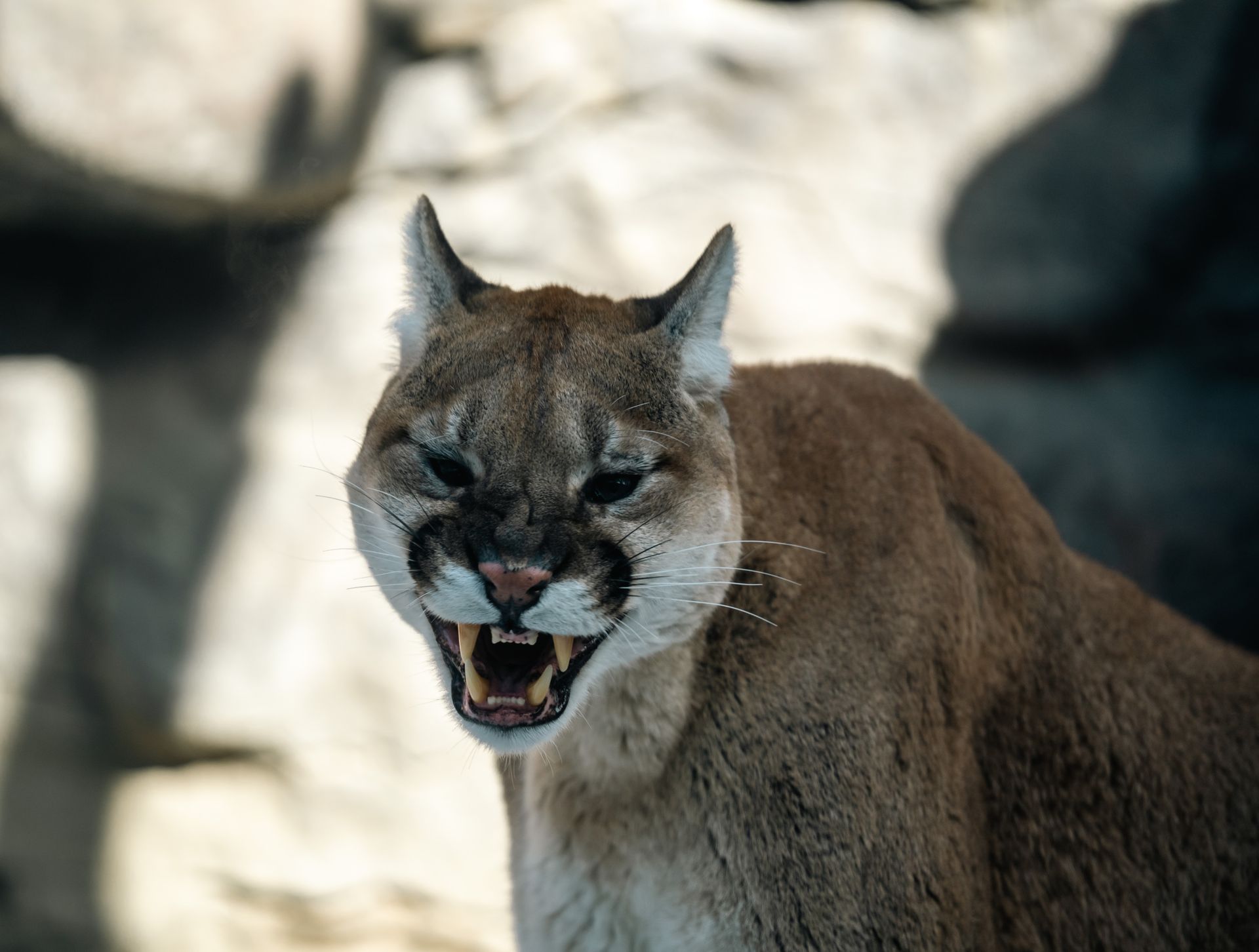
The Puma concolor coryi is a fascinating subspecies of cougar found in the southwestern United States and northern Mexico. They are also known as the Arizona cougar.
These big cats are a type of mountain lion, and they are well adapted to their desert and mountain habitats. They have a thick coat that helps them conserve heat and a strong sense of smell that aids in hunting.
In the wild, Puma concolor coryi are solitary animals and have a large territory that they mark with their scent to keep other cougars away. They are excellent climbers and often drag their prey up into trees to feed or hide it from other predators.
Related reading: Cougar Puma Concolor
Physical Description
The Florida Panther, also known as Puma concolor coryi, is a majestic creature with a unique physical description.
Males of the species can grow up to 159 lb (72 kg) in weight, and reach a head-to-tail length of 5.9 – 7.2 ft (1.8 – 2.2 m).
Females, on the other hand, are generally shorter and more slender, with a weight range of 64 – 100 lb (29 – 45.5 kg).
At birth, both males and females have a spotted pattern and striking blue eyes. As they mature, the eyes change to a yellowish shade, while the spots disappear entirely.
The fur of the upper body takes on a deep tan hue, while the underbelly is usually creamy white in color. Distinctive black markings appear on the tips of the tail and ears.
Here's a breakdown of the species' classification:
- Kingdom: Animalia
- Phylum: Chordata
- Class: Mammalia
- Order: Carnivora
- Family: Felidae
- Genus: Puma
- Species: P. concolor
- Subspecies: P. c. couguar
Habitat and Diet
Florida panthers use a variety of habitats, such as wetlands, swamps, upland forests, pastures, and citrus groves. They need dense, mature upland forests to truly thrive.
Adult males require territories of about 200 square miles. That's a huge area, roughly the size of a small town.
Female panthers need home ranges of about 75 square miles. This is significantly smaller than the territory needed by males.
Historically, Florida panthers ranged across the southeastern United States. They could be found in lands spanning across Florida, Georgia, Louisiana, Mississippi, Arkansas, Alabama, and parts of Tennessee and South Carolina.
Today, panthers live in the forests and swamps of South Florida. They can be found in pinelands, hardwood hammocks, and mixed swamp forests.
Male panthers have a home range of 200 square miles on average. This is consistent with what we know about their territory size.
Females span less area, averaging about 75 square miles. This smaller territory size is likely due to their smaller home range needs.
Related reading: Boa Constrictor Imperator Size
Locations and Distribution
The Florida panther, also known as puma concolor coryi, can be found in the southeastern portion of the state of Florida.
Its range is limited to the southern part of Florida, where it inhabits the swamps, forests, and grasslands of the Everglades and Big Cypress Swamp.
You can spot a Florida panther in places like the Everglades National Park, Fakahatchee Strand Preserve State Park, and Big Cypress National Preserve.
However, spotting one is highly unlikely due to their rarity and ability to hide from people.
Florida panthers have a strong preference for living in specific ecosystems, including tropical hardwood hammocks, pinelands, and mixed freshwater swamp forests.
These areas are now mostly protected, which is good news for the survival of this majestic creature.
Florida panthers are generally nocturnal and migrate through their territory during the day, often spending time in wetlands and moving to grasslands in the evening.
Conservation Status
The Florida panther is currently classified as endangered, a status it's held since 1973 due to extensive hunting and habitat loss.
As of the 1970s, it's estimated that only 20 to 30 Florida panthers existed in the wild.
The subspecies is highly susceptible to threats due to its small population size and low genetic diversity.
Florida panthers are protected throughout southern Florida's swamplands, including Everglades National Park and Big Cypress National Preserve.
Habitat loss and fragmentation are the primary causes of the Florida panther's endangered status, leading to issues like urban sprawl, pollution, and disease.
Between 2014 and 2023, a staggering 80% of panther fatalities were caused by vehicle collisions, making road safety a major concern.
The Florida panther population is still recovering from the devastating effects of mercury poisoning, which was linked to industrial pollution in the 1950s.
Conservation efforts aim to conserve and safeguard not only the Florida panther but also other vulnerable and endangered species found in the state.
National Efforts
The National Wildlife Efforts for the Florida Panther is a collaborative project between Everglades National Park and the Florida Fish and Wildlife Conservation Commission (FWC) to establish conservation corridors that will increase the original range of panthers in Florida Everglades.
Everglades National Park has teamed up with various charities and governmental bodies to create these corridors, aiming to boost Florida panther habitat and prevent habitat loss.
The Comprehensive Everglades Restoration Plan (CERP) is a key strategy in this initiative, which aims to manage water resources, prevent floods, and maintain the Florida panther habitat in the Everglades, southern Florida, and southwest Florida habitats.
This project is expected to benefit not only the Florida panther but also other endangered species, such as birds, alligators, sharks, and other animals.
The Nature Conservancy has also been actively involved in protecting thousands of acres of prime panther habitat and corridors that link those places.
Fun Facts and Information
The Florida panther, also known as Puma concolor coryi, is a majestic and endangered subspecies of cougar.
Florida panthers primarily feed on white-tailed deer and feral hogs, which live in upland forested areas, and require at least one large meal every week to maintain their health.
Females with kittens need about twice the amount of food as males, and will eat smaller prey like raccoons, armadillos, rabbits, birds, and even alligators when larger prey is scarce.
Here are some fun facts about the Florida panther:
- Florida panthers can be found in portions of a handful of counties in south, southwest, and south-central Florida.
- They occupy less than 5% of their historic range, which once spanned across the Gulf states and beyond.
- The Florida panther is also known as the Florida cougar, Florida puma, and Coast Rican puma.
Fun Facts and Information
The Florida panther is an incredible species, and I'm excited to share some fun facts and information about it.
The Florida panther's scientific name is Puma concolor coryi, and it's a federally endangered subspecies. It's also known as the Florida cougar or Florida Puma.
These majestic animals can grow up to 6-7 feet long and weigh between 70-160 pounds. That's a pretty impressive size!
In the wild, Florida panthers typically live for about 12 years. Unfortunately, their population is relatively small, with estimates ranging from 120-230 adults and subadults.
The Florida panther's diet consists mainly of white-tailed deer and feral hogs, which they need to eat at least once a week to maintain their health. Females with kittens require even more food, about twice the amount of a regular panther.
Here's a breakdown of the Florida panther's diet:
One hundred years ago, Florida panthers could be found roaming throughout the Gulf states and beyond, but today they're living on less than 5% of their historic range. They're mostly found in portions of a handful of counties in south, southwest, and south-central Florida.
The Florida panther is a remarkable animal, and it's essential we do our part to protect and conserve it.
Mountain Lion vs. Cougar
Mountain lions and cougars are actually the same animal, scientifically known as Puma concolor. They're native to the Americas and are known for their striking tawny or golden coats.
The mountain lion's territory spans across western North America, from British Columbia, Canada, to the southern Andes in South America. They're skilled hunters, preying on deer, elk, and even smaller animals like rodents and rabbits.
Mountain lions are solitary animals and have large home ranges, which can cover up to 100 square miles. They're also excellent climbers, often using trees to stalk their prey or escape danger.
Their distinctive vocalizations include a loud roar, a hissing sound, and even a unique "chuffing" noise, which sounds like a low-pitched purr. These vocalizations help them communicate with other mountain lions.
General Information
The Puma concolor coryi, also known as the Florida panther, is a subspecies of cougar found only in south Florida.
They are listed as an endangered subspecies due to habitat loss and fragmentation.
These big cats are known to inhabit a relatively small area, with estimates suggesting they cover around 4,000 square miles.
Their population is estimated to be less than 200 individuals.
Frequently Asked Questions
What is the meaning of Puma concolor coryi?
The scientific name Puma concolor coryi breaks down to "one color" in Latin, referring to the panther's uniform coat. This name is derived from the Latin word "concolor", meaning one color.
How many Black Panthers are left in Florida?
There are approximately 200 Florida panthers left in the wild, not to be confused with the mythical Black Panther. Learn more about the endangered Florida panther and its habitat in southern Florida.
What is the population of the Puma concolor coryi?
The estimated population of Puma concolor coryi is between 20-50 animals. This critically low number highlights the need for conservation efforts to protect this subspecies.
Featured Images: pexels.com