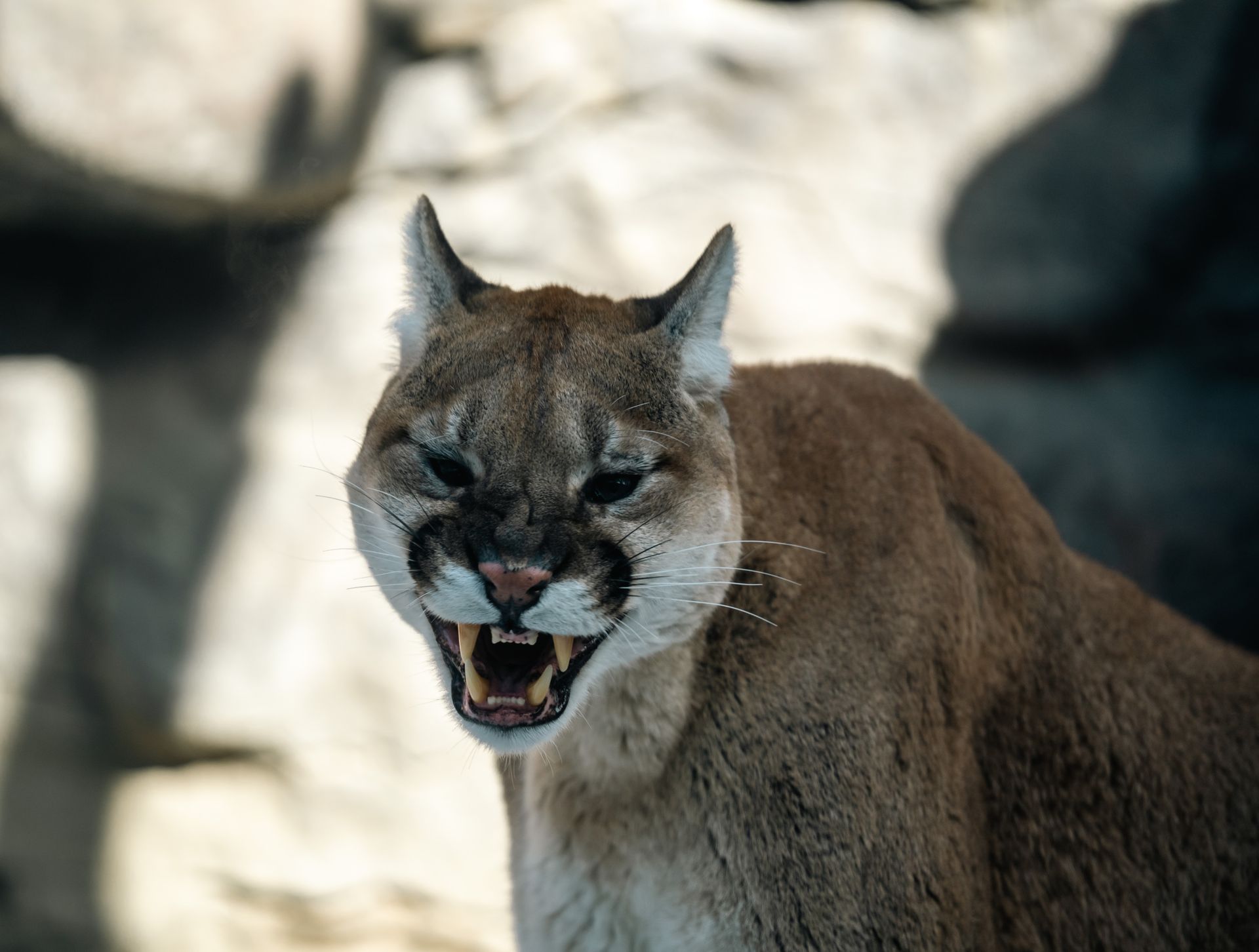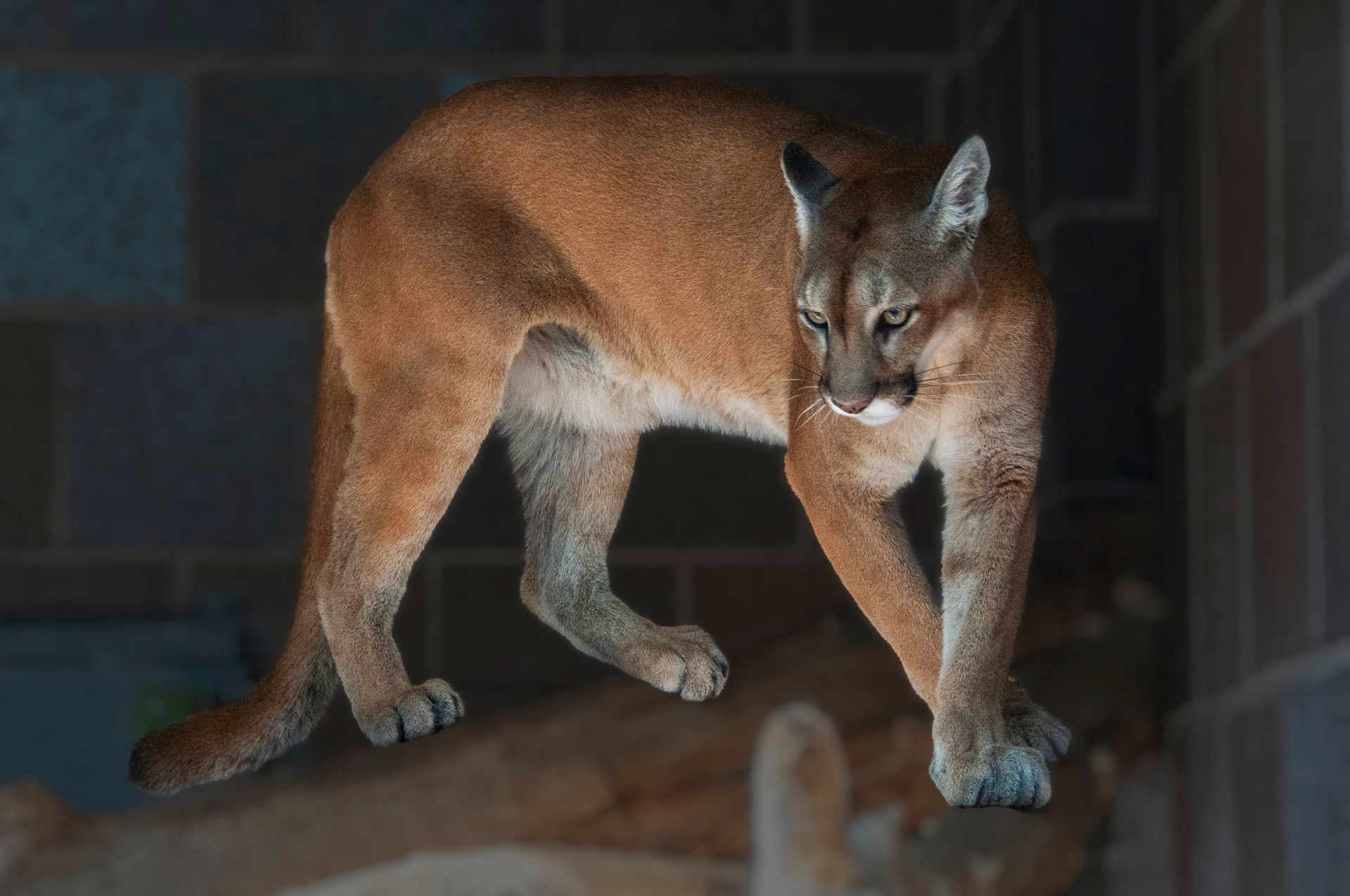
Felis concolor coryi, also known as the Florida panther, is a critically endangered subspecies of cougar.
The Florida panther is a majestic animal, with males weighing up to 80 pounds.
In Florida, the panther is considered an endangered species due to habitat loss and fragmentation.
The panther's habitat is primarily in south Florida, where it roams in a fragmented landscape of forests, wetlands, and agricultural areas.
Conservation efforts are underway to protect the panther and its habitat, including the establishment of wildlife corridors to connect isolated populations.
Distribution and Habitat
The Florida panther is a unique and fascinating creature that calls the southeastern United States home. It lives in a variety of habitats, including pinelands, tropical hardwood hammocks, and mixed freshwater swamp forests.
Its range spans across several counties in Florida, including Collier, Hendry, Lee, Miami-Dade, and Monroe County. This includes protected areas like the Big Cypress National Preserve and the Everglades National Park.
The Florida panther is the only confirmed cougar population in the Eastern United States, and currently occupies just 5% of its historic range. In the 1970s, there were only an estimated 20 Florida panthers remaining in the wild, but their numbers have increased to around 230 by 2017.
Florida panthers are found in rural communities, as well as in national wildlife refuges, such as the Florida Panther National Wildlife Refuge and the Ten Thousand Islands National Wildlife Refuge.
Here are some specific places where you can find Florida panthers:
- Big Cypress National Preserve
- Everglades National Park
- Florida Panther National Wildlife Refuge
- Picayune Strand State Forest
- Rural communities in Collier, Hendry, Lee, Miami-Dade, and Monroe County
Conservation and Genetics
The Florida panther population has faced significant threats to its survival, but conservation efforts have made a big difference. Prior to the mid-1990s, inbreeding was a major concern due to low genetic diversity.
Inbreeding led to a range of issues, including a high frequency of cowlicks and kinked tails. The frequency of cowlick in Florida panthers was a staggering 94% compared to just 9% in other puma subspecies.
Genetic diversity has been boosted through the introduction of eight pumas from Texas in the mid-1990s. This genetic rescue has helped reduce the inbreeding coefficient and increase genetic variation in the population.
Genetic Depletion
The Florida panther population faced a significant threat from genetic depletion prior to the mid-1990s. Inbreeding was the biggest concern due to low genetic diversity.
This led to a gradual decline in population size, making inbreeding depression more likely. Inbreeding depression occurs when the genetic traits of a population are weakened due to a lack of genetic diversity.
The Florida panther population had a high frequency of cowlicks and kinked tails, which are morphological consequences of inbreeding. Cowlicks were found in 94% of the Florida panther population, compared to 9% in other puma subspecies.
A high frequency of kinked tails was also observed, with 88% of the Florida panther population exhibiting this trait, compared to 27% in other puma subspecies.
A different take: Puma Concolor Coryi
Habitat Conservation
Habitat conservation is crucial for the survival of Florida panthers, and it's especially important to protect their preferred morning habitats. These habitats include forest types such as hardwood hammock, cypress swamp, pineland, and hardwood swamp.
Conservation strategies for Florida panthers tend to focus on their preferred morning habitats, but GPS tracking has shown that habitat selection varies by time of day, regardless of size or gender. They move from wetlands during the daytime to prairie grasslands at night.
Female panthers with cubs build dens for their litters in a wide variety of habitats, favoring dense scrub but also using grassland and marshland. This highlights the importance of conserving a range of habitats, not just the ones they prefer in the morning.
Habitat loss, habitat degradation, and habitat fragmentation are primary threats to the population as a whole. Southern Florida is a fast-developing area, and many developments have become extremely controversial for their location in prime panther habitat.
Roads have severely segmented the sexes of the Florida panther, with most panthers involved in car collisions being male. Females are much more reluctant to cross roads, which separates habitat and prevents adult panthers from interacting.
Conservation Programs
The Florida Panther Recovery Plan is a foundational federal-level document for panther conservation, mandated by the Endangered Species Act and first written in 1981.
It outlines the overarching strategy for the panther's survival and eventual removal from the endangered species list. This plan is managed by the United States Fish and Wildlife Service.
The Florida Panther Program is run by the Florida Fish and Wildlife Conservation Commission and is the primary state-level conservation program. It was originally called the Florida Panther Management Plan.
The Florida Panther Program consists of multiple plans including the Imperiled Species Management Plan, the Florida Panther Conservation Plan run by the Florida Department of Transportation, and the Florida Panther Protection Program in eastern Collier County.
Habitat Conservation Plans are legally binding agreements between the USFWS and private entities in South Florida, designed to allow for some development while minimizing the impact on panther habitat.
Florida Panther Conservation Banks are a market-based tool where landowners are given financial incentives to protect and manage panther habitat on their property. They earn "credits" which can be sold to developers to offset habitat loss elsewhere.
Florida Panthers
Florida Panthers are a subspecies of cougar, also known as Puma concolor coryi. They are found in South Florida, particularly in the Everglades National Park.
Territorial aggression between Florida Panthers is a significant concern, with it being the second leading cause of individual Panther mortality. This can be attributed to the dense undergrowth and habitat of the Everglades.
There have been instances where Florida Panthers have been affected by a neurological disorder, with eight endangered Panthers identified in 2019. However, no infectious diseases that can affect felines and other species were found to be the cause.
A whistleblower exposed issues with the work of a biologist, Maehr, which led to a panel of experts evaluating the science used to guide Panther recovery. The panel, known as the Florida Panther Scientific Review Team (SRT), identified serious problems with Maehr's literature.
The Data Quality Act (DQA) was used to file a complaint against the government agencies that continued to use the incorrect information. This complaint was successful in demonstrating the errors in the science used and led to the reinstatement of a biologist who had been fired.
Florida Panthers can be found in various habitats, including dense undergrowth and open spaces. They are known for their striking appearance, with a closeup of a puma (felis concolor) showing their distinctive features.
In the wild, Florida Panthers can be seen in areas such as Charlotte County, Florida, where they roam freely.
Panthers vs Panthers
Territorial aggression between Florida panthers is the second leading cause of individual panther mortality.
Florida's Fish and Wildlife Conservation Commission identified eight endangered panthers affected by an apparent neurological disorder in August 2019.
A whistleblower exposed Maehr's work, leading to the appointment of a panel of experts called the Florida Panther Scientific Review Team.
The SRT identified serious problems with Maehr's literature, including poor citations and misrepresented data.
Government agencies continued to use the incorrect information even after it was identified as flawed.
The Data Quality Act complaint successfully demonstrated these errors, and the USFWS admitted to using incorrect science.
The USFWS reinstated biologist Andrew Eller after he was fired for filing the complaint.
Environmental groups contended that reliance on incorrect data led to improper permitting for habitat development.
Flawed science was linked to financial conflicts of interest.
What Do They Eat?
The Florida panther is a large carnivore that feeds on a diverse range of prey.
Their diet consists of small animals like hares, mice, and waterfowl. They also hunt larger prey such as storks, white-tailed deer, and feral pigs.
In addition to wild animals, Florida panthers have been known to prey on livestock and domesticated animals like cattle, goats, horses, and sheep.
Female panthers often shift their hunting environment based on the availability of prey, and they frequently change their home range and movement behavior due to their reproductive rates.
Frequently Asked Questions
How rare is a Florida Black Panther?
Florida panthers are one of the rarest animals in the United States, with a population of only 30-50 individuals. Their rarity is largely due to habitat loss and the need for large, undisturbed territories with sufficient prey.
Featured Images: pexels.com