The Philippine mouse deer is a rare and elusive creature that can be found in the Philippines. It is also known as the Philippine forest deer.
These animals are quite small, with adults reaching a length of about 40-60 cm and weighing between 2-5 kg. They have a brownish-red coat with white markings on their face and legs.
The Philippine mouse deer is a solitary animal and is mostly active at night.
Physical Characteristics
The Philippine mouse-deer has a small size, typically ranging from 40 to 60 centimeters in length and standing at a height of around 30 centimeters at the shoulder.
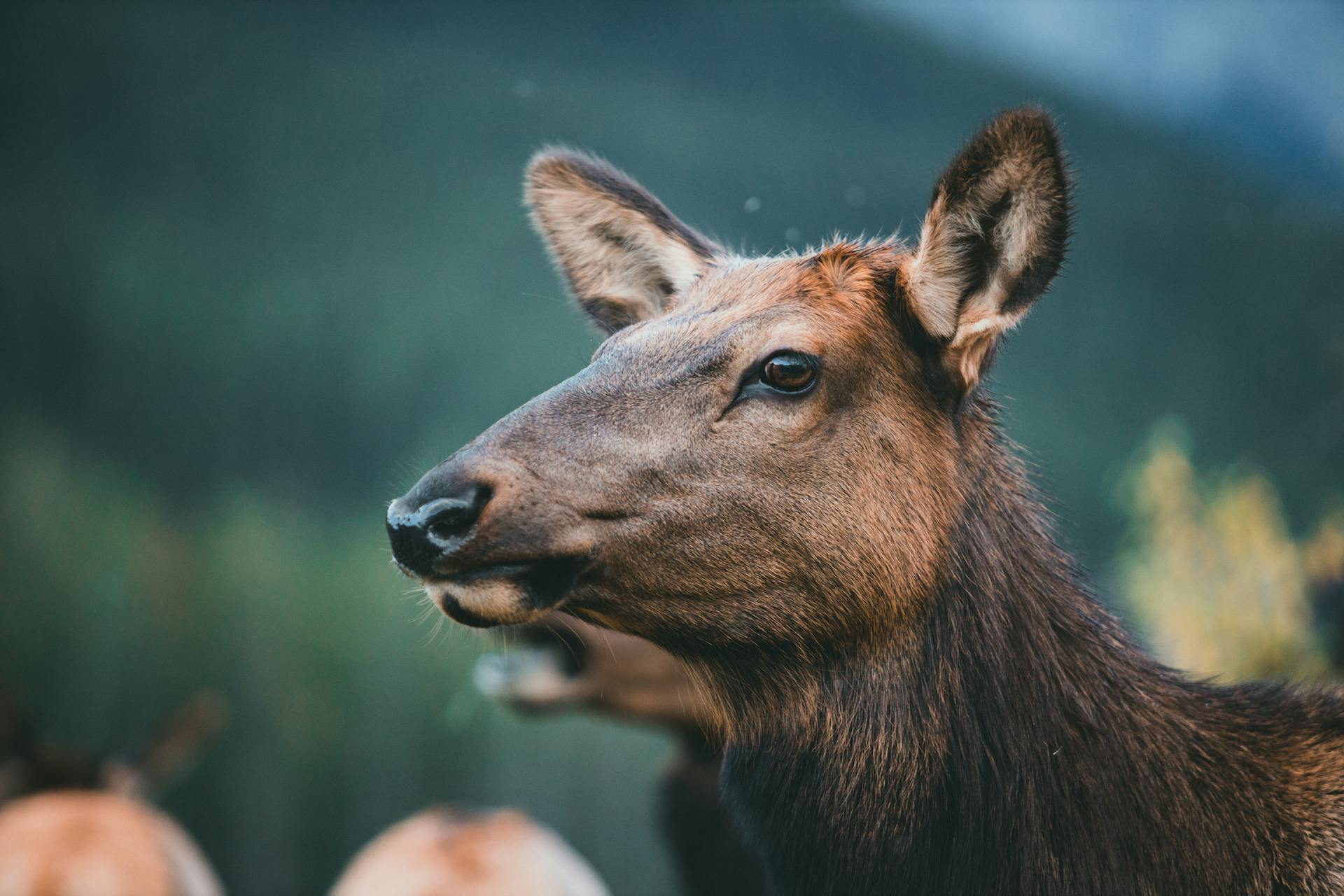
Its slender body and delicate legs give it a graceful and agile appearance. The fur is usually a rich, reddish-brown color, blending in with the forest undergrowth where it resides.
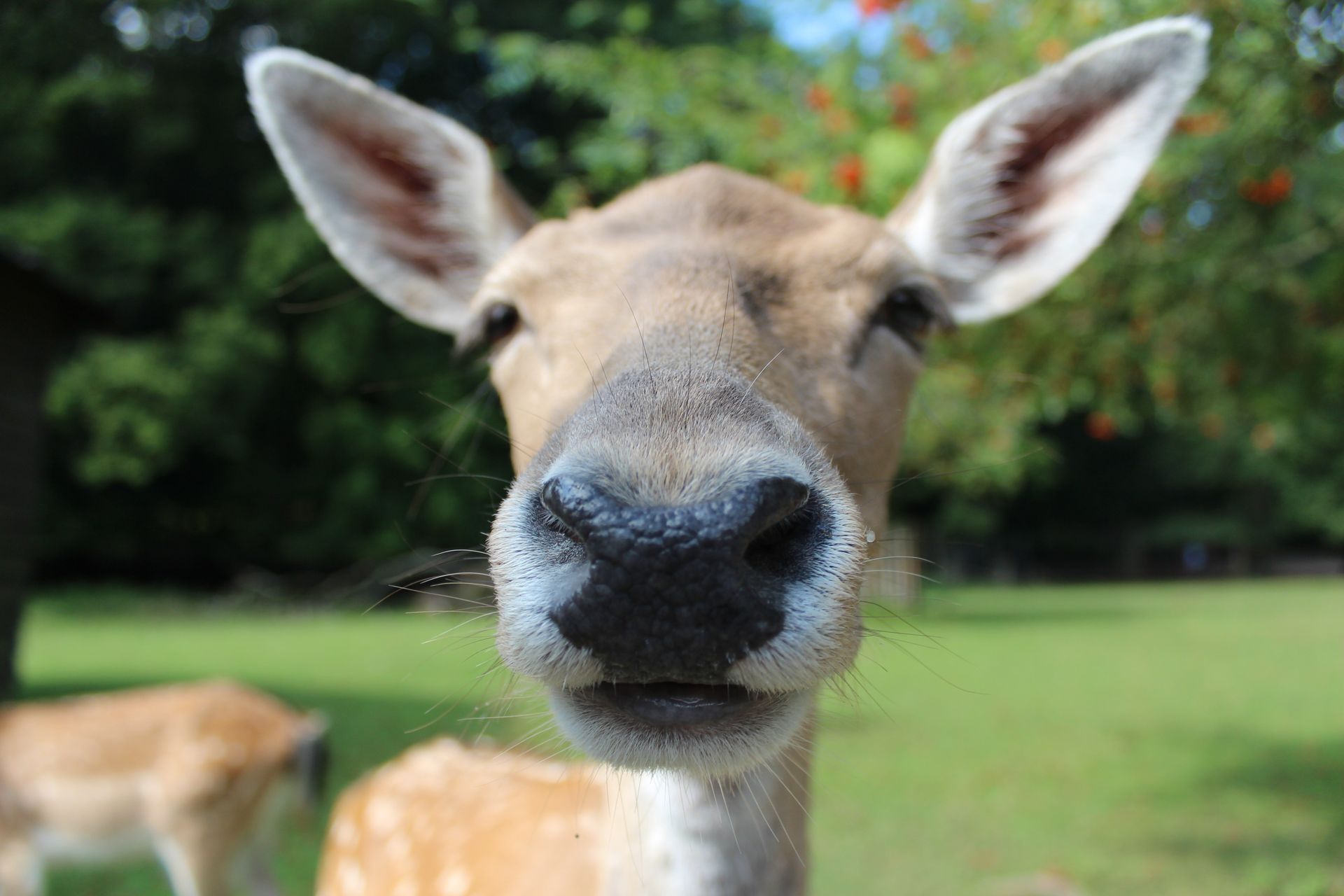
The Philippine mouse-deer has large, expressive eyes that are well-adapted for nocturnal activity. Its ears are also large and mobile, allowing it to detect sounds from its surroundings.
The fur is soft and dense, helping to keep the animal warm in its natural habitat. Each individual hair has sections of different colors, with a base that's generally light, a midsection that's tawny, orange, or brown, and a long black tip.
The most striking markings of the Balabac chevrotain are on the throat, with three narrow white stripes beginning from a white patch under the chin and extending down towards the chest. The rest of the throat is jet black.
The head itself is generally darker in color than the rest of the body. Broad rufous or fulvous 'eyebrow' stripes extend from the anterior corners of the eyes to the base of ears.
The sides of the head are more fulvous. A naked glandular patch on the underside of the jaw is bordered with white, which runs into the white patch at the top of the throat.
The Philippine mouse-deer measures 40–50 cm from the head to the tail base and reaches an average of 18 cm tall at shoulder height.
For your interest: White Deer Head Chihuahua
Behavior and Ecology
The Philippine mouse-deer is a solitary animal, but has been seen in pairs for short periods of time.
It's primarily nocturnal, meaning it's most active at night, which helps it avoid predators and forage for food safely under the cover of darkness. This behavior is crucial for its survival.
During the day, it takes shelter in dense primary and secondary forests and avoids movement, suggesting it's a cautious animal.
At sundown, the Philippine mouse-deer will wander into mangroves and more open areas to feed, likely taking advantage of the abundant vegetation.
They have also been spotted along the seashore, indicating their adaptability to different environments.
Here are some key characteristics of the Philippine mouse-deer's behavior:
- Nocturnal: most active at night
- Solitary: typically lives and forages alone
- Shy and elusive: cautious and tends to flee at the slightest sign of danger
- Territorial: marks its territory with scent glands on its feet
The natives of the Philippines believe the Philippine mouse-deer has a mutual relationship with a species of python, where the python will eat a predator that's hunting the mouse-deer.
Expand your knowledge: Burmese Python Florida Deer
Conservation and Status
The Philippine mouse-deer is fully protected under Philippine law, but enforcement of this protection is mostly ineffective. This lack of effective enforcement is a major concern for the species' survival.
Habitat loss is the biggest reason for the decline of the Philippine mouse-deer population. The mouse-deer's habitat is being converted to agricultural lands for coconut plantations and other crops. This conversion is happening at an alarming rate, making it harder for the species to find food and shelter.
The Philippine mouse-deer is categorized as Endangered by the International Union for Conservation of Nature (IUCN), a designation that reflects the severity of the threats it faces.
Conservation
The Philippine Mouse-Deer is threatened due to poaching and capture for the wild animal trade.
Hunting has caused a great decline in the number of individuals left, with hunters commenting that the mouse-deer is becoming harder to find.
The biggest reason for decline is habitat loss, as the mouse-deer's habitat is being converted to agricultural lands for coconut plantations and other crops.
Although the Philippine Mouse-Deer is fully protected under Philippine law, enforcement of this protection is mostly ineffective.
Eighteen priority sites are funded by Global Environment Facility/World Bank and the European Union, but unfortunately, the mouse-deer does not occur on any of these sites to benefit from their protection.
Habitat loss due to deforestation is a major concern for the Philippine Mouse-Deer, making them especially vulnerable to hunting and poaching for both their meat and skin.
The Philippines have what are called priority sites which protect the land, but it's essential to have more research and better protection of their habitat to help with the survival of this species.
Rare Birth at UK Zoo
The Philippine mouse-deer, a small nocturnal ruminant, was born at a UK zoo.
It's a significant event, considering the species is endemic to Balabac and nearby islands in the Philippines.
The Philippine mouse-deer has been named so due to its horizontal pupils, which allow for an increase in peripheral depth perception.
This unique feature is a key characteristic of the species.
The UK zoo's rare birth is a hopeful sign for the conservation of the Philippine mouse-deer, a member of the chevrotain family.
Contrary to its common name, the Philippine mouse-deer does not belong to the deer family Cervidae.
Habitat and Distribution
The Philippine mouse-deer is native to the Philippines, specifically found in the islands of Palawan, Balabac, and nearby smaller islands.
They can be found in the forests and grasslands of these islands, with adults typically weighing less than five kilograms.
Their populations have been in decline due to hunting and habitat destruction.
This tiny ungulate is known for its miniature size, making it a fascinating and elusive creature to spot in the wild.
Intriguing read: Falkland Islands Wolf
In Captivity
The Philippine mouse-deer is a rare and fascinating creature. Outside of its native Philippines, you can find them in captivity at six different collections in Europe.
One of the most famous of these collections is Chester Zoo. It's a great place to learn more about these amazing animals and their habitats.
These collections are a vital part of conservation efforts for the Philippine mouse-deer. By studying and protecting them in captivity, we can help ensure the survival of this species.
If you're interested in learning more about the Philippine mouse-deer, I recommend checking out Chester Zoo or one of the other European collections. They often offer educational programs and tours that can give you a closer look at these incredible animals.
Here are the six European collections that have Philippine mouse-deers in captivity:
These collections are a great way to learn about and appreciate the Philippine mouse-deer. By supporting conservation efforts and visiting these collections, you can help make a difference for this amazing species.
An Overview
The Philippine mouse deer is a fascinating creature that can be found in the dense forests of the Philippines. It's one of the smallest hoofed mammals in the world, typically weighing between 1.5 to 2.5 kilograms and standing about 25 to 30 centimeters tall at the shoulder.
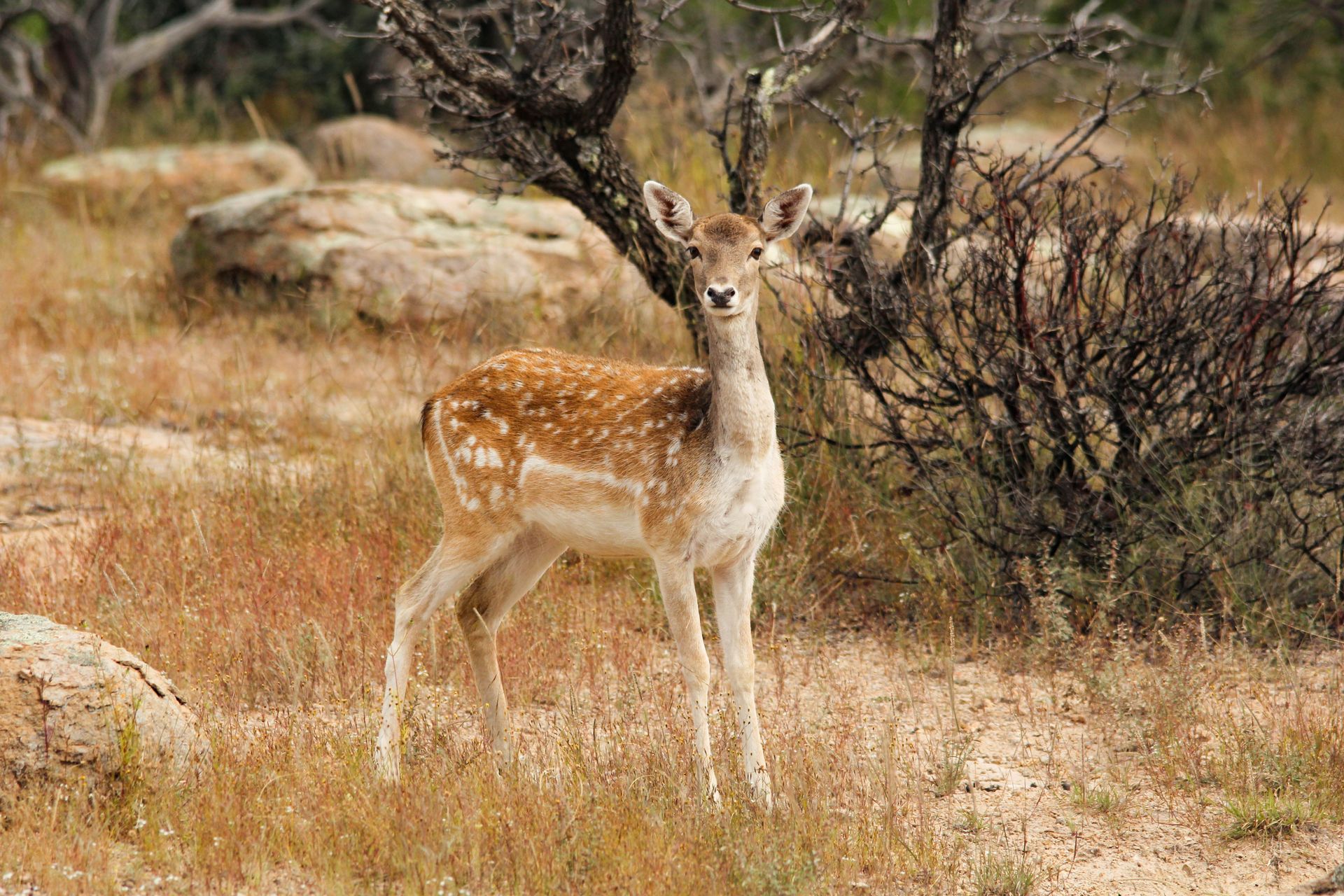
These tiny creatures have slender bodies, short legs, and small, pointed hooves. Their reddish-brown fur coat with white spots on their sides helps them blend into their forest habitat.
The Philippine mouse deer is primarily nocturnal, meaning they are most active during the night. They are shy and elusive animals, often avoiding human contact and staying hidden in dense vegetation.
They are solitary animals, except during the mating season when they seek out a mate. Unfortunately, the Philippine mouse deer is facing threats due to habitat loss caused by deforestation and hunting for their meat.
Here's a summary of their physical characteristics:
Life Cycle and Efforts
The Philippine Mouse-Deer's life cycle is quite fascinating. This elusive species inhabits the dense forests of the Philippines and is known for its small size, reaching a maximum of only 50 centimeters in length.
Females give birth to only one fawn at a time, and they do not have a fixed breeding season, making their reproductive activity unpredictable. This unique characteristic is quite interesting.
In the wild, the Philippine Mouse-Deer's life cycle is relatively short, with an average lifespan of only five years. This highlights the need for concerted conservation efforts to ensure the continued survival of this endangered species.
Conservation efforts have been put in place, including the establishment of protected areas, awareness campaigns, and rehabilitation projects. These initiatives have yielded positive results, with an increase in the population of the Philippine Mouse-Deer and its improved habitat.
Life Cycle

The Philippine Mouse-Deer, or Pilandok, has a unique life cycle that's worth exploring.
Its life cycle is relatively short, with an average lifespan of only five years in the wild.
Females give birth to only one fawn at a time, making their reproduction cycle quite predictable in that sense.
Interestingly, Pilandok females do not have a fixed breeding season, making their reproductive activity unpredictable.
These deer form strong pair bonds that usually last for the duration of their lives, a trait that's quite rare in the animal kingdom.
Efforts
Conservation efforts are underway to protect the Philippine mouse-deer and its habitat.
The Philippine government and various organizations have established protected areas, such as national parks and wildlife sanctuaries, to safeguard the species' natural habitat.
Community-based conservation programs have been implemented to enhance public awareness and foster sustainable practices.
Strict laws have been enacted to prohibit hunting and the trading of the Philippine mouse-deer.
The conservation efforts have yielded positive results, with an increase in the population of the Philippine mouse-deer and its improved habitat.
Reforestation efforts are being promoted to restore the species' natural habitat.
Awareness campaigns have been launched to educate the public about the importance of conservation and the threats faced by the Philippine mouse-deer.
In Culture
In Philippine folklore, the Philippine mouse-deer is often depicted as a trickster. This is evident in a Maranao tale where the deer outsmarts a prince into giving up his bag of gold. The prince then faces a hive of angry bees as a result. The Philippine mouse-deer's cunning nature is a recurring theme in these stories. The Maranao tale showcases the deer's cleverness and resourcefulness. It's a fascinating glimpse into the cultural significance of this unique animal.
Frequently Asked Questions
Is pilandok extinct?
No, pilandok is not extinct, but it is classified as endangered due to its rare and reclusive nature.
Featured Images: pexels.com