The Himalayan Musk Deer is a mysterious and elusive creature, found in the remote mountains of the Himalayas. They inhabit areas with dense forests and steep slopes, often at high elevations.
These deer are primarily herbivores, feeding on a variety of plants, including grasses, leaves, and twigs. They have a specialized digestive system that allows them to break down cellulose in plant cell walls.
In the wild, Himalayan Musk Deer are solitary animals, only coming together during the mating season. They have a strong sense of smell and can detect predators from a great distance.
Their large, hooved feet act as snowshoes, allowing them to move easily through deep snow.
You might enjoy: Eastern Musk Turtle
Physical Characteristics
Himalayan musk deer typically weigh between 11 to 18 kg.
Their length ranges from 86 to 100 cm, which is roughly 33.86 to 39.37 inches.
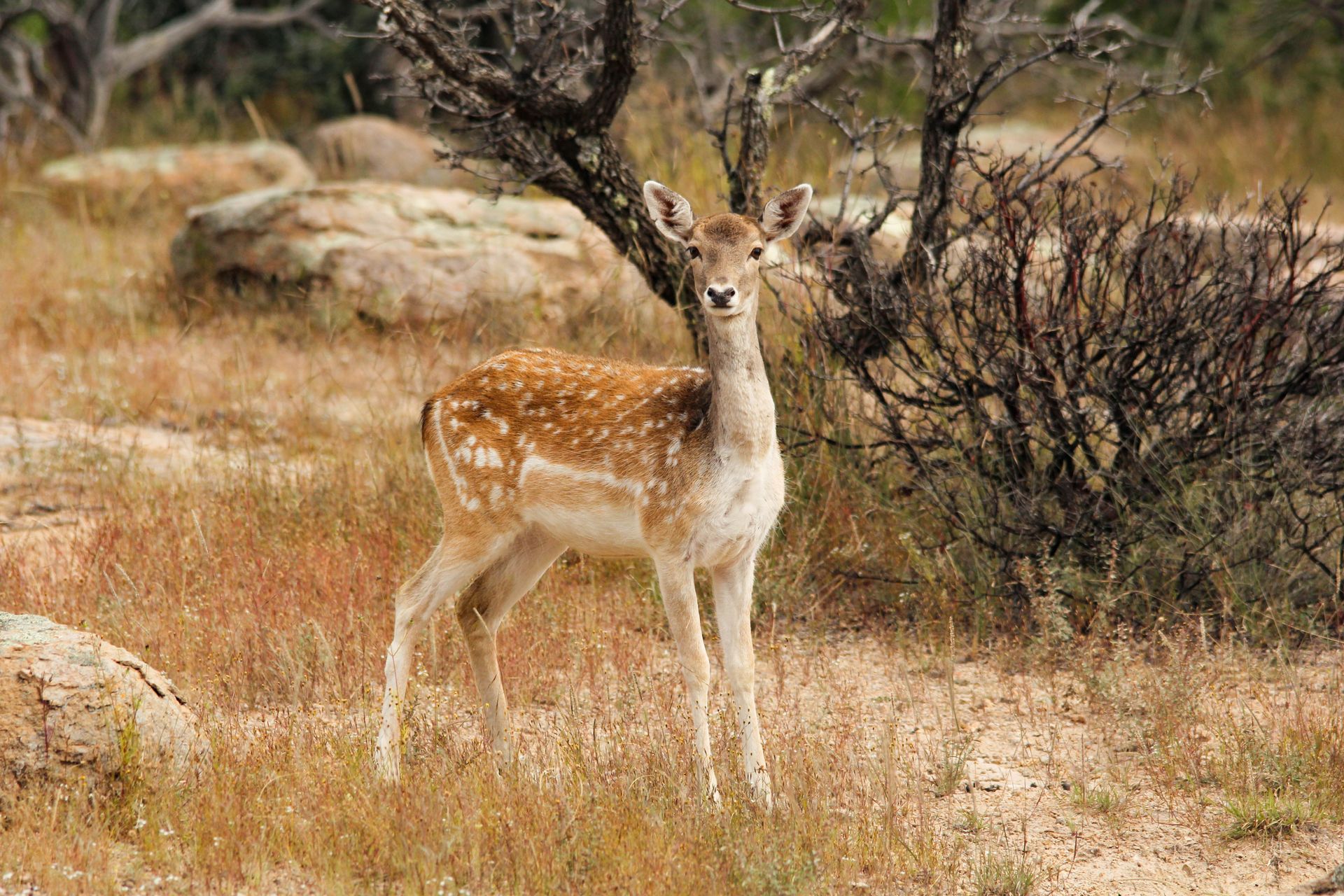
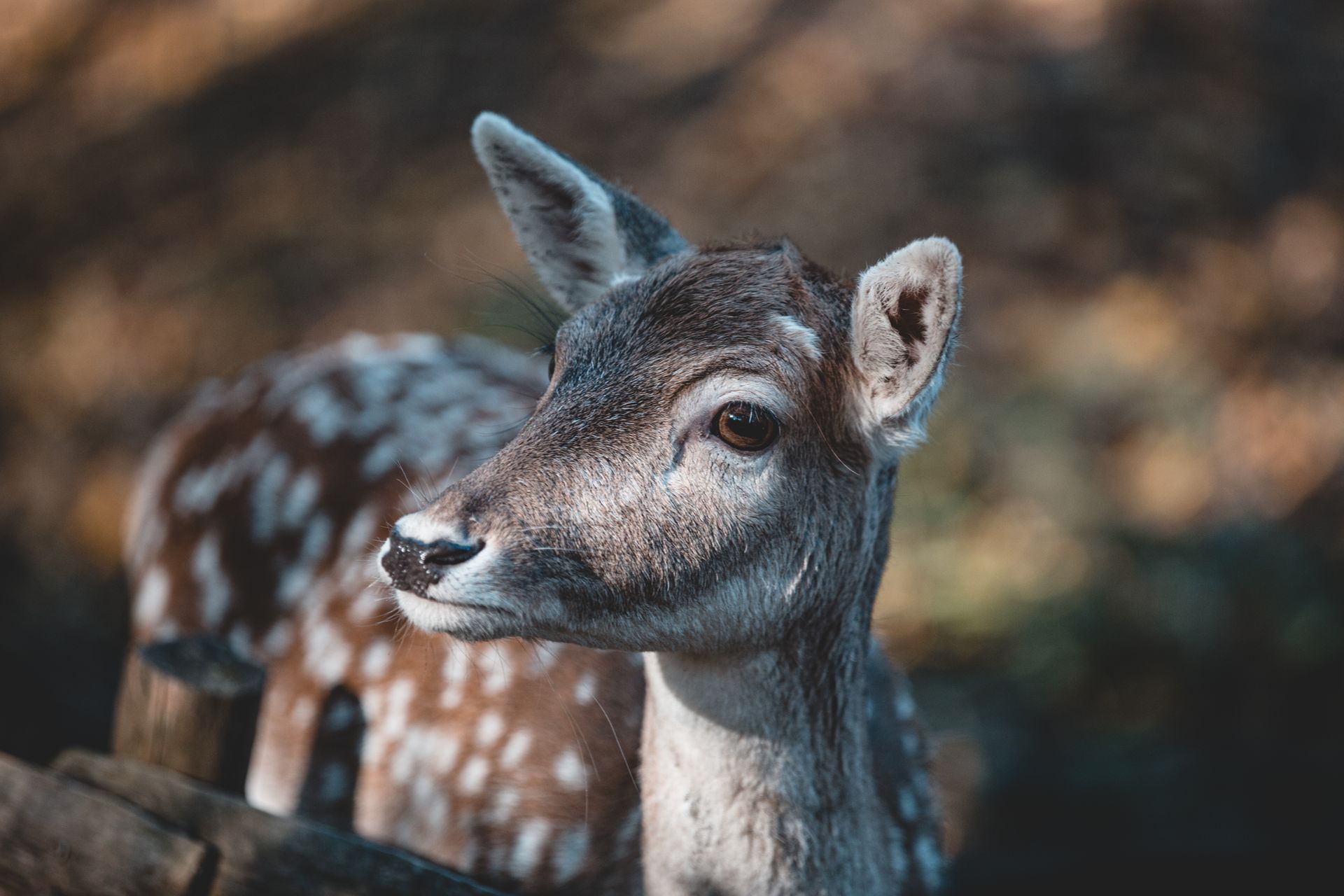
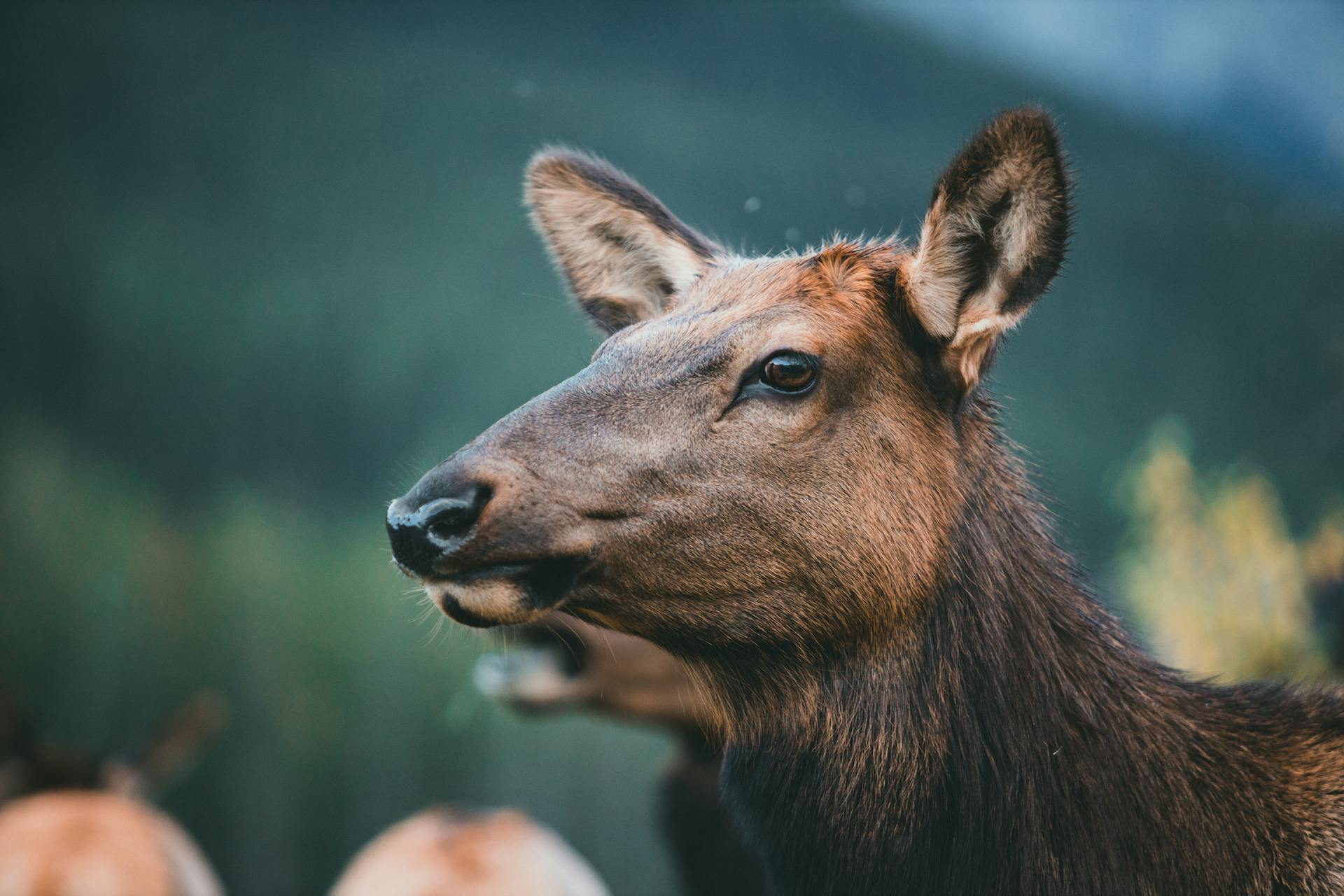
These deer are sandy brown in color, with slightly darker rumps and limbs. The ventral side of their bodies ranges from gray to white.
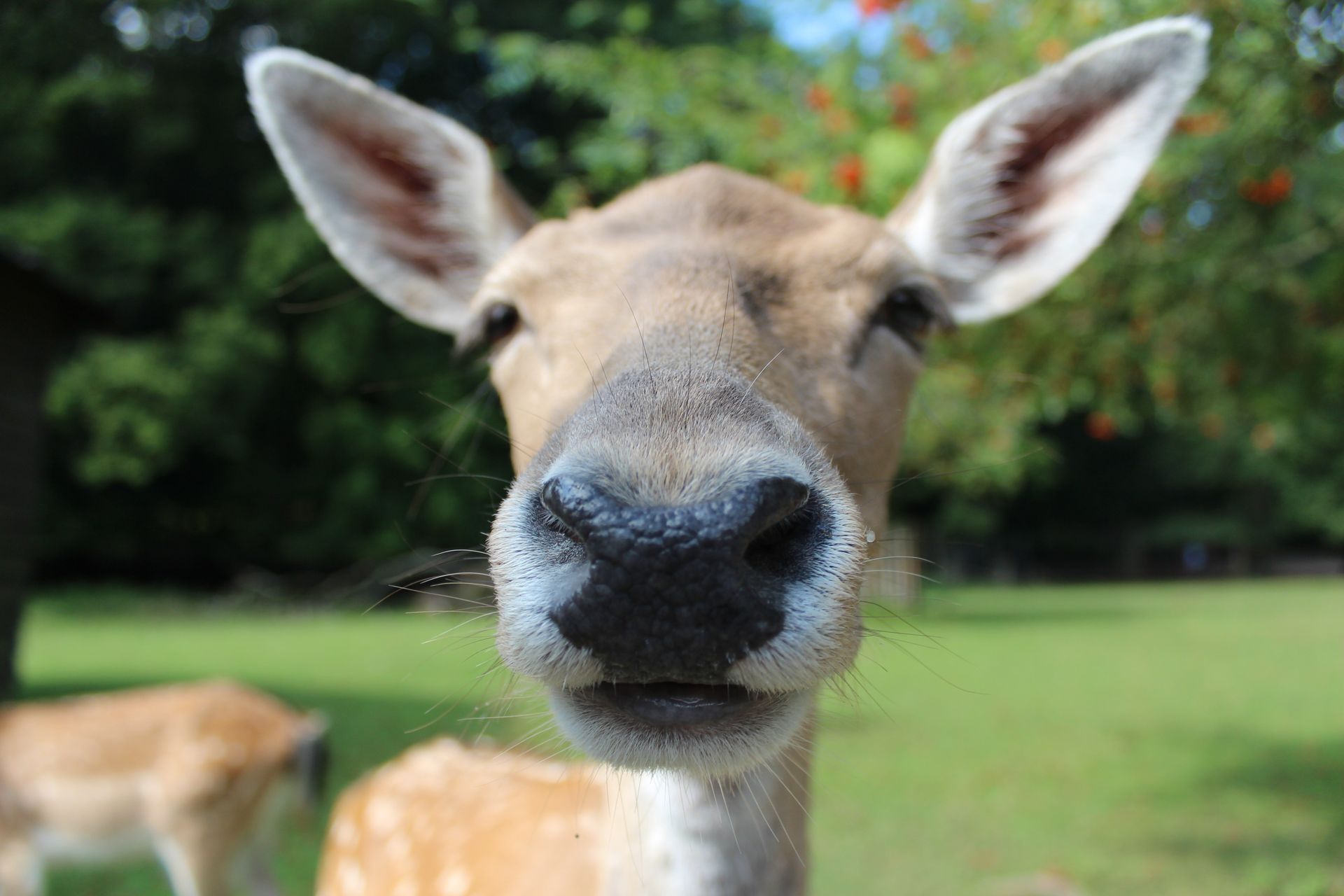
The rounded backs and long alert ears of the Himalayan musk deer contribute to their "hare-like" resemblance.
Male Himalayan musk deer have long upper canines that grow up to 7 to 10 cm, which break easily but grow continuously.
Females have a single pair of mammae, a unique characteristic among musk deer.
Musk deer do not have antlers, which is a notable trait among all musk deer species.
The Himalayan musk deer has a waxy substance called musk that the male secretes from a gland in the abdomen, which is used for marking territories and attracting females.
Here are the physical characteristics of Himalayan musk deer at a glance:
Habitat and Distribution
The Himalayan musk deer inhabits high alpine environments above altitudes of 2,500 m (8,200 ft). It's a mountainous species accustomed to navigating moderately to very steep slopes.
Their habitat predominantly consists of vegetation typical of alpine regions, and they roam at elevations higher than 2,500 m. This is a key factor in their ability to thrive in these environments.
Here are some key facts about the Himalayan musk deer's habitat and distribution:
- Habitat Regions: temperate, terrestrial
- Terrestrial Biomes: forest, mountains
- Range elevation: 2,500 (low) m, 8,202.10 (low) ft
- Average territory size: 0.22 km^2
Study Area
The Annapurna Conservation Area (ACA) is a vast protected area in Nepal that covers 7,629 km. It's the largest protected area in Nepal and is situated in the western region, spanning across five districts: Myagdi, Lamjung, Kaski, Manang, and Mustang. The ACA has a diverse range of habitats, from subtropical forests to alpine tundras. It's located between the Palearctic and Oriental realms and covers the western and eastern Himalayan eco-regions. The area stretches from the Annapurna Himalayas in the south and north, to the Tibet Autonomous Region of China in the north. It extends to the Manaslu Himalaya in the east and the Dhaulagiri Himalaya in the west. The ACA is home to an incredible array of wildlife, including 105 species of mammals, 488 species of birds, and many other species of fish, amphibians, reptiles, and butterflies.
Suggestion: Western Gray Squirrel
Geographic Range
The Himalayan musk deer can be found in a range of countries, including Bhutan, India, Nepal, and a small part of China. Their geographic range has sharply declined in recent years due to predation, trapping by humans, and habitat destruction.
The Himalayan musk deer resides in the Himalayan mountain range, particularly within the countries of Bhutan, India, Nepal, and a small part of China. This species is adapted to navigating moderately to very steep slopes.
Here are some key countries where the Himalayan musk deer can be found:
- Bhutan
- India
- Nepal
- China (small part)
Their geographic range is not limited to these countries, but their habitat has been affected by human activities, leading to a decline in their population.
Behavior and Ecology
Himalayan musk deer are primarily active during the morning and evening hours, often when feeding. They have a distinctive bounding gait, which allows them to jump as far as 6 m.
These creatures are solitary, terricolous, and sedentary, occupying small home ranges of up to 22 hectares. Males are fiercely territorial and defend their territories from other males, using latrine sites and strong-smelling secretions to mark their territory.
Here are some key behaviors of Himalayan musk deer:
- terricolous
- crepuscular
- motile
- sedentary
- solitary
- territorial
Males use their strong-smelling musk to attract females and bring them out of hiding during the mating season.
Camera Trapping
Camera trapping is a method used to study wildlife behavior and ecology by capturing images or videos of animals in their natural habitat.
Cameras were installed at latrine sites of musk deer in Marpha and Lubra, Mustang Valley, to compare color pelage.
The cameras were positioned 35 cm above ground and 2.5 m away from the latrine sites to capture both the flanks and head of each animal.
Five camera stations were selected at each site, with a distance of at least 0.5 km between them.
Latrine sites were chosen because musk deer visit them frequently to mark territory by defecating.
The cameras in Marpha and Lubra took five images per trigger, while those in other locations took a one-minute video.
A total of 33 cameras were installed in various locations, including Dhikurpokhari, Pisang, Ghyaru, Humde, Manang, and Khangsar, in the Manang region.
A unique perspective: Elon Musk Shiba Inu Coin
Ecology and Behaviour
Himalayan musk deer are shy and secretive animals, hiding in dense cover during the day and emerging at night to feed in more open habitats. They prefer to eat leaves from trees and shrubs with high protein and low fibre contents.
Their home range is relatively small, up to 22 hectares, and males are fiercely territorial, only allowing females to enter their range. Territories are marked by carefully placed defecation sites and strong-smelling secretions.
Males fight each other over females during the mating season, using their long canines to fight and defend their territories. They use their strong-smelling musk to attract females and bring them out from hiding.
Females have one or two young at a time, which live off their mother's milk until they are about six months old. At 16 to 24 months old, they become sexually mature and can live for up to 10 to 14 years.
Here's a list of key behaviors exhibited by Himalayan musk deer:
- terricolous
- crepuscular
- motile
- sedentary
- solitary
- territorial
Their predators include the leopard, snow leopard, Eurasian lynx, red fox, and gray wolf. Juveniles have been reported to be killed by yellow-throated marten and large raptors.
Conservation Status
The Himalayan musk deer is listed as endangered on both the IUCN Red List and the US Federal List. This classification highlights the urgent need for conservation efforts.
Habitat fragmentation, habitat reduction, and habitat destruction are major threats to the species. Poaching activities continue to increase as musk becomes more valuable.
Here are the conservation status classifications for the Himalayan musk deer:
- IUCN Red List: Endangered
- US Federal List: Endangered
- CITES: Appendix I (for all Himalayan musk deer except those in China) and Appendix II (for Himalayan musk deer in China)
The species is difficult to distinguish from similar species, making it hard to track population declines.
Classification and Phylogeny
The Himalayan musk deer's classification and phylogeny are fascinating topics.
The Himalayan musk deer belongs to the kingdom Animalia, specifically the phylum Chordata, and the class Mammalia.
The genus Moschus, to which the Himalayan musk deer belongs, is a monophyletic clade with a high posterior probability and bootstrap support.
Phylogenetic analysis suggests that the Himalayan musk deer shares a common ancestor with other musk deer species.
A Bayesian inference (BI) tree estimated based on mtDNA Cytb sequences shows that the Himalayan musk deer (M. leucogaster) is genetically similar to the population of musk deer in Mustang, Nepal.
The genetic divergences between M. leucogaster and its closest relatives are 8.9%, 7.9%, 8.3%, 8.5%, 9.2%, and 10.9% respectively.
Here's a breakdown of the genetic divergences between M. leucogaster and its closest relatives:
The maximum genetic difference between M. leucogaster and its closest relatives is 10.9% with M. berezovskii.
Reproduction and Lifespan
Himalayan musk deer mate between November and January, with a gestation period of 185 to 195 days.
Young deer nurse from their mothers for about 2 months before becoming completely independent at around 6 months of age.
Himalayan musk deer breed once yearly, with a typical lifespan of 10 to 14 years in the wild.
Here are some key reproductive features:
- Key Reproductive Features
- iteroparous
- seasonal breeding
- gonochoric/gonochoristic/dioecious (sexes separate)
- sexual
Himalayan musk deer typically reach sexual maturity between 16 to 24 months of age, both male and female.
Reproduction
Reproduction is a crucial aspect of any species' life cycle, and the Himalayan musk deer is no exception. They have a unique reproductive strategy that allows them to thrive in their native habitats.
Male Himalayan musk deer become anxious and competitive during the mating season, which typically occurs between November and January. They fight each other using their long canine teeth, while the females try to stay hidden.
The male's musk sac plays a key role in attracting females during this time, emitting a strong smell that lures them out of hiding. This is a critical period for the males, as they must establish dominance and secure mates.
Here are some key reproductive features of the Himalayan musk deer:
- Key Reproductive Features
- iteroparous
- seasonal breeding
- gonochoric/gonochoristic/dioecious (sexes separate)
- sexual
The gestation period for Himalayan musk deer is relatively long, lasting between 185 to 195 days. This means that females are pregnant for almost six months before giving birth to one or two young.
Young Himalayan musk deer are born between May and June and nurse from their mothers for about two months. During this time, they remain in hiding and are independent of their mothers except when feeding.
After weaning, the young deer become completely independent and start consuming food from their surroundings. They reach sexual maturity between 16 to 24 months of age, at which point they can start breeding themselves.
Parental investment is minimal in Himalayan musk deer, with young deer nursing from their mothers only when necessary. The mothers do not provide much care beyond this, and the young deer are left to fend for themselves.
Lifespan/Longevity
In the wild, Himalayan musk deer typically live for 10 to 14 years.
Their lifespan in the wild is a remarkable feat, considering the harsh environment they inhabit.
Himalayan musk deer can live up to 14 years in their natural habitat.
This is a testament to their adaptability and resilience in the face of adversity.
Here's a quick rundown of their typical lifespan in the wild:
- Typical lifespan: 10 to 14 years
Ecological Predictions
The Himalayan musk deer is found in a continuous belt of the high Himalaya from Annapurna in central Nepal to Kanchenjunga Conservation Area in eastern Nepal.
Its predicted distribution under current climatic conditions also includes isolated patches further east of the Nepal-India border.
The model used to predict the distribution of the Himalayan musk deer considered 22 potential predictors, including precipitation of the driest quarter, temperature seasonality, and annual mean temperature.
These predictors were chosen because they have a significant influence on the deer's habitat, with the most important ones being precipitation of the driest quarter, temperature seasonality, annual mean temperature, and solar radiation.
The model's accuracy was evaluated using the Area Under the Curve (AUC) score, which ranged from 0.97 to 0.99 depending on the background sampling bias.
A background sampling bias of 0.5 was used for all reported results, which is a moderate level of bias that still provides a good representation of the deer's habitat.
The model predicted that the Himalayan musk deer inhabits a continuous belt of the high Himalaya, with highly suitable and moderately suitable habitats distributed continuously between Annapurna and Kanchenjunga, including some regions of Tibet.
A substantial amount of highly suitable habitat was also predicted in Tibet, north of the Arun River in eastern Nepal.
Future and Climate
The Himalayan musk deer is an endangered species that calls the Himalayan region home. Its future is uncertain due to climate change.
A vast majority of the musk deer's current suitable habitat is expected to remain suitable in the future under all climate scenarios. However, the extent of suitable habitat to the east of Langtang is projected to decrease under all climate change scenarios.
The musk deer's suitable habitat is predicted to expand west and north of the current extent by 2050 and 2070 under all climate change scenarios. This means that most of Nepal's mountainous regions west of Annapurna will harbor suitable habitat for the musk deer in the future.
The predicted area of highly suitable habitat is greater than moderately suitable, meaning the majority of predicted future suitable habitat would be highly suitable. This proportion is predicted to be even greater west of Langtang.
Predicted Under Current Climate
Himalayan musk deer are predicted to inhabit a continuous belt of the high Himalaya from Annapurna in central Nepal to Kanchenjunga Conservation Area in eastern Nepal.
Their suitable habitats are also found in Tibet along the Nepal-China border. The model used to predict their distribution is based on Maximum Entropy (MaxEnt) models.
The predicted habitats are categorized into four categories: unsuitable, marginally suitable, suitable, and highly suitable. Highly suitable and moderately suitable habitats are distributed continuously between Annapurna and Kanchenjunga, including some regions of Tibet.
A substantial amount of highly suitable habitat was also predicted in Tibet, north of Arun River in eastern Nepal.
Future
The future of the Himalayan musk deer looks promising. A vast majority (85-89%) of its suitable habitat is expected to remain suitable in the future under all climate scenarios.
The extent of suitable habitat to the east of Langtang is projected to decrease under all climate change scenarios. This is a concerning trend, but it's worth noting that the deer's habitat will still be suitable in most areas.
The suitable habitat of the Himalayan musk deer is predicted to expand west and north of the current extent by 2050 and 2070 under all climate change scenarios. This is a positive development, as it will give the deer more space to roam and live.
Most of Nepal's mountainous regions west of Annapurna are predicted to harbor suitable habitat for the Himalayan musk deer in the future under all four scenarios of climate change. This is a significant finding, as it suggests that the deer will be able to thrive in these areas.
The total area of all suitable habitats (both "suitable" and "highly suitable") is expected to increase in all future climate scenarios. This is a good sign, as it means that the deer will have more habitat to live in.
The area of highly suitable habitat (probability > 0.7) is predicted to increase more than suitable habitat (0.5 < probability < 0.7) in all future climate scenarios. This is a positive trend, as it suggests that the deer will have even more favorable living conditions in the future.
The area of suitable habitat is greatest in 2050, but it remains largely constant after that. On the other hand, the area of highly suitable habitat keeps increasing after 2050 until 2070.
Moschus Leucogaster
Moschus leucogaster, also known as the Himalayan musk deer, is a species of deer found in the Himalayan region.
It is a relatively small deer, with adults typically weighing between 15-30 kg.
Their coats are reddish-brown in color, helping them blend in with their surroundings.
Their distinctive white or yellowish markings on their faces and throats are a key identification feature.
Frequently Asked Questions
What is the difference between a musk deer and a normal deer?
What sets musk deer apart from other deer is its unique combination of physical characteristics, including large ears, a short tail, and a gall bladder, unlike any other deer species
Featured Images: pexels.com