European fallow deer are native to Europe, North Africa, and the Middle East, with a history dating back to prehistoric times. They are a type of deer that has adapted well to various environments.
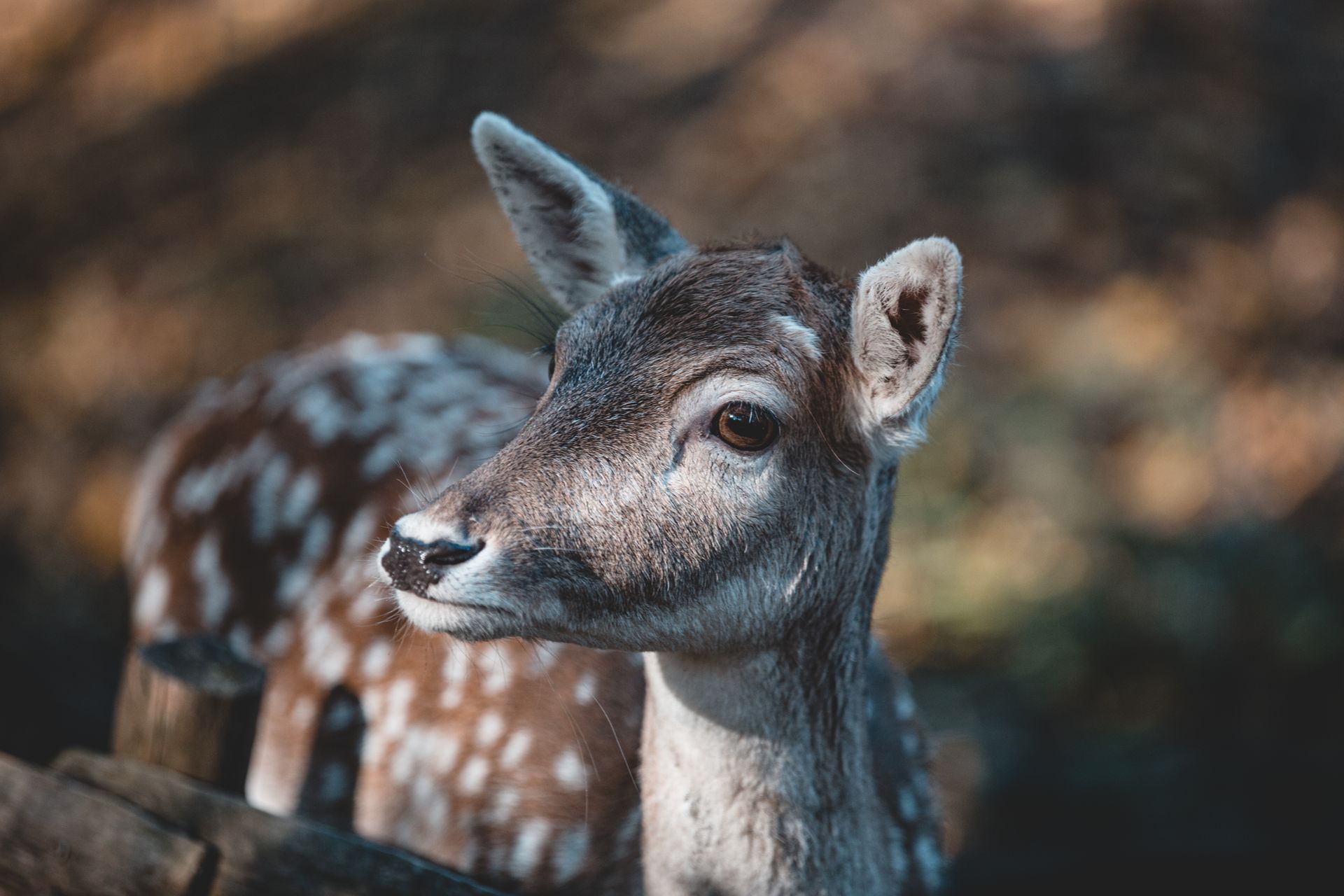
These deer are known for their distinctive coat patterns, which can range from white to dark brown. Their coats also have white spots, which can be more or less prominent depending on the individual.
Fallow deer are herbivores, feeding on a variety of plants, including grasses, leaves, and fruits. They are also known to visit agricultural areas in search of crops.
Physical Characteristics
The European fallow deer is a beautiful and distinctive species, and their physical characteristics are quite impressive. They have an elegant, slender body with strong legs.
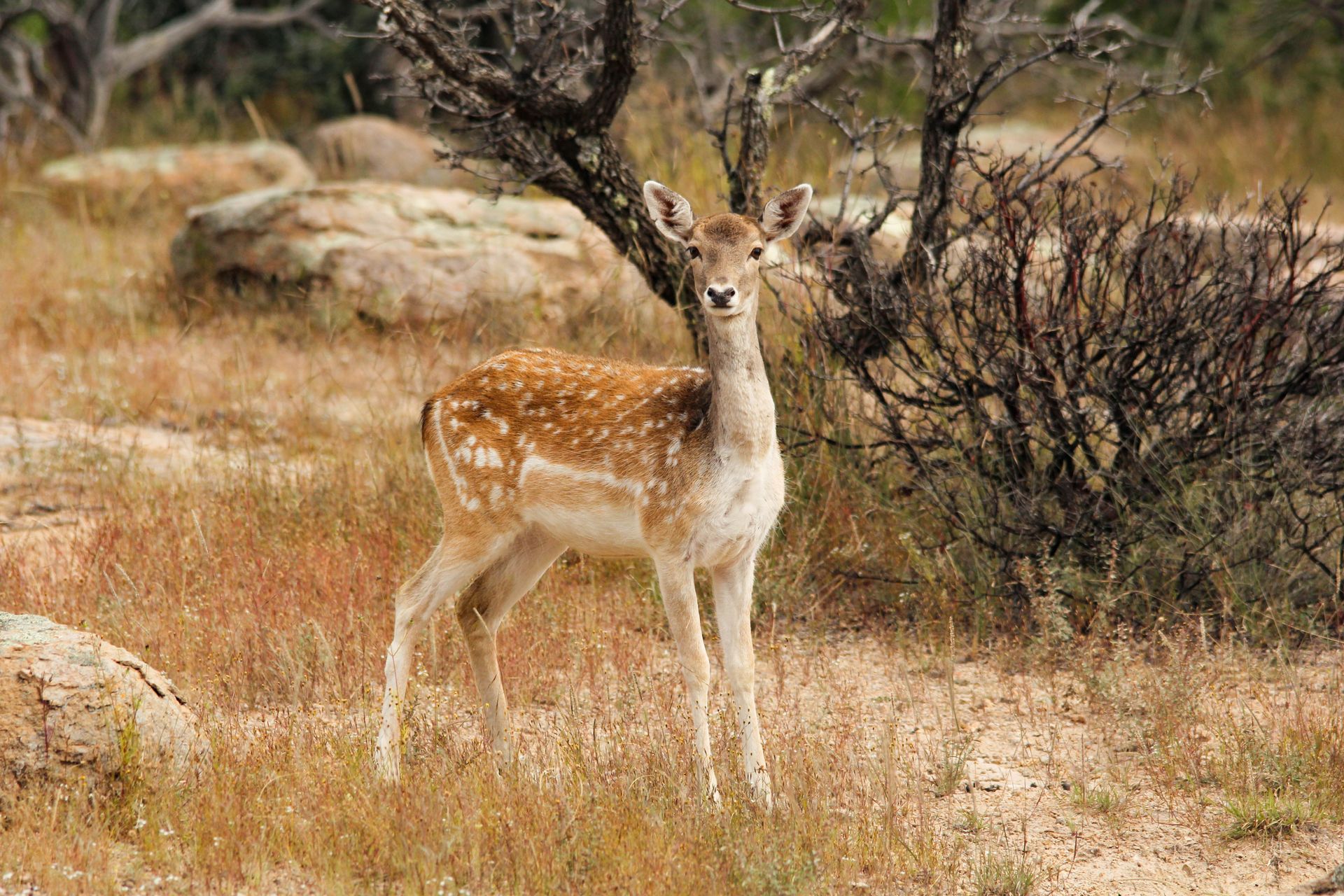
Their coats can vary in color depending on the season and individual deer. In the summer, they typically have a light chestnut-brown coat with white spots, while in the winter, their coat becomes duller and greyer.
Males, or bucks, can grow to be quite large, standing up to 90cm at the shoulder and weighing around 90kg. They also develop distinctive palmate antlers that are shed and regrown yearly.
Fawns, on the other hand, are born with a coat similar to the adult's summer coat. And did you know that some fallow deer are born with white coats?
Their tails are long and black on top, with a white underside, and are surrounded by a distinctive white rump patch outlined in black. This rump patch is a key identifying feature of the species.
Here are some of the different coat colors you might see in fallow deer:
- Tan or fawn with white spots on flanks
- Paler coat with white spots all year (Menil variety)
- Almost entirely black with no white coloration
- White to sandy, with a whiter coat at adulthood
Habitat and Distribution
European fallow deer are found in temperate environments and tend to struggle in hot conditions. They prefer to live in areas with open, grassy glades in the forest, where they can easily retreat to a dense understorey.
In these areas, they generally graze on grassy patches, but will browse trees and shrubs if other food sources are scarce. This adaptability helps them survive during times of limited resources.
European fallow deer are most active at dawn and dusk, and tend to feed more during the night.
Take a look at this: Persian Fallow Deer
Southern Balkans
Fallow deer were present in mainland Greece and some Greek islands, such as Corfu, Kythira, and Thasos, during the last ice age.
These islands were connected to the mainland due to lower sea levels or proximity to land, allowing the deer to thrive.
The species survived in reduced numbers in several parts of Greece, including Thessaly, Peloponnese, and Central Greece, during the Neolithic period.
A significant increase in population occurred during the mid-Neolithic period, particularly east of the Pindus mountain range and in Macedonia and Thrace.
Fallow deer were reintroduced to other Greek islands, including Crete, some of the Cyclades, Rhodes, Chios, Lesbos, Samos, and Sporades, during the Neolithic period and the Bronze Age.
Early-historic-period remains have been found in eastern Greece and on the islands of Thasos, Chios, Rhodes, and Crete.
The last individuals were hunted in Acarnania during the 1930s, marking the end of the species' wild population on the Greek mainland.
A small population of fallow deer was translocated to Düzlerçamı in European Turkey in 1977, suggesting that a small population existed there at that time.
In Albania, the fallow deer seemed to be plentiful during the first half of the 19th century, possibly in the area of Butrint.
You might enjoy: Falkland Islands Wolf
Where Do They Live?
European fallow deer can be found in temperate environments, but they're not suited to hot conditions. They prefer open, grassy glades in forest with dense understorey, which serves as a favourite retreat.
They generally graze on grassy areas, but will browse trees and shrubs when other food sources are scarce. This adaptability helps them thrive in a variety of habitats.
In the UK, they're widespread on the mainland, present in most of England and Wales south of a line drawn from the Wash to the Mersey. Populations in the New Forest and the Forest of Dean are long-standing, and many others originated from park escapees.
Here's a breakdown of their distribution in the UK:
- England: widespread in most lowland areas, with some populations in northern parts
- Wales: present in most areas south of the Wash-Mersey line
- Scotland: found in parts of Strathtay and around Loch Lomond
In Ireland, a historical herd of 400-450 European fallow deer can be found in Phoenix Park, which descends from the original herd introduced in the 1660s.
Behavior and Ecology
European fallow deer are very socially united animals, often staying together in groups that are generally divided into two flocks: females with fawns and males.
These groups are surprisingly flexible, with the size and habitat type closely linked to herd size, and can adapt to a variety of environments.
During the day, they usually rest and ruminate in shaded and protected areas, but they're most active at dawn and dusk, making them crepuscular and nocturnal animals.
Males are usually territorial and establish their territory by defending an area where there is an abundance of food and water, which can lead to some intense competition during the rutting season.
On a similar theme: European Doberman Pinscher Size
Ecology and Mating System Characteristics
European fallow deer are incredibly adaptable and can thrive in a variety of habitats, ranging from cool and wet to hot and dry environments.
They seem to have a preference for older forests with dispersed areas of grass, trees, and other vegetation. Their social organization is also quite flexible, with group size and habitat type closely linked to herd size.
During the breeding season, males stop feeding to defend their ruts from subordinate males, often losing around 17% of their body weight in the process. This weight loss is reversible, but it's a testament to the males' dedication to securing a mate.
Males produce low-frequency vocalizations called groans, which result from the unique shape of their vocal tract. These groans are an essential part of their mating behavior.
Despite their adaptability, European fallow deer do have some specific preferences when it comes to habitat. They tend to favor areas with a mix of trees, grass, and other vegetation.
Feeding
This animal is a herbivore, which means it only eats plants. It primarily feeds on fresh grasses and herbs.
In the wild, I've noticed that these plants are abundant in the spring and summer months, providing a constant source of food for the animal.
It's interesting to note that as the seasons change, the animal's diet also changes.
In autumn, it begins to feed on leaves of shrubs and trees, fruits, and ripe berries. These food sources become more available as the plants they normally eat start to dry out.
Suggestion: Bengal Tiger Animal
Life Cycle
The life cycle of European fallow deer is a fascinating process. Males, or bucks, live apart from females, or does, until the start of the rutting season.
As the breeding season begins in April and lasts for 6-8 weeks, dominant bucks become aggressive and take charge. They herd groups of does, mark out territories, and create rutting stands where they mate with the females.
During this time, bucks can be quite dangerous, so it's essential to exercise caution if you encounter them. Adult does typically give birth to a single fawn after a gestation period of about 230 days.
Here's a breakdown of the breeding season timeline:
- Breeding season: April - early August
- Duration of breeding season: 6-8 weeks
- Aggressive behavior: until early August
Conservation and Threats
European fallow deer face significant threats to their populations.
Humans are one of the main predators of fallow deer, alongside large predators like wolves, cougars, and bears.
Since the 19th century, fallow deer populations have been declining, and they've disappeared from almost all their former habitats.
Conservation efforts are underway to protect fallow deer, and they're now quite common in areas where they've been introduced.
Geographic Range
European fallow deer can be found in a variety of habitats across Europe.
They are native to the Iberian Peninsula, where they have been living for thousands of years. Their ancestors were first introduced to the region by humans.
Today, European fallow deer can be found in many European countries, including France, Germany, and the UK.
They thrive in a range of environments, from forests to grasslands, and are highly adaptable to different climates.
The Once and Future
The fallow deer's presence in Europe and beyond is due to deliberate movement by people which began 8,000 to 9,000 years ago.
These early introductions are difficult to track down, but we know that Romans transported deer across Europe and to the British Isles.
The Roman Empire ended, and the deer disappeared soon after, only to be reintroduced to Britain a thousand years later by the Normans.
The Normans might not have been the ones to bring the deer, but rather an anonymous person who saw some beautiful deer and decided to transport some back as a gift.
Fallow deer would become important animals in medieval Britain, with royalty keeping them in large herds on enclosed estates – often called deer parks – for viewing and hunting.
Venison made up a significant portion of the diet, and formalized hunts were hugely popular cultural events among the elite.
These deer were carefully nurtured, with many animals reaching very old ages, and were off-limits to people outside the estates, with significant penalties for anyone caught "poaching".
The formalized hunts of the deer park fell out of favor, but today, fallow deer are still very common in the English countryside and many other parts of Europe.
Suggestion: Animals Smarter than Dogs
General Information
The European fallow deer has a distinctive appearance, with a reddish-brown coat featuring black and white spots all over its body, and a white belly.
Its slender, strong legs support its elegant and slender body.
Males have branched horns that can reach over 50 cm in length, giving them a distinctive "V" shaped appearance.
Recommended read: White Deer Head Chihuahua
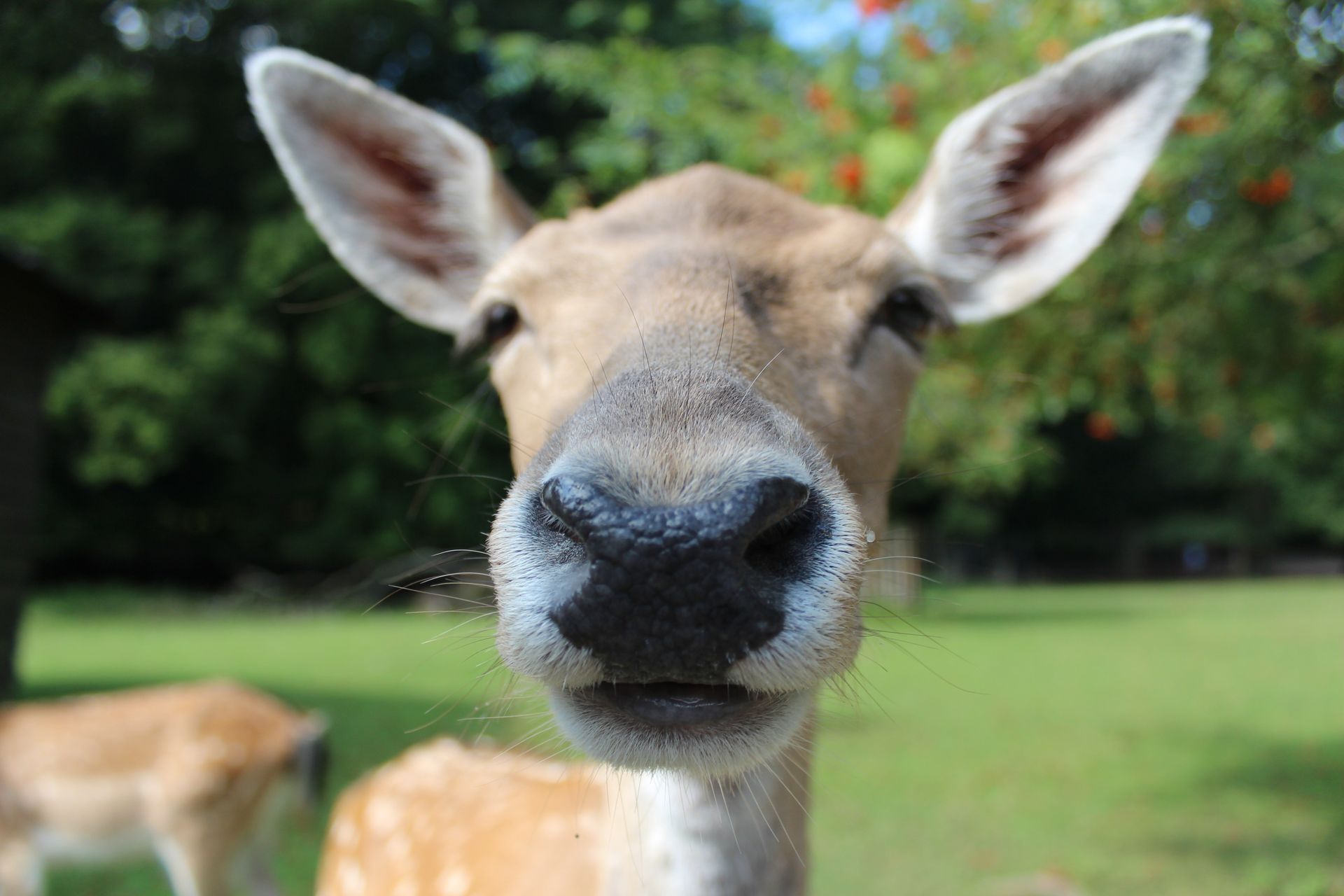
Fallow deer have excellent hearing, thanks to their long, movable ears that allow them to detect potential dangers and predators.
Their dark eyes are also a notable feature, contributing to their overall alertness and sensitivity to their surroundings.
A keen sense of smell and hearing also contribute to the fallow deer's ability to detect potential dangers and predators.
How Do They Breed?
European fallow deer are highly dimorphic, polygynous breeders, and their breeding season, or rut, lasts about 135 days.
The breeding season typically occurs in the second half of October in the Northern Hemisphere and in April in the Southern Hemisphere.
Males congregate in small groups on mating territories, known as leks, where females visit solely for copulation.
Lekking is the most commonly found and studied mating behaviour in European fallow deer, but variation can occur due to environmental or social conditions.
Female European fallow deer are polyestrous, meaning they're receptive to males during multiple periods of estrus throughout the mating season while not gestating.
Male rut behaviour includes licking and sniffing around the anus and vulva to determine whether a female is fertile.
Males produce high-pitched whines repeatedly to initiate mating, and following this display, a female may allow the male to mount.
Copulation can last as long as 5 minutes.
During the rutting season, males stop feeding to defend their ruts from subordinate males and can lose an average of 17% of their body weight.
The liver exhibits steatosis, which is reversible, and males defending their territory often experience this.
Male European fallow deer produce low-frequency vocalizations called groans, which result from the consistent and complex shape of the vocal tract involving the oral and nasal cavities.
Ruts are characterized by males gaining the best territory possible to increase their odds for mating, and are often characterized by the presence of females on stands.
After a gestation of around 230 days, adult does give birth to a single fawn in June or July.
They are usually able to breed after a year.
Frequently Asked Questions
What is special about fallow deer?
Fallow deer are known for their distinctive spotted coats and impressive antlers, but what really sets them apart is the unique way males communicate during the breeding season. They make a loud, attention-grabbing sound to proclaim their territory and attract mates.
Is fallow deer meat good to eat?
Yes, fallow deer meat is considered a nutritious and healthy option due to its high protein and mineral content, as well as its low saturated fat levels. It's a great choice for those looking for a lean and flavorful alternative to traditional meats.
Featured Images: pexels.com