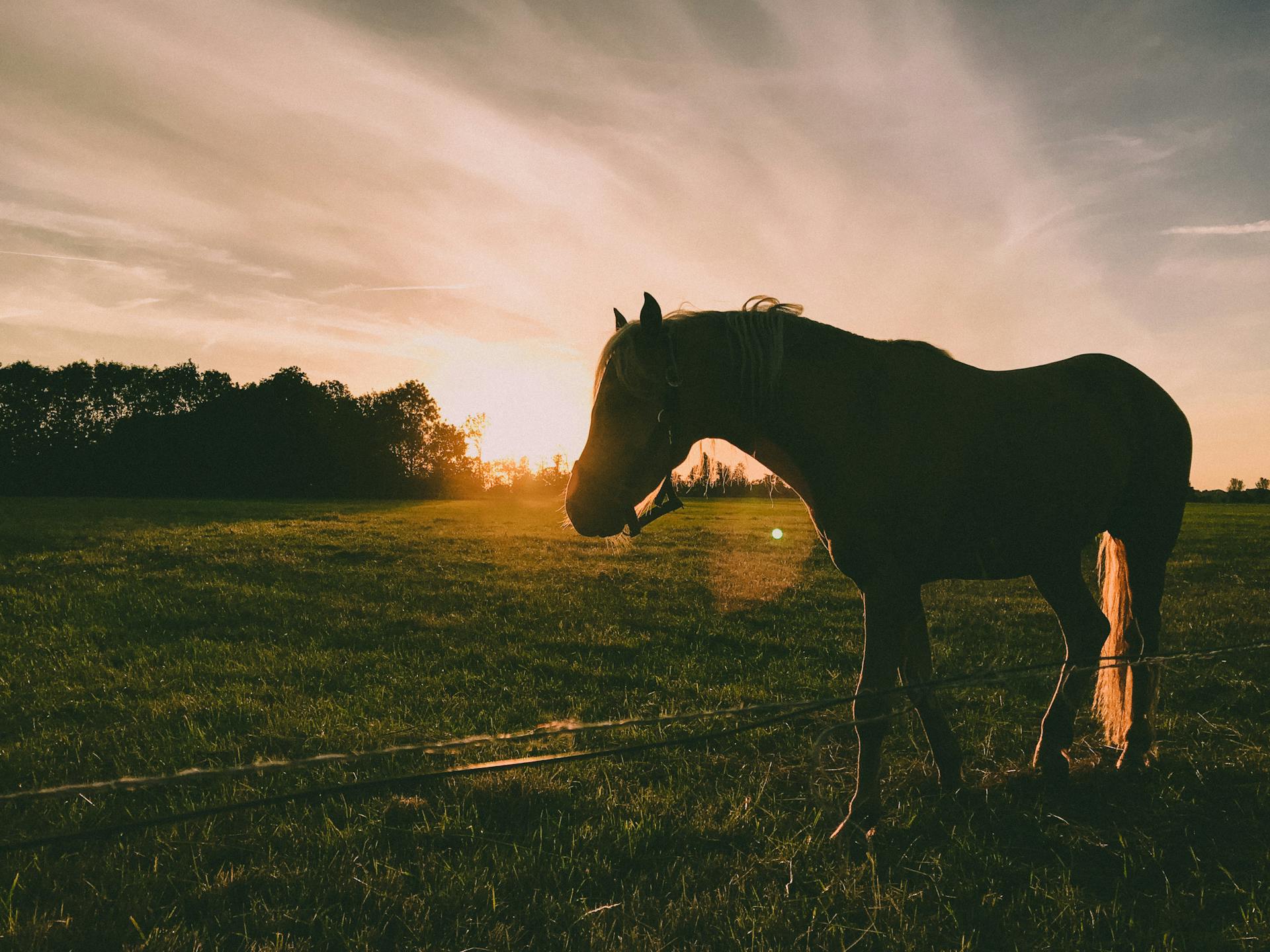
Percheron draft horses have a rich history that dates back to medieval times. They originated in France, specifically in the Perche region, from which they got their name.
Percherons were originally bred as war horses, but their gentle disposition and strength made them ideal for farm work. They were often used to pull heavy loads, such as plows and carts, and were valued for their endurance and intelligence.
Percherons are known for their impressive size, with stallions typically standing between 16 and 19 hands high. They can weigh between 1,800 and 2,600 pounds, making them one of the largest horse breeds in the world.
History and Origins
The Percheron breed originated in the old French province of Le Perche, a fertile region in Northern France well-suited for raising livestock and trade. The region's proximity to Normandy made it an ideal location for breeding horses.
Percherons have a rich history, with breeders producing and selling horses for various purposes by the 17th century. These early Perche horses were slightly shorter and more agile than modern Percherons.
Historical theories suggest that the original Perche horses descended from Celtic, Iberian, and Moor bloodlines brought to the region over centuries of wars and conquests. Scholars also believe Arabians significantly influenced the breed's development.
The French government established a royal stud at Le Pin for breeding military mounts in the early 19th century, which played a significant role in shaping the Percheron breed.
History and Origins
The Percheron breed originated in the old French province of Le Perche, a fertile region in Northern France well-suited for raising livestock and trade. This region was bordered by Normandy, and its ideal location contributed to the breed's development.
The Percheron breed evolved significantly over the past four centuries as their societal roles changed. Breeders in Le Perche produced and sold horses for various purposes, including war, agriculture, and transportation.
Percheron ancestors were powerful enough to carry knights in heavy armor into battle, and paintings from the Middle Ages often depicted French knights on grey horses, the predominant coat color of the modern Percheron breed. This was partly due to the increased visibility of grey horses at night.
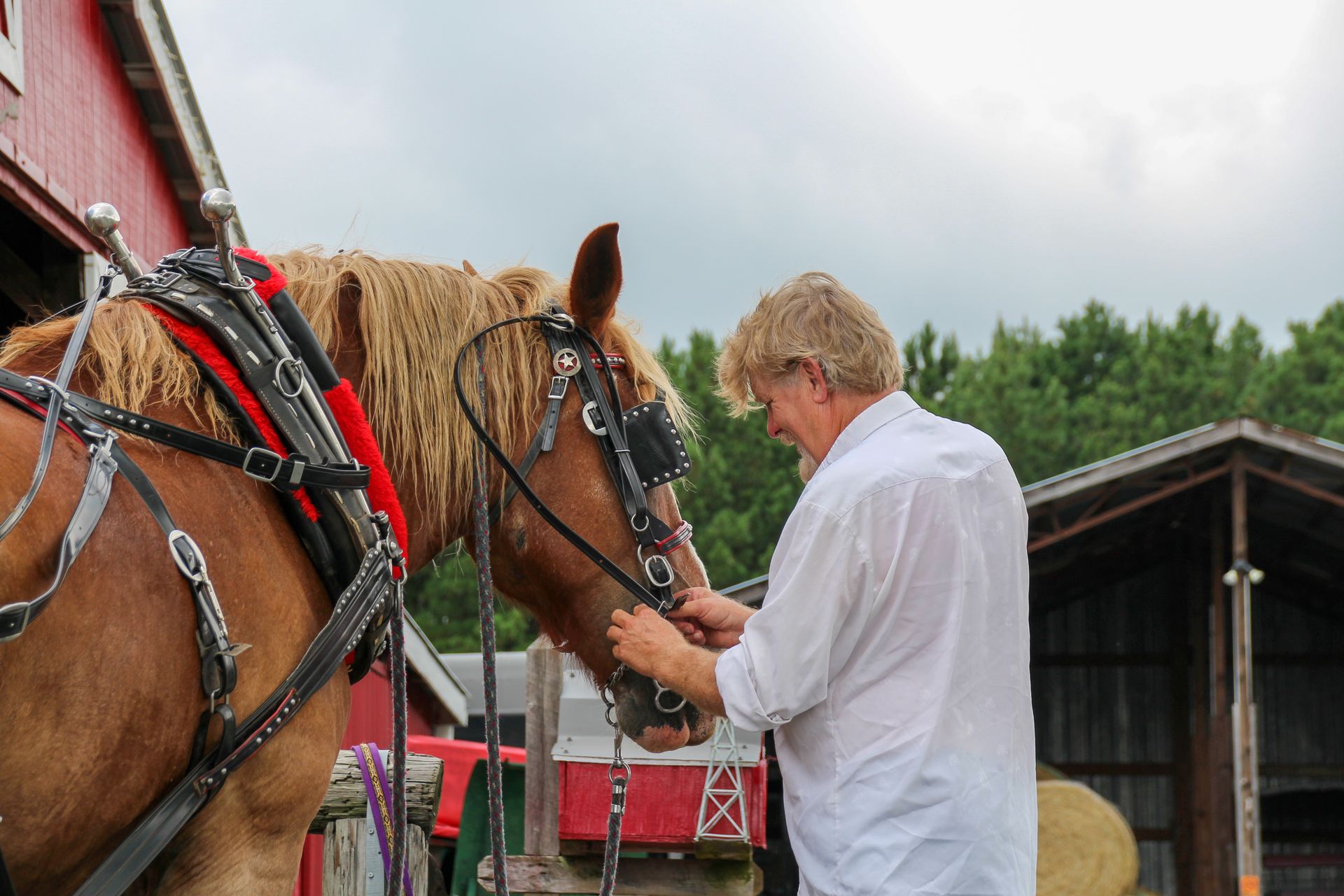
The Percheron breed's foundation stallion, Jean le Blanc, was foaled in 1823, and all modern Percherons can trace their ancestry back to him. Little information is available about this stallion.
Percherons were originally bred to be war horses, but their stockier body type emerged as they found a new niche as heavy draft horses for agriculture work. They were also used for pulling heavy stagecoaches and were favored for their grey coat color, which increased visibility at night.
The Percheron breed's popularity surged at the end of the 19th century, and the first Percheron stud book was established in 1893. French breeders exported the horses worldwide until embargos halted exportations during World War One.
The Percheron breed's ancestry is a mix of various horse breeds, including Arabian, native horses from Brittany, Barbs, and heavy Flemish horses. This blend of bloodlines contributed to the breed's development over several centuries.
By the 17th century, the Percheron was fairly established as a breed in its own right, but it was smaller than the modern version and was originally bred to be a warhorse. The breed's modern version was developed in the 1800s, with the introduction of the stallion Jean Le Blanc.
Facts About Horses
The Percheron horse is a gentle giant, with a calm and sensible temperament that makes it perfect for beginner riders or those who are timid around horses. Its height can reach up to 19 hands, making it a majestic sight to behold.
Percherons are known for their thick manes and tails, which are often wavy and require regular grooming to prevent matting. They also have a unique characteristic of not having heavy feathering on their legs, unlike other draft breeds.
Interestingly, the US is home to more Percherons than any other country, and the breed was first introduced to the US as the Norman-Percheron. This breed has a rich history, and its popularity has endured for centuries.
Percherons are intelligent and active horses that require plenty of pasture time to stay happy and healthy. They can get anxious if kept in a stable for too long, so it's essential to provide them with regular exercise and mental stimulation.
Here are some interesting facts about Percherons:
- They have a rich history dating back to the 19th century.
- They were introduced to the US in the 19th century as the Norman-Percheron.
- The US is home to more Percherons than any other country.
- They are known for their calm and sensible temperament.
- They have thick manes and tails that are often wavy.
Breed Characteristics
Percheron draft horses are known for their versatility, making them a popular choice for various tasks. Originally bred as war horses, they've adapted to pulling carriages, sleighs, and hayrides, as well as working in logging and on farms.
Their strength and stamina allow them to carry heavy loads, making them suitable for heavy riders. In fact, they can carry over 300 pounds.
Percherons are also known for their good-naturedness and intelligence, making them a great choice for riders of all skill levels. They're willing to perform and can be ridden with Western or English saddles.
Despite their size, Percherons are not cumbersome and are very willing to work, eager, and full of energy. They're also known for their enormous endurance, making them perfect for long hours of work or leisure.
Here are some key characteristics of the Percheron breed:
- Good-natured and intelligent
- Willing to perform
- Strong and sturdy
- Enduring and energetic
Overall, Percheron draft horses are a valuable asset for any farm or riding stable, offering a unique combination of strength, intelligence, and good-naturedness.
Physical Characteristics
Percheron draft horses are typically between 16 and 18 hands tall at the wither, which is quite impressive.
Most Percherons are heavy for their height, with bulky muscling throughout their body, but their gaits should appear light and supple.
Their heads are large but elegant, with a straight profile, square forehead, expressive eyes, wide nose, strong jaw, and refined ears.
Percherons have naturally thick, high-set tails, which farmers traditionally docked to prevent them from getting tangled in machinery, but the AVMA and AAEP now advise against this practice.
On average, Percherons are 16 to 17 hands tall in the United States, while those in France can be a little smaller or larger depending on the bloodline.
Percherons weigh between 1,800 to 2,600 pounds, making them similar in size to Clydesdale horses, who are lighter and shorter.
These horses have broad chests, rounded ribs, short backs, full flanks, low buttocks, and rounded hindquarters for power.
Percherons have straight legs with broad joints, strong forearms, and muscular thighs, and they lack the heavy leg feathering found in other draft breeds.
The average weight of a Percheron is around 1984 pounds, depending on their size.
The predominant coat color of Percherons is gray, with black coat colors also accepted by breed regulations.
Colors and Markings
Percherons can be black, gray, chestnut, bay, roan, or sorrel. The most common colors are gray and black.
In France, Percherons are born black but their coat will become gray as they grow. No other color is allowed in the French registry.
Percherons are allowed to have white markings, but excess white is frowned upon. This means that while some Percherons may have a few white spots, they shouldn't have too much white on their coat.
Percherons range from predominantly gray or black, with some having bay, roan, or chestnut coats. In North America, these colors are all permitted for registration, but in France, only black and gray are eligible.
The PHAA permits the registration of Percherons with white markings on the head and legs, but excessive white is considered undesirable. This means that breeders are aiming for a nice balance of color and markings.
Take a look at this: Black Horse
Temperament and Behavior
Percheron draft horses are typically gentle giants with docile dispositions and proud personalities. They have a calm temperament, but aren't sluggish or dull.
Their high energy levels make them a great match for equestrians who prefer larger horses, but their large size may not be suitable for beginner riders. It's essential to consider your riding experience and skill level when deciding if a Percheron is right for you.
Percherons are known for their willingness to work and adaptability, which makes them incredibly useful partners for work and riding. Their good minds aren't easily upset by activity, making them a great choice for those who enjoy active riding.
Worth a look: Wear Riding
Temperament
Percherons are typically gentle giants with docile dispositions and proud personalities.
Their calm temperament is a result of their willingness to work and adaptability, making them excellent equine partners for equestrians who prefer larger horses.
The breed is known for having higher energy levels than other draft horses, which can be both an asset and a challenge.
Percherons are not dull, but rather the most energetic draft breed, which means they thrive in environments with plenty of activity.
Their good minds are able to stay calm even in the midst of chaos, making them a great choice for riders who need a reliable partner.
Discover more: Draft Horses
Mares
Mares are known to be more aggressive than geldings, particularly during mating season. Their strong desire to establish dominance can lead to biting and kicking.
In some breeds, mares are more prone to behavioral issues due to their breeding history and socialization. This can result in a mare being more difficult to handle.
Mares that are not properly socialized to humans from an early age may develop fear-based behaviors, making them more challenging to train. This can lead to a mare becoming skittish or even aggressive around people.
Mares that are not properly socialized to other horses may also develop dominant behaviors, leading to conflicts with other horses in the herd. This can result in a mare becoming more aggressive and difficult to manage.
For more insights, see: Lead Change
Health and Care
Percheron draft horses are generally sound horses with minimal behavioral issues, but they are prone to certain health problems, including equine polysaccharide storage myopathy and osteochondritis dissecans.
Regular veterinary care is essential to prevent and manage these conditions. A yearly wellness program with routine vaccinations, deworming, and dental exams can help keep your Percheron healthy.
Daily grooming is also crucial to keep their coat and skin healthy, and routine farrier care maintains the correct hoof balance to support their heavy body weight.
Here are some common health and behavior problems associated with Percherons:
- Equine polysaccharide storage myopathy: a disease that affects muscle tissue, causing damage and pain.
- Osteochondritis dissecans: a painful joint condition that can develop in young Percherons due to rapid growth and activity.
To maintain your Percheron's health, it's essential to monitor their body condition and prevent obesity, which can lead to metabolic disorders and laminitis. Regular body condition scoring can help you distinguish between obesity and the breed's standard heavy type.
Health Problems
Respiratory problems are a significant concern for all horses, but draft horses are particularly prone to upper airway disorders.
Research has identified a unique spectrum of upper airway disorders in draft horses, with 62% of competition draft horses having complex disorders involving two or more anatomical structures contributing to airway obstruction.
Related reading: Biggest Draft Horses
Draft horses, especially Percherons, are at a higher risk of laryngeal disease, with 31% of Percherons studied having idiopathic left laryngeal hemiplegia.
The increased complexity of upper respiratory disorders in draft breeds makes surgery more challenging, and they are also more likely to experience complications after general anesthesia.
Some draft horses may develop equine polysaccharide storage myopathy, a disease where muscles can't properly store glucose, leading to muscle tissue damage.
Osteochondritis dissecans is another painful joint condition that can affect young Percherons, often due to rapid growth and activity.
Here are some specific health problems to watch out for in draft horses:
- Upper airway disorders, such as laryngeal disease and complex airway obstruction
- Equine polysaccharide storage myopathy, a disease affecting glucose storage in muscles
- Osteochondritis dissecans, a painful joint condition caused by rapid growth and activity
Care and Management
Percherons need regular veterinary care to stay healthy. Owners should work with their veterinarian to develop an annual wellness program with routine vaccinations, deworming, and dental exams.
Draft horses like Percherons require larger stalls and pens to provide adequate space and prevent getting cast. They also need daily turnout for free exercise and social contact, which has numerous health benefits.
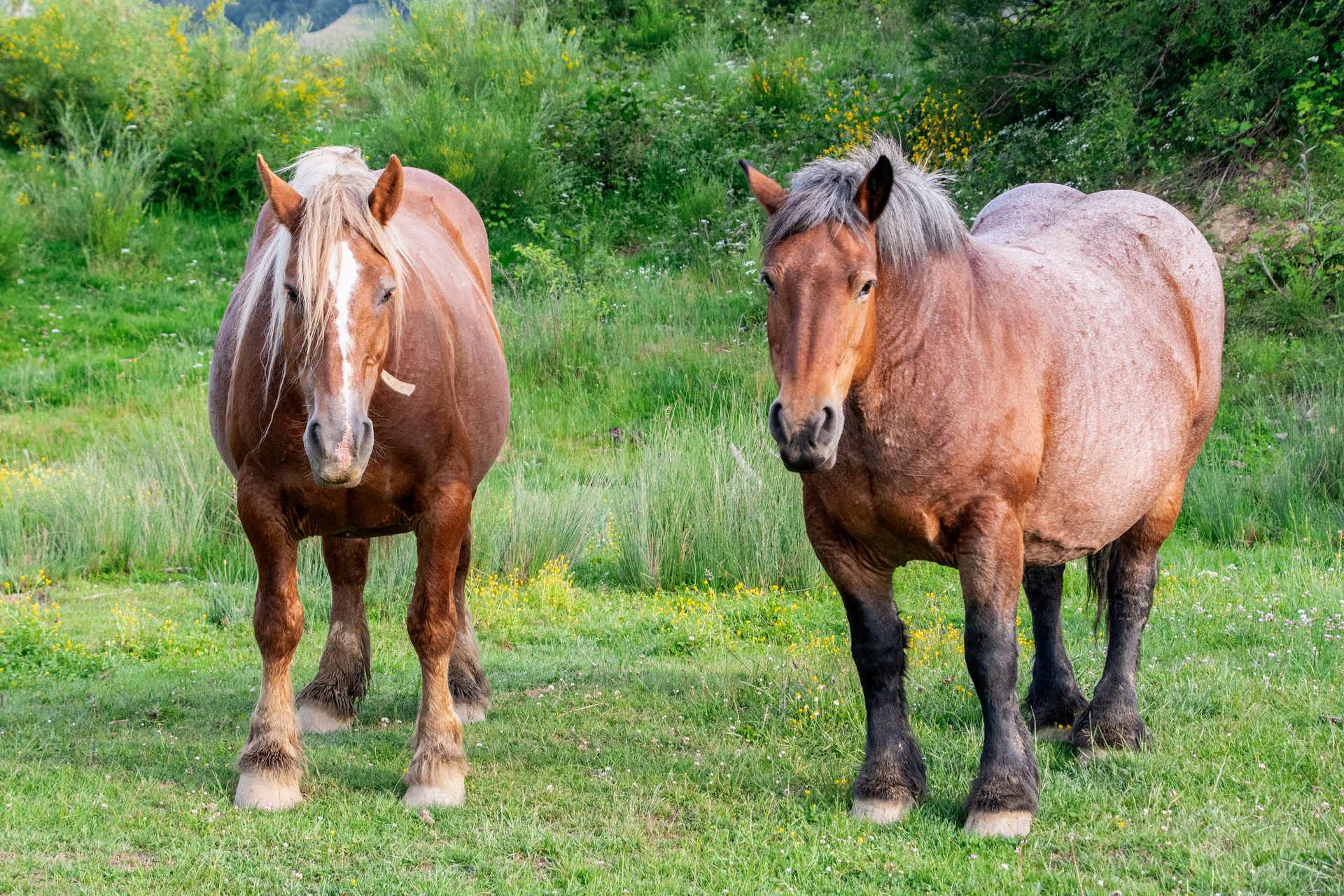
However, full-time turnout on grass pasture may not be suitable for Percherons with PSSM. High starch and sugar levels in fresh grass can contribute to increased glycogen storage and muscle symptoms.
Percherons with PSSM or older horses with insulin resistance caused by PPID may do better on a dry lot or with a grazing muzzle to restrict grass intake. This helps limit their grass intake and reduce the risk of pasture laminitis.
Daily grooming is essential for Percherons to keep their coat and skin healthy. Routine farrier care also maintains the correct hoof balance to support their heavy body weight.
Percherons are energetic horses that thrive with regular light exercise. However, intense exercise programs can be problematic due to their heavy musculature and potential for overheating and respiratory conditions.
Here are some key considerations for Percheron care:
Percherons are easy keepers, meaning they have little difficulty maintaining their body condition. However, they can quickly become overweight if they eat too many calories, increasing the risk of metabolic disorders.
Regular body condition scoring can help Percheron owners distinguish obese horses from the breed's standard heavy type. Ensuring access to clean water and free-choice loose salt is also crucial, as draft horses drink more water than average-sized horses and have a higher risk of heat stress.
Uses and Disciplines
Percheron draft horses are incredibly versatile and can be used for a variety of purposes. Originally bred as war horses, they now excel in recreational driving, pulling carriages, sleigh rides, and hay rides.
Their strength and stamina make them ideal for use in logging and on farms, where they can carry heavy loads and work in challenging terrain. Percherons can also be used to pull parade carriages, and Disneyland Paris even maintains teams of working Percherons to pull trams on Main Street.
Percherons are also used in forestry to remove trees from areas heavy machinery can’t access, and they're often used in the Caisson Platoon at Arlington National Cemetery for military funerals.
Disciplines
Percherons excel in driving disciplines, particularly in recreational driving, where they're often used for carriage driving, both competitively and commercially.
Their calm temperaments and commanding size make them a popular choice for mounted police work.
Today, you can find Percherons pulling parade carriages, sleigh rides, and hay rides, and even trams at Disneyland Paris.
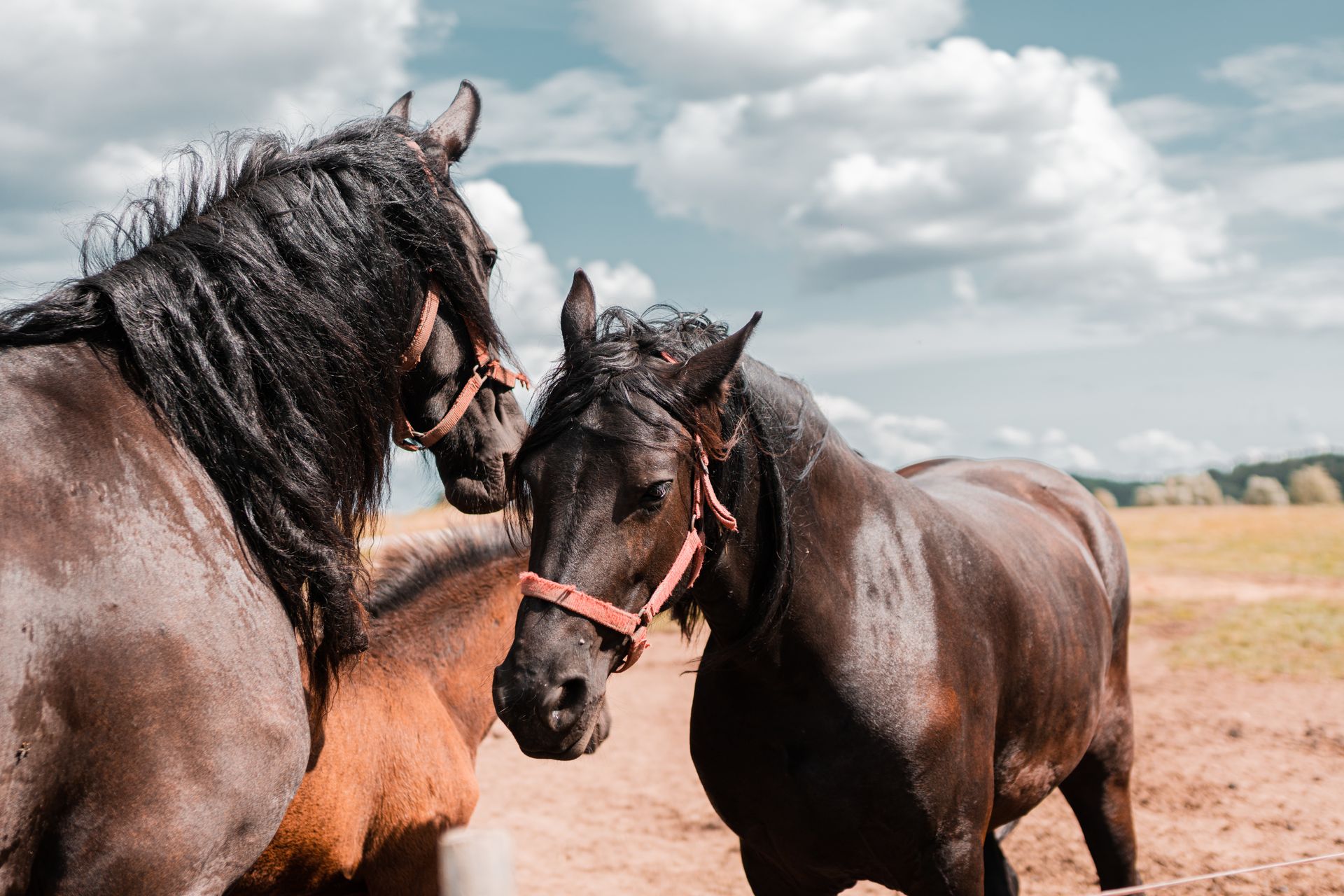
Their size and strength also make them useful for forestry work, removing trees from areas heavy machinery can't access.
Percherons are sometimes ridden as pleasure mounts for larger riders, taking advantage of their calm temperaments.
In the Caisson Platoon at Arlington National Cemetery, Percherons are used for military funerals, adding a touch of dignity and respect.
As a draft breed, Percherons are naturally suited to pulling heavy loads, making them a popular choice for logging and other heavy-duty tasks.
Their sensible temperaments and endurance also make them excellent trail horses, capable of navigating challenging terrain with ease.
Uses
Percherons are incredibly versatile horses that can be used in a variety of disciplines. They're often seen pulling carriages, sleighs, and hayrides, making them a popular choice for recreational activities.
Originally bred as war horses, Percherons have a strong work ethic and can handle heavy loads, carrying more than 300 pounds. They're perfect for heavy riders.
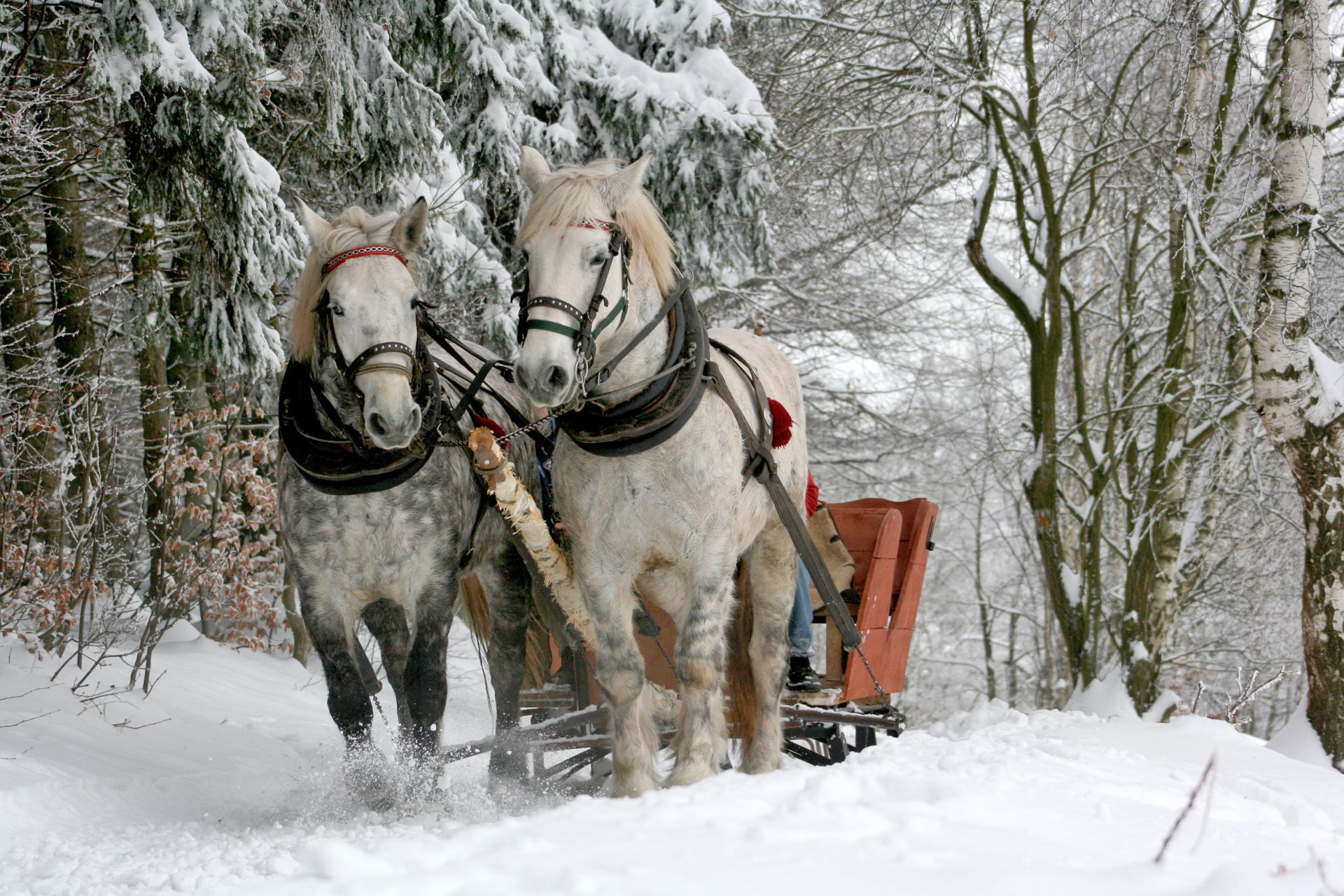
Their strength and stamina also make them ideal for use in logging and on farms. They can even outpower machines when a team is used to pull something.
Percherons can be ridden with Western or English saddles, and they have a captivating presence in the dressage ring. Many riders prefer them for their willingness and adaptability.
In Australia, Percherons are often crossed with thoroughbreds to create police horses. This combination brings together the best of both breeds, resulting in horses with excellent temperament and endurance.
Percherons are also used in the UK to create heavy hunters with good temperaments and increased height. This breed combination is a great example of how Percherons can be used to create horses for specific purposes.
Champion and Celebrity Horses
Jean Le Blanc, foaled in 1823, is considered one of the founding sires of the modern Percheron breed. All of today's Percherons can trace their bloodline to this horse.
The Armour packing company was known for its gray Percherons that pulled yellow wagons in the late 1800s and early 1900s, competing in the driving ring against top horses of the time.
Pabst Brewery used Percherons to power its mills and deliver beer in Chicago during the 1800s. The Pabst family even bred its own Percherons and competed with them at the 1904 World's Fair.
The Heinz Hitch was created in the 1980s to honor the tradition of horse-drawn delivery, featuring eight black Percherons that drew crowds in parades and exhibitions across the U.S.
Buying and Adopting
Percherons can range in price from $1,000 to $10,000, making them a significant investment.
The price varies based on the horse's age, level of training, and pedigree, which is why they're considered rare.
It's essential to visit with the horse at the rescue or breeder before committing to ensure you're compatible.
Ask to see the horse's level of training on display if possible, and take note of their demeanor.
Readers also liked: How to Get a Horse's Attention?
Make sure you receive documentation on the horse's lineage, where they were bred, and their health history from the breeder.
If the breeder doesn't provide this information, it may be a red flag.
Rescue organizations should also provide as much information as possible on the horse's history, health, and temperament.
If you're not comfortable with the answers, it's best to look for another horse.
A pre-purchase or pre-adoption examination by a veterinarian is highly recommended to determine the horse's health and suitability for its desired use.
This examination will give you peace of mind and ensure you're getting a healthy horse.
Related reading: Horse Health Certificate
Riding and Breeding
Percherons are a popular choice for riders who prefer large horses, and they're known for their willingness and adaptability.
They can be ridden with either Western or English saddles, and their calm temperament makes them a great option for the timid equestrian who's looking to build their confidence.
Percherons are also being used in dressage, and some have even shown a talent for jumping at lower levels.
Their sensible temperaments and endurance make them excellent trail horses, and they can carry more than 300 pounds, making them suitable for heavy riders.
Breed Registry
The Percheron Horse Association of America is the breed registry of Percheron horses in North America, founded in 1876.
It's the first purebred livestock association in the United States, a testament to the breed's long history.
The PHAA is dedicated to preserving and promoting purebred Percheron horses.
They process all registration and ownership transfers of Percherons in North America, ensuring the breed's integrity is maintained.
By doing so, they help keep the breed's bloodlines pure and its characteristics intact.
Founded in 1876, the PHAA has a rich history of serving the Percheron community.
Breeding and Uses
Percherons were originally bred as war horses, but today they're often seen pulling carriages, sleighs, and hayrides.
Their strength and stamina make them ideal for use in logging and on farms, where they can carry more than 300 pounds.
Percherons are good for heavy riders, too, and are often chosen by riders who prefer large horses for their willingness and adaptability.
A fresh viewpoint: How Often Should Horses Be Dewormed?
They can be ridden with Western or English saddles, and have a captivating presence in the dressage ring.
Percherons are also used for carriage driving, competitively, commercially, or for pleasure, and are commonly seen on fall hayrides and Christmas sleigh rides.
They can even outpower machines when a team is used to pull something, making them useful for logging and other heavy tasks.
Percherons make good riding horses, with sensible temperaments and endurance that make them excellent trail horses.
Some Percherons have even shown a talent for jumping at lower levels, and have been successful in dressage.
Geldings
Geldings are a great option for many horse owners.
They are often younger males that have been castrated, which can make them more even-tempered and less prone to certain behaviors.
Faith's baby boy, Earl, is a 6-year-old registered Percheron standing at 19+ hands.
He's still a kid and has his moments, but he's showing great promise.
Percherons are a breed known for their size and strength, making them well-suited for draft work or other heavy tasks.
Earl is continuing his discipline and respect training under harness, which is essential for any young horse.
Having a brother team, like Earl and his brother Jet, can be a great way to socialize and train multiple horses at once.
They can learn from each other and develop a strong bond.
Is Horse Riding Right for You?
Horse riding can be a rewarding experience, but it's essential to consider whether it's right for you. If you're a beginner rider, you might need mounting blocks to climb aboard, which some breeds like the Percheron Horse are accommodating of.
Percherons are known for their docile nature, making them a great choice for those who lack experience in horse ownership. They're also easy keepers that can adapt to various climates and conditions.
As a beginner, it's crucial to consider the temperament of the horse you'll be riding. Percherons are sweet, tolerant, and easygoing, which makes them an excellent choice for those who are new to horse riding.
Frequently Asked Questions
What are the disadvantages of a Percheron horse?
Percheron horses can be intimidating in size and may be prone to certain health issues. Additionally, owning a Percheron can be costly due to their high maintenance needs.
Featured Images: pexels.com