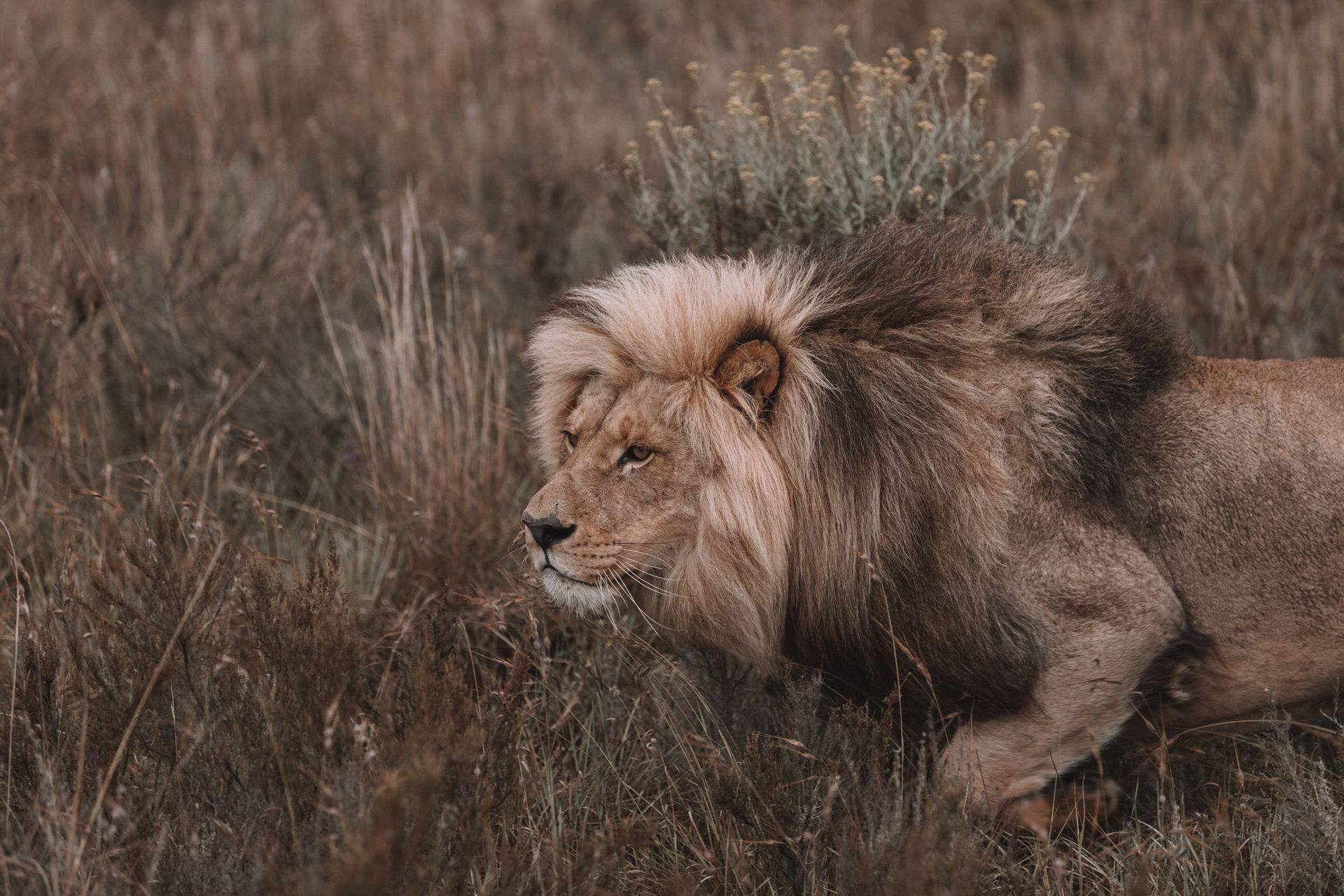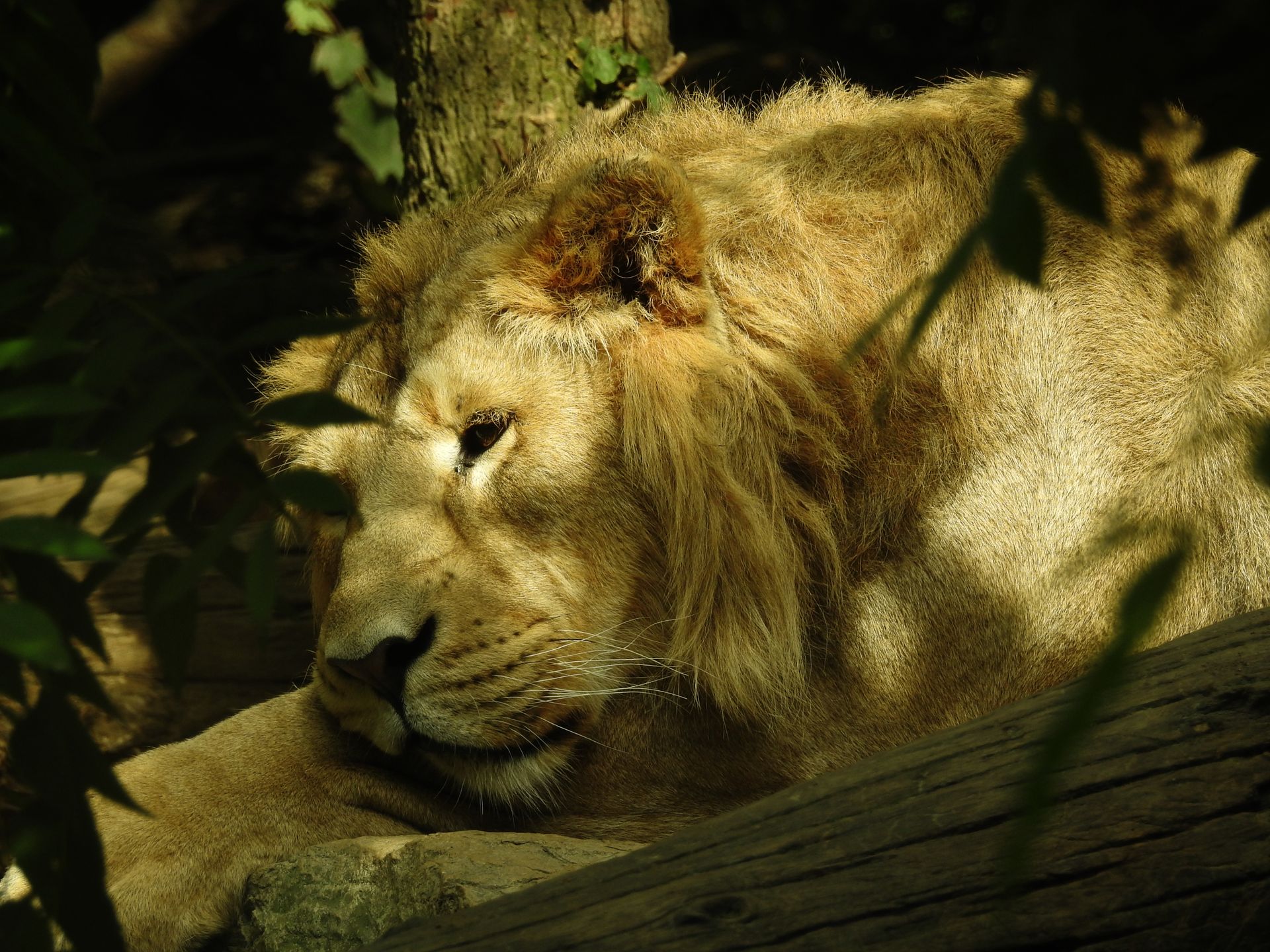
The Asiatic lion, also known as Panthera leo persica, is a subspecies of lion that is native to India. They are found primarily in the Gir Forest National Park in Gujarat, India.
One of the most distinctive features of the Asiatic lion is its smaller size compared to other lion subspecies, with males weighing around 260-300 kg.
The Asiatic lion is also known for its unique social structure, with a prides typically consisting of several females, their cubs, and one or more males.
Asiatic Lion
The Asiatic lion is a subspecies of the lion that survives in the wild today only in India, with occasional sightings in Pakistan, particularly in Pakistani Azad Kashmir. It once ranged from Southeast Europe to India, covering most of Southwest Asia.
The Asiatic lion is smaller than the African lion, with male Asiatic lions slightly bigger than females. The maximum recorded length of a male Asiatic lion in the Gir National Park is 115 inches from head to tail. A feature common in the species but absent in their African counterparts is the fold of skin on the belly.
Here are some key facts about the Asiatic lion's range and population:
- The Asiatic lion's range includes the Gir National Park and surrounding areas in the Indian state of Gujarat.
- The population has steadily increased since 2010, with estimates ranging from 523 individuals in 2015 to 674 in 2020.
- The 2020 estimation exercise showed an increase of 29% over the 2015 census figure.
Physical Characteristics
The Asiatic Lion is a majestic creature with some striking physical characteristics.
Their coats are a mix of golden and dark brown colors, with a distinctive mane in males that can be up to 4 inches thick.
Their bodies are muscular and powerful, built for hunting and protecting their territory.
Adult Asiatic Lions typically weigh between 260 and 550 pounds.
Habitat and Distribution
The Asiatic Lion is found in the wild only in India, specifically in the Gir Forest National Park and Wildlife Sanctuary in the state of Gujarat.
This habitat is a unique combination of deciduous and dry forests, grasslands, and wetlands, which provides the lions with a diverse range of food sources and shelter.
The Gir Forest is a protected area, and conservation efforts have helped to increase the lion population over the years.
Conservation Status
The Asiatic lion's conservation status is a heartening story. The Junagadh State developed a conservation effort in the Gir National Park, which saved the Asiatic lion from almost certain extinction.
In the 2015 census, the lion population was estimated at 523 individuals, comprising 109 adult males, 201 adult females, and 213 cubs. This number has steadily increased since 2010.
The conservation efforts have paid off, with the lion population growing by 29% between 2015 and 2020, reaching an estimated 674 individuals in the Gir forest region. This is a significant increase, and a testament to the effectiveness of conservation efforts.
However, the Asiatic lion's population is still fragile, and conservation efforts must continue to protect this subspecies. The Asiatic lion is smaller than the African lion, and its habitat is limited to the Gir National Park and surrounding areas in India.
Here are some key statistics on the Asiatic lion's conservation status:
- 2010: Lion population starts to increase
- 2015: Estimated 523 individuals, including 109 males, 201 females, and 213 cubs
- 2020: Estimated 674 individuals in the Gir forest region
- 2017: Surveyors counted 650 wild lions
It's essential to continue supporting conservation efforts to protect the Asiatic lion and its habitat.
King of the Jungle
The majestic title of "King of the Jungle" is well-deserved by Panthera leo persica.
They were once widely distributed across the Middle East, India, and Central Asia, but their habitat has shrunk significantly due to human activities.
Their distinctive physical features include a short, dark mane that runs along the neck and shoulders, helping to protect their neck during fights.
Panthera leo persica are skilled hunters, using coordinated attacks to take down prey much larger than themselves.
Asiatic Lion in Myth and Art
The Asiatic lion has a rich history in mythology and art, with depictions found on numerous flags and coats of arms across Asia and Europe, as well as the national emblem of India.
One of the most interesting aspects of the Asiatic lion's cultural significance is its connection to Hinduism, where it is worshiped as the "Lion God" or Narasimha, an incarnation of the god Vishnu.
In Sri Lanka, the Sinhalese people, who are the majority ethnic group, are referred to as the "lion people" due to their legendary founder, Prince Vijaya, who is said to have migrated from Singhapur, a place that is believed to be close to the Gir Sanctuary.
The Asiatic lion's influence can also be seen in Chinese art, where it is depicted as a guardian lion, despite not being native to the region. These Chinese guardian lions are modeled after Asiatic lions found in Indian temples and were likely brought to China by Buddhist priests or traders.
Here are some key facts about the Asiatic lion in mythology and art:
- The Asiatic lion appears on numerous flags and coats of arms across Asia and Europe and is also found on the national emblem of India.
- Narasimha, the lion incarnation of Vishnu, is worshiped as the "Lion God" in Hinduism.
- The Sinhalese people are referred to as the "lion people" in Sri Lanka.
- Chinese guardian lions are modeled after Asiatic lions found in Indian temples.
Featured Images: pexels.com