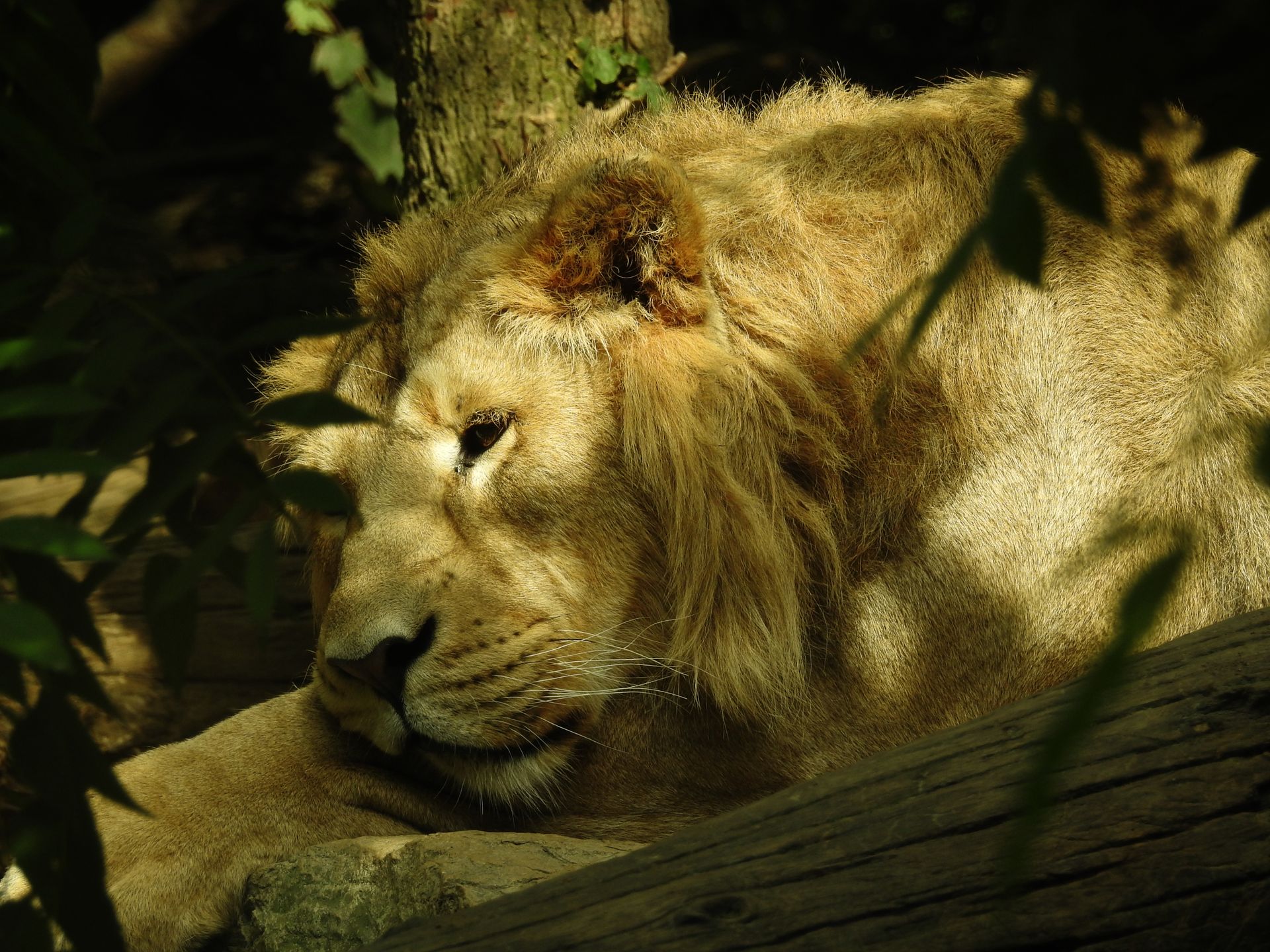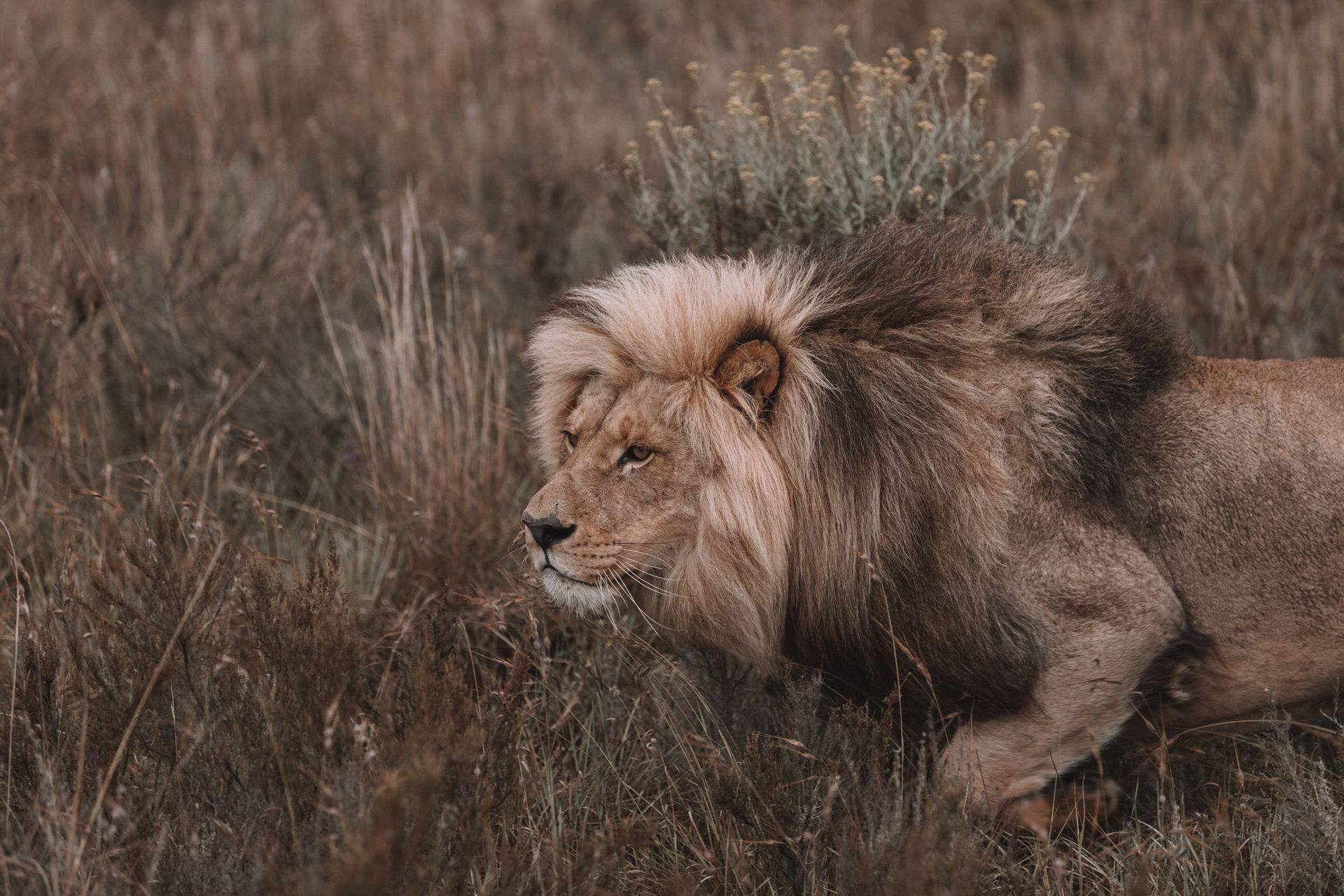
The Panthera Leo Krugeri is a subspecies of lion found in South Africa. They are known for their distinctive tawny coats.
These majestic animals are primarily found in the Kruger National Park and surrounding areas. Their habitat consists of savannas and grasslands.
In the wild, Panthera Leo Krugeri lions are social animals and live in prides, which can range from 3 to 30 individuals. They are skilled hunters and feed on a variety of prey, including antelopes and zebras.
See what others are reading: Panthera Leo Persica
Physical Characteristics
A male lion can grow up to 1.2m tall at the shoulders.
Their mass can be as much as 200 Kg or more.
Female lions, or lionesses, are slightly smaller and weigh about 130 Kg.
Their underparts are whitish with a general tawny to sandy tinge.
Young animals often have rosettes and spots, and females may retain these on their underparts.
Only male lions have a long tawny mane on the sides of the face and on top of the head.
In some individuals, this mane can become almost black.
Lion Behavior and Habitat
African lions are found in Sub-Saharan Africa, specifically in South Africa, where Kruger National Park offers some of the best opportunities to view them in their natural habitat.
Lions live in prides, which consist of two to 12 related females and their young, and dominant males. Dominant males may form coalitions of two to six, holding tenure over prides.
The roar of the lion is an impressive sound, often associated with the African wild.
Breeding
Lions are non-seasonal breeders, which means they can give birth to cubs at any time of the year.
Females of a pride often synchronize births, which is likely a result of their social behavior and communal living.
After a gestation period of 110 days, one to four cubs are born.
Behaviour
Lions are social animals that live in prides, which consist of two to 12 related females and their young, along with one or more dominant males.
These males often form coalitions with each other, working together to maintain control over the pride.
A lion's roar is an unmistakable sound, often used to communicate with other lions over long distances.
Lions also use scent-marking to communicate, leaving their scent on their surroundings to convey information to other lions.
By displaying their facial expressions and body postures, lions can show their emotions and intentions.
When feeling aggressive, lions will often show off their impressive canine teeth, retract their ears, and display the dark patch behind their ears.
Their tails can also give away their mood, twitching in irritation when they're feeling agitated.
African Lion Habitat
African lions are found in Sub-Saharan Africa, which is their last refuge. They inhabit a vast territory that includes South Africa, where some of the best opportunities to view lions in their natural habitat exist.
Kruger National Park in South Africa is a prime location for spotting African lions. One of the best places to see lions in Kruger National Park is Camp Shawu.
Camp Shawu is situated near a dam that attracts lions and a variety of other wildlife, making it an ideal spot for lion sightings.
Kruger National Park Lions
Kruger National Park is home to a large African lion population, and one of the best places to see them is in Camp Shawu, which overlooks a dam that attracts lions and a multitude of wildlife.
Kruger National Park offers some of the best opportunities to view lions in their natural habitat. South Africa is the last refuge of these supreme animals.
Kruger National Park is a fantastic place to see lions, with Camp Shawu being one of the best places to spot them.
Results and Information
The Panthera Leo Krugeri is a subspecies of lion found in South Africa's Kruger National Park.
They are a majestic sight to behold, with males weighing up to 550 pounds and reaching lengths of up to 8.5 feet.
Their coats are a beautiful tawny color with a golden sheen, helping them blend in with their savannah surroundings.
The Panthera Leo Krugeri is listed as a subspecies of lion, with a distinct genetic makeup that sets it apart from other lions.
Their habitat is vast, covering much of South Africa's Kruger National Park, with its diverse landscape of grasslands, woodlands, and rocky outcrops.
These lions are skilled hunters, using coordinated attacks to take down prey much larger than themselves, such as buffalo and giraffe.
Their social structure is complex, with prides led by dominant females and males playing a secondary role.
They are highly adaptable, thriving in a variety of environments and able to coexist with other predators like leopards and hyenas.
In the wild, they can live for up to 18 years, although their average lifespan is significantly lower due to threats from poaching and habitat loss.
Their numbers are declining, with estimates suggesting fewer than 20,000 individuals remaining in the wild.
Cape Lion Traits
The Cape Lion is a fascinating creature, and understanding its traits can give us a better idea of its characteristics.
The Cape Lion's upper canine size is a key distinguishing feature, and the Port Elizabeth specimen was initially thought to be a female, but its size suggests it's actually a male.
Out of the 22 Cape Lion skulls examined, 12 were classified as adult, but six of them had major damage or were missing parts, making it difficult to take every measurement.
Only two of the 16 Cape Lion mandibles examined possessed pm2, and it's worth noting that among the 732 non-Cape Lion mandibles examined, only one had pm2 alveolus on the left mandible.
The ratio of condylobasal length to greatest length of the skull of wild adult Cape Lions was not significantly different from that of other wild adult southern African Lions.
A statistically significant difference was detected, however, in the ratio of rostral depth to nasal length among wild adult male southern African Lions.
Featured Images: pexels.com