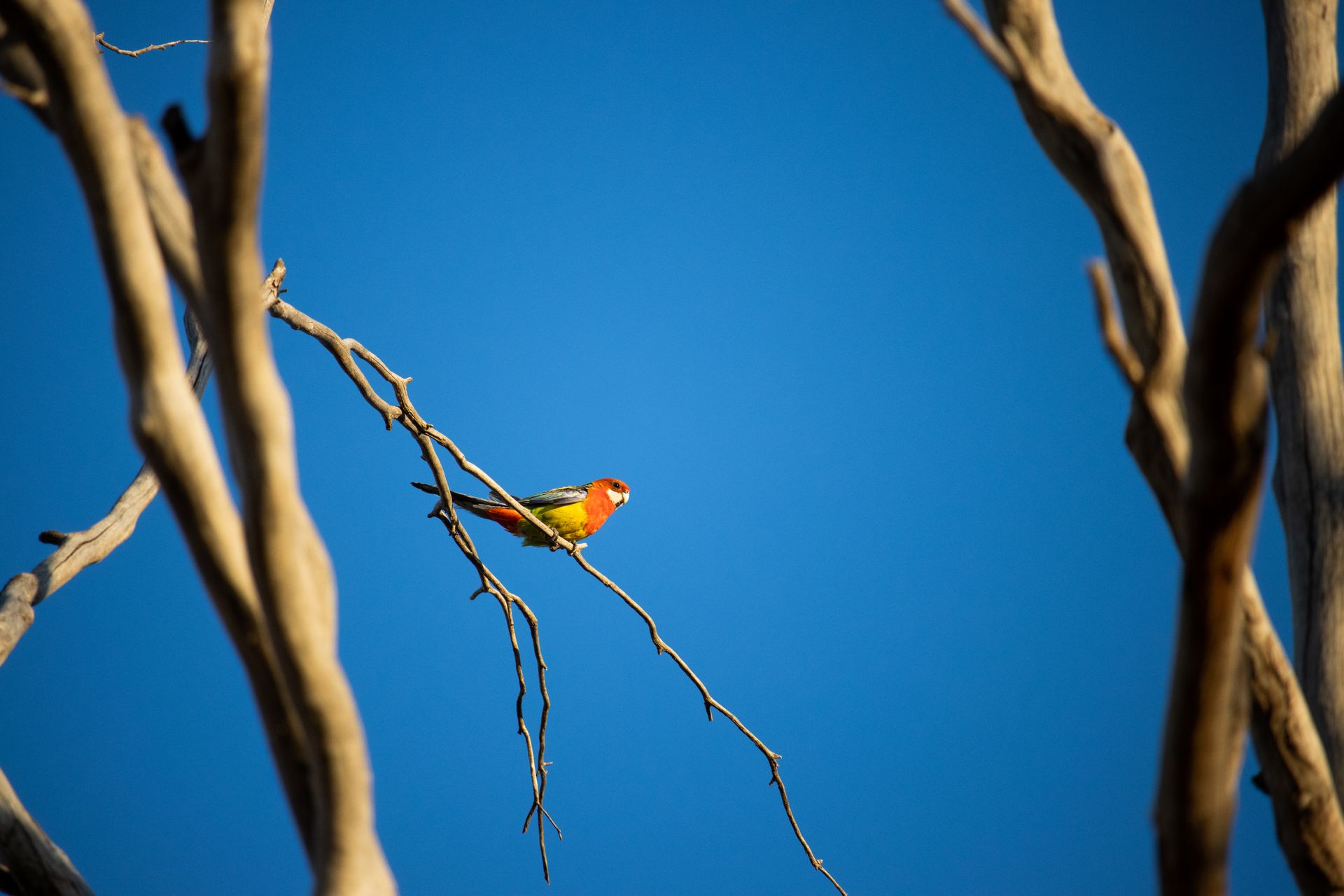
The Pale Headed Rosella is a stunning bird species that's native to Australia. They're known for their striking red and blue plumage.
These birds are relatively small, measuring between 30-32 centimeters in length. They have a distinctive pale grey crown on their heads, which gives them their name.
The Pale Headed Rosella is a social bird that thrives in flocks, often seen in urban areas and woodlands. They're also known to visit bird feeders, making them a popular sight for birdwatchers.
Their diet consists mainly of seeds, fruits, and insects, which they forage for in trees and shrubs.
Taxonomy and Description
The pale-headed rosella has a rich taxonomy, with its formal description dating back to 1790 by English ornithologist John Latham. He gave it the binomial name Psittacus adscitus, with the specific epithet meaning "to approve" in Latin.
The pale-headed rosella is now placed in the genus Platycercus, introduced by Nicholas Aylward Vigors in 1925. Its closest relative was initially thought to be the eastern rosella, but a 2017 mitochondrial study found that it's actually the northern rosella.
There are two subspecies of the pale-headed rosella: the nominate adscitus (found in Cape York Peninsula) and the palliceps (found in eastern Queensland), also known as the blue-cheeked rosella.
Taxonomy
The pale-headed rosella has a fascinating history in the world of taxonomy. It was formally described in 1790 by John Latham and given the binomial name Psittacus adscitus.
The specific epithet "adscitus" comes from the Latin word "asciscere" meaning "to approve". This name was chosen for a reason that's still unclear.
Latham didn't specify a locality when he first described the species, but in 1912, Gregory Mathews designated Cooktown, Queensland in northeast Australia as its type locality.
The pale-headed rosella is now placed in the genus Platycercus, which was introduced in 1925 by Nicholas Aylward Vigors.
There are two subspecies of the pale-headed rosella: the nominate adscitus and the palliceps, also known as the blue-cheeked rosella.
The blue-cheeked rosella has been depicted in 1832 by Edward Lear in his book Illustrations of the Family of Psittacidae, or Parrots.
A 2017 mitochondrial study found that the closest relative of the pale-headed rosella is actually the northern rosella, not the eastern rosella as previously thought.
Here are some common names occasionally seen for the pale-headed rosella:
- Mealy rosella
- Moreton Bay rosella
- Blue rosella
- Blue-cheeked rosella (for the northern subspecies)
Description
The pale-headed rosella is a bird species that's quite striking in appearance. It's 33 cm long, which includes its 15 cm long tail.
Its underparts are a pale blue color, and its upper breast and head are a pale cream-yellow. The tail is a vibrant blue-black and green, while the vent is a deep blood red.
The feathers on its back, nape, and scapulars are black with bright yellow edges, giving it a scalloped appearance. In some subspecies, the yellow edges have a pale blue tinge.
The bill of the pale-headed rosella is pale blue-white, and its legs are dark grey. Its eyes are a warm yellow-brown color.
Both males and females have similar appearances, although females are slightly smaller and less vibrant in color.
Discover more: Yellow Headed Blackbird Habitat
Pale Headed Rosella Facts
The Pale Headed Rosella is a medium-sized parrot with a distinctive appearance. It has a pale head, all white or blue and white cheek patches, and a mainly blue underbelly. The back is yellow with dark flecks.
You might like: White Headed Duck Oxyura Leucocephala
This parrot is very similar to the Eastern Rosella, which has a bright red head instead of yellow. The two species are often found together and may even hybridise.
Pale Headed Rosellas are found in savanna woodlands, lightly timbered woodlands, and tree-lined watercourses. They're also spotted in agricultural lands.
They mainly eat seeds, fruits, and flowers, as well as insects and their larvae. They feed more often in shade than in sunlight.
The Pale Headed Rosella makes its nest in the hollows of dead or living trees, usually in eucalypts. The nest is often near water.
Here are some key facts about the Pale Headed Rosella:
- Size: 28 cm to 34 cm
- Classification: Genus Platycercus, Species adscitus, Family Psittacidae, Order Psittaciformes, Class Aves
Identification and Habitat
The Pale-headed Rosella is a medium-sized parrot with a distinctive appearance. It has a pale head and all white, or blue and white cheek patches.
The underbelly is mainly blue, with red under the tail, and the back is yellow with dark flecks. This parrot is quite noisy and conspicuous, except when feeding.
You can spot Pale-headed Rosellas in savanna woodlands, lightly timbered woodlands with a grassy understorey, tree-lined watercourses, and even agricultural lands.
A fresh viewpoint: White Deer Head Chihuahua
Identification
The Pale-headed Rosella is a medium-sized, broad-tailed parrot.
It has a distinctive pale head and all white, or blue and white cheek patches.
Its underbelly is mainly blue, with red under the tail.
The back is yellow with dark flecks.
The female is similar, though slightly duller, with an off-white underwing stripe.
This parrot is known for being noisy and conspicuous, except when feeding.
Worth a look: Black Headed Parrot
Habitat
Pale-headed Rosellas can be found in a variety of habitats, including savanna woodlands.
These woodlands often have a lightly timbered structure with a grassy understorey, providing the birds with a lush environment to forage and nest.
Tree-lined watercourses are also a common place to spot Pale-headed Rosellas, as they offer a reliable source of water and food.
Agricultural lands are another habitat where Pale-headed Rosellas can be found, often visiting crops and farmland in search of seeds and insects.
Behavior and Diet
Pale-headed Rosellas are primarily ground-dwellers, but they also forage in trees and shrubs. They mainly eat seeds and fruits of grasses, shrubs, and trees.
Their diet is quite varied, including flowers, insects, and their larvae. They also seem to prefer feeding in the shade rather than in direct sunlight.
In terms of breeding, they don't have a strict schedule, but rather breed from September to January, or whenever rainfall is sufficient.
Feeding and Diet
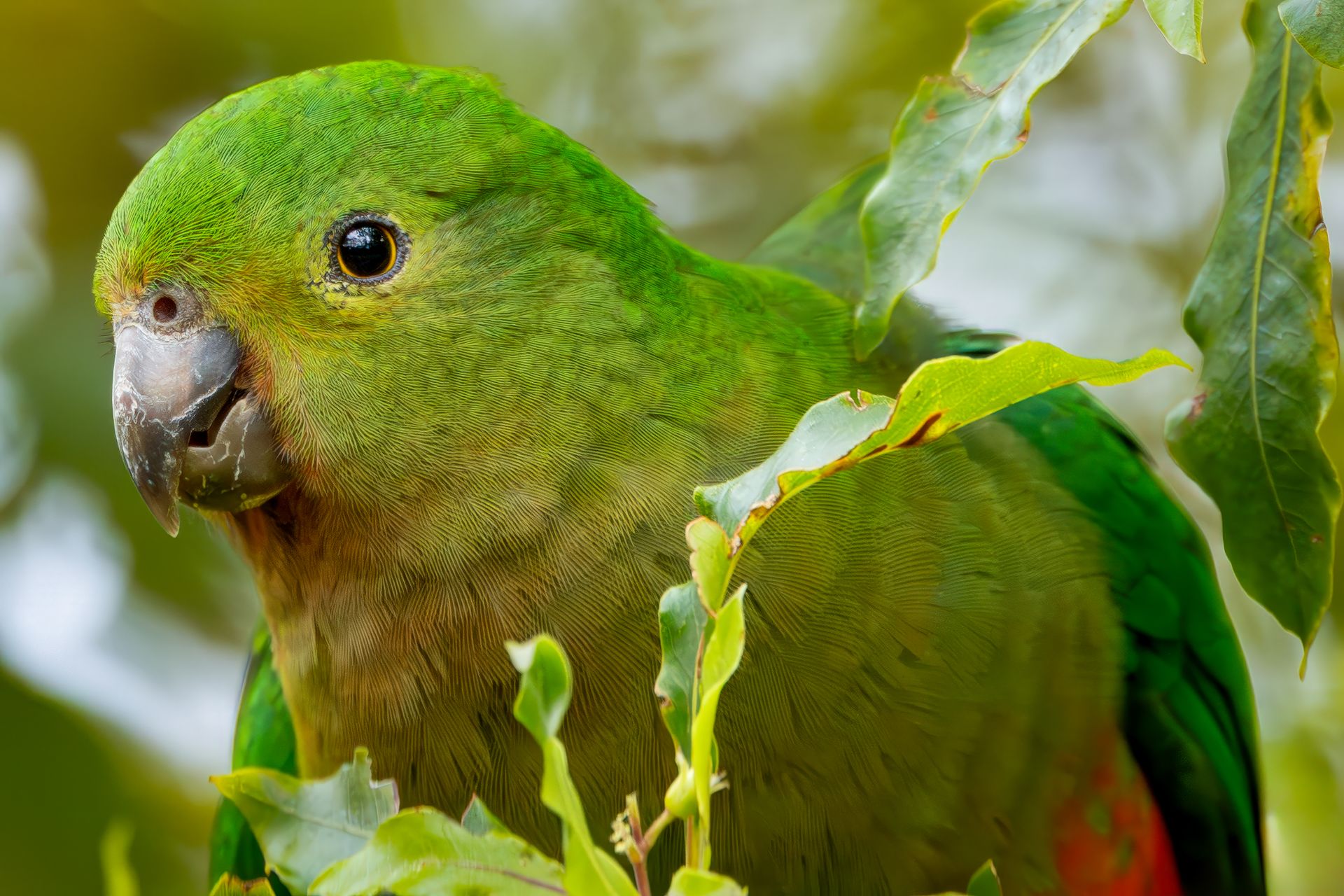
Pale-headed Rosellas are primarily ground-dwellers, but they also forage in trees and shrubs for food. They have a varied diet that includes seeds, fruits, and flowers from grasses, shrubs, and trees.
Seeds and fruits make up a large portion of their diet, and they also eat insects and their larvae.
Insects and their larvae are a nutritious addition to their diet, providing essential protein.
They tend to feed more frequently in shaded areas than in direct sunlight.
Take a look at this: Red Headed Woodpecker Diet
Breeding Behaviours
Pale-headed Rosellas are skilled nesters, often choosing hollows in dead or living eucalyptus trees, as well as hollow stumps and posts.
They usually place their nests near water sources.
Only the female incubates the eggs, which are laid on a bed of wood dust.
After a few days, the male takes on a key role in feeding the young.
The presence of the male during this critical feeding stage is a notable aspect of Pale-headed Rosella breeding behaviour.
Broaden your view: Red Headed Woodpecker Male
Rosella
The Rosella is a stunning bird with a distinctive appearance.
Its name "Rosella" comes from the Latin word for red, which is a fitting description given the vibrant hues of its plumage.
This bird is a type of parrot, specifically a member of the Platycercus genus.
The Pale-headed Rosella is a medium-sized bird, typically measuring around 35 centimeters in length.
Frequently Asked Questions
What is the spiritual meaning of pale-headed rosella?
The pale-headed rosella is associated with peace, tranquility, and positivity, symbolizing hope and joy in the face of life's challenges. It represents the ability to rise above difficult times and find inner peace.
Where do Pale-headed Rosellas nest?
Pale-headed Rosellas typically nest in hollows of dead or living eucalypt trees, or hollow stumps and posts, often near water sources. Their nests are lined with wood dust, providing a cozy space for their eggs.
Featured Images: pexels.com