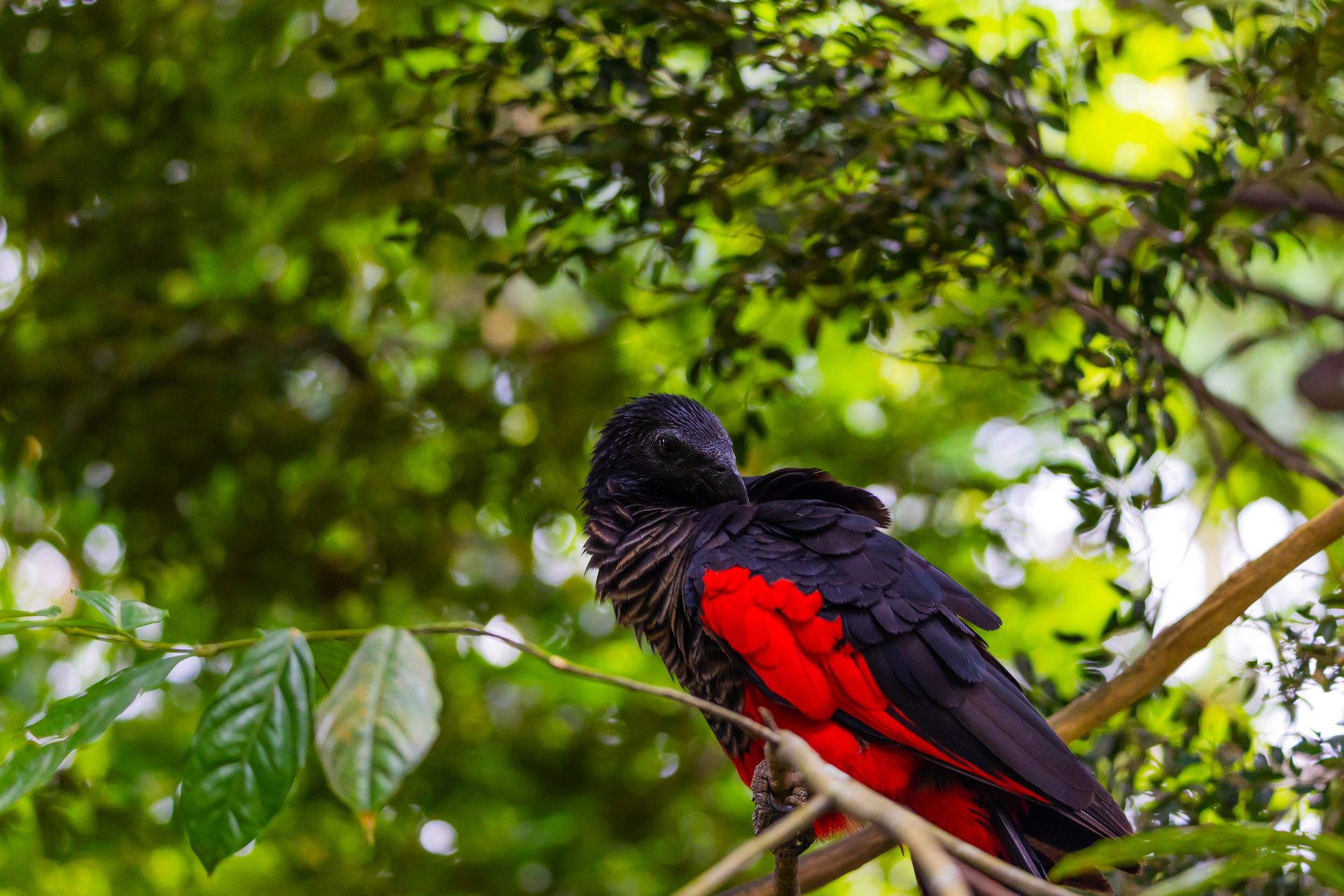
The Black Headed Parrot is a medium-sized parrot native to the tropical forests of South America. They are known for their striking black head and green body.
These birds are social creatures and live in flocks in the wild, often with a dominant male leading the group. They are also known for their ability to mimic human speech and other sounds.
In the wild, Black Headed Parrots feed on a variety of fruits, seeds, and leaves. They have a strong beak that is perfect for cracking open nuts and seeds.
Their lifespan in captivity is around 30-40 years, making them a long-term companion for many parrot owners.
Taxonomy and Description
The black-headed parrot's taxonomy has undergone some changes over the years. Carl Linnaeus first described the species in 1758, placing it in the genus Psittacus.
Linnaeus based his account on George Edwards' description of the "white-breasted parrot" in 1751. He originally gave the type locality as Mexico, but this has since been changed to Caracas in Venezuela.
The black-headed parrot is now classified together with the white-bellied parrot in the genus Pionites, introduced by Ferdinand Heine in 1890. The generic name Pionites combines the genus Pionus with the Ancient Greek word "itēs", meaning "resembling."
Two subspecies of the black-headed parrot are recognized:
- P. m. melanocephalus (Linnaeus, 1758) – southeast Colombia and south Venezuela through the Guianas and north Brazil
- P. m. pallidus (Berlepsch, 1889) – south Colombia to northeast Peru
Adult black-headed parrots are quite small, measuring between 21 to 25 cm (8.3 to 9.8 in) in length and weighing between 130 to 170 g (4.6 to 6.0 oz).
Taxonomy
The black-headed parrot's taxonomy has a fascinating history. It was formally described by Carl Linnaeus in 1758 in the tenth edition of his Systema Naturae.
Linnaeus placed the black-headed parrot in the genus Psittacus, but it's now part of the genus Pionites along with the white-bellied parrot. This change was introduced by Ferdinand Heine in 1890.
The generic name Pionites combines the genus Pionus, introduced by Johann Wagler in 1832, with the Ancient Greek word-itēs meaning "resembling". The name Pionus itself comes from the Ancient Greek word piōn, pionos meaning "fat".
There are two recognized subspecies of the black-headed parrot:
- P. m. melanocephalus (Linnaeus, 1758) – southeast Colombia and south Venezuela through the Guianas and north Brazil
- P. m. pallidus (Berlepsch, 1889) – south Colombia to northeast Peru
Description
The black-headed parrot is a relatively small bird, measuring between 21 to 25 cm in length.
Its weight ranges from 130 to 170 grams, which is roughly 4.6 to 6.0 ounces.
The sexes of the black-headed parrot are the same, meaning there's no noticeable difference between males and females.
Adult black-headed parrots have a distinctive black cap that covers their forehead to the nape of their neck.
A rufous-orange band is visible across their hindneck, adding a pop of color to their otherwise green and yellow plumage.
Their back and wings are a dull green color with dark blue primaries and reddish blue axillaries, giving them a unique appearance.
The lower breast and belly of adult black-headed parrots are creamy white, while their flanks, thighs, and vent area are a vibrant apricot yellow.
The tail of the black-headed parrot has a green top surface with yellow feather tips and an olive-yellow lower surface.
Immature birds have pale yellow breasts and bellies, distinguishing them from their adult counterparts.
Readers also liked: Violet Green Swallow
Distribution and Habitat
The black-headed parrot is found in a variety of habitats, from southeastern Colombia to Brazil's Amazon River.
They inhabit the canopy, clearings, and edges of humid lowland tropical forest of both terra firme and várzea types.
These forests are often secondary, and the parrots can be found in small numbers at elevations as high as 1,000 m (3,300 ft).
Their range spans across several countries, including Brazil, Venezuela, and Ecuador.
Here's a list of some of the countries where you can find the black-headed parrot:
- Colombia
- Venezuela
- Guianas
- Brazil
- Peru
They're well-suited to their rainforest home, with strong beaks and quick movements helping them navigate dense foliage.
Their diet consists of fruits, seeds, and nuts, which helps spread seeds and maintain the ecosystem's balance.
The black-headed parrot's native range is a testament to the rich biodiversity of the Amazon basin.
Physical Characteristics
The black-headed parrot is a vibrant bird with striking plumage. It has a unique mix of colors that make it stand out.
These parrots are known for their endearing features, which include their vibrant and multi-colored feathers. The head is black, contrasting with the rest of the body.
The white breast feathers may have a yellow or orange tint in young birds, adding to their charm.
Physical Characteristics
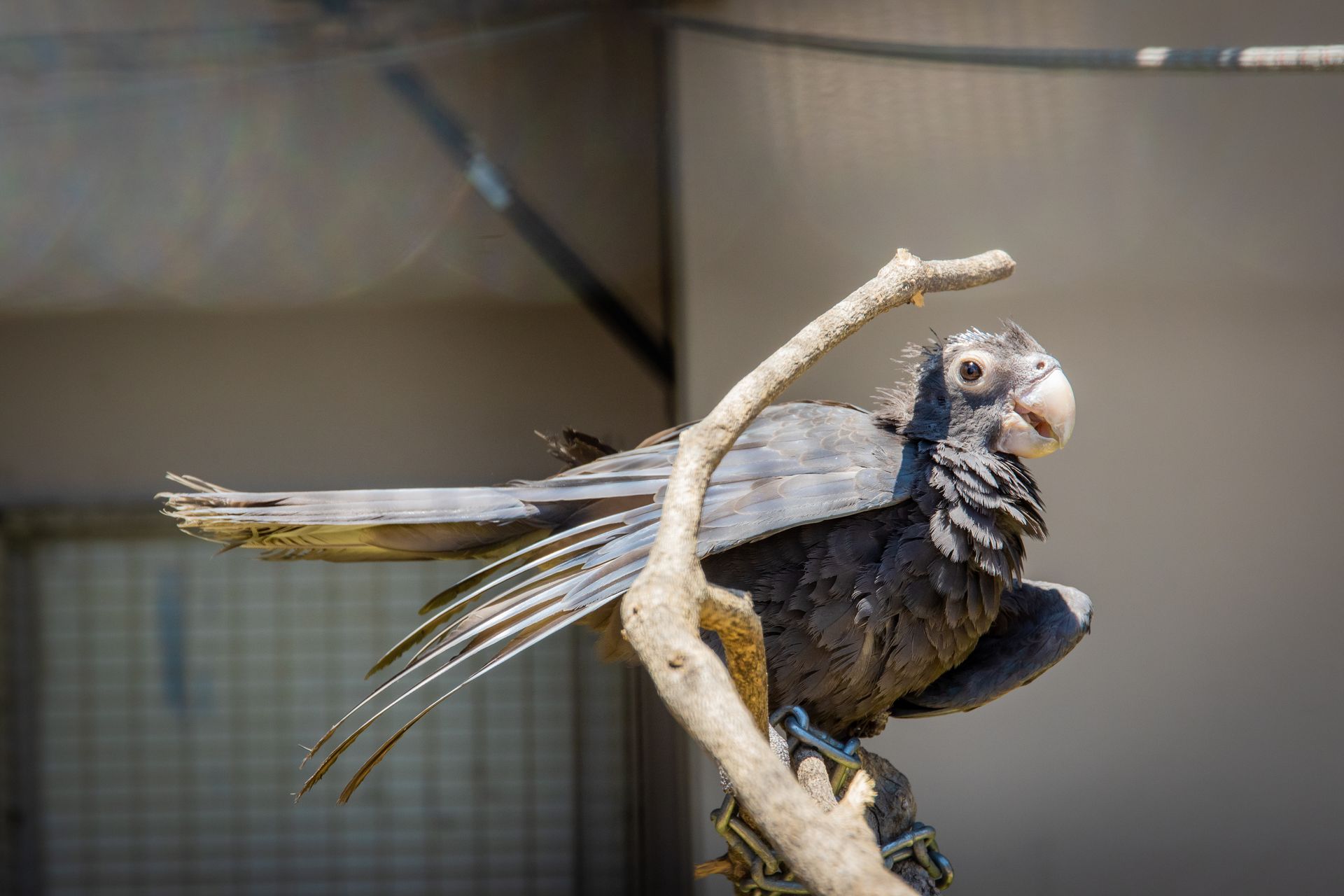
The black-headed parrot is a vibrant bird with striking plumage. Its unique mix of colors makes it stand out.
The parrot's head is black, contrasting with the rest of its body. The green, orange, yellow, and white feathers create a stunning visual effect.
The white breast feathers may have a yellow or orange tint in young birds, adding to their charm.
Size and Weight
The black-headed parrot's size and weight are perfectly suited for its environment.
They're a medium-sized bird, measuring 23 centimeters (9 inches) in length.
Their wingspan is quite impressive, coming in at 36 centimeters (14 inches). This makes it easy for them to move around.
Weighing in at 160 grams when fully grown, they're not too heavy to fly or perch.
Here are some key measurements to keep in mind:
Beak and Eye Features
The beak of a parrot is quite remarkable. It changes color as the bird grows, starting with a grey beak in young birds.
As the parrot matures, its beak darkens to black. This change is a clear sign of age.
The black-headed parrot's beak is just one of its unique features. Its black head, combined with the changing beak, makes for a striking appearance.
Intelligent and Curious
Black Headed Caiques are very smart and curious birds, known for learning new tricks quickly and enjoying training. They can pick up many behaviors, depending on their owners' creativity.
As natural hoppers, Caiques are great at learning tricks. This unique ability makes them a joy to train and interact with.
Start training your Black Headed Caique early to avoid aggression and ensure success. Keep training sessions short, about two minutes once they get the task, to keep their focus and prevent frustration or boredom.
Their smart and lively nature makes them thrive on positive feedback, which is essential for becoming good and friendly pets. With the right guidance, they can develop unique personalities and even learn to enjoy focused training.
Vocalization and Aviculture
The black-headed parrot's vocalization is quite distinctive, making a high-pitched and penetrating squealing "skeeea .. skeeea" sound, which can also be described as a wheezy or squealing screech.
Their vocalization is not limited to flight calls, as they are very vocal when perched, producing a variety of calls that can be more musical or rather un-birdlike.
In aviculture, black-headed parrots are known to mimic surrounding sounds, such as alarm clocks, smoke detectors, and even car alarms, often combining these sounds to create new ones.
Vocalization
The black-headed parrot's flight call is a high-pitched and penetrating squealing "skeeea .. skeeea" sound. This unique call is often described as a wheezy or squealing screech, e.g. 'screeéyr, screeyer-screeyer-screeyer'.
Perched birds are very vocal, making a variety of calls. Some of these calls are more musical, while others are rather un-birdlike.
The black-headed parrot's vocalizations are a key aspect of its behavior and social interactions.
In Aviculture
In aviculture, Black-headed parrots are a popular choice, but they can be a handful to care for. They're playful and energetic, so they need a large cage with plenty of toys and perches.
To determine the sex of a Black-headed parrot, you'll need to rely on surgical sexing or DNA sexing, as they don't show any obvious physical differences. DNA sexing is the safer option for the bird.
A minimum cage size of 24" L X 24" W X 36" H is recommended, but the bigger the better to keep them happy and active. Bar spacing should be no more than 1".
Black-headed parrots are known to be a bit feisty and may bite if they don't respect boundaries. They also use their beak more often than other parrot species, so be prepared for some beak-based communication.
Some Black-headed parrots may struggle to mimic human speech, but they're more likely to pick up and repeat other sounds they hear, like alarm clocks, smoke detectors, and car alarms.
Caique Species Overview
Caiques are a group of parrots known for their fun nature, bright colors, and small size.
Black-headed caiques, in particular, are a popular choice as pets due to their playful and energetic personalities.
They require a large cage with many toys and perches, with a minimum size of 24" L X 24" W X 36" H.
The larger the cage, the better, as black-headed parrots tend to hop more than fly.
Black-headed parrots can have a tendency to bite, so owners need to set boundaries early on.
Check this out: Black Headed Python Size
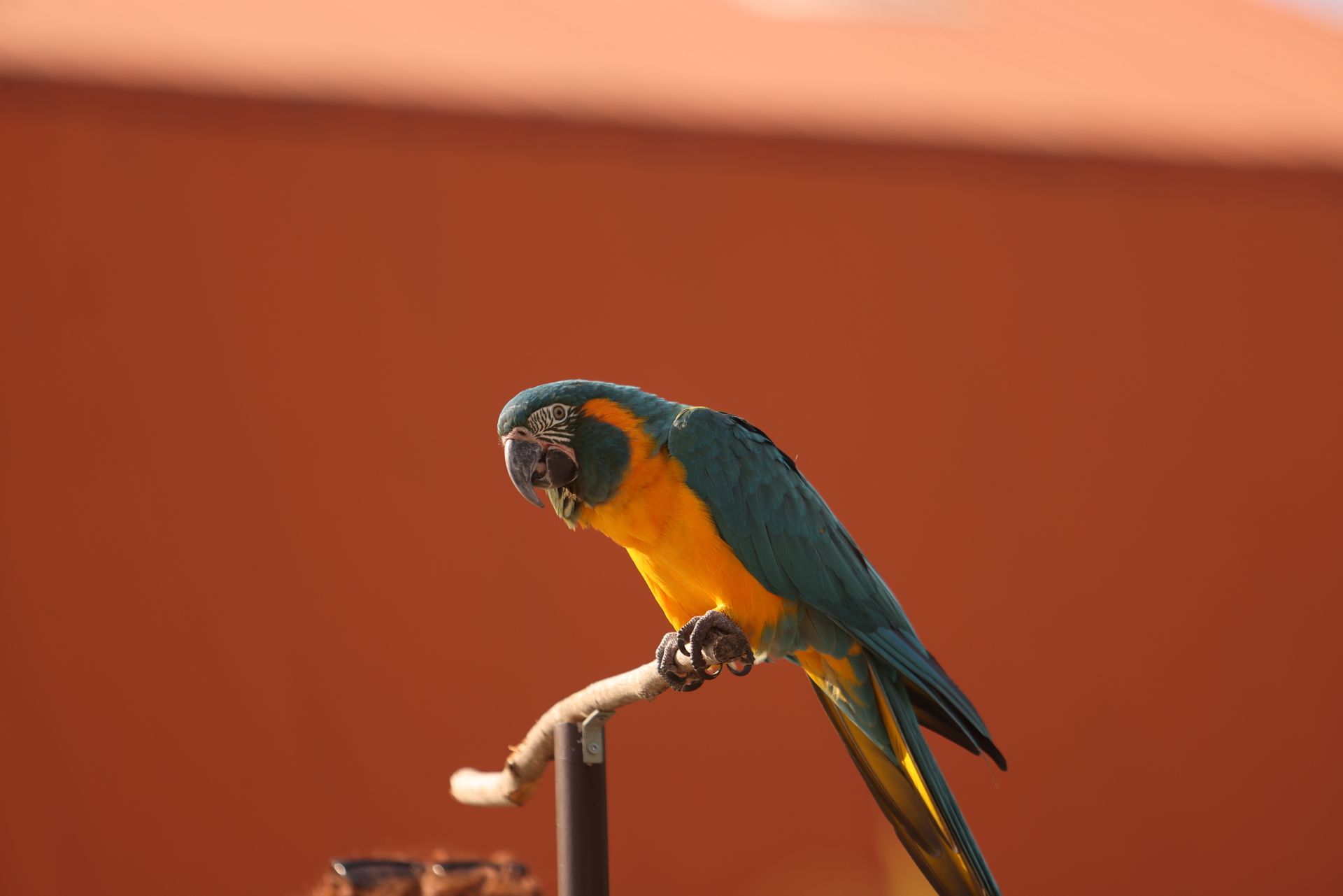
They use their beak more often than other parrot species, which may require some adjustments in handling.
Some black-headed parrots will poorly mimic human speech, but they commonly mimic other surrounding sounds.
These sounds can include alarm clocks, smoke detectors, microwave-oven beeps, laughs, car alarms, and whistles.
Black-headed parrots can even combine sounds they've picked up to make new ones.
Breeding and Care
The breeding season for black-headed parrots varies greatly depending on the location, with some areas experiencing it in April and May, while others see it in October and November, or even from December to February.
In captivity, the incubation period for black-headed parrot eggs is 25 days, and fledging occurs 10 weeks after hatching.
They typically nest in tree cavities, and the clutch size is believed to be two to four eggs.
A good breeder should have certain qualities, including knowing a lot about breeding and raising black-headed parrots, caring about the health and happiness of their birds, and being open about their breeding methods.
Here are some key qualities of a responsible breeder:
- Knowledge of breeding and raising black-headed parrots
- Caring about the health and happiness of their birds
- Openness about their breeding methods
- Putting the birds' welfare first
- Providing a clean and fun place for the birds to live
Breeding
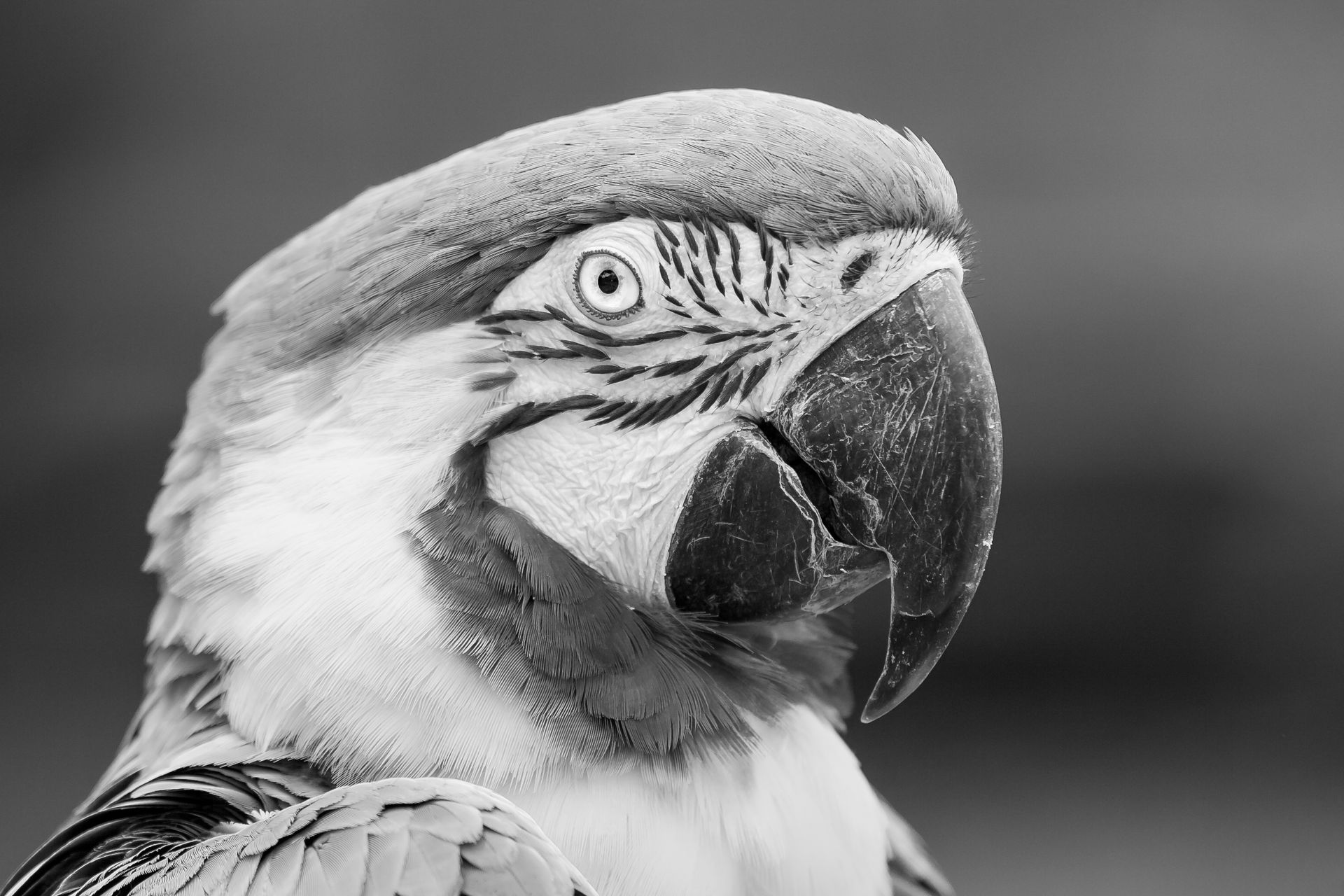
The breeding season for black-headed parrots varies greatly depending on their location. In Venezuela, it takes place in April and May, while in Suriname, it occurs in October and November. French Guiana's breeding season spans from December to February.
Black-headed parrots typically nest in tree cavities. The clutch size is believed to be between two to four eggs. In captivity, the incubation period is 25 days, and fledging occurs 10 weeks after hatching.
If you're looking to bring a black-headed parrot into your family, it's essential to understand the importance of a reputable breeder or adoption source.
Housing and Enrichment
Creating a good home for your Black Headed Caique Parrot is crucial for their happiness. They love to play and need lots of space and toys to stay happy and healthy at home.
A cage around 30″ x 36″ x 30″ is best for one bird. However, if you have multiple birds, you'll need a bigger cage to accommodate them.
Bar spacing should be 1/2″ to 7/8″ to keep your bird safe. This is especially important if you have younger birds or birds that like to chew.
Here are some recommended cage sizes for your caique parrot:
A bigger cage is better for cleaning and setup, but it's also more expensive and takes up more space.
Health and Veterinary Care
Regular vet visits are crucial for keeping your Black Headed Caique Parrot in top shape. This helps prevent health issues that can arise from neglect.
Black Headed Caique Parrots are full of energy and need our care to stay healthy. They can be prone to health problems, so it's essential to be aware of the signs.
Polyomavirus is a significant health issue that can cause stomach problems and affect their organs. Look out for signs like tiredness and diarrhea.
Catching problems early can make a big difference in your Caique's health. That's why it's vital to keep an eye out for changes in their behavior and physical condition.
Here are some common health issues in Caiques:
- Nutritional deficiencies from bad diets
- Respiratory infections
- Feather plucking or self-mutilation
- Psittacine Beak and Feather Disease (PBFD)
- Bacterial or fungal infections
The average lifespan of a Black Headed Caique Parrot is 50 years, which means they require long-term care and attention to their health.
Choosing a Pet
If you're considering bringing a black headed parrot into your home, you should think about the level of care and attention they require. They need a lot of social interaction and can become destructive if left alone for too long.
Black headed parrots are known for their ability to mimic human speech and other sounds, which can be a fun and entertaining experience for owners. They are also intelligent birds that can learn tricks and commands with proper training.
Their diet consists mainly of fruits, vegetables, and seeds, and they require a balanced and nutritious diet to stay healthy. A varied diet is essential to prevent nutritional deficiencies.
In the wild, black headed parrots are known to live in flocks, which can make them more social and affectionate birds. If you're looking for a pet that will bond with you, a black headed parrot might be a good choice.
Introduction and Overview
The Black-headed Parrot is a vibrant bird, found in the Amazon basin, particularly in Brazil, Venezuela, and Colombia. It's a member of the Pionites genus, which includes two species.
This bird is known for its distinctive black forehead to nape, with green lores, and is often referred to as the Black-crowned Parrot. Two subspecies are recognized, with the more westerly ranging P. m. pallida having a whiter breast and belly, and a paler hindneck band.
They breed in tree-cavities, laying two eggs, but the breeding season may vary across their broad range.
Introduction
The Black-headed Parrot is a stunning species found in the northern Amazonia region. It's one of just two species in the genus Pionites.
This bird is also known as the Black-crowned Parrot, due to its distinctive black forehead to nape. It has a broadly similar yellow, green, and white plumage to its congener, the White-bellied Parrot.
The Black-headed Parrot has a broad range, spanning from southern Colombia to northeast Peru, and across northern Brazil to the Guianas, and northeast Venezuela. It's found in various habitats, including seasonally flooded and terra firme forests, as well as second growth and clearings.
Two subspecies are recognized, with the more westerly ranging P. m. pallida being distinguished by its whiter breast and belly, and its paler hindneck band.
A unique perspective: Northern Mockingbird Male vs Female
Introduction to the Caique Parrot
The caique parrot is a vibrant bird loved as a pet. They originate from the Amazon basin, specifically in Brazil, Venezuela, and Colombia.
These birds are known as Pionites melanocephala, a unique species that stands out among parrots.
Frequently Asked Questions
Are black-headed Caiques good pets?
Yes, black-headed Caiques can make entertaining and playful pets for experienced bird owners, but their high energy levels require special attention and care. If you're up for the challenge, a black-headed Caique can bring joy and laughter to your life.
What is the lifespan of a black-headed parrot?
A black-headed parrot typically lives for 30 years in captivity and 15-20 years in the wild. Its lifespan is influenced by its environment and care.
Are black-headed caiques rare?
While the black-headed caique is listed as Least Concern, some subspecies are more endangered due to insufficient data. The conservation status of black-headed caiques is complex, with varying levels of risk depending on the subspecies.
Featured Images: pexels.com