Oklahoma's diverse landscape is a haven for bird enthusiasts, with over 400 species calling the state home. The state's varied habitats, from forests to grasslands, support a wide range of bird species.
The American Robin is a common sight in Oklahoma's backyards, recognizable by its brown back and red breast. The Northern Cardinal's vibrant red plumage is another distinctive feature.
If you spot a bird with a blue-gray back and white patches on its wings, it's likely a Blue Jay. These birds are known for their bold, curious nature.
The Western Meadowlark is a grassland specialist, with its yellow breast and brown back allowing it to blend in with its surroundings.
Worth a look: Bird Identification by Photo
Color Identification
In Oklahoma, the vibrant colors of red, orange, and yellow birds can instantly catch our attention.
Birds with these colors stand out against their surroundings, making them easier to spot and identify. This is especially true for red, orange, and yellow birds, which can quickly narrow down the possibilities when trying to determine a bird's identity.
By familiarizing ourselves with the typical coloration of certain bird species, we can use color as a useful tool for identification.
Worth a look: Yellow Bird Identification
Carotenoids and Colors
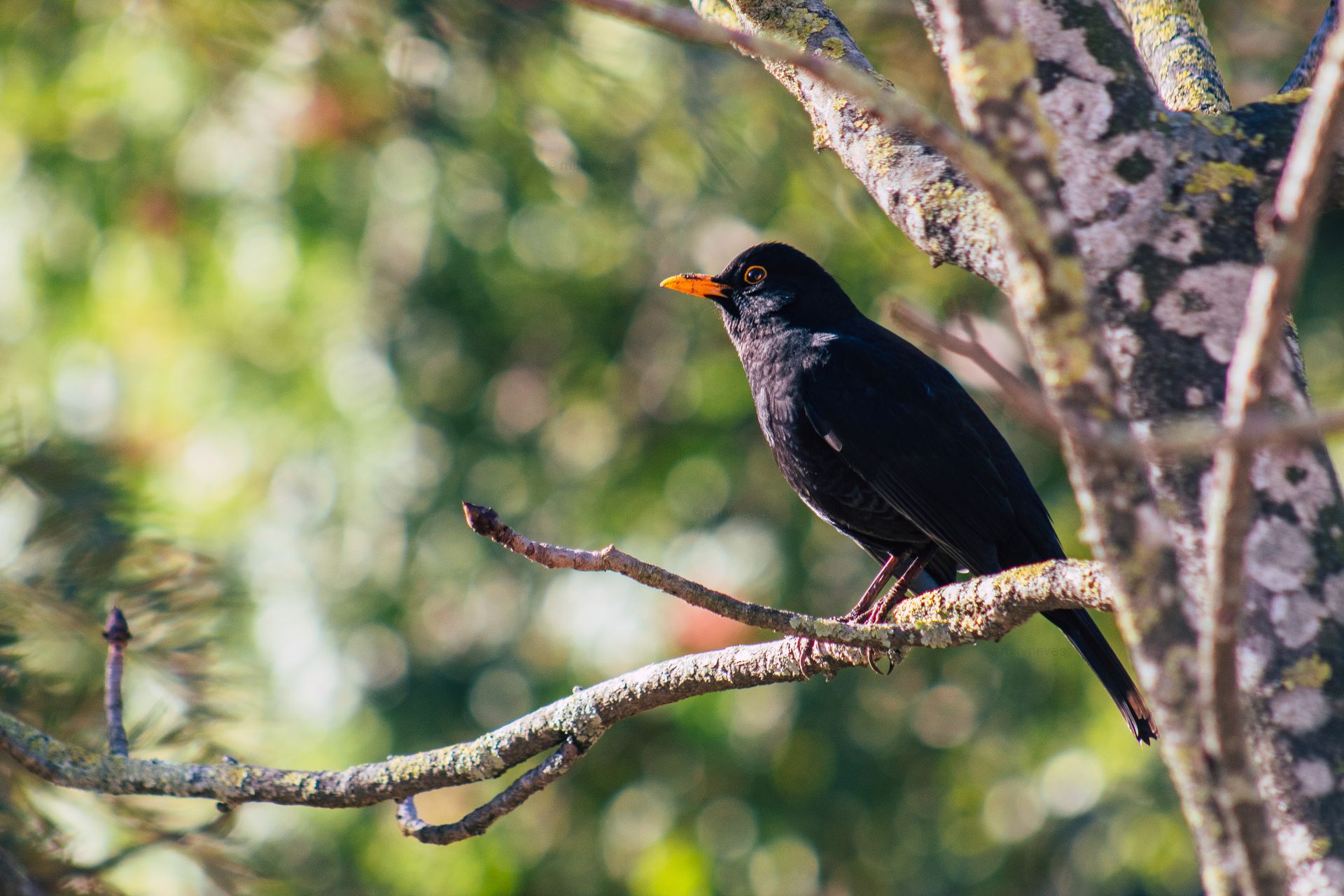
Carotenoids are responsible for the red, orange, and yellow colors observed in birds' feathers.
These pigments are obtained through a bird's diet, primarily from consuming fruits, berries, and insects.
Birds that have a diet rich in carotenoids tend to exhibit more vivid and saturated colors.
The availability and consumption of carotenoids can also influence color variations within a species or between sexes.
Red, Orange, and Yellow Birds
Red, Orange, and Yellow Birds are a treat to spot in Oklahoma, with over 20 species displaying these vibrant colors.
Birds like the Baltimore Oriole and Orchard Oriole are known for their bright orange and yellow plumage, making them stand out against their surroundings.
The colors of these birds are not just for show; they're actually a result of pigments called carotenoids, which are obtained through their diet.
Birds that eat a lot of fruits, berries, and insects tend to have more vivid and saturated colors, like the American Goldfinch.
Carotenoids can also influence color variations within a species or between sexes, which is why some birds may have more intense colors than others.
The Northern Flicker and Eastern Meadowlark are two more examples of birds in Oklahoma that display a range of colors, including shades of yellow and red.
By familiarizing yourself with the typical coloration of certain bird species, you can quickly narrow down the possibilities when trying to identify a bird you've encountered.
Red, orange, and yellow birds are not just easy to spot, but they're also a great way to get started with birdwatching in Oklahoma.
Shape and Size as ID Tools
Shape and size are crucial tools for identifying birds in Oklahoma. A bird's shape, including its body proportions, beak shape, wing shape, and tail shape, can provide valuable clues for species identification.
Birds of prey like hawks and eagles have a distinctive shape characterized by broad wings and a hooked beak. This shape is a giveaway that the bird is a bird of prey.
Readers also liked: Bird of Prey Identification in Flight
Size is another crucial aspect to consider when identifying birds. A small bird with bright red plumage is more likely to be a Ruby-throated Hummingbird.
Comparing a bird's size to familiar objects or other birds in its vicinity can be helpful. For example, if you see a bird that's about the size of a sparrow, it's likely to be a small species like a sparrow itself.
A larger bird with similar coloration could be a Summer Tanager. This bird's size is a key factor in its identification.
On a similar theme: Small Bird Nest Identification
Distinguishing Features
In Oklahoma, bird identification is all about paying attention to the little things. Considering characteristics such as wing patterns, tail length and shape, facial markings, and behavioral traits can greatly assist in bird identification.
Wing patterns, for example, can be a key distinguishing feature. Some birds have distinctive wing bars or stripes that can be a dead giveaway.
Facial markings can also be a big help. Many Oklahoma birds have distinctive eye rings, eyebrow stripes, or beak shapes that can make them stand out.
Intriguing read: Oklahoma State Bird Scissor Tailed Flycatcher
Behavioral traits, such as foraging habits or courtship displays, can also be an important part of a bird's identification profile. By observing how a bird behaves, you can get a better sense of its overall identity.
Evaluating these features collectively can help you put together a comprehensive identification profile, making it easier to identify the birds you see in Oklahoma.
Common Species
Oklahoma is home to a rich diversity of bird species, and within the realm of red, orange, and yellow birds, there are several common and easily recognizable species that bird enthusiasts may encounter.
The American Robin is one of the most well-known bird species in Oklahoma, easily recognized by their rusty orange breast and grayish-brown upperparts.
These birds are particularly hard to miss, especially during the spring when they arrive en masse after winter migration.
Bird Identification Checklists
Bird Identification Checklists are a great way to start your Oklahoma birding journey. They help you narrow down the possibilities and make identification easier.
To create a checklist, start by looking for distinctive field marks such as the Red-winged Blackbird's red and yellow patches or the American Robin's red breast.
The shape and size of a bird's beak can also be a key identifier, like the Warbler's small, pointed beak.
Pay attention to a bird's song, which can be a dead giveaway, like the Northern Cardinal's clear, whistled song.
In Oklahoma, the summer months bring a variety of songbirds, including the Yellow Warbler and the Black-and-white Warbler.
The shape and color of a bird's wings and tail can also be telling, such as the Mourning Dove's long, pointed tail.
The size and shape of a bird's legs and feet can also be useful for identification, like the Sandpiper's long, slender legs.
Keep in mind that some birds may have similar characteristics, so it's essential to observe multiple features before making a positive identification.
The Oklahoma Bird Identification Guide can be a valuable resource for creating and using bird identification checklists.
Broaden your view: Warbler Bird Identification
Frequently Asked Questions
What is the bird app that identifies birds?
The Merlin Bird ID app uses the world's largest bird database to help identify birds you see and hear. It offers four fun ways to identify birds with the help of eBird's vast collection of bird sightings, sounds, and photos.
What are the big GREY birds in Oklahoma?
In Oklahoma, the big grey birds you're likely thinking of are likely Skuas or jaegers, medium to large birds with distinctive hooked bills and sharp claws. These birds are often mistaken for large dark gulls, but have a unique fleshy cere above their upper mandible.
Featured Images: pexels.com