The Norwich Terrier is a small, energetic dog breed that originated in England in the 19th century. They were bred to hunt small game like rabbits and rodents.
One of the most distinctive features of the Norwich Terrier is its large, expressive head and its "broken" or "level" skull shape, depending on the country of origin. The breed's compact body and sturdy legs make it well-suited for navigating tight spaces and dense underbrush.
Norwich Terriers are known for their friendly, outgoing personalities and their strong prey drive, which can make them challenging to train for inexperienced owners. They are generally good with children and other pets, but early socialization is key to ensuring a harmonious household.
Physical Characteristics
The Norwich Terrier is a small but spirited dog breed, standing just 10 inches high at the shoulders. They have a sturdy build, making them one of the smallest working Terriers.
Their coat is hard, wiry, and straight, lying close to the body and about 1½ to 2 inches long. They have a protective mane on the neck and shoulders that forms a ruff at the base of the ears and throat.
The Norwich Terrier's eyes are small, dark, and oval-shaped, with black rims and a bright, keen expression. Their nose pigment is also black.
Size
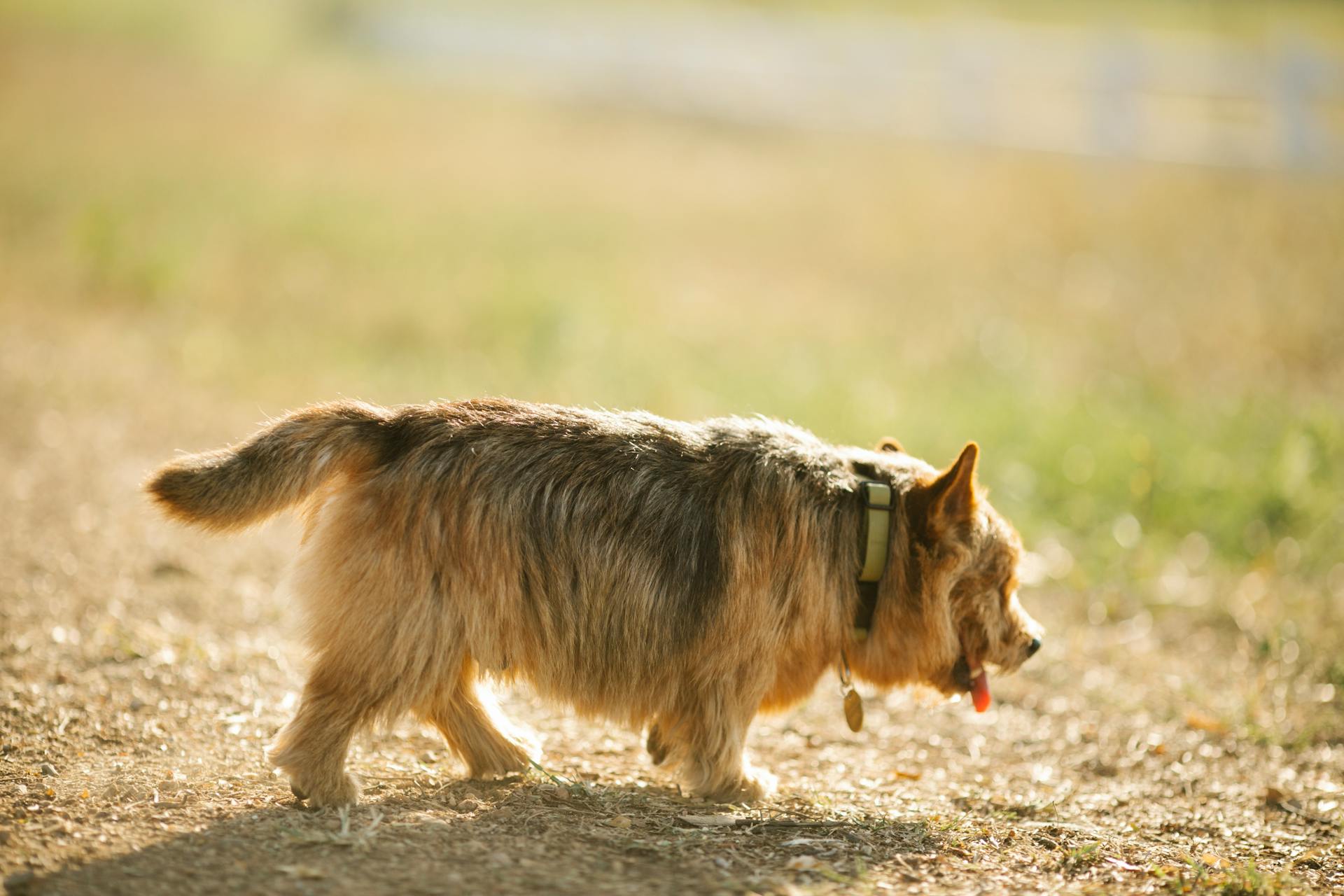
The Norwich Terrier is one of the smallest of the terrier breeds, standing 10 inches high at the shoulders.
They weigh roughly 12 pounds for both males and females, which is a compact and stocky build, not overweight.
Their ideal height, measured at the withers, is also 10 inches.
Their ideal weight is approximately 12 pounds, which should be in proportion to the individual dog's structure and balance.
A fit working condition is of utmost importance, and their weight should reflect that.
Coat
The Norwich Terrier's coat is a distinctive feature of the breed. It's made up of a hard, wiry, and straight topcoat over a soft, downy undercoat.
The topcoat can be any shade of red, grizzle, wheaten, or black and tan. Brushing your Norwich weekly can help remove dead hair and keep the coat looking its best.
The coat is about 1½ to 2 inches long, and there's a definite undercoat. Regular brushing will also help keep your Norwich clean.

The protective mane on the neck and shoulders is longer and forms a ruff at the base of the ears and throat. This helps protect the dog from the elements.
The legs have moderate furnishings of a harsh texture, which can be a bit rough to the touch. Some tidying is necessary to keep the dogs neat.
The hair on the head, ears, and muzzle is short and smooth, except for slight eyebrows and whiskers. They are shown with as natural a coat as possible.
Stripping the coat twice a year can help maintain the coat's characteristic hard texture. Without stripping, your Norwich will look a little scruffy, and they'll shed more than they would otherwise.
Here's an interesting read: Hand Stripping Cairn Terrier
Eyes
The eyes are a standout feature, with small, dark, oval-shaped eyes that are placed well apart. They have a bright, keen expression, giving the impression of alertness and attention to detail.
The eyes are framed by black rims, which add to their striking appearance.
Forelegs
When it comes to the forelegs of this breed, they are truly impressive. The legs are short, straight and powerful.
Strong pasterns are a key feature, providing stability and support for the animal's movements. This is particularly noticeable when the animal is in motion.
The elbows lie closely to the ribs, which helps to create a more streamlined appearance. This is a characteristic that is often appreciated by breeders and owners alike.
Here's an interesting read: Animal Planet Dogs 101 German Shepherd
Tail
The tail of this breed is generally docked to a medium length. It's a distinctive feature that sets them apart.
The tail is set on high, with the base level with the topline. This gives them a unique appearance.
It is carried erect, which means it's always held up and out of the way.
Personality and Temperament
The Norwich Terrier is a breed that's full of life and personality. They're known for their affectionate nature and generally love everyone, making them a great fit for households with multiple pets and children.
They have a mind of their own, but they enjoy pleasing both themselves and their owners. Norwich Terriers are active and love playing with balls and toys or just playing a good game with the people they love.
Early socialization is crucial for this breed, and enrolling them in a puppy kindergarten class is a great start. Inviting visitors over regularly and taking them to busy parks and stores that allow dogs will also help them polish their social skills.
Norwich Terriers can display barking and digging behaviors, which are reflective of their terrier heritage. Consistent and early training can help manage these habits.
They're highly social and emotional dogs that become attuned with their owners. They thrive on human contact and love to play the clown for laughs.
Norwich Terriers are witty, intelligent, and eager to please, but they can be bossy and opinionated. They need consistent positive reinforcement training by someone with experience to be on their best behavior.
Despite their small size, Norwich Terriers have a big personality and can be fearless. They're happy, bouncy pups with a silly sense of humor and aren't afraid to tell you exactly what they want.
With consistency and mindfulness, you can mold their courageous spirit into a lovely and unwaveringly loyal companion. They're highly intelligent and very trainable, making them a great breed for the right owner.
Health and Care
Norwich Terriers are generally healthy dogs, but like all breeds, they can be prone to certain health conditions. They can live up to 12-15 years with proper care and attention.
One health issue to be aware of is tracheal collapse, which is often seen in small breeds. Signs of tracheal collapse include coughing that sounds like a goose honk, fainting, and an inability to exercise for long periods. It's treated medically, but if that doesn't work, surgery may be recommended.
Another health issue to watch out for is dental problems, which can be prevented with routine dental care like teeth brushing and cleanings. Regular check-ups with a veterinarian will also help catch any potential issues early on.
Here are some common health issues to monitor in Norwich Terriers:
- Upper airway syndrome (UAS)
- Epilepsy
- Paroxysmal dyskinesias
- Hip dysplasia
- Patellar luxation
- Eye disease (primary lens luxation and cataracts)
- Periodontal disease
To keep your Norwich Terrier healthy, it's essential to provide mental stimulation and regular exercise. A walk around the block or a run in a small fenced yard is suitable, but they shouldn't be over-exercised, especially in the heat. Regular training and playtime will keep them happy and engaged.
Health and Care
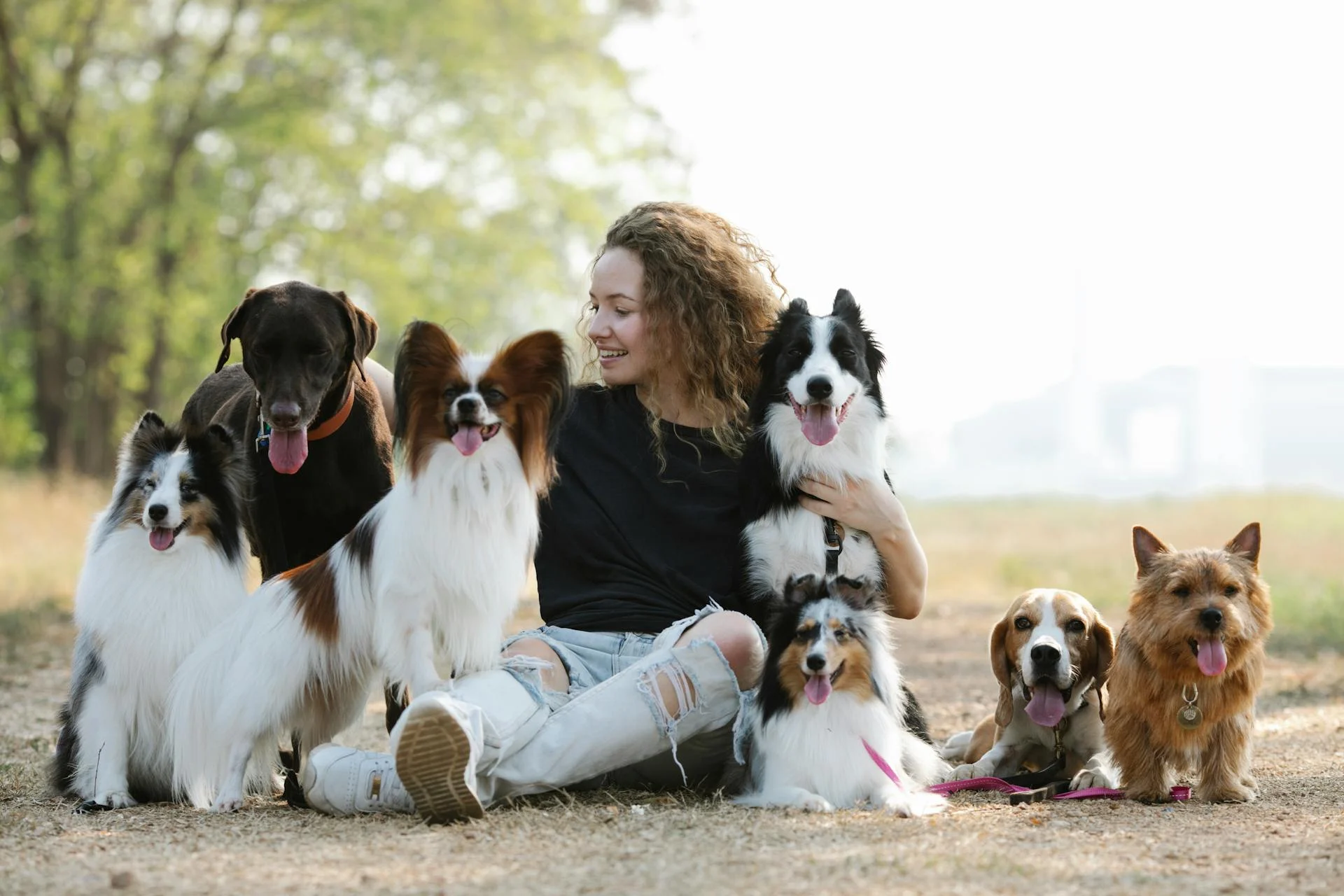
Norwich Terriers are generally a healthy breed, but like all dogs, they can be prone to certain health issues. They can live for 12 to 15 years with proper care.
Norwich Terriers are more susceptible to certain conditions, including tracheal collapse, elongated soft palate, and epilepsy. These conditions can be treated with medication and surgery, but it's essential to be aware of them if you're considering this breed.
A good breeder will show you health clearances for both parents, which prove they've been tested for and cleared of specific conditions. You should expect to see health clearances from the Orthopedic Foundation for Animals (OFA) for hip dysplasia, elbow dysplasia, hypothyroidism, and von Willebrand's disease.
Norwich Terriers are also prone to dental problems, luxating patella, and upper airway syndrome. Regular dental care, such as brushing and cleanings, can help prevent dental disease.
To prevent upper airway syndrome, it's essential to monitor your pup's breathing, especially in summer heat or during vigorous exercise. If you notice any signs of this condition, consult your veterinarian immediately.
Suggestion: Bernese Mountain Dog Hip Dysplasia
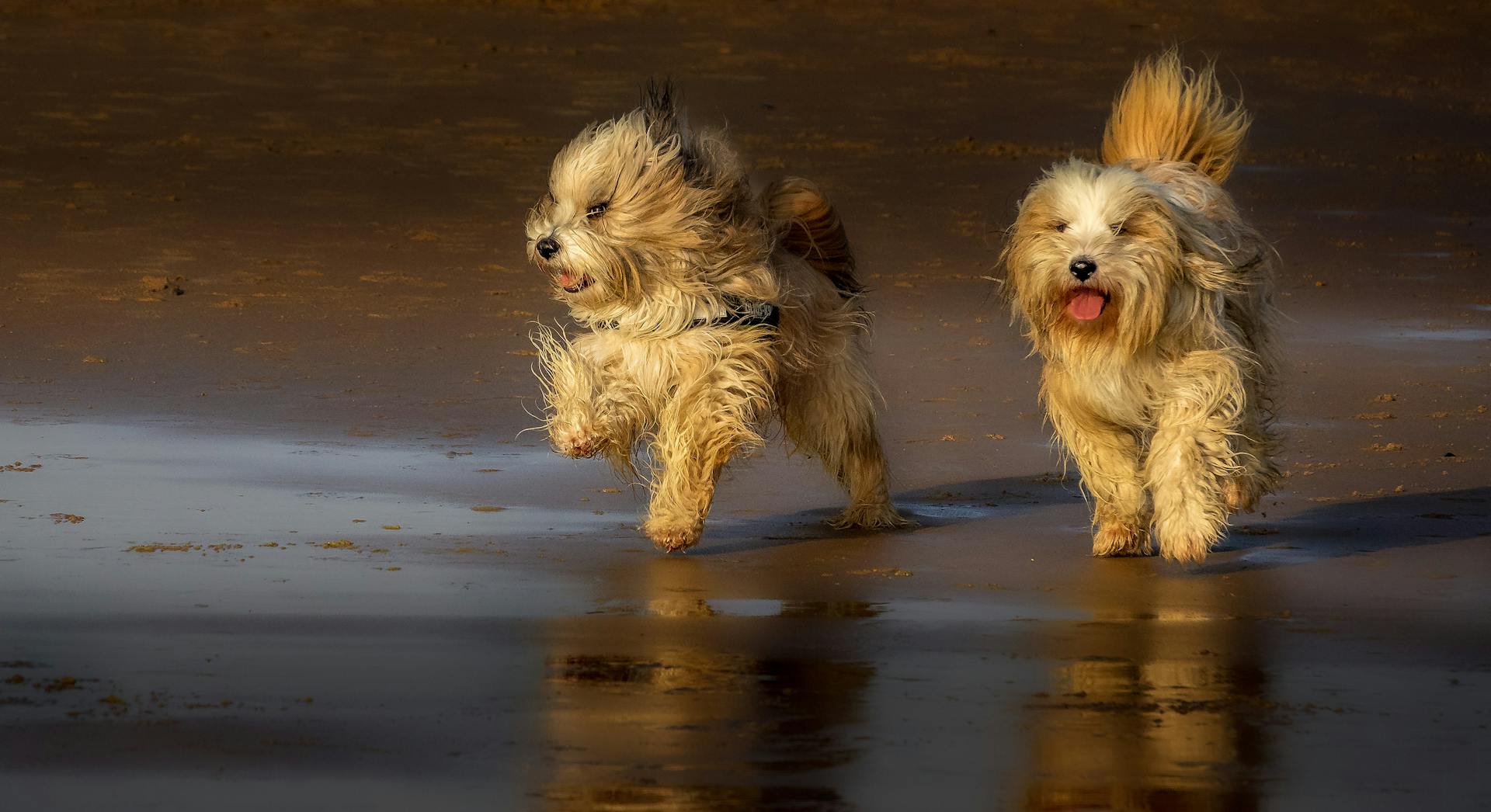
Norwich Terriers require daily exercise, but they don't need strenuous physical activity. A walk around the block or a run in a small fenced yard is sufficient. They also need mental stimulation, so provide them with puzzle toys and teach them new skills.
To keep your Norwich Terrier's mind busy, teach them new tricks and play games with them. Regular training is vital, especially with the help of a professional trainer who has experience with the breed. Every dog can be trained with time and effort, so don't tolerate undesirable behavior.
Here are some common health issues in Norwich Terriers:
Grooming
To maintain your Norwich terrier's wiry coat, you'll need to see a groomer for hand-stripping, which removes hair from the root and keeps their texture hard and color vibrant.
Norwich terriers shed moderately, but regular brushing can help keep them clean and reduce shedding. Brush them weekly to remove dead hair.
A Norwich terrier's coat can be any shade of red, grizzle, wheaten, or black and tan, but it's essential to strip the coat twice a year to maintain its hard texture. Without stripping, they'll look a little scruffy and shed more.
Norwich terriers have a coarse, wiry coat that requires patience to work with, or you can hire an experienced dog groomer familiar with stripping Norwich Terriers. Along with stripping, weekly grooming is necessary to remove shed fur.
To keep your Norwich terrier's nails healthy, trim them regularly if they don't wear them down naturally. If you can hear them clicking on the floor, they're too long.
Brushing your Norwich terrier's teeth at least two or three times a week can help prevent gum disease and bad breath. Daily brushing is even better, especially for small breeds like the Norwich.
Living Needs
Norwich terriers are great city dogs, and apartment living suits them just fine. They'll do well with a couple of walks around the block each day.
However, they're high-anxiety dogs and shouldn't be left alone for long periods of time. This means you'll need to make arrangements for regular companionship, whether that's a family member or a dog walker.
Norwiches can thrive in families of homebodies, where they'll receive plenty of attention and affection. They'll also get along with other dogs and cats, especially if introduced in puppyhood.
Family-Friendly Dogs?
Living with family-friendly dogs requires some consideration. Norwich Terriers can make spectacular family pets if you teach them proper boundaries early.
Their hyperactive side can be tempered with early training. However, they might be a little small for young kids, who can play too rough sometimes.
Some Norwich Terriers are more patient and tolerant than others, but they all need help expelling their excess energy in an appropriate manner.
Feeding
Feeding your Norwich Terrier requires some finesse, as they can be prone to obesity.
The recommended daily amount is 1/2 to 1 cup of high-quality dry food a day, divided into two meals.
For more insights, see: Shiba Inu 1 Cent
A highly active dog will need more food than a couch potato dog.
The quality of dog food matters, as better food will go further in nourishing your dog and less will be needed.
You should be able to see a waist when looking at your Norwich from above.
Place your hands on his back, thumbs along the spine, with the fingers spread downward, and you should be able to feel but not see his ribs without having to press hard.
A fresh viewpoint: Will Shiba Inu Coin Reach $1
Living Needs
Norwich terriers are surprisingly adaptable to living situations, making them suitable for almost any home.
Their compact bodies and short legs mean they don't require a lot of space, so apartment living is a great option. A couple of walks around the block each day will keep them happy and healthy.
However, Norwiches can get anxious if left alone for too long, so it's best to have them with you most of the time. This means they thrive in homes with families who spend plenty of time together.
For your interest: When Is the Best Time to Breed Your Dog
Norwich terriers can get along with other dogs and even cats, especially if they're introduced when they're young. They're also playful and friendly with children, but it's essential to supervise interactions, especially with smaller kids.
These little dogs like to take charge, so be prepared for them to boss around any children in the household. With proper training and socialization, they can live happily with anyone.
Breed Information
The Norwich Terrier is a small working Terrier breed developed in 19th-century England to hunt small game and vermin.
They come in a modest palette of standard colors like wheaten and red grizzle, and their small litter sizes make them a rarity compared to other Terriers.
Originating from England, Norwich Terriers typically stand 9-10 inches tall at the shoulder and weigh around 11-12 pounds.
Their lifespan is relatively long, ranging from 12-15 years, making them a great companion for active families or seniors.
Check this out: Boston Terrier New England
With a wiry coat that needs weekly brushing and occasional stripping, grooming can be a moderate task for owners.
Norwich Terriers are known for their independent, playful, and intelligent nature, requiring 30 minutes of exercise per day to stay happy and healthy.
They are relatively easy to train, making them a great choice for first-time dog owners or those with limited experience.
Some common health issues to watch out for include hip dysplasia, elbow dysplasia, and eye problems.
- Origin: England
- Size: 9-10 inches tall at the shoulder, 11-12 pounds
- Lifespan: 12-15 years
- Coat: Wiry, needs to be brushed weekly and stripped a few times a year
- Temperament: Independent, playful, intelligent
- Exercise needs: 30 minutes per day
- Training: Relatively easy to train
- Grooming: Moderate
- Health: Some common health problems include hip dysplasia, elbow dysplasia, and eye problems
Breed Overview
The Norwich Terrier is a wonderful breed, perfect for active families or individuals who want a loyal companion. They're small in size, but big on personality.
Originating in 19th-century England, the Norwich Terrier was bred to hunt small game and vermin. Their ancestry is unclear, but they're thought to have descended from small red Irish Terriers.
These terriers are relatively easy to train, but they can be willful and independent at times. Consistent training and socialization are key to bringing out their best behavior.
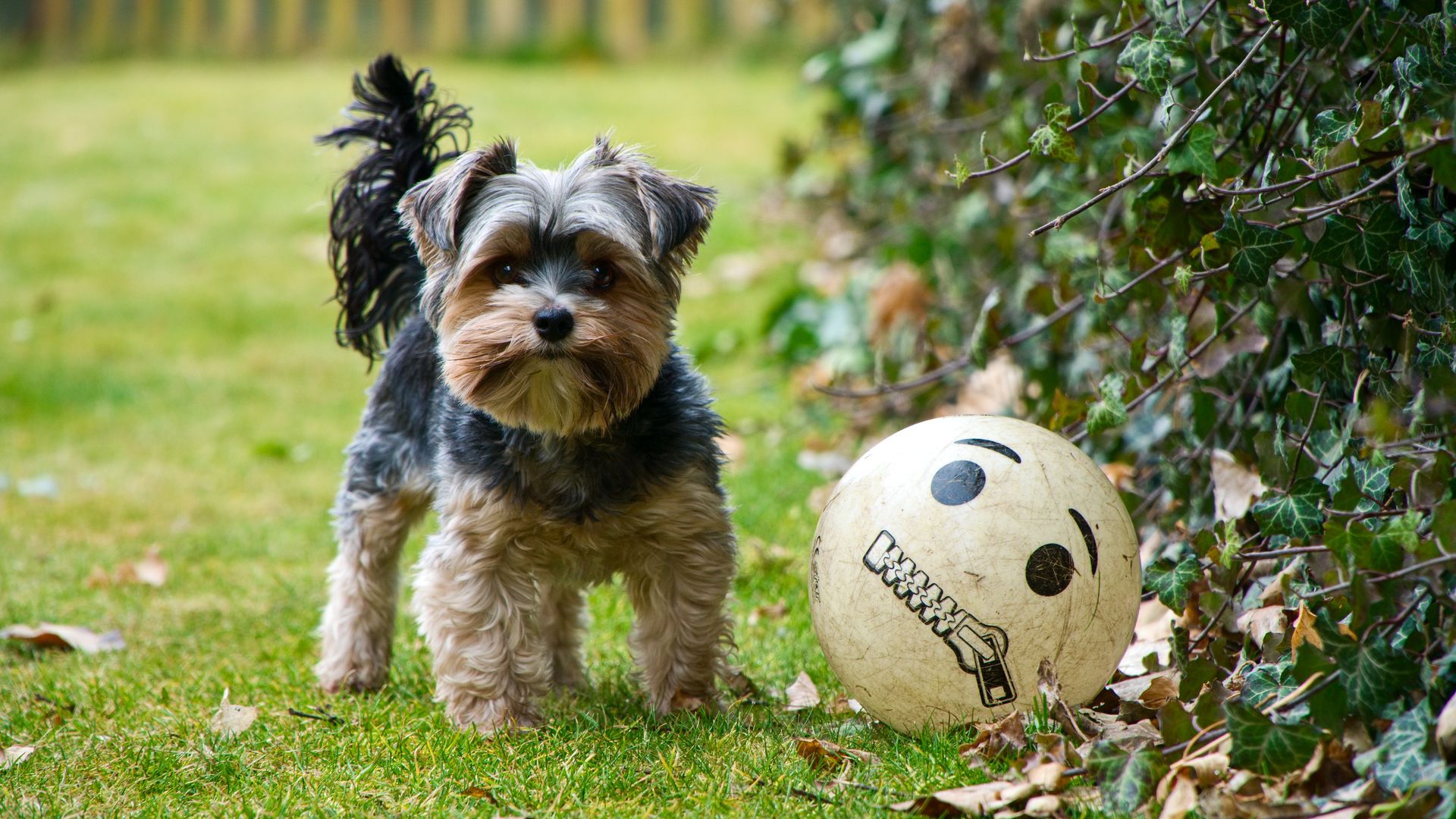
Norwich Terriers are relatively small, standing between 9-10 inches tall and weighing between 11-12 pounds. They have a wiry coat that requires regular brushing and stripping.
If you're an active person or family, the Norwich Terrier is a great choice. They need at least 30 minutes of exercise per day to stay happy and healthy.
Here are some key facts about the Norwich Terrier breed:
Overall, the Norwich Terrier is a loving and loyal breed that makes a great companion for the right owner. With their big personality and small size, they're a great choice for city living or active families.
Breed Recognition
The Norwich Terrier breed has a fascinating history when it comes to breed recognition. In 1932, a group of 13 Norwich Terrier owners formed the first breed club, thanks to the effort of Mrs. D. Normandy-Rodwell.
The breed club's initial goal was to create a breed standard, but it was a contentious process. The Kennel Club's chairman, A. Croxton Smith, warned that restricting the breed standard to one ear type would cause difficulties, but the president of the Norwich Terrier Club, Jack Read, refused to budge.
Readers also liked: American Kennel Club Lancashire Heeler
The debate over ear type was a significant issue, with some breeders cropping the ears of their terriers who lacked erect ears. Despite the Kennel Club's rules, some breeders continued to crop ears, leading to concerns about the breed's future.
In 1935, the first breed standard was released, and it included both black and tan and dropped ears. However, the president of the Norwich Terrier Club, Jack Read, resigned from his role after the standard was released, citing disagreements over the breed standard.
Here is a brief timeline of the breed recognition process:
3 Little-Known Facts
Here's a section on 3 Little-Known Facts that you might find interesting:
The breed originated in Germany in the 16th century, where it was bred as a hunting dog. The first recorded mention of the breed dates back to 1570.
One of the breed's most distinctive features is its unique coat, which requires regular grooming to prevent matting. This can be a challenge for owners who are not familiar with the breed's specific needs.
The breed is known for its high energy level, requiring daily exercise to stay happy and healthy. If you're an active person, this breed might be a great fit for you.
Natural Hunters

Norwich Terriers are natural vermin hunters, bred for their scrappy, can-do attitude and talent for chasing small creatures.
Their tenacity and hunting instinct make them well-suited for this role, and they were valued by working-class hunters for their skills.
They were mostly owned by these hunters, who appreciated their affectionate and playful side at home.
Their natural hunting ability is a key characteristic of the breed, and it's something that owners should be aware of.
Recommended read: Dogo Argentino Natural Ears
Pet Breed Compatibility
When introducing a new pet to your household, it's essential to consider their compatibility with other pets. Norwich Terriers usually get along well with other small dogs if they're well-socialized as puppies.
However, it's worth noting that Norwich Terriers can be a little annoying to big dogs, but they can get along if the large pups tolerate their hyper personality.
In some cases, Norwich Terriers can even learn to co-exist peacefully with cats.
Final Thoughts
Norwich Terriers have big hearts, just like giant dogs, and an endearing coarse wire-haired coat.
They require a little extra work to properly groom, but it's worth it for their loving nature.
Reducing their excessive barking can be a challenge, but with training, they'll provide years of love and loyalty.
As a fun-sized breed, they're ideal for families with kids, dogs, or even cats.
With the right training, they'll be a beloved member of the family, bringing joy and entertainment to all.
Frequently Asked Questions
Is a Norwich Terrier a good family dog?
Yes, Norwich Terriers make excellent family dogs due to their affectionate, energetic, and loyal nature. They thrive in families who can provide plenty of playtime and love.
Do Norwich Terriers bark a lot?
Norwich Terriers can bark excessively if not properly trained, making them a consideration for owners who value a quiet home. Proper training can help minimize excessive barking.
Are Norwich Terriers high maintenance?
Norwich Terriers require regular grooming and dental care, making them a moderate to high maintenance breed. Regular brushing and clipping are necessary to prevent health issues and keep their coat in good condition.
Are Norwich Terriers lap dogs?
Yes, Norwich Terriers are often used as lap dogs due to their affectionate and small size. They make great companions for those who want a loving and portable pet.
Do Norwich terriers like to cuddle?
Yes, Norwich Terriers are known to be affectionate and cute, making them a great breed for those who love to cuddle. They thrive on human interaction and attention, so be prepared for plenty of snuggles!
Featured Images: pexels.com