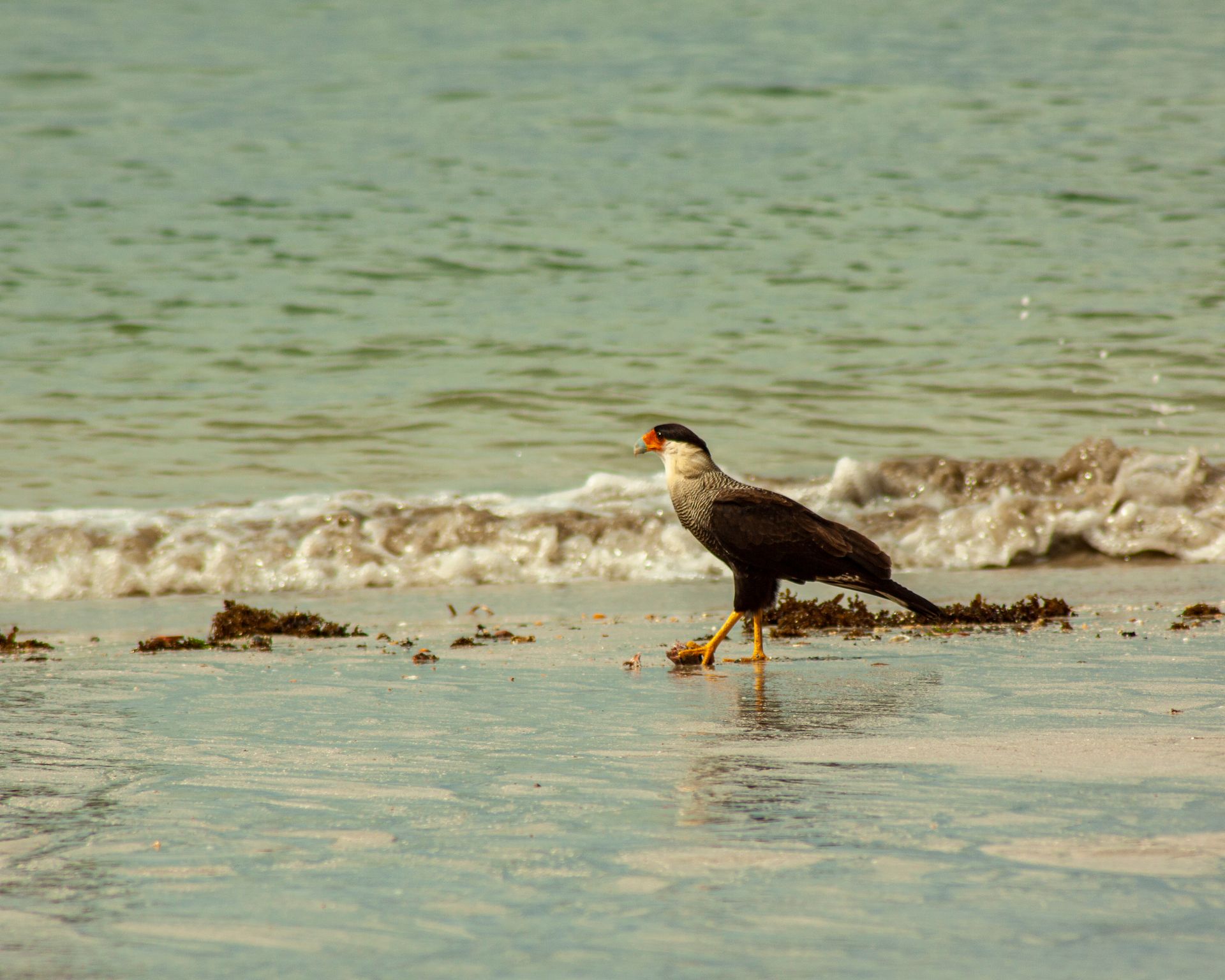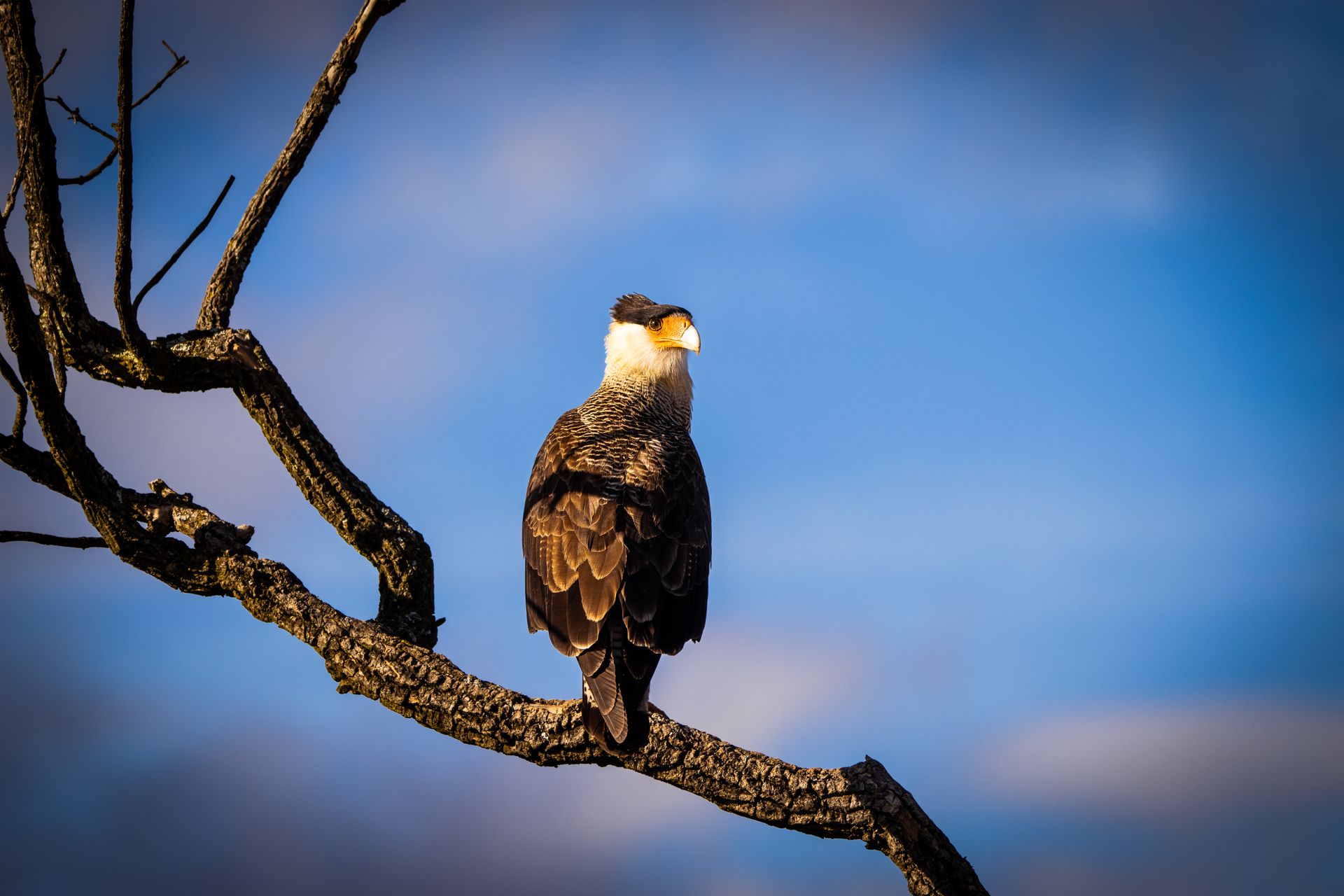
The Northern Crested Caracara is a fascinating bird species, and understanding its diet and behavior is crucial to appreciating its unique characteristics.
These birds are known to be opportunistic omnivores, feeding on a wide variety of food sources including insects, fruits, and small animals.
They are also skilled scavengers, often feeding on carrion and other dead animals.
In terms of their foraging behavior, Northern Crested Caracaras have been observed to forage both on the ground and in trees, using their sharp eyesight to locate potential food sources.
Their intelligence and adaptability allow them to thrive in a variety of environments, from grasslands to deserts.
For another approach, see: What Animals Eat African Wild Dogs
Diet
Crested Caracaras are opportunistic eaters, and their diet reflects their resourcefulness. They eat just about anything they can find.
Their diet consists of carrion, insects, fish, reptiles, amphibians, birds, and mammals. They also eat turtle eggs, which they dig up with their feet.
Crested Caracaras are known to take advantage of disturbance, such as fires or farming operations, to grab fleeing animals or pick up those that have died. They watch for vultures and often join them to feed on carrion.
Unlike most raptors, Crested Caracaras generally fly or run on the ground toward their prey until they overtake it.
Behavior
Crested caracara birds are very opportunistic when it comes to feeding and have a liking for certain types of food.
They may search for insects under vegetation or go through leaves to look for insects and bird eggs.
Crested caracara birds practice piracy as a common feeding behavior, harassing birds like vultures, Cattle Egrets, and Red-tailed Hawks to make them disgorge their meals.
They can also dig in grounds to find insects and catch small birds while flying or running, carrying the prey on their talons.
In most cases, crested caracara birds like to tread along open ground in their long and sturdy feet.
They are good flyers, but also often steal food from other species, leaving no stone unturned to find a good meal.
These birds are diurnal in their habits and build their nests with large sticks in trees like palm trees and mesquites or in the ground.
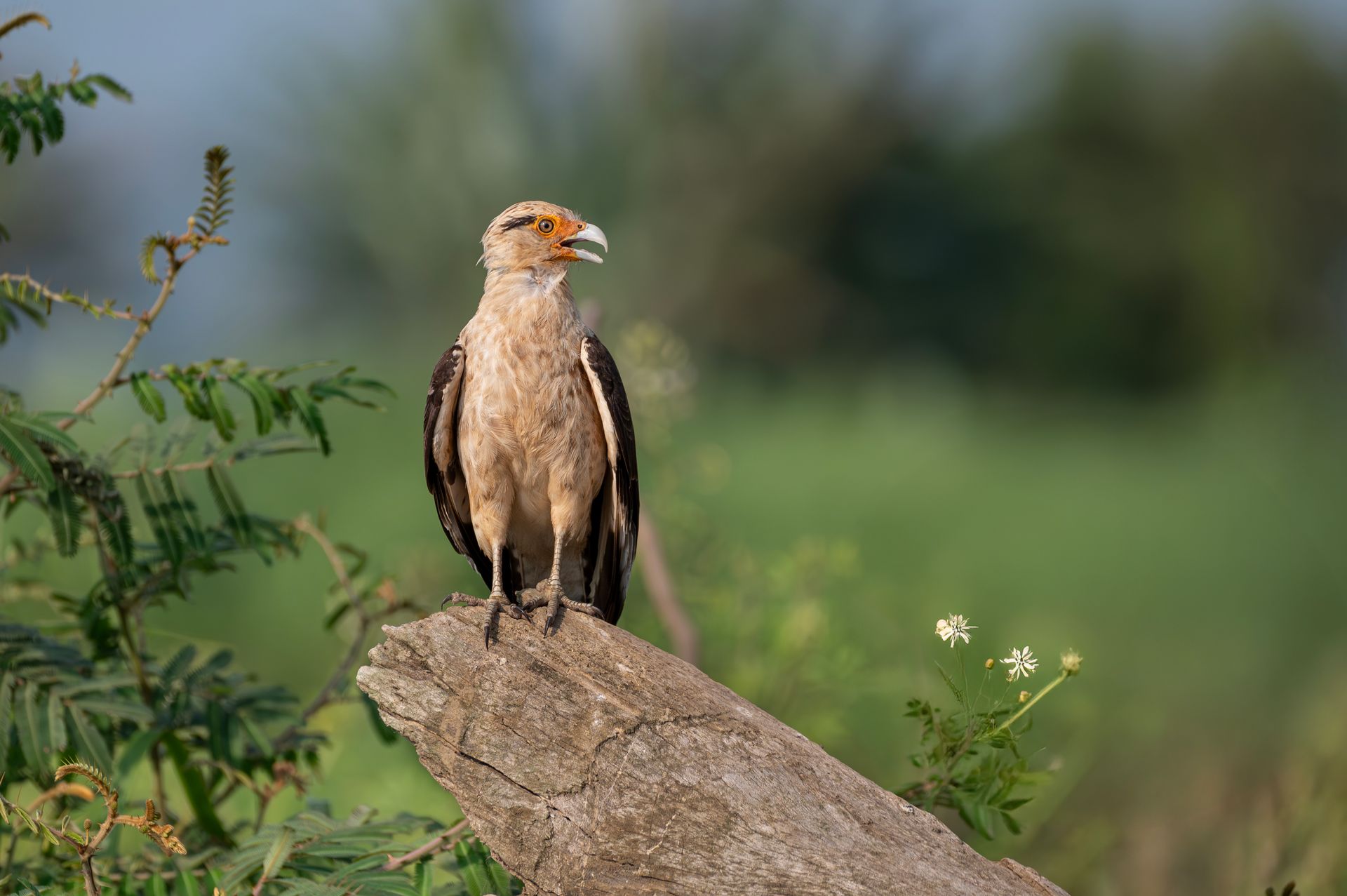
See what others are reading: Yellow Headed Caracara
Crested caracaras are territorial birds and return to the same nest site year after year, marking their territory by calling in a coarse, grating manner all the time while hovering over the nest and sitting there.
They are generally solitary but can also be seen often in pairs or in small groups consisting of three to four birds.
While feeding on a carcass, the number of crested caracaras gathering together in one place may reach well over sixty.
Featured Images: pexels.com