India is home to a diverse range of non-poisonous snakes that play a vital role in maintaining the balance of its ecosystems.
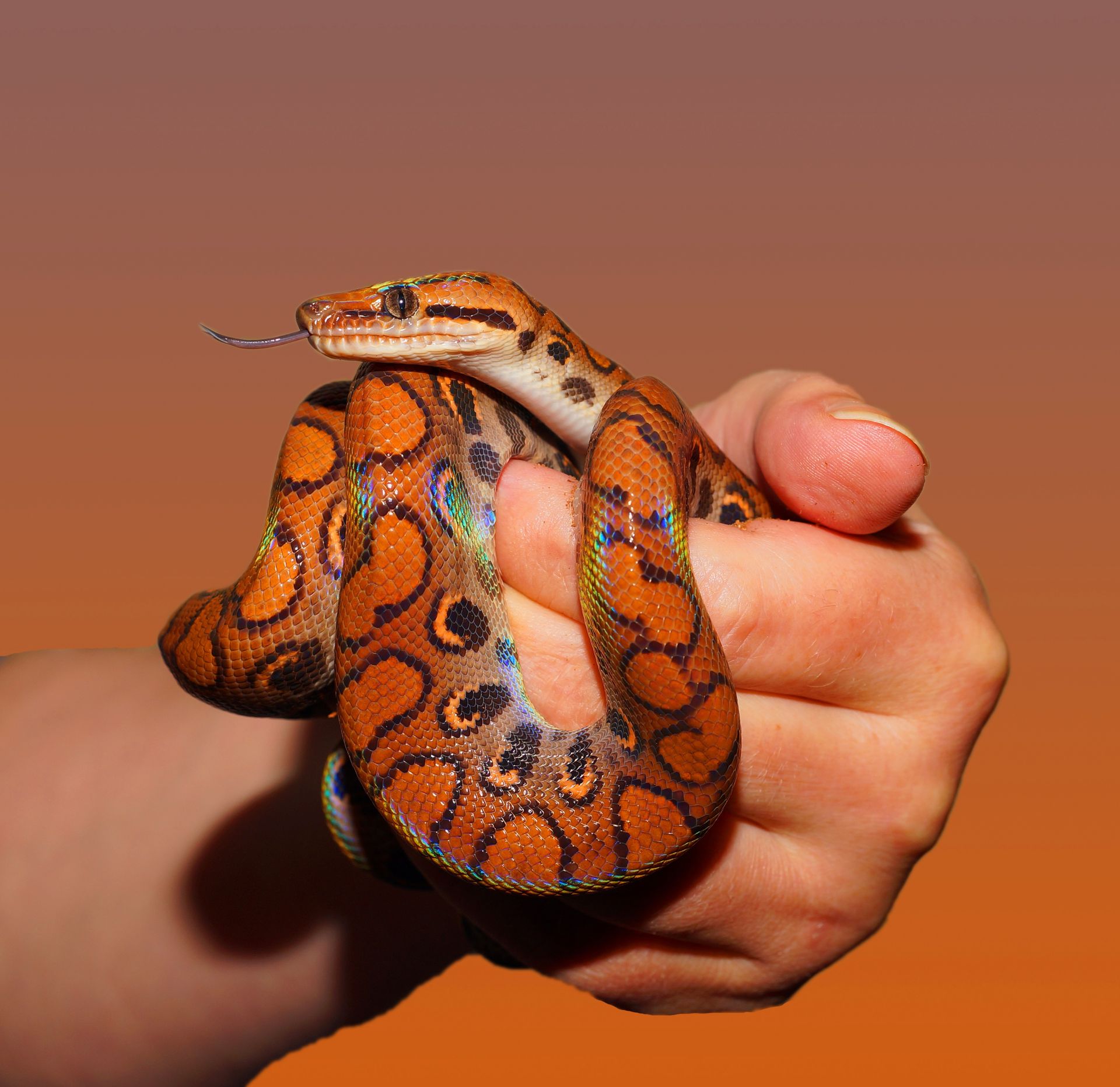
The Indian Rock Python, for instance, is a non-poisonous snake that is widely distributed across the country. It is a skilled hunter that helps control the population of small mammals and birds.
These non-poisonous snakes also serve as a food source for various predators, including birds of prey and other snakes. This highlights their importance in the food chain.
The Indian Python is also known to aid in pest control by preying on rodents and other small rodents that can damage crops.
You might like: Dog Poison Hotline Free
Non Poisonous Snakes in India
India is home to a diverse range of non-poisonous snakes, each with unique characteristics and habits. The Indian rat snake, also known as the Oriental rat snake, is one of the most widely distributed non-venomous snakes in India.
These reptiles are known for their adaptability in various environments, including agricultural lands, forests, and urban locales. Indian rat snakes are excellent climbers and swimmers, and can be found both in trees and water bodies.
Additional reading: What to Do If Your Dog Ate Rat Poison
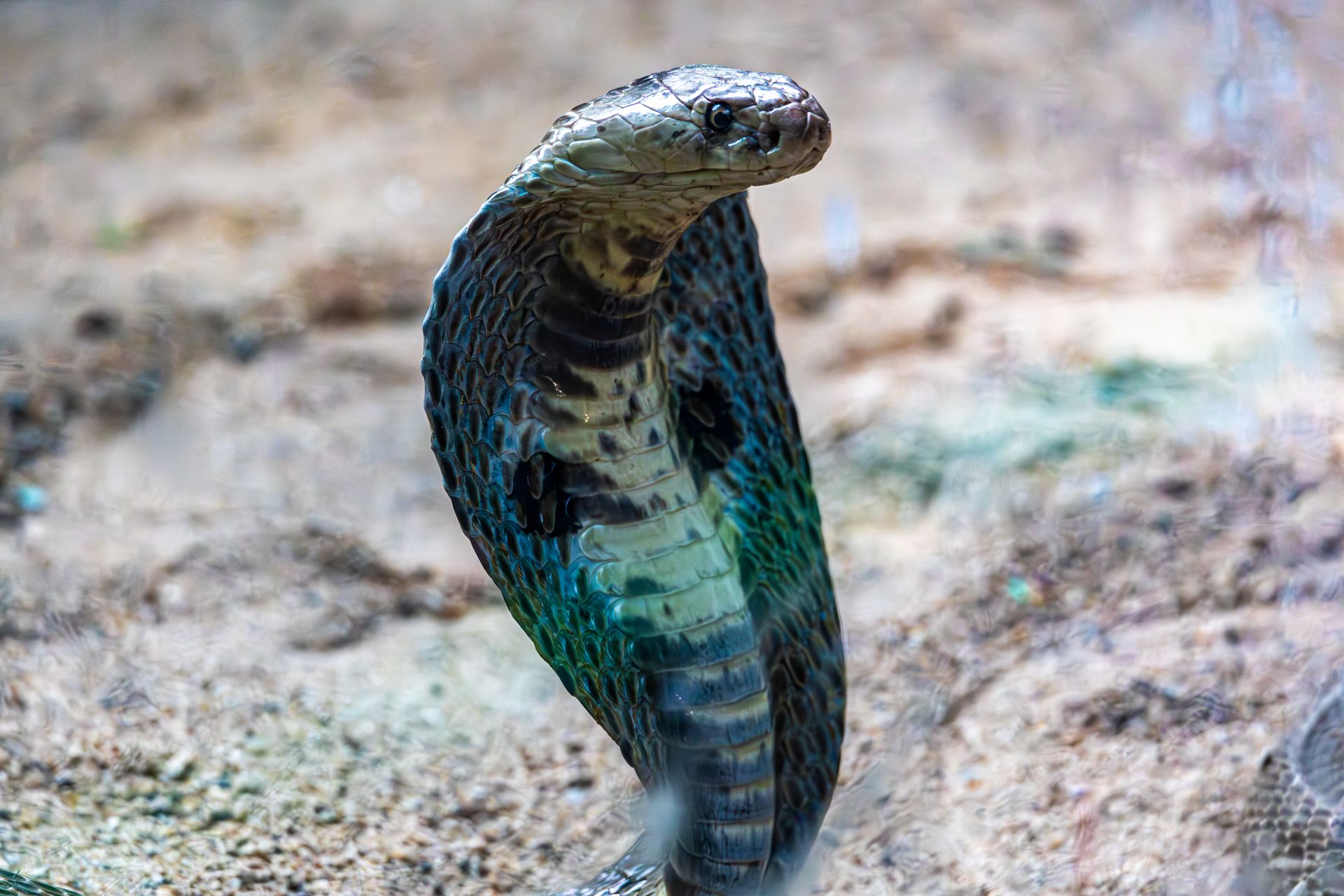
Rat snakes are highly active during the day and are known for their speed, often called “the fastest moving serpent in India”. When threatened, they display a unique defence mechanism — they inflate their necks to resemble a cobra, a deception to protect themselves.
Indian rat snakes use the method of constriction to overcome their prey, which can include rodents, birds, frogs, and small mammals. By keeping the rat population in check, this reptile species benefits the urban as well as agricultural ecosystem.
The common wolf snake is a small, non-venomous species that has often been found in residential spaces and gardens, and also in agricultural lands. This reptile is frequently mistaken for the highly venomous common krait due to their similar coloration.
Like all snakes, the common wolf snake defends itself by striking with its sharp fangs when it senses potential threat. Despite being non-venomous, its bite can cause severe lacerations.
The following table summarizes some of the non-poisonous snakes found in India:
If you spot a snake in your locality, do not tackle it alone, reach out to the nearest wildlife authority instead.
Keelback Snakes
Keelback snakes are a type of non-venomous snake found in India, known for their excellent swimming abilities and semi-aquatic lifestyle.
These snakes are often found near water bodies, such as drains, ponds, and lakes, and feed on small fish, water frogs, and other aquatic animals. They are diurnal, meaning they are most active during the day.
Checkered keelbacks, in particular, are known for their unique defense mechanism, where they flatten their head and raise their body to resemble a venomous Indian cobra, leaving locals baffled and fearful.
Here are some species of keelback snakes found in India:
Keelback snakes play a crucial role in controlling rodent populations, benefiting both agriculture and public health.
Russell's Kukri Snake
The Russell's Kukri Snake is a small but efficient predator of small creatures like insects and lizards. It has sharp teeth that can cause injury to the skin, although its bite is not dangerous to humans.
This snake is also known as the streaked kukri snake due to its pattern of many horizontal streaks from head to tail. Its curved fangs resemble the traditional Nepali knife called the kukri.
In case of danger, the Russell's Kukri Snake forms coils with its body and elevates its upper body to threaten a strike. It can also use its sharp teeth to feed on reptile eggs.
Natricinae: The Keelbacks
The keelback snakes are a type of non-venomous snake found in India, known for their semi-aquatic nature and distinctive ridges on their dorsal scales. They are excellent swimmers and can be found near water bodies.
Keelbacks are classified into the Natricinae subfamily, which includes several species. One of the most common keelback species is the checkered keelback, also known as the Asiatic water snake. They are found in freshwater lakes and rivers and feed on water frogs and small fish.
The green or lead keelback is another species of keelback found in India. It inhabits forested regions at high elevations and feeds primarily on frogs and toads. This species is essential for controlling amphibian populations in the ecosystem.
Here are some key characteristics of keelback species found in India:
Keelbacks are known to catch their prey with their teeth, but other non-venomous snakes in India use constriction to subdue their prey.
Other Non Poisonous Snakes
The Indian rat snake is an excellent climber and swimmer, often found in trees and water bodies. It's a highly active snake during the day and is known for its speed, earning it the nickname "the fastest moving serpent in India".
In terms of defense, the Indian rat snake inflates its neck to resemble a cobra when threatened, a clever deception to protect itself. However, its bite is harmless to humans.
The Indian rat snake is a beneficial species, helping to keep the rat population under control, which benefits both urban and agricultural ecosystems. Locally known as dhaman, it's even been called a farmer's friend for protecting crops from rodent infestations.
Here are some other non-venomous snakes in India:
- Banded racer (Argyrogena fasciolata): A small-sized snake that inhabits the Indian plains, feeding on small mammals and lizards.
- Banded or common kukri (Oligodon arnensis): A medium-sized colubrid snake with crossbands on its body, found in high altitudes in the Himalayan region.
- Bronzeback (Dendrelaphis tristis): A medium-sized slender tree-snake found at heights of 2000 m, controlling insect populations in tree tops.
- Common cat or Indian gamma snake (Boiga trigonata): A colubrid snake found in high altitudes, near the Himalayas and in the western state of Maharashtra.
- Diadem snake (Spalerosophis diadema): A large-sized colubrid snake found in desert and semi-desert areas of northwestern India, consuming rodents to maintain urban ecosystem balance.
- Dog-faced water snake or New Guinea bockadam (Cerberus rynchops): A medium-sized colubrid snake found in coastal areas, controlling fish and amphibian populations.
Snakes in India
Snakes in India are fascinating creatures that play a vital role in maintaining the balance of ecosystems. The country is home to a diverse range of non-venomous snakes that can be found in various habitats, from high altitudes to coastal areas.
Some of these snakes, like the Bronzeback (Dendrelaphis tristis), can be found at heights of 2000 m, where they inhabit low bush and thorn-branched trees.
The Common cat or Indian gamma snake (Boiga trigonata) is another example, found in high altitudes near the Himalayas and in the western state of Maharashtra.
These snakes have adapted to their environments in remarkable ways, such as the Diadem snake (Spalerosophis diadema), which can be found in desert and semi-desert areas of northwestern India.
The Golden tree snake (Chrysopelea ornata) is also remarkable, able to glide for considerable distances, creating the impression of flying.
Some snakes, like the Dog-faced water snake or New Guinea bockadam (Cerberus rynchops), play a crucial role in controlling fish and amphibian populations in aquatic ecosystems.
Here are some key facts about non-venomous snakes in India:
- The Bronzeback snake can be found on tree tops in southern India and the Himalayan foothills.
- The Common cat or Indian gamma snake can grow up to a certain length.
- The Diadem snake is known to consume rodents, helping to maintain urban ecosystems.
- The Dog-faced water snake inhabits mangrove forests, salt pans, abandoned creeks, and estuaries.
- The Golden tree snake's gliding ability aids in escaping predators.
Snake Conservation
In India, there are over 250 species of non-poisonous snakes, which is approximately 60% of the country's total snake population.
The Indian python, one of the non-poisonous snakes found in India, can grow up to 7 meters in length and weigh up to 25 kilograms.
Non-poisonous snakes in India play a crucial role in maintaining the ecosystem balance by controlling rodent populations.
The Indian rock python is known to eat small mammals, birds, and other reptiles, helping to regulate their populations.
These snakes are generally harmless to humans and can even be beneficial to have around, as they help to keep pest populations under control.
However, the Indian rock python is considered a threatened species due to habitat loss and fragmentation.
In some parts of India, non-poisonous snakes are revered as sacred animals and are protected by local communities.
The Indian python is also an important part of the country's cultural heritage, featuring in various mythological and folklore stories.
Non-poisonous snakes in India are an integral part of the country's biodiversity and deserve our respect and protection.
See what others are reading: Non Shedding Shiba Inu
Featured Images: pexels.com