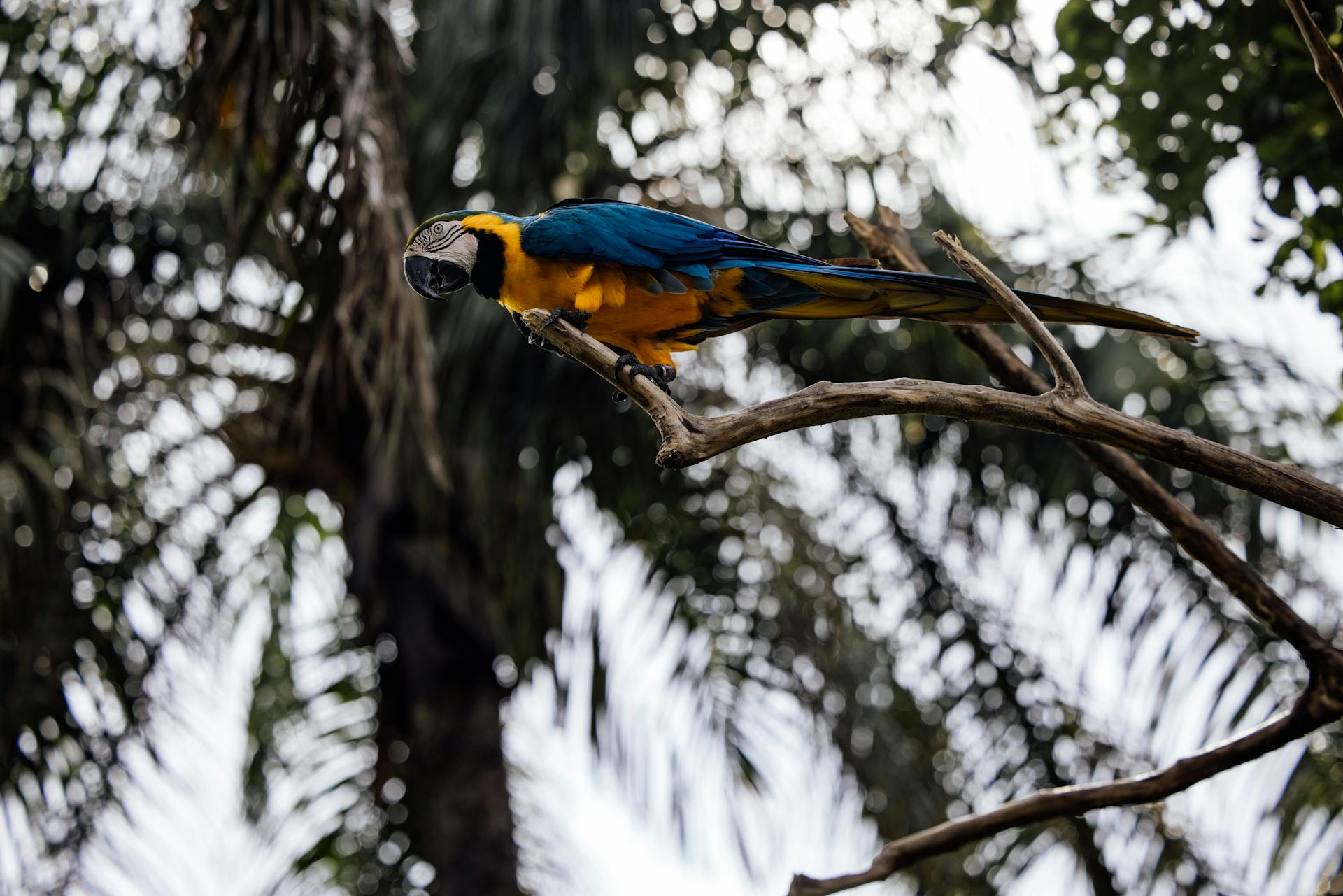
Neophema birds have been kept in captivity for many years, with the first recorded import of a Neophema species being the Blue-faced Parrotfinch in 1880.
The Neophema genus is one of the most popular groups of birds kept in aviculture, with many species being bred in captivity.
One of the main reasons for their popularity is their small size, making them a great choice for hobbyists with limited space.
Many Neophema species are known to be relatively easy to care for and can thrive in a well-maintained aviary or large cage.
Readers also liked: Neophema Chrysogaster
Classification
The Neophema parrots are a fascinating group, and their classification is quite interesting. They are sometimes considered a subfamily, and within that, the tribe Neophemini is a notable group.
The Neophema and Bourke's parrot are often united in the tribe Neophemini, but mtDNA sequence data suggests this might not be entirely accurate.
In fact, research indicates that the group would need to include more closely related forms, such as the budgerigar and the Pezoporus ground-parrots.
However, Joseph et al. (2011) found that Neophema is actually related to Bourke's parrot and the ground-parrots, and forms part of the tribe Pezoporini, but not to the budgerigar.
Analysis of mitochondrial DNA published in 2021 showed that the ancestors of Bourke's parrot and the remaining Neophema parrots most likely diverged between 6.4 and 8 million years ago.
The Neophema lineage diverged again, resulting in the turquoise and scarlet-chested parrots, and the four remaining species.
There are 6 or 7 species of Neophema parrots, depending on the classification used.
Aviculture
Neophema birds are not beginner-friendly, they're tender and may die without apparent cause, so it's essential to provide a spacious aviary with a small flock and harmless birds.
These birds thrive in a social environment and need to be let out to fly and interact with humans frequently. A pair or single bird in a cage can be kept, but they'll be sluggish and unhealthy.
Trade in wild-caught specimens is restricted, and it's recommended to reject them because they're extremely difficult to acclimate to aviary conditions. Even expert aviculturalists often struggle to keep wild-caught birds alive for more than a few months.
Captive-bred birds are far more hardy, but inexperienced aviculturalists should still exercise caution. The most easily bred Neophema species are Bourke's parrot, the scarlet-chested parrot, the turquoise parrot, and the elegant parrot.
Specific Species
Let's dive into the specifics of the Neophema genus. The Neophema genus includes several species of parrots, each with their unique characteristics.
The Blue-winged parrot, Neophema chrysostoma, is one of the species found in this genus.
The Elegant parrot, Neophema elegans, is another species within the Neophema genus.
The Rock parrot, Neophema petrophila, is also a member of this genus.
Here's a list of some of the species found in the Neophema genus:
- Blue-winged parrot (Neophema chrysostoma)
- Elegant parrot (Neophema elegans)
- Rock parrot (Neophema petrophila)
- Orange-bellied parrot (Neophema chrysogaster)
- Turquoise parrot (Neophema pulchella)
- Scarlet-chested parrot (Neophema splendida)
Bourke's parrot, Neopsephotus bourkii, may also be considered a member of this genus, depending on the author.
Frequently Asked Questions
What birds can live with turquoise parrots?
Turquoise parrots can be housed with finches, pigeons, doves, softbills, and other small parrots in a mixed collection. However, they should not be kept with other Neophema family members due to potential aggression.
Featured Images: pexels.com