
Lymphoma in dogs is a serious health issue that affects many canine companions. Lymphoma is a type of cancer that begins in the immune system, specifically in the lymphatic system.
Symptoms of lymphoma in dogs can vary, but common signs include weight loss, vomiting, diarrhea, and lethargy.
Lymphoma can affect any dog, but certain breeds are more prone to the disease. According to research, breeds such as Basset Hounds, Bulldogs, and Boxers are at higher risk.
Early detection is crucial in treating lymphoma in dogs.
Explore further: Muscular System Dog
What Is Lymphoma?
Lymphoma is a type of cancer that affects white blood cells called lymphocytes, which play a crucial role in the immune system.
These cells are responsible for protecting the body from infection, but in the case of lymphoma, they become cancerous and start to multiply uncontrollably.
Lymphoma can affect almost any organ in the body, but it most commonly arises in organs that are part of the immune system, such as the lymph nodes, liver, spleen, and bone marrow.
Multicentric lymphoma, also known as nodal lymphoma, is the most common type of lymphoma in dogs, accounting for about 80% of all cases.
It starts in the lymph nodes and can spread to other parts of the body if left untreated.
Other common types of lymphoma in dogs include cutaneous lymphoma, which affects the skin, alimentary or gastrointestinal lymphoma, which affects the stomach and intestines, and mediastinal lymphoma, which affects organs within the chest.
What Causes?
Lymphoma in dogs is a complex and multifaceted disease, and experts haven't yet pinpointed a single cause.
Research suggests that a combination of genetic and environmental factors may contribute to lymphoma in dogs. This is because dogs share our environment, exposing them to similar factors that could cause cancer in humans.
Some studies have identified specific breeds that are at a higher risk for lymphoma, including the Golden Retriever, Beagle, Saint Bernard, and Rottweiler.
One study found that male dogs were more likely to develop lymphoma than female dogs, and spayed or neutered dogs of both sexes were at a higher risk than intact dogs.
Suggestion: Can Hypothyroidism in Dogs Cause Seizures
Dogs are exposed to many potential carcinogens in their environment, including phenoxyacetic acid, pesticides, fungicides, medications, and chemical dyes.
Advanced genetic studies may help identify underlying genetic and chromosomal causes of lymphoma in dogs.
Lymphoma can occur in any breed of dog, but some breeds may be more predisposed to developing the disease.
The link between immune suppression and lymphoma in dogs is not clearly established, although it is a known risk factor for lymphoma in humans.
Diagnosis
Diagnosing lymphoma in dogs can be a complex process, but it starts with a veterinarian observing an enlarged lymph node. A tissue sample is then obtained from the affected organ through a fine-needle aspiration, which extracts a sample of the dog's lymph nodes or organs.
The most common diagnostic tool is a fine-needle aspiration, which is a relatively quick and painless procedure. A veterinarian will evaluate the sample through a cytology exam or by a biopsy, examining a section of tissue.
A biopsy is a minor surgical procedure to remove a piece of lymph node or other organ affected by cancer. The most common methods for lymph node biopsy are Tru-cut needle biopsy, incisional wedge biopsy, or removal of an entire lymph node.
Clinical evaluation is also an important part of diagnosing lymphoma in dogs. A veterinarian will perform a physical examination to assess the dog's overall health and look for signs of lymphoma.
Fine-needle aspiration with cytologic evaluation is a highly effective method for identifying pathological monomorphic populations of lymphoid cells. Cytologic diagnosis of lymphoma depends on the proportions of large, intermediate, and small lymphocytes assessed on multiple well-made, highly cellular fine-needle aspirate smears.
A biopsy involves the surgical removal of a tissue sample from the lymph node or lesion. This sample will be processed and examined under a microscope at a veterinary laboratory to look for the presence of lymphoma.
There are five stages of lymphoma, depending on which sites the cancer affects and the degree to which it's localized or spread throughout the body. The stages are:
- Stage I: Involves a single lymph node
- Stage II: Affects multiple lymph nodes in one region
- Stage III: All lymph nodes affected (generalized)
- Stage IV: Involves lymph nodes and organs such as the liver, spleen, or chest
- Stage V: Involves the bone marrow
Staging tests, such as blood tests, urinalysis, X-rays, abdominal sonograms, and bone marrow aspiration, can help determine how far the lymphoma has spread throughout the dog's body.
Additional reading: Canine Intelligence Test
Symptoms and Stages
Lymphoma in dogs can be a challenging diagnosis to make, as the symptoms can be subtle and may not be immediately apparent. The most common initial symptom of multicentric lymphoma in dogs is firm, enlarged, non-painful lymph nodes, which can feel like hard, rubbery lumps under the skin.
These lymph nodes can be found in various locations on a dog's body, including under the jaw, behind the knee, and in front of the shoulders. If you notice lumps like these on your dog, it's essential to have them checked by a veterinarian, even if your pet seems fine otherwise.
The symptoms of lymphoma in dogs can vary depending on the stage and type of the disease, but common signs include loss of appetite, lethargy, weight loss, and swelling of the face or legs. The staging system for lymphoma in dogs is based on the extent of cancer in the body, and it's typically classified into five stages: Stage I, Stage II, Stage III, Stage IV, and Stage V.
You might enjoy: What Are Symptoms of Lymphoma in Dogs
Here's a breakdown of the five stages of canine lymphoma:
Each stage can also be further divided into substage A (absence of systemic signs) and substage B (presence of systemic signs, such as fever, weight loss, or hypercalcemia).
A different take: Signs of Diabetes in Dogs
Symptoms
Dogs with lymphoma often have firm, enlarged lymph nodes that feel like hard, rubbery lumps under the skin. These lumps can appear in various places, such as under the neck or jaw, behind the knees, or in front of the shoulders.
You might notice these lumps even if your dog seems fine otherwise, so it's essential to ask your vet to check them. The submandibular lymph nodes, located under the jaw, and the popliteal lymph nodes, behind the knee, are the most easily located.
Dogs with cutaneous lymphoma have red, itchy, dry, and flaky patches of skin, which can become thick and moist with open sores as the disease worsens. Certain breeds, like sheepdogs, poodles, and Bichon Frise, may lose their hair due to chemotherapy.
Discover more: Flea Treatment on Fur Not Skin Dog

Other common symptoms of lymphoma in dogs include loss of appetite, lethargy, weight loss, and swelling of the face or legs. Increased thirst and urination may also occur.
Here are some common places to find enlarged lymph nodes in dogs:
- Under the neck or jaw
- Behind the knees
- In front of the shoulders
- In the armpits
Your vet may initially treat these symptoms as an allergy or infection, but if your dog doesn't improve, a skin biopsy may be necessary to diagnose cutaneous lymphoma.
Stages
If your dog has lymphoma, it's essential to understand the stages of the disease to determine the best course of treatment. Staging tests can show how far the cancer has spread, and the more body parts it involves, the more serious your dog's condition may be.
The five stages of canine lymphoma reflect the extent of cancer in your dog's body. Here's a breakdown of each stage:
Each stage can also be divided further, with substage A indicating your dog feels well, and substage B indicating they feel sick.
Treatment and Prognosis
Chemotherapy is the most effective treatment for canine lymphoma, with a success rate of ≥ 90% for initial response. This treatment can be administered through an IV line or orally, and dogs often receive a combination of medications.
The type of chemotherapy used depends on the type of lymphoma, with multicentric lymphoma often treated with the UW-25 protocol, which is based on the CHOP protocol used in humans. This protocol involves administering four different drugs together to increase the chances of stopping cancer growth.
The prognosis for dogs with lymphoma varies depending on the stage of cancer and the treatment chosen, with most dogs experiencing remission after chemotherapy. However, many dogs will eventually experience a relapse, and the cancer may become resistant to treatment.
Dogs with multicentric lymphoma treated with CHOP chemotherapy have a median survival time of 9-13 months, with 50% of dogs surviving beyond this time point and 50% dying before it. This highlights the importance of choosing the right treatment and following up with regular check-ups.
Recommended read: Multicentric Lymphoma in Dogs
Common chemotherapeutic agents used to treat lymphoma in dogs include cyclophosphamide, hydroxydaunorubicin (doxorubicin), vincristine, and prednisone, which are often used in combination protocols. Other agents, such as lomustine, mitoxantrone, and rabacfosadine, may also be used.
Here is a summary of common chemotherapeutic agents used to treat lymphoma in dogs:
In addition to chemotherapy, surgery or radiation therapy may be recommended for certain types of low-grade localized lymphoma. However, most cases cannot be successfully treated with surgery or radiation alone.
You might like: Best Soft Food for Dogs after Dental Surgery
Chemotherapy and Side Effects
Most dogs tolerate chemotherapy well, with fewer than 5% experiencing side effects that need to be managed in a hospital setting.
The most common side effects include loss of appetite, decreased activity level, and mild vomiting or diarrhea that persists for one or two days.
Serious side effects are uncommon, but if they do occur, it's essential to talk to an oncology doctor or staff about reducing the chemotherapy dose to lessen side effects.
Unlike people, most dogs do not lose their hair when treated with chemotherapy, but some breeds may acquire a "chemo coat" or experience increased shedding.
Hair growth will resume once chemotherapy is discontinued, and some breeds, like Poodles or Poodle mixed breed dogs, Shih Tzus, Havanese, Old English Sheepdogs, and Golden Retrievers, are more prone to this phenomenon.
A specific intravenous chemotherapy, called doxorubicin, is notorious for causing hair loss in dogs.
Intriguing read: Dogs Hair Standing up and Tail Wagging
Living with Lymphoma
Living with lymphoma requires a proactive approach to ensure your dog's quality of life is maintained. Talk to your vet about available treatment options and what to expect as the disease progresses.
Discussing hospice care with your vet is crucial to keep your dog comfortable. Hospice care can improve your dog's quality of life.
Lymphoma is a complex disease with many factors impacting your dog's health. If you're worried your dog might have lymphoma, call your vet for more information.
Here's an interesting read: Shiba Inu Life Stages
Types of Lymphoma
Lymphoma in dogs is a complex and multifaceted condition, with over 30 different types identified. The symptoms and severity of lymphoma can vary greatly from one dog to another.
The four most common types of lymphoma in dogs are multicentric lymphoma, alimentary lymphoma, mediastinal lymphoma, and extranodal lymphoma.
Multicentric lymphoma is the most common type, affecting up to 85% of cases, and typically starts in the lymph nodes. This type of lymphoma can be challenging to diagnose due to its non-specific symptoms.
Alimentary lymphoma, also known as gastrointestinal lymphoma, is the second most common type, making up less than 10% of cases. It primarily affects the digestive system.
Mediastinal lymphoma is a rare type that enlarges parts of the lymph system in or around the chest, causing breathing difficulties. It can also cause a lump or fluid buildup.
Extranodal lymphoma affects specific organs or sets of organs, such as the skin, eyes, kidneys, lungs, or central nervous system. Most cases of extranodal lymphoma affect the skin, known as cutaneous lymphoma.
A fresh viewpoint: Holistic Medicine for Dogs with Skin Allergies
Here are the four main types of lymphoma in dogs:
The symptoms of lymphoma in dogs can be non-specific, making diagnosis challenging. However, with the right diagnostic techniques, such as fine-needle aspiration and lymph node biopsy, it's possible to identify the type and severity of lymphoma.
Research and Studies
There are clinical trials for dogs with lymphoma being conducted at Purdue University.
Multiple trials are currently underway, offering varying degrees of financial support to owners who participate.
You can determine if your dog qualifies for a clinical trial by asking your primary care veterinarian to call 765-494-1130 and leave a message for Clinical Trials Nurse, Ms. Araynna Holland.
Financial support is available to owners who agree to participate in these trials, making it easier for them to enroll their dogs.
To participate, your dog's primary care veterinarian needs to contact Ms. Holland at the specified phone number.
Clinical trials at Purdue University can provide valuable insights and potentially life-saving treatments for dogs with lymphoma.
Explore further: Clinical Trials for Dogs with Lymphoma
Clinical Findings and Lesions
Lymph nodes in dogs with lymphoma are often 3-10 times their normal size and nonpainful, but can become fixed and compress surrounding structures with disease progression.
Affected lymph nodes are initially freely movable but firm, and can become uncomfortable or cause functional compromise.
In the alimentary form of canine lymphoma, any part of the GI tract or mesenteric lymph nodes may be affected, leading to symptoms like vomiting, constipation, and abdominal pain.
Dogs with lymphoma may also exhibit hepatosplenomegaly, with either diffuse enlargement or multiple, pale nodules of variable size disseminated in the parenchyma.
Recommended read: How to Become a Trainer of Service Dogs
Clinical Findings
Canine lymphoma can manifest in various ways, with 80-85% of cases presenting as generalized, nonpainful, peripheral lymphadenopathy.
High-grade T-cell or B-cell variants are the most common forms of lymphoma in dogs.
Alimentary lymphoma accounts for less than 10% of all cases of canine lymphoma and can cause symptoms like vomiting, constipation, and abdominal pain due to intestinal obstruction.
Expand your knowledge: Small Cell Lymphoma in Dogs
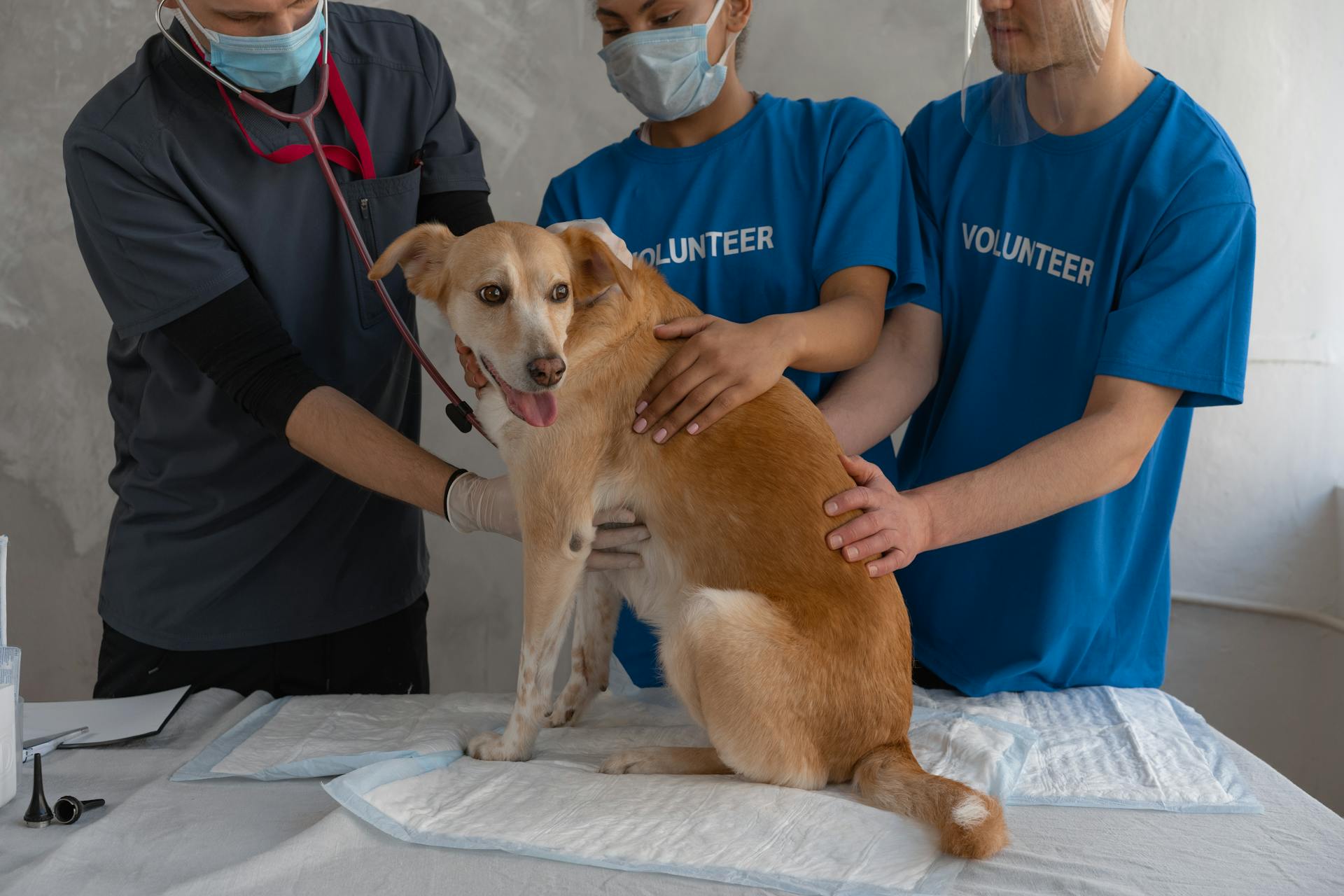
Systemic constitutional signs, such as lethargy, weakness, fever, anorexia, and dehydration, can become severe and life-limiting in dogs with substantial tumor burden or paraneoplastic hypercalcemia.
Dogs with alimentary lymphoma may show marked and debilitating GI disturbances, including anorexia, vomiting, diarrhea, hypoproteinemia, and weight loss due to malabsorption and maldigestion.
Exclusive involvement of the cranial mediastinum characterizes only a small fraction of lymphoma cases, typically presenting with enlargement of the cranial mediastinal lymph nodes, thymus, or both.
Humoral hypercalcemia of malignancy, a paraneoplastic syndrome, can occur in 10-40% of dogs with lymphoma and is characterized by primary polyuria with secondary polydipsia.
Low-grade (indolent) lymphoma is a molecular variant of lymphoma that consists of several histopathologic subtypes, including marginal-zone, follicular, mantle-cell, and T-zone lymphomas.
Indolent lymphomas most commonly involve the spleen or lymph nodes and generally have a slow clinical progression, with dogs often remaining subclinically affected for a prolonged time.
Curious to learn more? Check out: T-zone Lymphoma in Dogs
Lesions
Canine lymphoma can cause significant changes in the body, particularly in the lymph nodes.

Affected lymph nodes are typically 3-10 times their normal size and are nonpainful to the touch.
These enlarged nodes are initially freely movable, but as the disease progresses, they can become fixed and compress surrounding tissues, leading to discomfort or functional issues.
Lymph nodes affected by lymphoma are often gray to tan in color and lose their normal cortical-medullary demarcation when cut open.
Hepatosplenomegaly, or enlargement of the liver and spleen, is a common finding in canine lymphoma patients.
In some cases, the liver and spleen may show multiple, pale nodules of varying sizes scattered throughout the parenchyma.
The alimentary form of canine lymphoma can affect any part of the gastrointestinal tract or the mesenteric lymph nodes.
On a similar theme: Liver Mini Schnauzer
WHO Clinical Staging System
The WHO Clinical Staging System for lymphoma in domestic animals is a way to classify the extent of cancer in your dog's body. This system helps veterinarians determine the severity of the disease and decide on the best course of treatment.
The system has five stages, each with its own description. Stage I involves a single node or lymphoid tissue in a single organ, excluding bone marrow. Stage II involves many lymph nodes in a regional area, with or without involvement of the tonsils.
Stage III is characterized by generalized lymph node involvement. Stage IV involves any of the previous stages with liver or spleen involvement. Stage V is the most advanced stage, where there is involvement of bone marrow or other organ systems, along with manifestation in the blood.
Each stage can be further divided into substages based on the presence of systemic signs. Substage a indicates the absence of systemic signs, while substage b indicates the presence of systemic signs such as fever, weight loss, or hypercalcemia.
Here's a breakdown of the stages:
Key Information
Lymphoma is the most common hematopoietic tumor affecting dogs.
Most dogs with lymphoma respond positively to systemic chemotherapy, with improved quality of life and overall survival time.
Lymphoma in dogs is often diagnosed through a combination of findings on physical examination and cytologic evaluation of fine-needle aspirates of enlarged lymph nodes.
Lymphoma is a heterogeneous disease, meaning it can manifest in different forms and require thorough diagnostic testing and categorization to determine the best course of treatment.
Here's a breakdown of the most common type of lymphoma in dogs:
- Most lymphomas in dogs are multicentric, large B-cell tumors.
Frequently Asked Questions
Does lymphoma show up in blood work?
Yes, blood tests can detect some signs of non-Hodgkin lymphoma, such as anemia, which can cause fatigue. Anemia is a common symptom that may indicate the presence of lymphoma.
Is lymphoma cancer painful for dogs?
Lymphoma in dogs is typically not painful, but it can cause discomfort and swelling in affected areas. If you suspect your dog has lymphoma, it's essential to consult a veterinarian for proper diagnosis and treatment.
Has any dog ever survived lymphoma?
Yes, some dogs have survived lymphoma, but their chances are relatively low, with less than 25% living for two years or more. While survival is possible, treatment outcomes vary depending on the dog's individual health and the type of lymphoma.
What breed of dog is prone to lymphoma?
Lymphoma primarily affects middle-aged to older dogs, with certain breeds like Boxers, Golden Retrievers, and Bulldogs being more prone to the disease. These breeds are at higher risk, but lymphoma can occur in any dog breed.
At what age is lymphoma most common in dogs?
Lymphoma is most common in dogs between 5 to 9 years old. This age range is a critical period for canine health, and understanding the risks can help you provide the best care for your furry friend.
Featured Images: pexels.com