The Loricariinae family is a diverse group of armored catfish, with over 1,000 species found in freshwater environments across the Americas.
These catfish are characterized by their bony plates, or scutes, which cover their bodies.
One of the most distinctive features of Loricariinae is their unique head shape, which is often pointed and narrow.
Loricariinae can be found in a wide range of habitats, from slow-moving rivers to still lakes and ponds.
Their armored bodies allow them to navigate through dense vegetation and rocky areas with ease.
Taxonomy and Classification
Loricariinae was first described in 1831. This is a significant date in the history of taxonomy.
The subfamily has undergone several changes over the years. In 1979, many genera were described, leading to the division of Loricariinae into four subfamilies.
These subfamilies are Loricariini, Harttiini, Farlowellini, and Acestridiini. However, Farlowellini was later reclassified into Hartiini.
The most recent papers conclude that there are 30 or 31 genera in the subfamily. The status of Cteniloricaria is still dubious, with some considering it a synonym of Harttia.
Here are the tribes that make up Loricariinae:
- Tribe Loricariini
- Tribe Harttiini
Description and Characteristics
Loricariinae species are characterized by a depressed body covered by bony plates. This is a unique feature among fish.
The maxillary barbels of Loricariinae species are a distinctive pair. They are also known for modification of the mouth into a suckermouth.
Members of the subfamily Loricariinae show a greater diversity of lip structures and shapes than other loricariids. This diversity is quite remarkable.
The Harttiini are characterized by numerous and pedunculated teeth. They also have a caudal fin with more branched rays.
The Loricariini are characterized by a more important variation in lips and teeth shape. They often have postorbital notches and predorsal keels.
Here are the main subfamilies of Loricariinae:
- Loricariinae
- Harttiini
- Loricariini
Siluriformes and Loricariidae Diversity
The order Siluriformes is quite diverse, with representatives found in freshwater on all continents except Antarctica, and two marine families.
This order includes 39 valid families, with 19 of them found in South America.
The family Loricariidae is a significant part of the Siluriformes order, with over 1,000 valid species.
It's divided into six subfamilies: Lithogeninae, Delturinae, Rhinelepinae, Loricariinae, Hypoptopomatinae, and Hypostominae.
Despite numerous studies on the Loricariidae, there are still inconsistencies in the number of subfamilies and their composition.
Morphological Characters
Morphological characters play a crucial role in understanding the characteristics of loricariid fish. These characters are mainly obtained from studies on the subfamily Loricariinae.
External morphology and coloration are studied based on alcohol-preserved specimens. Bone and cartilage are studied using double stained and cleared specimens.
Character statements are composed of four fundamental functional components: locator, variable, variable qualifier, and character states. This is identified as a key aspect of character description.
Inapplicable characters are coded as “-”, while missing data is coded as “?”. This is a crucial step in constructing the character matrix.
A software called Mesquite 3.0.2 is used for the construction of the character matrix. This software is specifically designed for phylogenetic analysis.
The character matrix is constructed by analyzing the morphological characters of the fish. These characters include the shape and structure of the body, fins, and other features.
Here's a list of some of the morphological characters that are used to study loricariid fish:
- Transverse process of fourth vertebra reaching beyond compound pterotic border
- Parapophysis of fourth vertebra abutting ventrally to transcapular ligament
- Hyomandibula concavity large without foramen
- Fourth pharyngobranchial nodular and cartilaginous
- Lower pharyngeal plate triangular
- Lateral lamina of orbitosphenoid reaching more than half of its length
- Small cavity at base of lateral lamina of orbitosphenoid
- Upper pharyngeal tooth plates triangular
- Rictal barbel half of orbit diameter
These characters are used to study the morphology of loricariid fish and understand their characteristics.
History and Evolution
Loricariinae, a subfamily of armored catfish, has a rich history dating back to the Paleocene epoch.
The earliest known ancestors of Loricariinae date back to the Paleocene epoch, around 60 million years ago.
These early ancestors were found in the Americas, specifically in the regions that are now Argentina and Brazil.
The armored plates that give Loricariinae their name have been a distinctive feature of the subfamily for millions of years.
History of Harttiini and Farlowellini
Harttiini, a group of fish, has a complex history when it comes to classification. The Harttiini resolved as (Harttiella (Cteniloricaria, Harttia)), differing from previous classifications.
Rapp Py-Daniel's analysis using Maximum Parsimony found a different composition of Harttiini, which included Sturisomatichthys, Farlowella, Aposturisoma, and Sturisoma, but not Harttiella or Cteniloricaria.
Provenzano's study found Harttiini to include only Harttia, excluding Harttiella species and considering Cteniloricaria a synonym of Harttia.
Phylogeny and Evolution of Loricariidae
The order Siluriformes is quite diverse, with representatives found in freshwater on all continents except Antarctica, plus two marine families. Currently, it has 39 valid families.
One of the main clades of the order Siluriformes is the family Loricariidae, which has over 1,000 valid species. This family is a significant part of the order's diversity.
The Loricariidae family has six subfamilies: Lithogeninae, Delturinae, Rhinelepinae, Loricariinae, Hypoptopomatinae, and Hypostominae. Several studies have focused on the Loricariidae to understand their relationships.
Phylogenetic and taxonomic studies have been conducted to clarify the relationships within Loricariidae, using both molecular and morphological evidence. However, there are still inconsistencies in the number of subfamilies and their composition.
Harttiini and Farlowellini
Harttiini and Farlowellini are two subfamilies of Loricariinae that have been studied extensively.
The Harttiini subfamily resolved as (Harttiella (Cteniloricaria, Harttia)) in a recent study, which differs from a previous classification where Harttia and Harttiella were sister to each other.
Rapp Py-Daniel proposed a different classification for Harttiini, suggesting it should be classified as (((Sturisomatichthys (Farlowella, Aposturisoma) Sturisoma)) (Lamontichthys (Harttia))).
This classification is distinct from the one proposed by Provenzano, who found Harttiini to only include Harttia, excluding Harttiella species and considering Cteniloricaria as a synonym of Harttia.
Farlowellini, on the other hand, are a subfamily that has not been directly compared to Harttiini in the provided study.
Identification and Keys
To identify the tribes of Loricariinae, start by looking at the number of teeth in the dentary and premaxillary bones. If they are few, typically less than 20 in each ramus, and a postorbital notch is present, you're likely looking at a Loricariini.
The presence or absence of gular plates on the ventral surface of the head can also be a distinguishing feature. If gular plates are present, and the nuchal plate is articulated to surrounding plates, you're probably dealing with a Farlowellini.
In the Harttiini tribe, the shape and keeling of the plates on the caudal peduncle can be a key identifier. If the plates are smooth and the caudal peduncle is strongly depressed, you might be looking at a Harttiella.
Lamontichys
Lamontichthys is a genus of fish that was first described by Miranda Ribeiro based on Harttia filamentosa from the Juruá River in Brazil.
Seven branched pectoral-fin rays are a key characteristic of Lamontichthys, and this feature was used by Miranda Ribeiro to describe the genus.
Lamontichthys was found to be monophyletic in a study, meaning it is a distinct group of fish that shares a common ancestor.
Tribal Identification Key
If you're trying to identify a Loricariinae tribe, start by counting the teeth on the dentary and premaxillary. If they're few, typically less than 20 in each ramus, you're in the right direction.
A postorbital notch is usually present, except in Metaloricaria, which is a good characteristic to keep in mind.
If the teeth are many, typically more than 40 in each ramus, and the postorbital notch is absent, you'll need to look for a circular mesethmoid ventral disk.
The presence of gular plates on the ventral surface of the head between the pectoral girdle and lower lip can be a key identifying feature.
In the absence of gular plates, the nuchal plate, when present, is not articulated to surrounding plates, which can help narrow down the identification.
The caudal peduncle's shape and odontodes' development can also be useful characteristics to examine.
Data and Methods
We collected data on Loricariinae from various sources, including museum collections and field observations. These sources provided information on the species' distribution, habitat, and physical characteristics.
Our study focused on the Loricariinae subfamily, which includes around 600 species of armored catfish. This subfamily is a significant portion of the more than 2,000 species of catfish.
We used a combination of morphological and molecular techniques to identify the species and analyze their relationships.
Phylogenetic Inference Method
The phylogenetic inference method used in this study is Bayesian Inference (BI) analysis, which is a powerful tool for discovering interrelationships and proposing classification of the Loricariinae subfamily.
BI analysis was chosen over Maximum Parsimony (MP) analysis due to the uneven nucleotide substitution rates between data partitions and the use of multiple substitution models among markers, which can lead to reconstruction artifacts such as long branch attraction.
A Maximum Parsimony analysis was still performed, following the argumentation of Kluge and Grant, to reveal phenotypical synapomorphies and diagnose each clade, but its results were compared to those obtained through BI.
The BI analysis followed a Total Evidence approach, which relies on the scientific principle of severity of test and is discussed by Fitzhugh.
The resulting tree from the BI analysis was used to propose a classification for the Loricariinae subfamily, while the MP analysis was used to identify morphological synapomorphies to diagnose genera and family-group taxa.
Here is a summary of the phylogenetic inference methods used in this study:
The BI analysis was used to propose a classification for the Loricariinae subfamily, while the MP analysis was used to identify morphological synapomorphies to diagnose genera and family-group taxa.
Evidence Data Matrix
The evidence data matrix was analyzed using Bayesian inference and maximum parsimony, under a total evidence approach.
The matrix included 100 terminals, with 9 belonging to the outgroup and 91 comprising the ingroup.
A total of 6,819 characters were analyzed in the data matrix.
Molecular characters made up a significant portion of the data, with 441 sequences from seven markers included.
Data from the 12S and 16S mitochondrial markers were taken entirely from GenBank.
The remaining markers, including Cytb, MyH6, Rag1, Rag2, and nd2, contributed mostly novel data for the Loricariinae.
Discussion and Conclusion
The Loricariinae family of armored catfish has been extensively studied, and it's clear that their unique armor plating is a key adaptation to their environment.
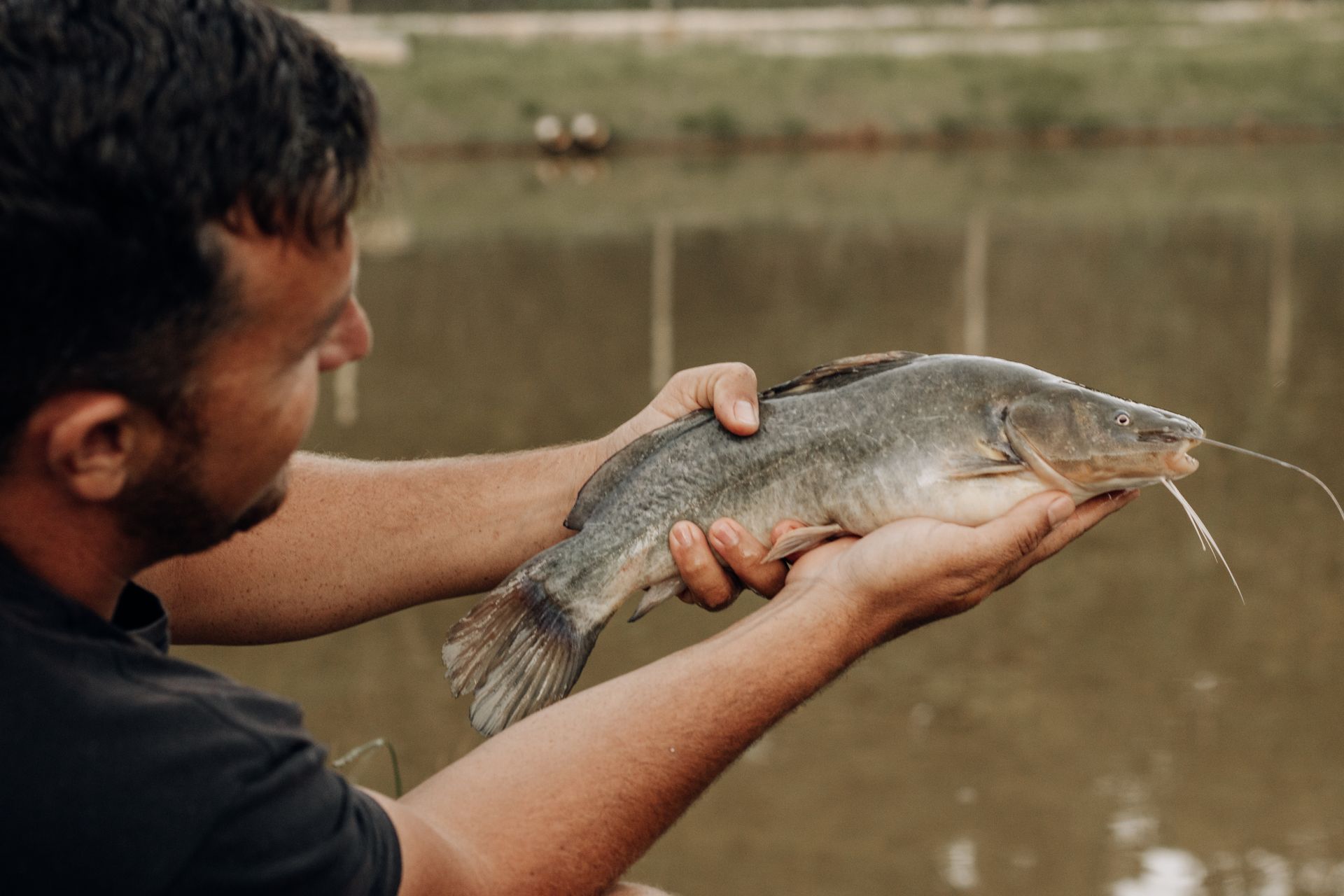
These armored catfish have been found to thrive in freshwater environments, particularly in the Amazon and Paraná river basins.
Their armored plates, made of bone, serve as a defense mechanism against predators.
The Loricariinae family is incredibly diverse, with over 500 species identified.
Many of these species have been found to be quite small, with some reaching lengths of only a few centimeters.
Their small size and armored plates have allowed them to occupy a wide range of ecological niches.
Featured Images: pexels.com