Kennel cough and reverse sneezing are two common canine health issues that can be concerning for pet owners. Kennel cough, also known as infectious tracheobronchitis, is a highly contagious respiratory disease caused by bacteria such as Bordetella bronchiseptica.
Reverse sneezing, on the other hand, is a common condition that affects dogs of all ages. It's characterized by a sudden, intense inhalation of air through the nose, often triggered by nasal irritation or allergies.
Kennel cough symptoms can range from mild to severe and may include a persistent cough, runny nose, and loss of appetite. In severe cases, kennel cough can lead to pneumonia, which can be life-threatening if left untreated.
The good news is that both kennel cough and reverse sneezing are treatable with proper care and attention.
Broaden your view: Dog Has Lump on Snout
Causes and Symptoms
Kennel cough can be a real nuisance for dogs, and it's essential to recognize the symptoms to get your furry friend the help they need.
A dry cough or a "reverse sneeze" are common signs of kennel cough.
The reverse sneeze sounds like a sniffling cough through the nose, indicating post-nasal drip or a tickle in the throat.
Your dog may seem lethargic and have low energy, or they may appear normal, making it crucial to keep an eye on their behavior.
Signs of kennel cough can appear as early as two days after exposure.
A unique perspective: Signs of Old Age in Staffordshire Bull Terrier
Prevention and Treatment
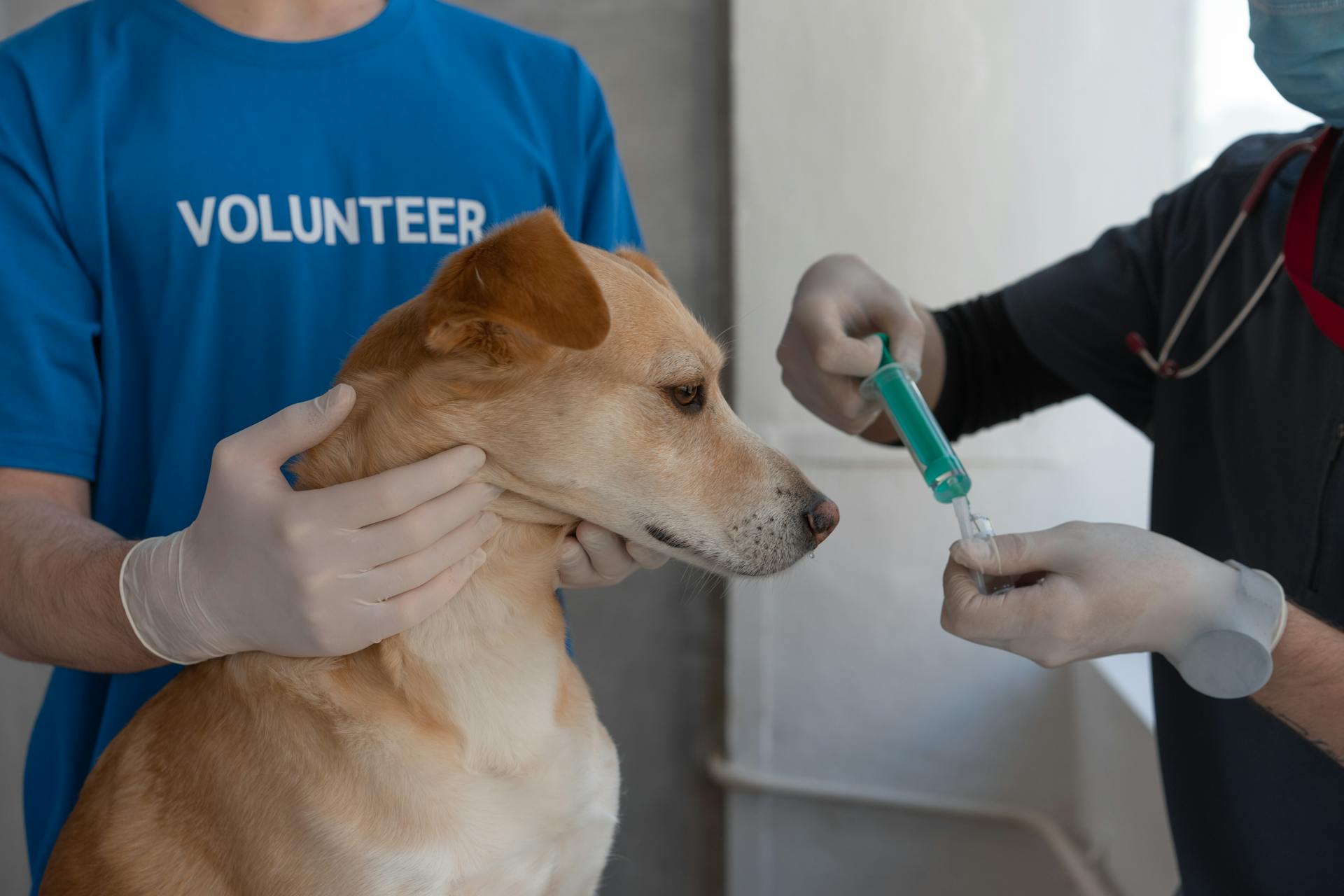
If you suspect your dog has kennel cough, it's essential to contact your vet right away. Many cases will go away on their own, but antibiotics can easily treat the infection if necessary.
If your dog's condition doesn't improve within one week, or if they show other signs like nasal or eye discharge, vomiting, fever, etc., it's a good idea to contact your veterinarian. Keep an eye out for these warning signs to ensure your dog receives proper treatment.
If your dog is coughing, it's also helpful to take videos of their coughing to show your vet. This can help them assess what may be causing the cough and inform treatment going forward.
Here are some common symptoms to look out for if your dog is coughing:
- Fever
- Sneezing
- Lethargy
- Nasal or eye discharge
- Rapid or difficulty breathing
- Blue or purple gums due to lack of oxygen
- Loss of appetite
To prevent kennel cough, make sure your dog stays up to date with their vaccines for other illnesses.
Protecting Dogs from CIRDC
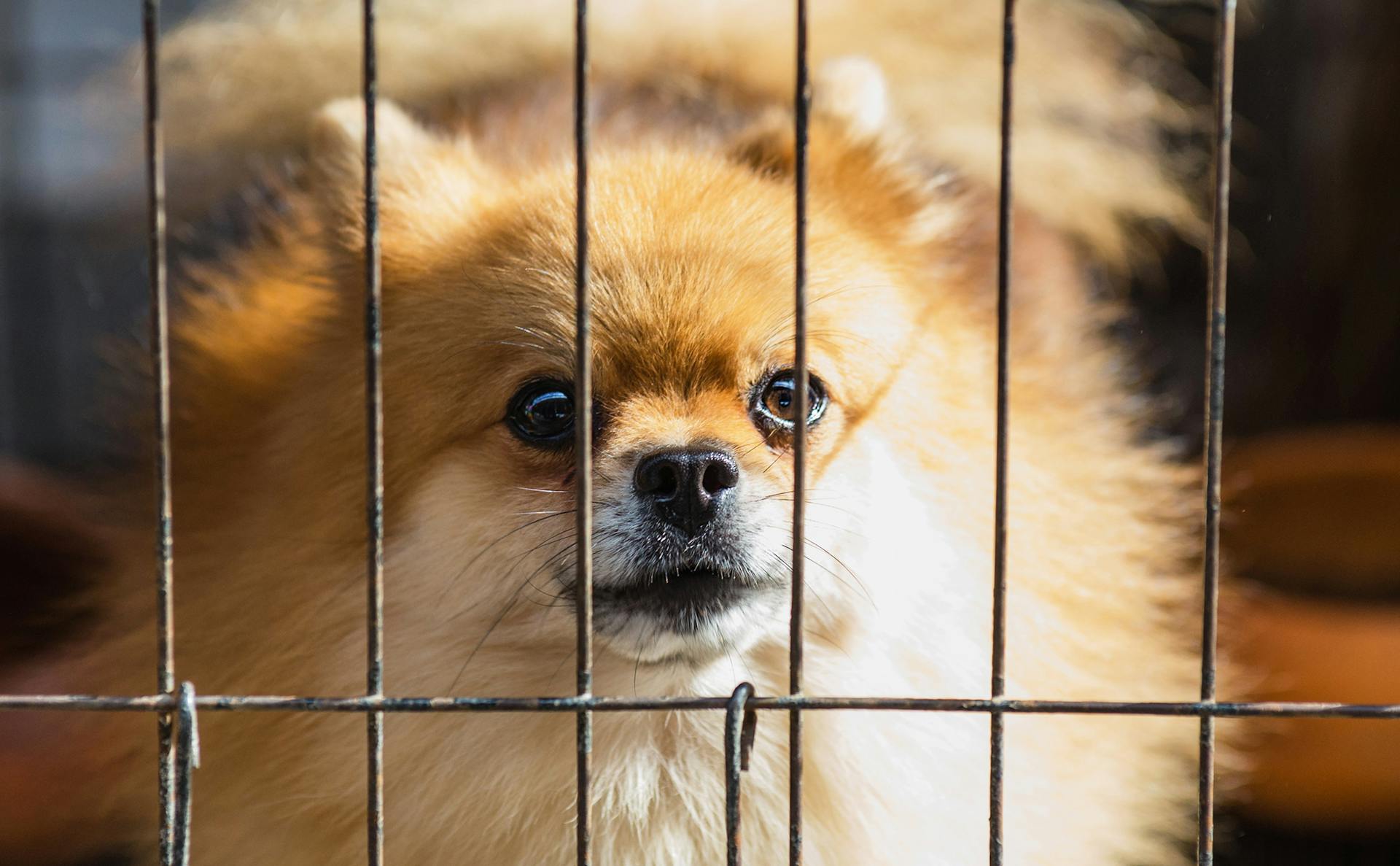
Standard canine vaccines are highly effective against some CIRDC-associated viruses and are recommended for all dogs.
While vaccines are a crucial part of protecting your dog, it's essential to understand that dogs can be contagious and still look perfectly healthy.
To further protect your dog, keep them away from toys and food and water bowls used by dogs outside your household.
Staying informed is also key, so ask your veterinarian or check news or internet resources about places or geographic regions where CIRDC has been reported.
If outbreaks are occurring in a particular area, consider delaying or avoiding travel with your dog to that place.
Here are some specific vaccines your dog may need, depending on their lifestyle and the local situation:
- Annual intranasal vaccine against Bordetella, canine adenovirus type 2, and canine parainfluenza for dogs in at-risk groups.
- Injectable canine influenza vaccine where canine influenza is known to be circulating.
What is Cough Treatment?
Cough treatment for your furry friend is often straightforward and easy to manage. Many cases of kennel cough will resolve on their own within a week.
If your dog's condition doesn't improve within one week, it's essential to contact your veterinarian, as this could be a sign of something more serious. Your vet may prescribe antibiotics to help clear up the infection.
You should also reach out to the rescue group or shelter where you adopted your pet, as they may provide follow-up advice and medicine at little or no cost to you.
In some cases, your vet may recommend testing to determine the cause of the cough. If your dog is coughing, it's a good idea to take a video of the behavior to show your vet.
Here are some common symptoms to watch out for in addition to coughing:
- Fever
- Sneezing
- Lethargy
- Nasal or eye discharge
- Rapid or difficulty breathing
- Blue or purple gums due to lack of oxygen
- Loss of appetite
If you have a healthy dog at home, it's a good idea to keep it away from other dogs, especially those who seem sick.
Coughing in Dogs: What to Do
If your dog is coughing, contact your veterinarian right away. It's also helpful for owners to take videos of their dog coughing to show their vet.
Keep an eye out for other common symptoms of the mystery canine illness, which include fever, sneezing, lethargy, nasal or eye discharge, rapid or difficulty breathing, blue or purple gums due to lack of oxygen, and loss of appetite.
If your dog is coughing, your vet may recommend testing to help assess what's causing the cough and inform treatment going forward. For dogs with the mystery illness, basic tests will come back negative.
To prevent the spread of illness, keep your healthy dog away from other dogs, especially those who seem sick. Avoid high-traffic dog areas like boarding, doggy day cares, dog parks, grooming, or training classes.
Make sure your dog stays up to date with their vaccines for other illnesses.
Suggestion: Dog Illness Bay Area
What and How It's Spread
Kennel Cough is a bacterial infection caused by Bordetella bronchiseptica.
It's highly contagious and can spread through an animal shelter like the common cold spreads through a kindergarten class.
This means you can catch it from other dogs, even if they're not showing symptoms.
Kennel Cough can be transferred outdoors as well, through the air or by drinking from the communal water bowls at the dog park.
Featured Images: pexels.com