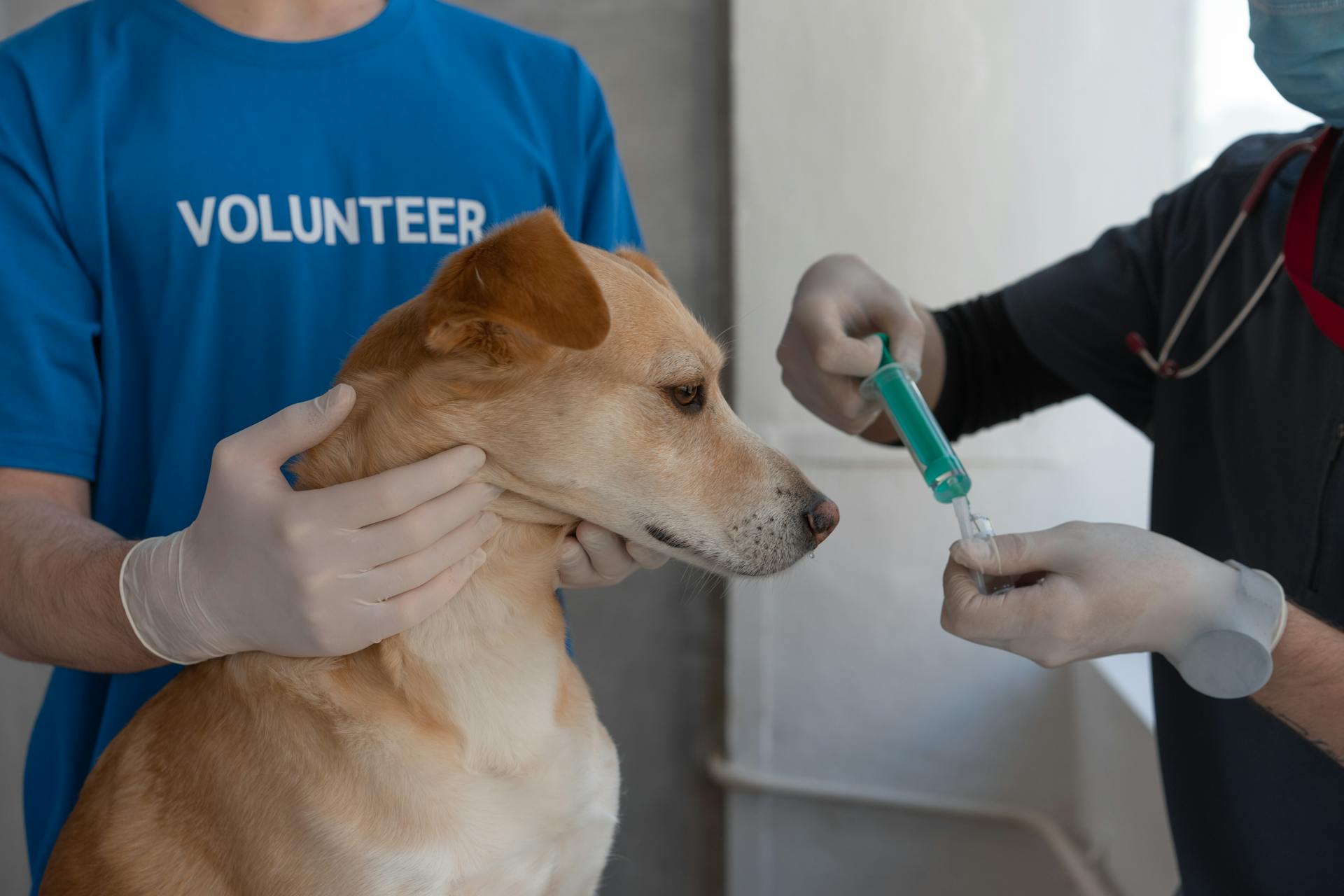
The Kennel Cough shot is a vaccine that protects dogs against the highly contagious Bordetella bronchiseptica bacteria, which causes kennel cough.
Kennel cough is a common respiratory illness that spreads quickly in areas where dogs congregate, such as dog parks, kennels, and veterinary clinics.
The Kennel Cough shot is typically administered to dogs that are at high risk of exposure, such as those that frequent dog daycare, boarding facilities, or participate in dog sports.
This vaccine is usually given annually to maintain protection against kennel cough.
What is Kennel Cough?
Kennel cough is a highly contagious respiratory disease among dogs that involves inflammation of the trachea and bronchi.
It's caused by a variety of bacteria and viruses, but the most common is a bacteria called Bordetella bronchiseptica.
The most common symptom of kennel cough is a loud, honking or hacking cough, often so severe that a dog may cough up liquid or foam.
Take a look at this: Kennel Cough Bacteria
Dogs with kennel cough may also sneeze or have a runny nose, and some may show general signs of illness, such as lethargy, a fever, or decreased appetite.
Kennel cough is spread primarily through respiratory droplets from coughing, sneezing, etc., but can also spread via direct contact or through sharing objects.
Fortunately, kennel cough is not considered a fatal disease, and the vast majority of dogs recover just fine, although it can make a dog very uncomfortable.
Here's an interesting read: Can I Spread Kennel Cough on My Clothes
Symptoms and Diagnosis
The symptoms of kennel cough can be quite distinctive. A persistent cough is the primary symptom, often described as sounding like a honking goose.
Dog owners may notice their pet's coughing fits, which can be quite frequent. Eye discharge, a reduced appetite, and a consistently runny nose are also common symptoms.
In some cases, dogs with kennel cough may develop a fever. If you suspect your dog has kennel cough, it's essential to schedule a vet visit for an accurate diagnosis.
Here are some common symptoms of kennel cough in dogs:
- Eye discharge
- Less of an appetite
- A consistently runny nose
- Fever
Keep in mind that only a vet can provide a proper diagnosis and treatment plan for your furry friend.
Prevention and Vaccination
The Bordetella vaccine is a crucial step in protecting your dog from kennel cough. It's one of the most frequently given vaccines, and most boarding, veterinary, and daycare facilities require it to be up-to-date.
To determine if your dog needs the Bordetella vaccine, consider their lifestyle and risk of exposure. If they frequent places like kennels, dog parks, or dog grooming facilities, they're more likely to need the vaccine. For example, dog parks, doggy daycare, grooming, boarding, travel, training classes, dog shows, or pet events are all high-risk areas where your dog may be exposed to kennel cough.
The vaccine is given either by injection or intra-nasal route, and it's essential to follow the recommended vaccination schedule to ensure your dog's protection. For puppies, the vaccine can be given as young as six weeks old, with a booster shot four weeks later. Adult dogs typically require annual boosters to maintain their defense against kennel cough.
For your interest: Is Kennel Cough the Same as Bordetella
Here's a quick reference guide to help you understand the Bordetella vaccine schedule:
Remember, the Bordetella vaccine is not just an option; it's a crucial shield against kennel cough. By following the recommended vaccination schedule, you can help protect your dog from this highly contagious illness.
Causes
Kennel cough is highly contagious and spreads easily from dog to dog. It's a respiratory infection that can travel through the air when an infected dog coughs or sneezes, leaving tiny droplets filled with the virus floating around.
These infectious particles can be inhaled by your dog, causing them to get sick. If your dog sniffs, licks, or inhales these particles, they might contract kennel cough.
Shared water bowls or toys can also be a source of infection. Even just touching noses with an infected friend during a playdate can put your pup at risk.
Places where dogs gather in close quarters, such as kennels, dog parks, and grooming salons, are hot spots for the spread of kennel cough. These areas are perfect breeding grounds for the spread of the infection.
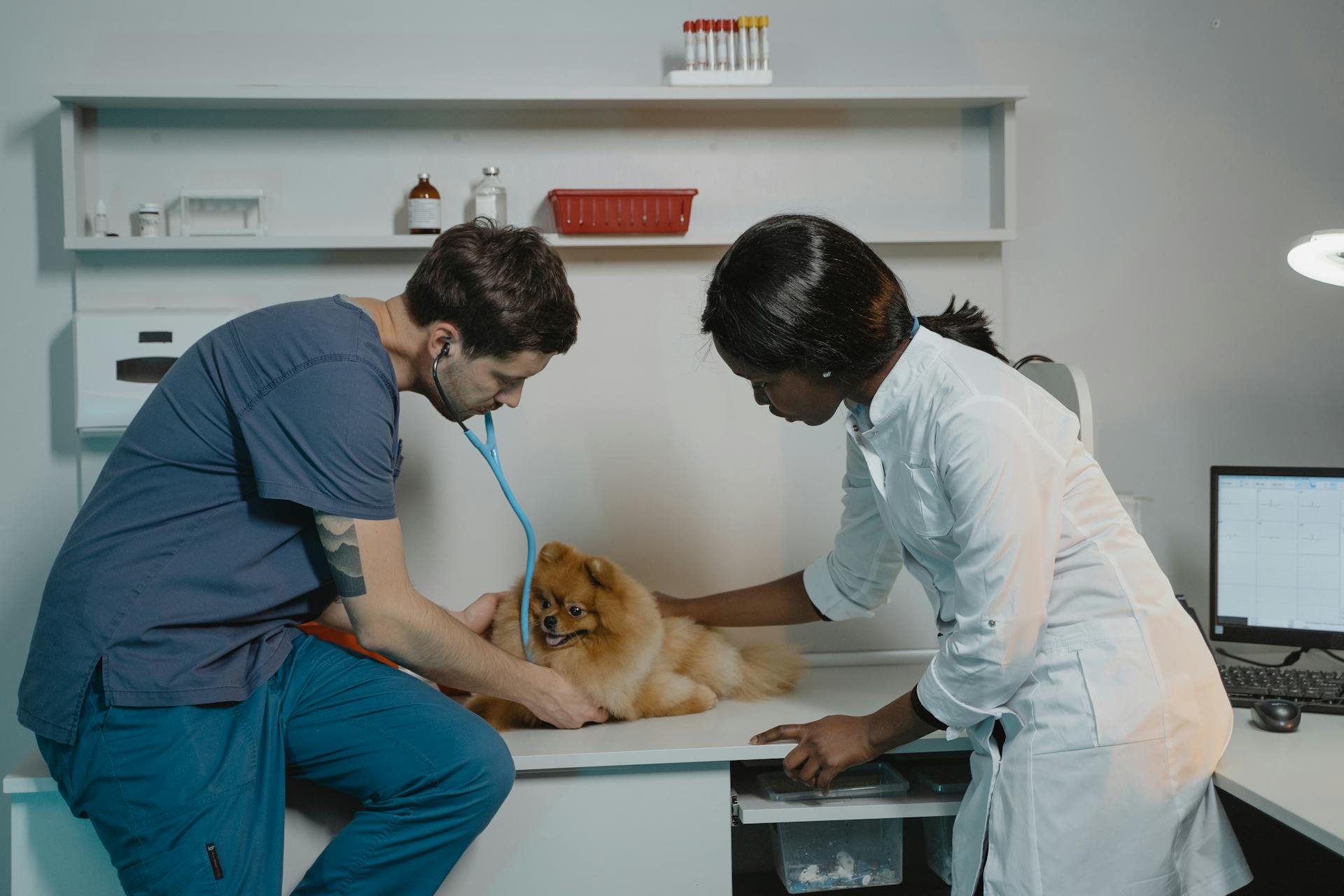
Here are some common places where your dog might contract kennel cough:
- boarding facilities
- shelters
- doggy daycare
- training facilities
- dog parks
The most common symptom of kennel cough is a loud, honking or hacking cough. This can become so severe that a dog may cough up liquid or foam, making it uncomfortable for both the dog and their owner.
Understanding the Vaccination Schedule
Puppies can receive the Bordetella vaccine as young as six weeks old, starting their protection against kennel cough early.
The Bordetella vaccine is typically administered annually, although boarding facilities or hospitals may recommend it every six months.
For adult dogs or puppies older than 16 weeks of age, the intranasal vaccine can be given once, and the injectable vaccine should be given twice, two to four weeks apart.
It takes roughly 10 to 14 days for partial immunity to develop after the vaccine has been administered.
You should keep your furry friend up to date to ensure their vaccination is effective, as immunity to Bordetella may last for up to one year.
Recommended read: Bordetella Vaccine vs Kennel Cough
Here's a breakdown of the vaccination schedule for dogs:
Social pups or dogs who go to grooming, boarding, or training facilities may need the vaccine every six months to maximize their protection.
The Bordetella vaccine is not legally required, but it's one of the most frequently given vaccines, and many boarding, veterinary, and daycare facilities require it to be up to date.
Your veterinarian will work with you to determine if your dog is at risk and to create the best vaccine schedule for your dog if vaccination is advised.
Potential Risks and Side Effects
The Bordetella vaccine, also known as the kennel cough shot, can cause a low-grade fever shortly after vaccination, which is a completely normal vaccine reaction.
This side effect is often noticed within 24 hours after vaccination. Some dogs may experience a change in behavior, such as lack of energy and loss of appetite.
In some cases, the cough may be chronic, lasting for several weeks.
Discover more: Kennel Cough after Bordetella Treatment
Common side effects of the vaccine include annoyance or mild discomfort at having liquid squirted into their nose, sneezing for a short time after the intranasal vaccine, and tiredness, a mild fever, or coughing.
A severe or allergic reaction is possible but very rare.
The injectable vaccine may cause some pain at the injection site for a day or up to a few days, but the intranasal and oral vaccines are not painful.
If you notice any of these side effects, it's always best to consult with your veterinarian to ensure your dog's health and safety.
Here are some common side effects of the kennel cough shot:
- Annoyance or mild discomfort at having liquid squirted into their nose
- Sneezing for a short time after the intranasal vaccine
- Tiredness, a mild fever, or coughing
- Pain at the injection site (for injectable vaccine)
- Severe or allergic reaction (very rare)
Frequently Asked Questions
How often do dogs need a Bordetella shot?
Dogs typically need a Bordetella shot every 6-12 months, depending on their risk of exposure. Your veterinarian will recommend the best schedule for your pet.
Featured Images: pexels.com