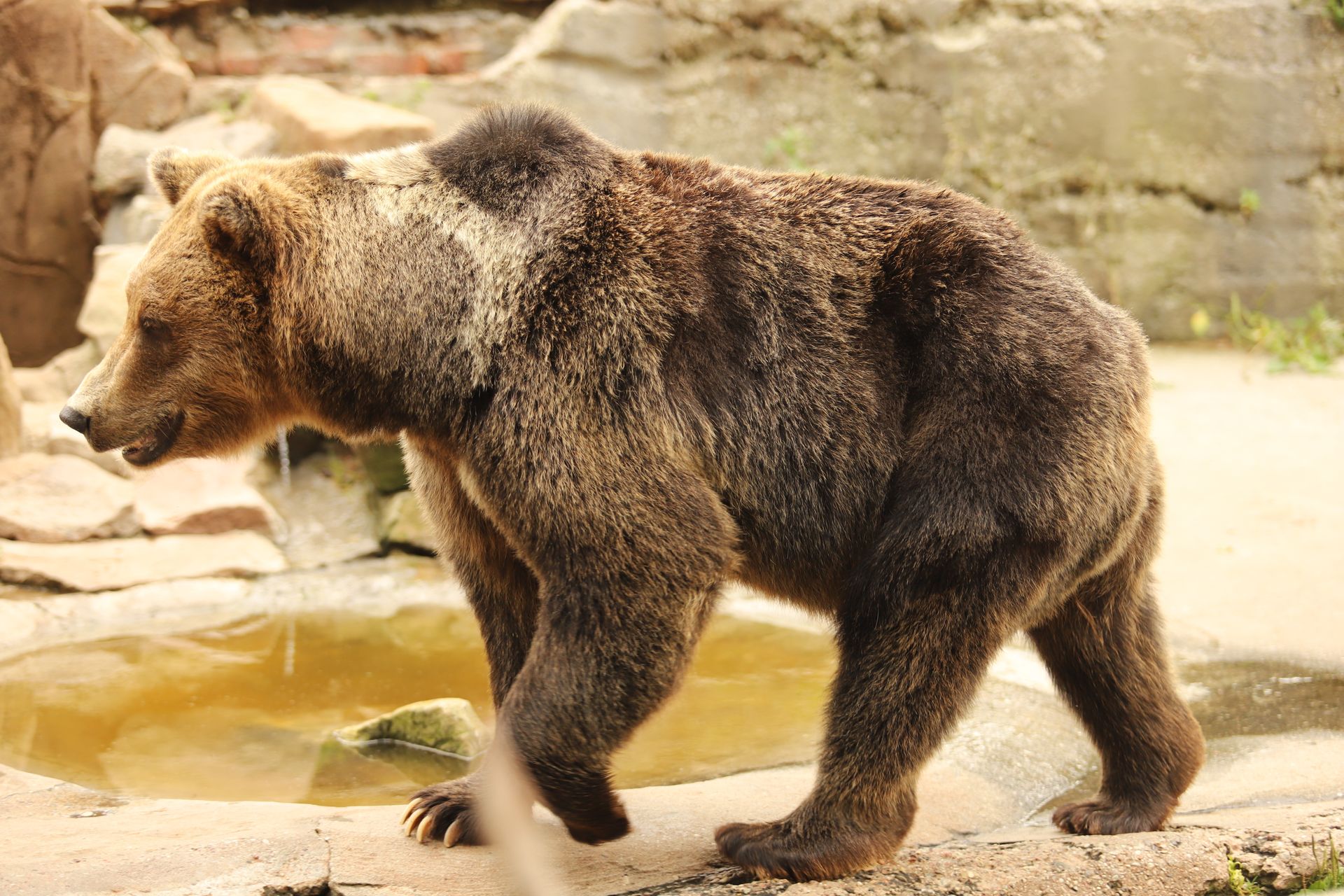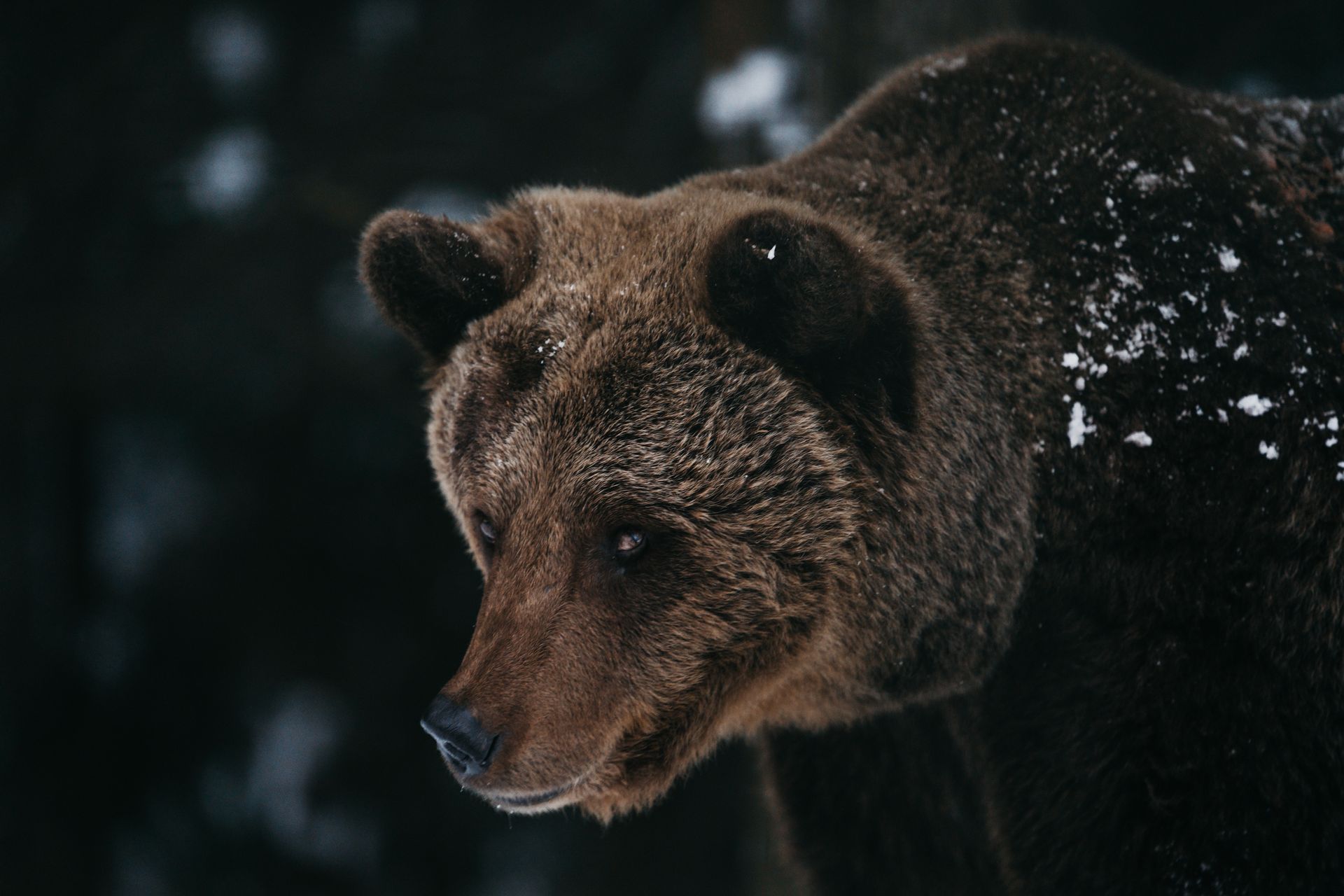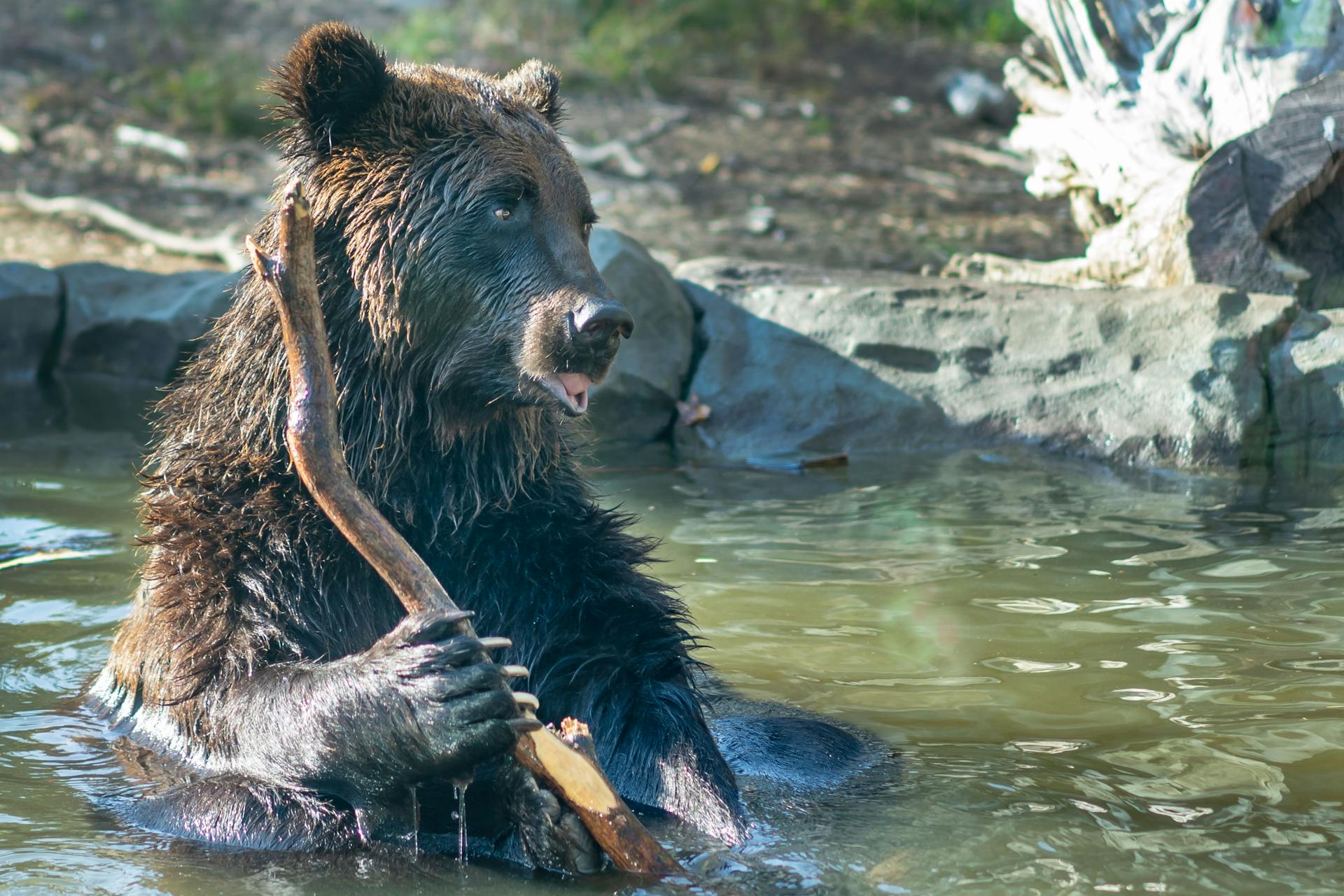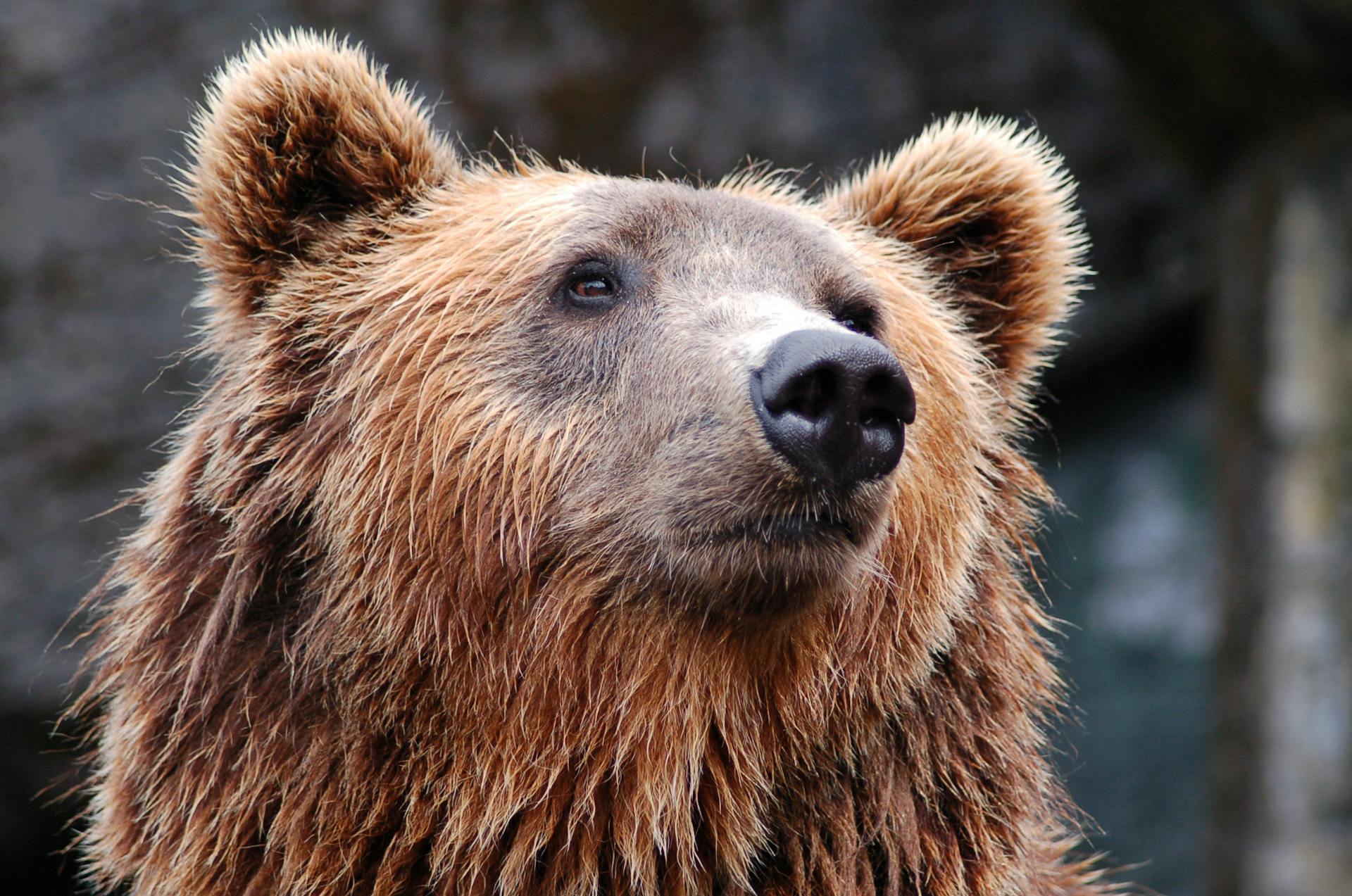
Japanese black bears are highly adaptable, and their ability to thrive in a variety of environments is a testament to their resilience.
In Japan, the black bear population is estimated to be around 10,000, with the majority living in the mountainous regions of Honshu, Shikoku, and Kyushu.
As the climate warms, Japanese black bears are shifting their habitats to higher elevations in search of food and shelter.
Habitat and Distribution
Japanese black bears can be found on two Japanese islands: Honshu and Shikoku. They inhabit a range of elevations, from the high snow regions to the low snow regions, and have even been spotted as high as 3,000 meters in the alpine region.
The bears tend to live in areas with an abundance of grasses and trees with berries, particularly broad-leaved, deciduous forests. They specifically inhabit the northeastern high snow region and the southwestern low snow region on Honshu and Shikoku.
In Shikoku, the number of black bears is small, and they are mostly found quietly in and around Mount Tsurugi in Tokushima Prefecture.
Where Do They Live?
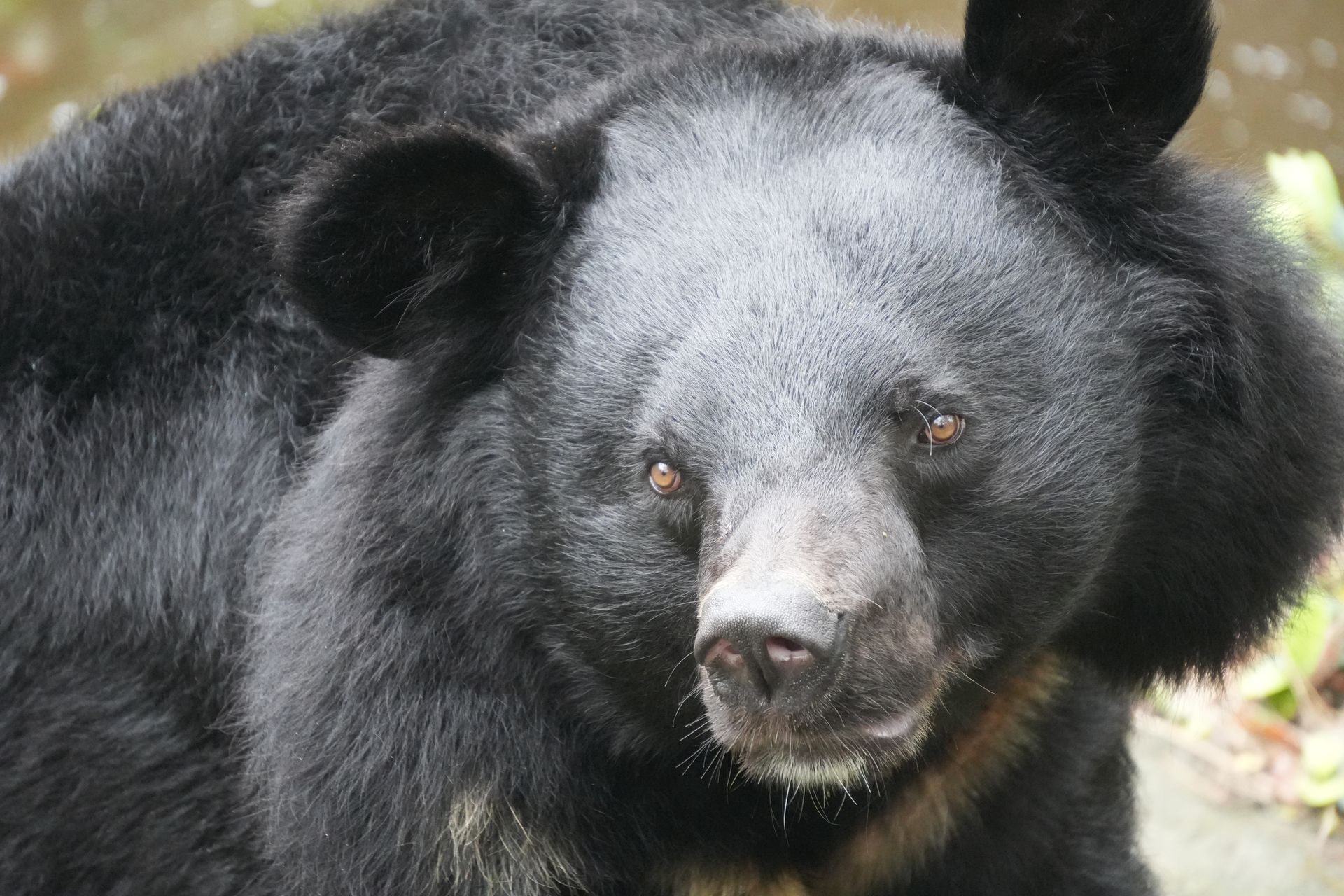
Black bears can be found on two Japanese islands: Honshu and Shikoku. They inhabit areas with abundant grasses and trees with berries, particularly broad-leaved, deciduous forests.
They tend to live in the northeastern high snow region and the southwestern low snow region. The northeastern high snow region is quite challenging, but they've been spotted as high as the alpine region, which is over 3,000 metres (9,800 feet) high.
The number of black bears in Shikoku is small, and they live only quietly in and around Mount Tsurugi in Tokushima Prefecture.
Consider reading: How Old Do Galapagos Tortoises Live
Reviving Satoyama Forests
In many areas of Japan, abandoned fields and forests are being taken back by nature. The Satoyama Forests are a prime example of this, where a denuded slope has been transformed into a lush forest with huge konara trees.
Today, the ground is covered with acorns and chestnuts, attracting bears to the area. This is just one of many cases of forest revival in Japan. The Japan Bear Network of researchers reports that the distribution of bears has been expanding since 2000.
Here's an interesting read: Wild Cats of Japan
Forestry as an industry is struggling, but Japan's natural forests are thriving. The area of land covered by natural forests has remained the same for the past three decades, but forest accumulation is expanding by 8,600 square meters every year. That's equivalent to 4.3 million 100-square-meter houses built with conventional construction methods.
Conservation Status
The Japanese black bear is listed as a vulnerable species on the IUCN Red List. This classification is a serious warning sign that the population is at risk.
Habitat destruction is a major problem for Japanese black bears. As villages grow, the bears' natural habitats are being destroyed, reducing their carrying capacity and leading to a decline in population.
Over-hunting and poaching are also significant threats to the Japanese black bear population. The high price of their body parts on the black market makes them a desirable target for poachers.
The Japanese black bear is expected to be extinct within the next 100 years if the current rate of decline continues. This is a sobering thought, and it's essential to take action to protect these magnificent creatures.
Here are some key facts about the Japanese black bear's conservation status:
- Species name: Ursus thibetanus japonicus
- Also known as: Asiatic black bears, Mammals of Japan
- Region: Found in Honshu and Shikoku regions
- Discovery year: 1857
Tsukinowaguma and Behavior
Japanese Black Bears, also known as tsukinowa-guma, are found in mainland Honshu and are known to inhabit the mountainous regions of the Kiso Valley.
The Kiso Valley's low human population and high percentage of mountainous forest make it an ideal territory for bears, with some areas having the highest bear population density in Japan.
Locals in the Kiso Valley regularly spot bears, and unfortunately, there have been attacks and deaths in recent years, including an 83-year-old man who was found dead with a bite wound in 2020.
For another approach, see: California Black Bear Population
Bears and Acorns
Japanese black bears make their way to human habitats when there isn't enough food for them in the mountains. This is because they need to increase their body fat to survive hibernation in the winter.
Their main source of food is the acorns of deciduous trees, which are high in calories and rich in nutrients. The type of tree varies with the altitude, with konara, kunugi, and kuri species common in the lowlands where humans usually live.
If this caught your attention, see: American Bald Eagle Food Chain
Buna and mizunara species are found further up mountain slopes. A study by the Forest Research and Management Organization shows that the frequency of bear sightings in human-inhabited areas correlates directly to the abundance or lack of acorns in the mountains.
If one type of tree doesn't produce enough acorns, another type usually will, but when several types fail at once, the bears descend the slopes in search of food. This happened in 2006 and 2010, two years with numerous bear sightings.
Trees naturally control their acorn production to survive, producing bumper crops one year and then decreasing the crop over time. This ensures that the bears don't eat all the acorns and the trees can perpetuate.
A different take: Dogs Eating Acorns
Tsukinowaguma
The Tsukinowaguma, also known as Japanese Black Bears, are a common sight in the Kiso Valley. They're found in mainland Honshu, but not in Hokkaido, where the Ezo Brown Bears, or higuma, dwell.
The Kiso Valley is a bear's paradise due to its low human population and high percentage of mountainous forest. This makes it the ideal territory for bears to roam and thrive.
In the winter, Tsukinowaguma are hunted, and some people eat their meat. The organs of the bears have enormous financial value in traditional Chinese medicine.
Locals in the Kiso Valley regularly spot bears, and unfortunately, there have been attacks and deaths in recent years. In 2020, an 83-year-old local man was found dead with a bite wound to his neck after going for a run on logging roads in Nagiso Town.
While encounters with Tsukinowaguma can be scary, there are ways to mitigate the risks of meeting a bear.
Safety and Coexistence
To avoid bears in Japan, it's essential to let them know you're coming. You can do this by making plenty of noise.
Japanese Black Bears are omnivores and don't view humans as a source of food, so they're likely to run away if they hear you coming. They're also skittish, which makes them even more likely to avoid you.
Carrying a bear bell, also known as a kuma-yoke-suzu, is a common and effective method of telling bears you're coming. You can attach one to your backpack and ring it as you walk.
Some trails, like those on the Nakasendo, already have bear bells for hikers to ring. When you see one, ring it enthusiastically to let the bears know you're coming.
Keeping up a lively conversation is equally effective, and some say more so than bells. If you're walking with friends or family, keep chatting to let the bears know your whereabouts.
If you run out of things to say, play a word game, sing a shanty, or recite a haiku to keep the conversation going.
Check this out: How to Say Bird in Japanese?
The Onslaught
The number of black bears hunted or captured and killed due to the danger they posed averaged 2,200 a year up to the 1980s.
This number dropped to around 1,500 per year by the 1990s, but then started to climb again.
In 2006, a record 4,856 bears were captured or killed, a stark contrast to the lower numbers seen in the previous decades.
The Japanese black bear population is estimated to be between 15,000 and 20,000.
Designated as a vulnerable species, the Japanese black bear is protected by the Washington Convention.
Readers also liked: Woman Killed by Alligator Walking Dogs
Frequently Asked Questions
How big is a Japanese black bear?
Japanese black bears typically reach 110-130cm in length and 40-130kg in weight. They are medium-sized bears with a distinctive white crescent shape on their chest.
What is the behavior of the Japanese black bear?
Japanese black bears are primarily nocturnal and solitary, using tree nests and dens for rest, food, and hibernation. They adapt their behavior to avoid humans and survive harsh winters in Japan's mountainous regions.
What is the Japanese black bear mythology?
In Japanese mythology, the Asian black bear is associated with the mountain spirit (yama no kami) and is personified as a benevolent figure with various titles, such as "mountain man" and "loving mother
Featured Images: pexels.com