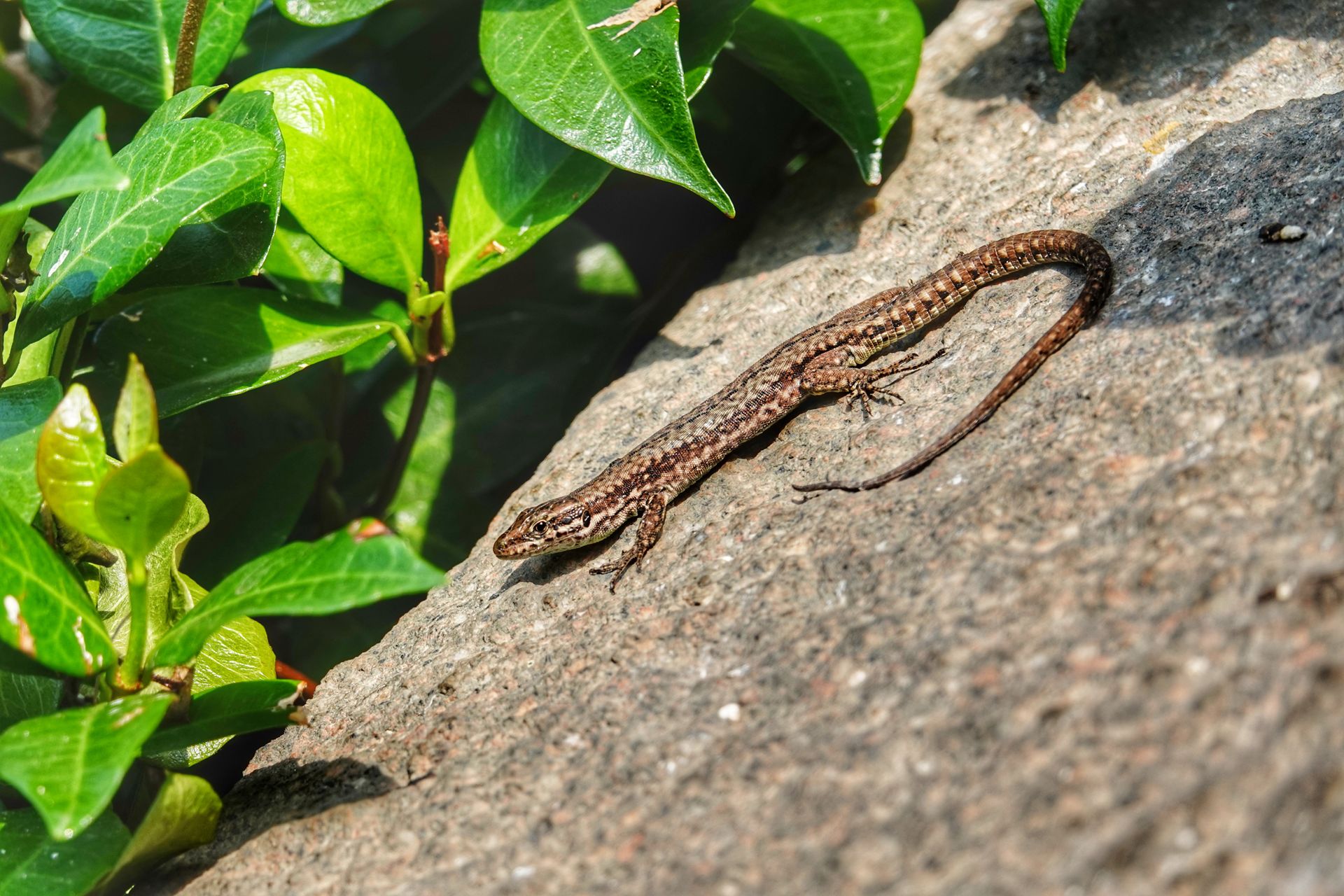
The Italian Wall Lizard is a fascinating creature, and it's easy to see why it's a popular sight in the Mediterranean region. They have a distinctive pattern of dark spots on a light brown or gray background.
One of the most notable characteristics of the Italian Wall Lizard is its ability to change color, allowing it to blend in with its surroundings. This is a result of specialized cells in their skin called chromatophores.
Italian Wall Lizards are also known for their impressive climbing abilities, thanks to their strong claws and flexible bodies. They can often be found scaling vertical surfaces with ease.
They have a relatively small size, typically growing to around 6-8 inches in length.
Physical Characteristics
The Italian wall lizard is a pretty cool creature, and its physical characteristics are quite interesting.
They typically measure about 150 to 250 mm from their snout to the base of their tail.
Their backs are usually green or brown, and their bellies are white or green.
You might enjoy: Western Green Mamba
However, their size and colors can vary a lot because of the many subspecies.
Some subspecies are melanic, which means they have hints of blue or black on their backs and bellies.
This blue color is usually seen in lizard populations living on islands, not on the mainland.
Male Italian wall lizards have larger heads and stronger jaws than females.
This difference helps males eat certain prey and also helps them in fights with other males.
Their coloration can also vary depending on the population, with some island populations having a more vibrant color scheme.
Check this out: Blue Tongue Lizards Australia
Habitat and Behavior
Italian wall lizards are incredibly adaptable and can thrive in many different environments. They're found in forests, grasslands, shrublands, rocky areas, and even farmland. Their ability to live in open, sunny places is due to their thermophilic nature, which means they can handle and even thrive in high temperatures.
In Italy, these lizards are very common, and their natural home also includes countries like Bosnia and Herzegovina, Croatia, France, Montenegro, Serbia, Slovenia, and Switzerland. They're able to live in such a wide range of habitats due to their biological characteristics.
You might enjoy: Do Alligators or Crocodiles Live in Saltwater
The activity period of Italian wall lizards can vary depending on their location. For example, a 2005 study found that lizards in New York were active for fewer months of the year (April to October) and fewer hours each day compared to those in Rome. This is likely because New York has colder temperatures than Rome, where lizards are active all year.
A different take: Reptiles of New Zealand
Habitat and Behavior
Italian wall lizards are incredibly adaptable, thriving in many different environments. They can live in forests, grasslands, shrublands, rocky areas, and even farmland.
Their ability to handle high temperatures is a key factor in their adaptability. They're thermophilic, which means they can thrive in sunny, open places.
In Italy, you can find them in forests, grasslands, shrublands, rocky areas, and farmland. They're also common in countries like Bosnia and Herzegovina, Croatia, France, Montenegro, Serbia, Slovenia, and Switzerland.
A study in 2005 compared the behavior of Italian wall lizards in New York to those in Rome. The lizards in New York were active for fewer months of the year, specifically from April to October.
See what others are reading: New Caledonia Geckos
Colder temperatures in New York likely explain why the lizards in this region have reduced activity levels. In contrast, lizards in Rome are active year-round.
Italian wall lizards can live in many different environments, but their behavior is influenced by their habitat. For example, they're active for fewer hours during the day in New York compared to Rome.
Their ability to adjust to different environments is impressive, and it's a testament to their resilience.
Catching Podarcis Sicula
Catching Podarcis Sicula is a task that requires some skill and patience.
The Italian wall lizard, Podarcis sicula, can be caught using a simple technique.
You'll need a small container or terrarium to catch and transport the lizard safely.
Catching Podarcis sicula was mentioned by cbernz on October 5th, 2016, in a post at 7:42 am.
How Use Light
Italian wall lizards can use polarized light to orient themselves.
They can learn a direction using white polarized light, which is a useful skill for navigating their habitat.
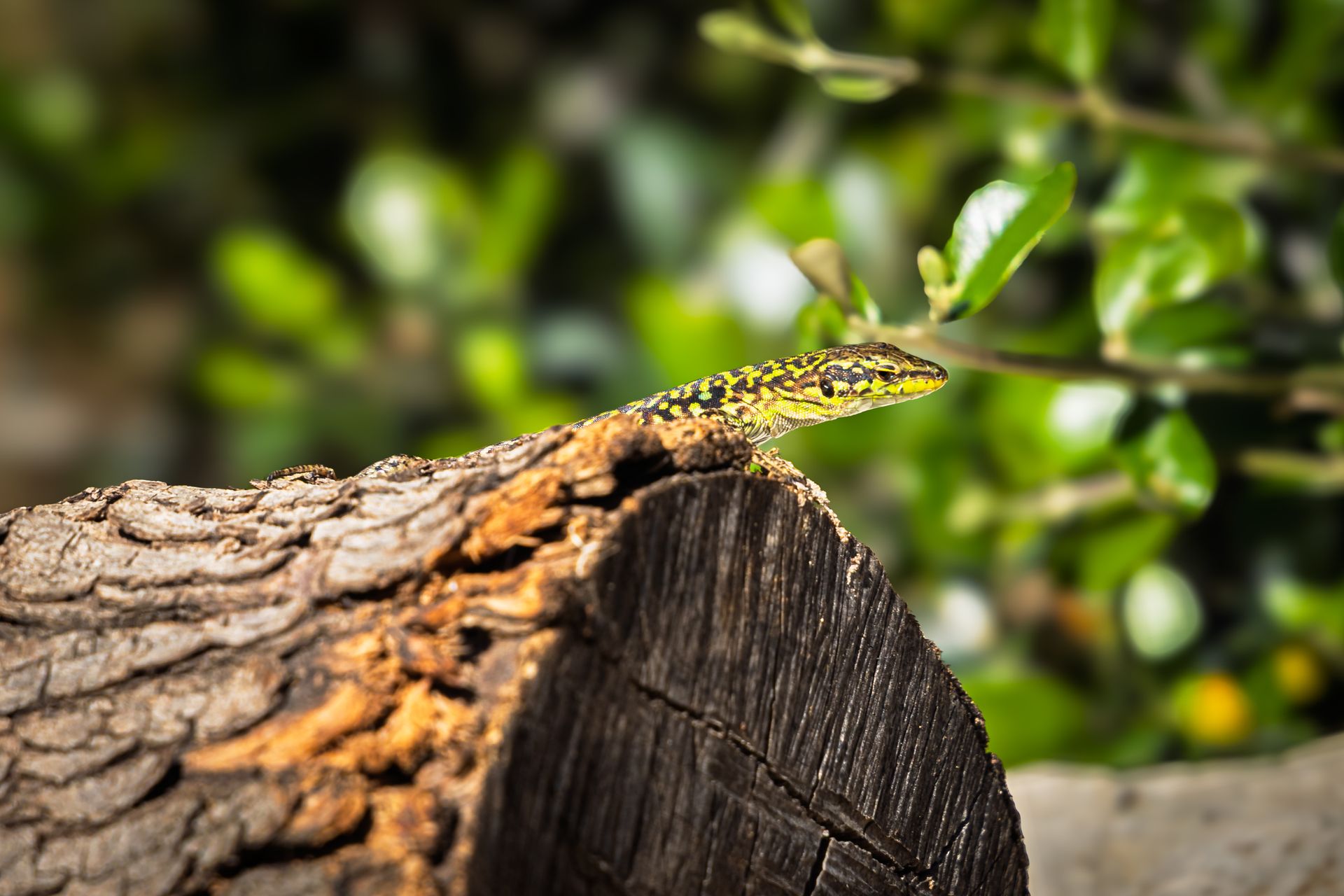
Italian wall lizards can also orient correctly under blue and cyan light, giving them a wider range of options for navigation.
Red light, however, seems to confuse them, so it's best to stick with white, blue, or cyan light if you're trying to get an Italian wall lizard's attention.
Their ability to use polarized light is just one of the many ways they can find their way around, and it's a testament to their impressive navigational skills.
Life Cycle
Italian wall lizards are oviparous, meaning females lay eggs.
Females can lay 3 or 4 clutches of eggs per year, with each clutch typically containing 4-7 eggs. The number of eggs laid per clutch can vary depending on the population.
The breeding season for Italian wall lizards usually runs from May to July. This is the time when females are most active and laying eggs.
Gravid females, or females carrying eggs, spend more time basking in the sun to help their eggs develop properly. This is a crucial part of their reproductive cycle.
Tick infestation can be a common problem for Italian wall lizards, especially in man-made habitats. Large males tend to have higher tick loads due to their increased home ranges.
Recommended read: Big Four Snakes India
Diet and Predation
Italian wall lizards are generalist predators, which means they eat a wide variety of foods. Their diet mainly consists of small invertebrates, especially arthropods like insects.
They can also eat small vertebrates, and interestingly, plants make up a larger part of their diet compared to other related lizards. Male lizards tend to have a more varied diet than females.
Lizards living on islands often eat more plant matter than those on the mainland.
You might enjoy: What Do Legless Lizards Eat
What Do Eat?
Italian wall lizards are generalist predators, which means they eat a wide variety of foods.
Their diet mainly consists of small invertebrates, especially arthropods like insects.
They can also eat small vertebrates.
Interestingly, plants make up a larger part of their diet compared to other related lizards.
Male lizards tend to have a more varied diet than females.
Lizards living on islands often eat more plant matter than those on the mainland.
Related reading: What Does the Western Fence Lizard Eat
Who Eats?
Italian wall lizards are generalist predators, which means they eat a wide variety of foods.
Their diet mainly consists of small invertebrates, especially arthropods like insects. They can also eat small vertebrates.
Interestingly, plants make up a larger part of their diet compared to other related lizards.
Male lizards tend to have a more varied diet than females.
Conservation and Distribution
The Italian wall lizard is listed as a species of least concern by the International Union for Conservation of Nature (IUCN). This means their population is healthy and growing.
They can be found in a wide range of countries, including Italy, Bosnia and Herzegovina, Croatia, France, Montenegro, Serbia, Slovenia, and Switzerland.
Here are some of the countries where you can find Italian wall lizards in the wild:
- Italy
- Bosnia and Herzegovina
- Croatia
- France
- Montenegro
- Serbia
- Slovenia
- Switzerland
Conservation Status
The Italian wall lizard is listed as being of least concern by the International Union for Conservation of Nature (IUCN) on the IUCN Red List.
Its current population numbers are increasing, which is a great sign for the species' conservation status.
The Italian wall lizard is listed as a species of least concern by the IUCN, meaning their population is healthy and growing.
This classification indicates that the species is not considered to be threatened with extinction at this time.
If this caught your attention, see: Common Snapping Turtle Species
Range
Italian wall lizards are native to Italy, but their range extends to other parts of Europe, including Bosnia and Herzegovina, Croatia, France, Montenegro, Serbia, Slovenia, and Switzerland.
They have also been introduced to non-native countries, such as Spain, Turkey, the United States, and Canada.
In the United States, they have been spotted in places like Topeka, Kansas, Long Island, New York, and the Cincinnati area of Ohio.
The lizards have become established in Cincinnati and are now considered a normal resident, not just an invasive species.
Italian wall lizards can spread quickly, often using railroad tracks to move to new areas.
Here are some of the countries where Italian wall lizards have been introduced:
- Spain
- Turkey
- United States
- Canada
Subspecies and Hybridization
P. siculus has dozens of subspecies, with 52 described by Henle and Klaver in 1986. These subspecies can be quite similar, with some distinguished by very few physical differences.
The species' native range is home to six groupings of P. siculus, identified by Podnar et al in 2005. These groupings are the Sicula clade, which includes Southwestern Calabria, Sardinia, and Sicily, and five others.
The Sicula clade is just one of the many groupings of P. siculus. The others include the Monesterace clade, which includes the Istrian coast, the Cantazaro clade, which includes central Calabria, the Tuscany clade, which spans across Western Italy, the Suzac clade, which includes islands in southern and central Dalmatia, and the Campestris-sicula clade, which spans Northern Italy and the Adriatic Islands inhabited by P. siculus.
Reports have also surfaced of hybridization between P. siculus and other species of the Podarcis genus, such as P. tiliguerta and P. raffonei.
Explore further: Land Iguanas of the Galapagos Islands
Lizard Behavior and Defense
Italian wall lizards are incredibly resourceful when it comes to defending themselves. They can detect chemical cues of common predators and modify their behaviors accordingly.
In fact, studies have shown that P. siculus is able to distinguish between scents of dangerous snakes and non-dangerous snakes. This ability is crucial for their survival.
One fascinating aspect of Italian wall lizard behavior is their anti-predatory behavior. They increase tongue-flicking behavior, commonly associated with stress, when exposed to predator scents.
Consider reading: What Did the Fish Say When He Hit a Wall?
Anti Predatory
P. siculus has a unique way of detecting chemical cues of predators and modifying its behavior accordingly. This ability is crucial for its survival.
It can distinguish between scents of dangerous snakes and non-dangerous snakes, which is impressive given the diversity of snakes in the wild.
When exposed to predator scents, P. siculus increases its tongue-flicking behavior, a common sign of stress. This behavior is more pronounced in non-gravid females.
Gravid females, on the other hand, display fewer tongue-flicks when exposed to predator scents, possibly due to the priority of embryo development.
Non-gravid females spend more time moving slowly when exposed to predator scents, whereas gravid females spend less time basking and more time being stationary.
These changes in behavior are likely strategies to avoid detection by predators while still meeting the thermoregulatory needs of embryo development.
Interestingly, subpopulations of P. siculus facing greater threats of predation have developed higher maximal running speeds and flee faster and further when presented with a predator threat.
This rapid adaptation highlights the remarkable ability of P. siculus to adjust its behavior in response to changing environmental pressures.
You might like: What Did the Fish Say When It Hit the Wall?
Lizard Fights and Competition
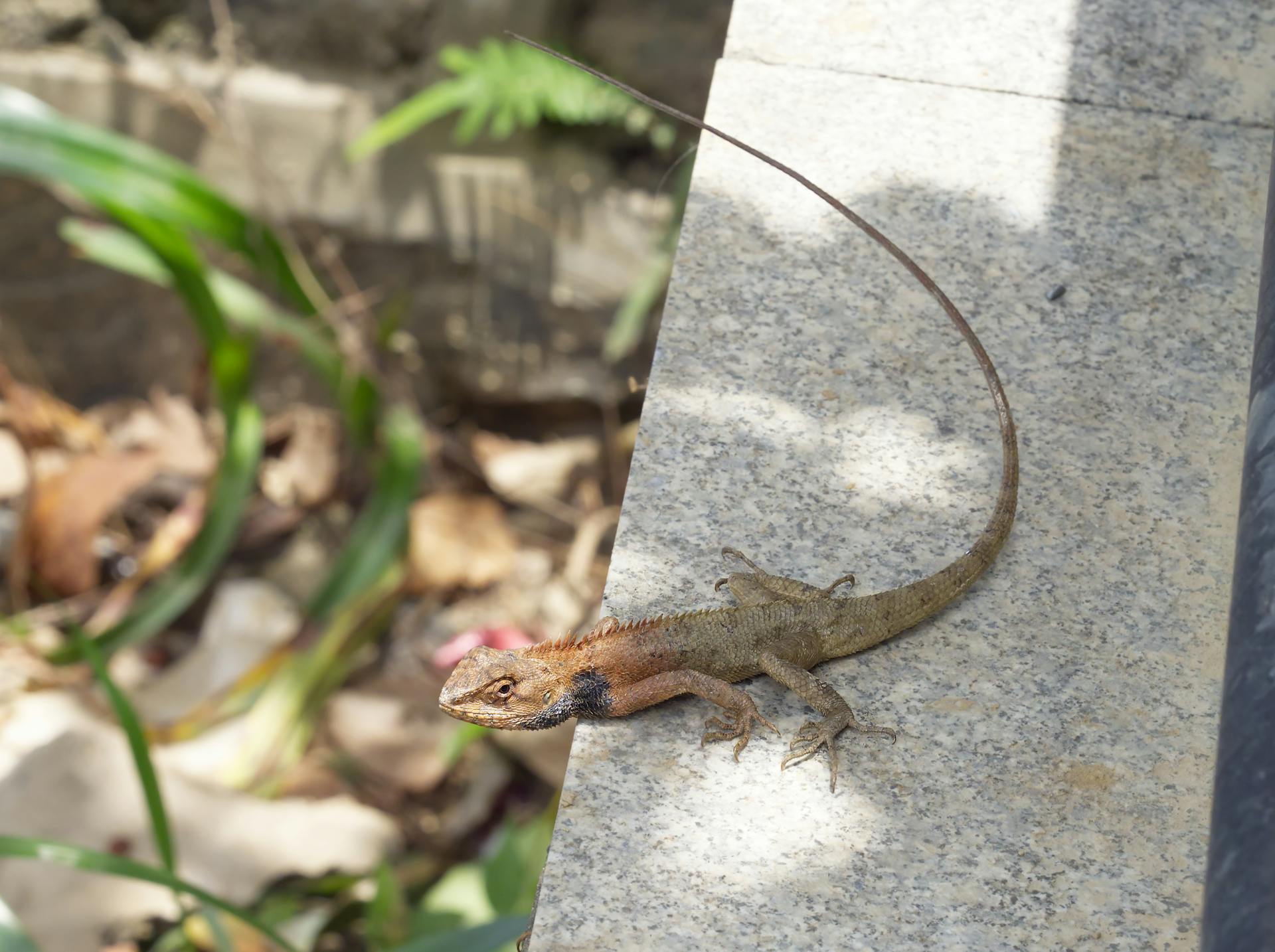
Lizard Fights and Competition can be intense, especially among Italian wall lizards. In some groups, over half the lizards are missing a toe due to frequent fighting.
Males are more likely to have missing toes than females, suggesting that males engage in more aggressive behavior. This is likely due to the competition for mates and resources.
Lizards with missing toes also tend to have stronger bites, which is a testament to their ability to defend themselves. This is a clear advantage in a competitive environment.
More aggressive lizards tend to spend more time basking in the sun, allowing them to grow faster and stronger. This social behavior can be established quickly and last a long time.
How Learn
Italian wall lizards are quite smart and can learn different tasks, like removing colored caps from food containers to get a treat.
They can even learn from other lizards, and it seems to stick! In one experiment, lizards who watched others remove caps from food pods were much better at the task than those who didn't.
It's not just about learning from their own kind, either - Italian wall lizards can even pick up skills from lizards of a different species, although it might take a bit longer.
Readers also liked: Italian Food Dog Names
Diseases and Parasites
Italian wall lizards can get various parasites and bacteria, such as Pantoea, Citrobacter, and E. coli, some of which are resistant to antibiotics.
Ticks are a common problem, especially in areas altered by humans, and larger male lizards tend to have more of them.
The number of ticks on a lizard can depend on the type of habitat, with females in traditional olive farms often having more ticks than those in modern olive farms.
Some bacteria and parasites found in mainland lizard populations can be zoonotic, meaning they can spread to humans or other animals.
Pinworms are another type of parasite that can affect Italian wall lizards.
Introduction and Classification
The Italian wall lizard is a fascinating creature, and understanding its classification can help us appreciate its diversity. The Italian wall lizard has many different subspecies, with scientists describing dozens of them.
These subspecies are essentially different "versions" of the same animal, with some being very similar and others having distinct characteristics. Some studies have identified over 50 different subspecies.
The Italian wall lizard can even breed with other types of Podarcis lizards, such as P. tiliguerta, resulting in hybridization.
Island Life and Adaptation
Italian wall lizards living on islands are generally smaller than those on the mainland.
A study found that individuals from island populations of P. siculus were smaller and had less sexually dimorphic body sizes.
The size difference between male and female lizards is less noticeable on islands.
Research observed a reduction in sexual dimorphism among insular populations of P. siculus, which aligns with the island syndrome hypothesis.
Lizards from islands have lower average head sizes.
A study found that insular head sizes were on average lower in P. siculus populations.
The environment can shape how Italian wall lizards look and act over time.
A study discovered that what the lizards ate in their habitat affected how strong their bite was and how big their jaw muscles were.
On islands where food was harder to chew, lizards had stronger bites and muscles.
This adaptation is a result of population-level ecological pressures and can lead to the macroevolutionary emergence of variation between populations.
Population-level ecological pressures can result in the macroevolutionary emergence of variation between populations in P. siculus.
Broaden your view: Inaccessible Island Rail
Frequently Asked Questions
Why is the Italian wall lizard a threat?
Italian Wall Lizards compete with native species for food and habitat, posing a threat to B.C.'s native lizard populations, specifically the Northern Alligator Lizard. This competition can have a negative impact on the native species' survival and well-being.
Can Italian wall lizards survive winter?
Italian wall lizards can survive cold temperatures if kept dry, but they are susceptible to freezing and death under certain winter conditions. They may be able to endure shallow hibernation if kept dry, but further research is needed to confirm their winter survival capabilities.
Featured Images: pexels.com