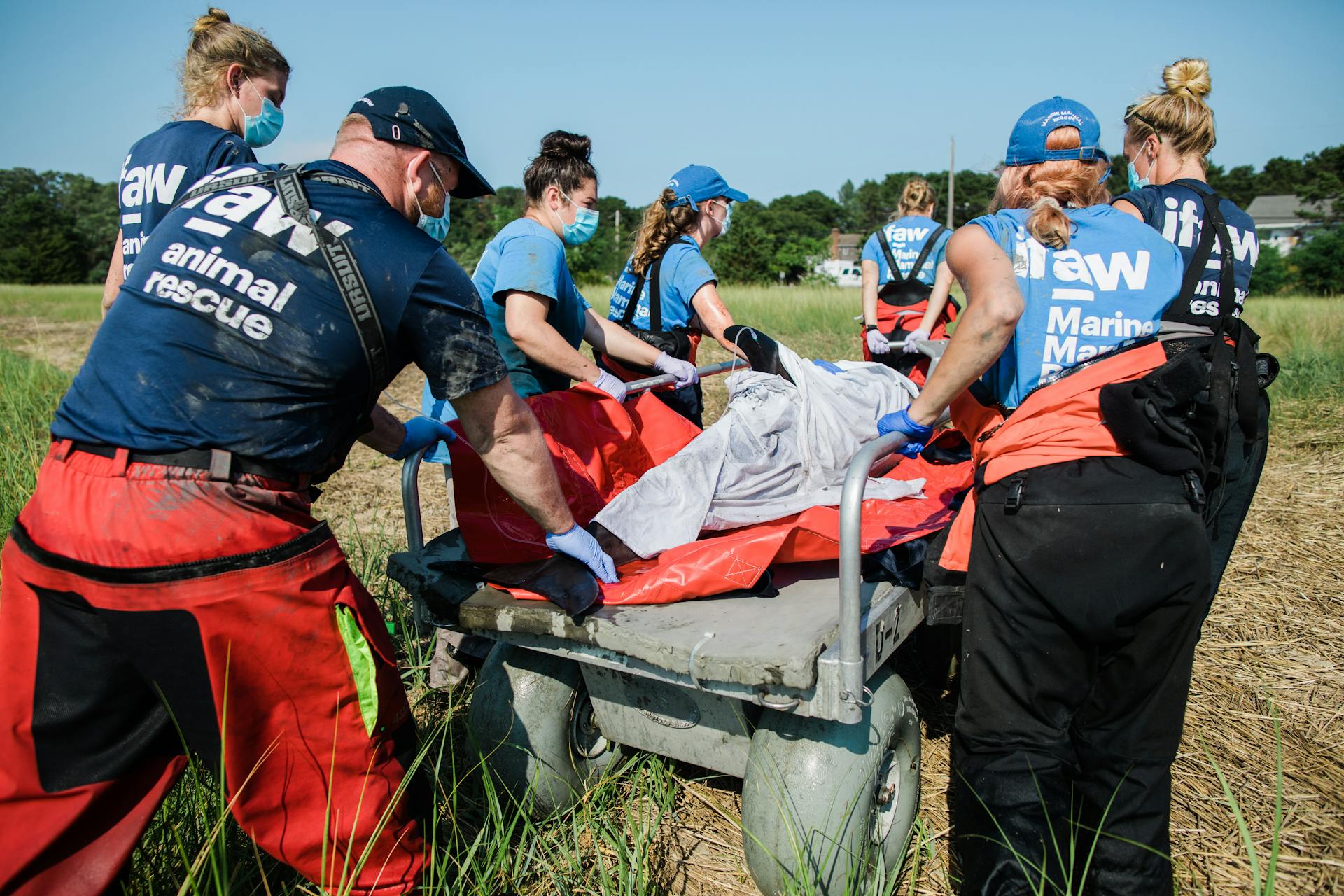
The International Fund for Animal Welfare (IFAW) is a well-established charity that works globally to protect animals and the places they call home.
IFAW has a strong presence in over 40 countries, with a focus on addressing issues such as animal cruelty, wildlife trafficking, and habitat destruction.
According to the charity's annual reports, IFAW spends around 85% of its income directly on programs and services, making it a highly efficient organization.
However, what does this mean for donors and supporters who want to ensure their contributions are making a real difference?
Readers also liked: Is the Aspca a Good Organization
What is IFAW Rating?
The IFAW rating is a crucial assessment of the organization's financial health, governance, transparency, and program effectiveness. It's evaluated by rating agencies such as Charity Navigator, BBB Wise Giving Alliance, and GuideStar.
A strong rating from these agencies suggests that donations are used efficiently. This means that IFAW is effectively using its resources to make a positive impact on animal welfare.
IFAW's rating is based on its ability to meet ethical and financial standards. This includes factors such as low administrative costs and transparent financial reporting.
A lower score may indicate issues such as high administrative costs or limited financial transparency.
Importance of Ratings
Animal welfare organizations, like the International Fund for Animal Welfare (IFAW), rely on public donations to fund their vital work. Ensuring transparency is crucial in this process.
Checking a charity's rating is essential to confirm that donations primarily support animal rescue, conservation, and advocacy. This is why it's so important to do your research before donating.
Animal welfare organizations that follow ethical fundraising and operational practices are highlighted by charity ratings. These ratings help identify organizations that are doing things right.
Charity ratings also prevent contributions from being wasted on excessive administrative costs. This is a major concern for donors who want to see their money making a real difference.
Charity ratings hold nonprofits responsible for their financial decisions. This encourages accountability and ensures that organizations are using donations efficiently.
Here are some key benefits of checking a charity's rating:
- Ensures Fund Allocation
- Identifies Ethical Practices
- Avoids Mismanaged Funds
- Encourages Accountability
Rating Determination
The International Fund for Animal Welfare (IFAW) charity rating is determined by charity watchdogs who assess nonprofits based on several key criteria. These criteria are used to evaluate IFAW's financial decisions and operational practices.
Charity watchdogs consider a nonprofit's financial transparency and accountability when determining its charity rating. This includes evaluating how donations are allocated and whether they primarily support animal rescue, conservation, and advocacy.
To ensure that donations are used effectively, charity watchdogs also assess a nonprofit's administrative costs and fundraising practices. This helps identify organizations that follow ethical fundraising and operational practices.
Here's a breakdown of the key criteria used by charity watchdogs to determine IFAW's charity rating:
By evaluating IFAW's performance based on these criteria, charity watchdogs provide a comprehensive charity rating that helps donors make informed decisions about their contributions.
Financial Transparency
Financial transparency is a crucial aspect of any charity, and international fund for animal welfare charities are no exception. Audited financial statements for current and previous years are available on the charity's website.
Charities like World Animal Protection and IFAW make their financial statements publicly available, allowing donors to see exactly how their money is being spent. This transparency is essential for building trust with donors and ensuring that funds are being used efficiently.
According to World Animal Protection's audited financial statements, the charity received $5.5m in donations in 2024 and spent $4.1m on its programs, which is 64% of revenue. This is a great example of a charity being transparent about its finances.
Here's a breakdown of how IFAW allocates its funds:
This table shows that over 75% of IFAW's funds go directly to animal welfare programs, which is a great indicator of the charity's commitment to its mission. However, some critics argue that IFAW's marketing and executive salaries are higher than ideal.
Charity ratings agencies like Charity Navigator, BBB Wise Giving Alliance, and GuideStar evaluate nonprofits to ensure they meet ethical and financial standards. A strong rating suggests that donations are used efficiently, while a lower score may indicate issues such as high administrative costs or limited financial transparency.
For example, IFAW has a 3/4 star rating from Charity Navigator, which indicates that the charity is doing a good job of using donations effectively. However, charities like WWF and the Humane Society allocate a slightly higher percentage of funds to programs, which may impact their ratings.
Charity Evaluation
Animal charities have varying levels of transparency and accountability, which is crucial for donors to make informed decisions. Animal Charity Evaluators acknowledges Animal Welfare organizations like Animal Charity Evaluators itself, but notes mixed reviews due to high fundraising and operational costs.
It's essential to check a charity's rating to ensure funds are allocated effectively. Charity Navigator, for instance, gives IFAW a 3 out of 4-star rating, reflecting its high scores in accountability and transparency. However, it deducted points for administrative expenses exceeding industry standards.
Here are some key points to look for when evaluating a charity's rating:
- Ensures Fund Allocation – Confirms that donations primarily support animal rescue, conservation, and advocacy.
- Identifies Ethical Practices – Highlights organizations that follow ethical fundraising and operational practices.
- Avoids Mismanaged Funds – Prevents contributions from being wasted on excessive administrative costs.
- Encourages Accountability – Holds nonprofits responsible for their financial decisions.
Animal Evaluators
Animal evaluators play a crucial role in assessing the effectiveness and transparency of animal welfare organizations. They help donors make informed decisions about where to allocate their funds.
Animal Charity Evaluators (ACE) is one such evaluator that acknowledges the global impact of certain charities, even if they're not top-recommended. However, they've received mixed reviews due to high fundraising and operational costs.
Charity evaluators like ACE and Charity Navigator provide valuable insights into a charity's financial management. For instance, Charity Navigator gives IFAW a 3 out of 4-star rating, highlighting their accountability and transparency. However, they deduct points for administrative expenses exceeding industry standards.
Here are some key points to consider when evaluating animal charities:
- Ensures Fund Allocation – Confirms that donations primarily support animal rescue, conservation, and advocacy.
- Identifies Ethical Practices – Highlights organizations that follow ethical fundraising and operational practices.
- Avoids Mismanaged Funds – Prevents contributions from being wasted on excessive administrative costs.
- Encourages Accountability – Holds nonprofits responsible for their financial decisions.
WWF UK
WWF UK is one of the most well-known animal charities in the world, active in over 100 nations.
Their conservation efforts focus on preserving fragile species in places like East Africa, the Amazon rainforest, and the Arctic.
WWF UK has made significant progress in increasing the number of wild tigers and mountain gorilla populations since 2010.
By 2022, the charity has committed to helping double the number of wild tigers, with the goal of having more tigers living in the wild than ever before.
WWF UK has also been working on a reduction in rhino poaching every year since 2015.
You can support WWF UK by adopting an animal or donating, which will contribute to their efforts in protecting various animal species.
See what others are reading: Are Dogs Wild Animals
Comparing IFAW
Comparing IFAW to other leading animal charities can be a bit confusing, but let's break it down. IFAW has a charity rating of 3/4 stars from Charity Navigator, which means they meet certain standards for financial health, governance, transparency, and program effectiveness.
IFAW allocates 76% of their budget to animal welfare programs, which is a significant amount. However, some critics argue that their marketing and executive salaries are higher than ideal.
Here's a comparison of IFAW with other leading animal charities:
As you can see, while IFAW has strong ratings, charities like WWF and the Humane Society allocate a slightly higher percentage of funds to programs. This is worth considering if you prioritize cost-effectiveness in your charitable donations.
Featured Images: pexels.com