Illinois is home to a diverse range of bird species, with over 400 different types documented in the state. The prairies, forests, and wetlands of Illinois provide a unique habitat for many of these birds.
The American Goldfinch is one of the most common birds in Illinois, with its bright yellow color and distinctive song making it a popular sight in backyards and parks. It's a year-round resident in the state, but its numbers can fluctuate depending on food availability.
The state's location along the Mississippi Flyway means that many migratory birds pass through Illinois each year, including the Sandhill Crane, which is a common sight in the state's wetlands and prairies. These birds can be seen from February to April, and again from August to October.
The Illinois state bird, the Cardinal, is a year-round resident and can be found in a variety of habitats, including backyards, parks, and woodlands. Its distinctive song and bright red plumage make it a popular sight among bird enthusiasts.
Curious to learn more? Check out: Bird Identification Washington
Bird Taxonomy
Birds are the only organisms with feathers.
Birds are endotherms, meaning they maintain a nearly constant body temperature.
A hard bill but no teeth is a characteristic of birds.
A gizzard, which functions to grind food, is present in the digestive tract of birds.
Fertilization is internal in birds, meaning they lay hard-shelled eggs that are incubated in a nest.
Order: Charadriiformes
The Charadriiformes order is a diverse group of birds that includes plovers, oystercatchers, sandpipers, and auks. They can be found in a wide range of habitats, from beaches and estuaries to Arctic tundra and mountainous regions.
These birds are known for their slender bills and webbed feet, which are perfect for foraging in shallow water. The smallest member of this order is the Little Stint, which measures just 13 centimeters in length.
The Charadriiformes order is further divided into several families, including the Scolopacidae, which includes sandpipers and snipes, and the Alcidae, which includes auks and guillemots.
Family: Hirundinidae (Swallows)
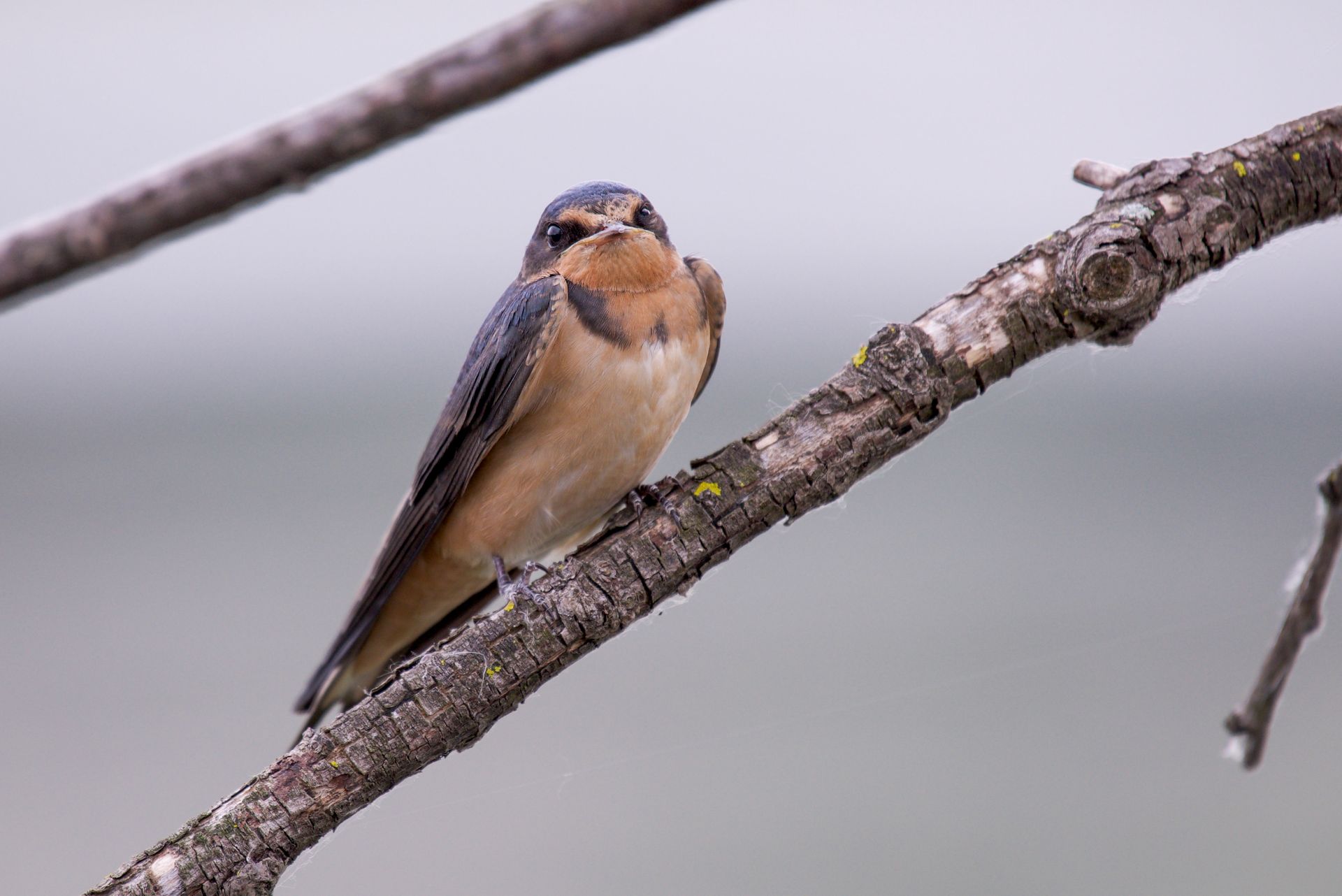
The Hirundinidae family, commonly known as Swallows, is a fascinating group of birds. They are known to be regular visitors to many areas.
One of the most notable species within this family is the Bank Swallow (Riparia riparia), which is considered a regular visitor and has been sighted with a breeding behavior (B).
Tree Swallows (Tachycineta bicolor) are also regular visitors, often seen with a breeding behavior (B). They're quite common in many areas.
The Violet-green Swallow (Tachycineta thalassina) is a rare sight, with only one recorded occurrence and a note on cross-breeding.
Northern Rough-winged Swallows (Stelgidopteryx serripennis) are also regular visitors, often seen with a breeding behavior (B).
Purple Martins (Progne subis) are another regular visitor, often seen with a breeding behavior (B).
Barn Swallows (Hirundo rustica) are common, regular visitors, often seen with a breeding behavior (B).
Cliff Swallows (Petrochelidon pyrrhonota) are also regular visitors, often seen with a breeding behavior (B).
Readers also liked: Common Yellowthroat Juvenile
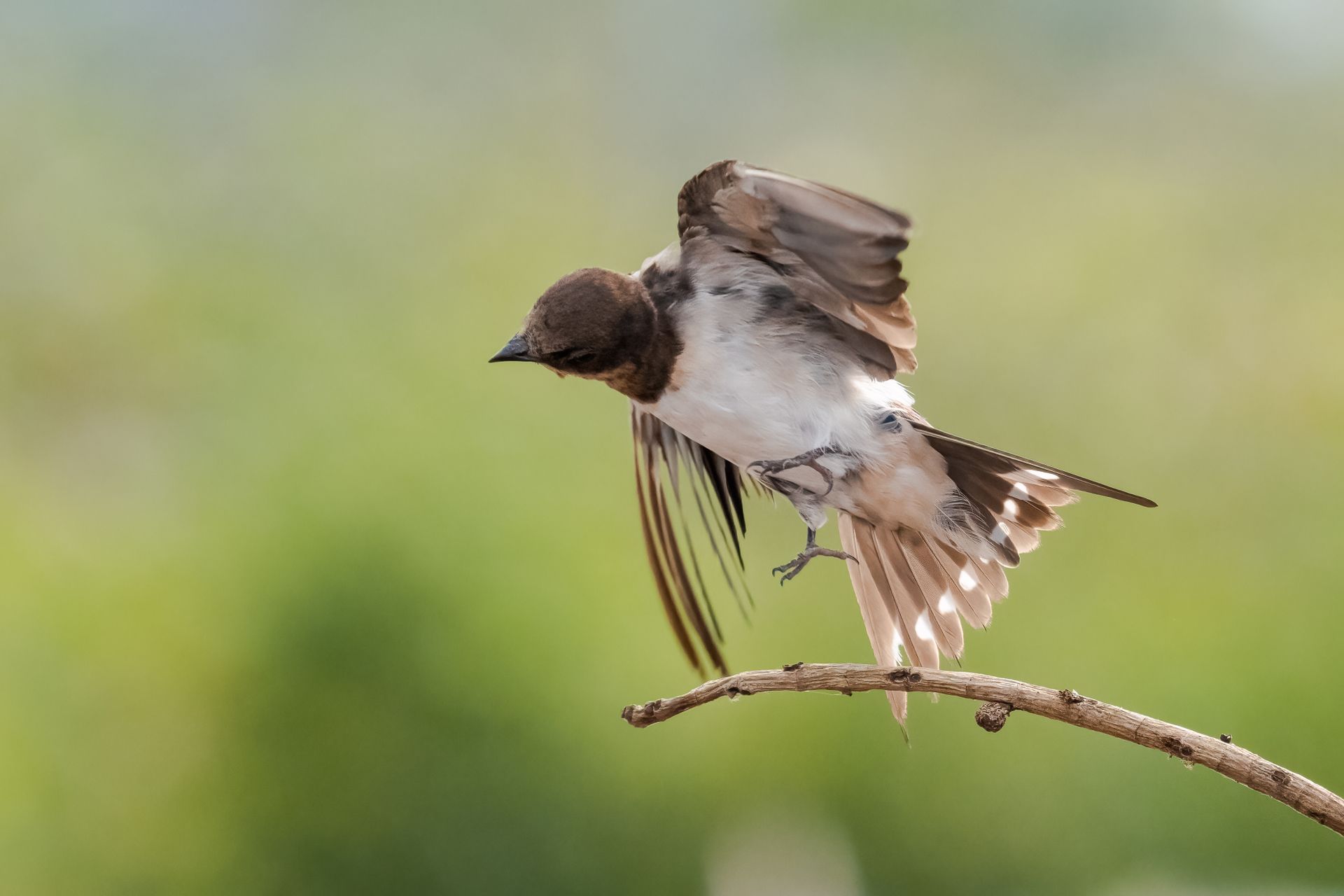
Cave Swallows (Petrochelidon fulva) are less common, but still worth noting as casual visitors.
Here's a quick rundown of some of the species mentioned:
- Bank Swallow (Riparia riparia): Regular visitor, breeding behavior (B)
- Tree Swallow (Tachycineta bicolor): Regular visitor, breeding behavior (B)
- Northern Rough-winged Swallow (Stelgidopteryx serripennis): Regular visitor, breeding behavior (B)
- Purple Martin (Progne subis): Regular visitor, breeding behavior (B)
- Barn Swallow (Hirundo rustica): Regular visitor, breeding behavior (B)
- Cliff Swallow (Petrochelidon pyrrhonota): Regular visitor, breeding behavior (B)
- Cave Swallow (Petrochelidon fulva): Casual visitor
Red Birds
The Red Birds of Illinois are a treat to spot, and I've had the pleasure of seeing them in my backyard. The Northern Cardinal is a year-round resident, known for its vibrant red plumage and distinctive song.
One of the most common Red Birds is the Northern Cardinal. It's easy to identify by its bright red feathers and crest.
The House Finch is another Red Bird that's commonly seen in Illinois. They're known for their streaked breasts and can often be found at bird feeders.
The American Robin is a bit of a trickster when it comes to its color, but it's still a Red Bird worth spotting. It has a reddish-orange breast and a distinctive brown back.
Here's a list of some of the Red Birds you might see in Illinois:
- Northern Cardinal
- House Finch
- American Robin
- Scarlet Tanager
- Red-headed Woodpecker
The Scarlet Tanager is a migratory bird that's a rare but exciting sighting in Illinois. Its bright red plumage makes it a standout among other birds.
The Red-headed Woodpecker is a year-round resident that's known for its striking red head and black back.
Small Brown Birds
Small brown birds in Illinois are a common sight in backyards, particularly in the summer months. The most common wren species in Illinois during this time is the House Wren.
House Wrens are tiny birds with a loud voice, so keep an ear out for their distinctive sound. They don't migrate south, so if you spot a wren during winter, it's likely to be a Carolina Wren.
Female House Finches are also small brownish-gray birds found in backyard gardens all over the Prairie State. They're a great bird to spot if you're new to bird watching in Illinois.
You might like: Illinois Birds List
Family: Scolopacidae (Sandpipers)
The Scolopacidae family, commonly known as sandpipers, is a diverse group of small brown birds. Some species of sandpipers are quite rare, like the Eskimo Curlew, which is unfortunately extinct.
One of the most striking things about sandpipers is their incredible migration patterns. For example, the Red Knot, a regular visitor to our area, makes an impressive journey from the Arctic to the southern tip of South America every year.
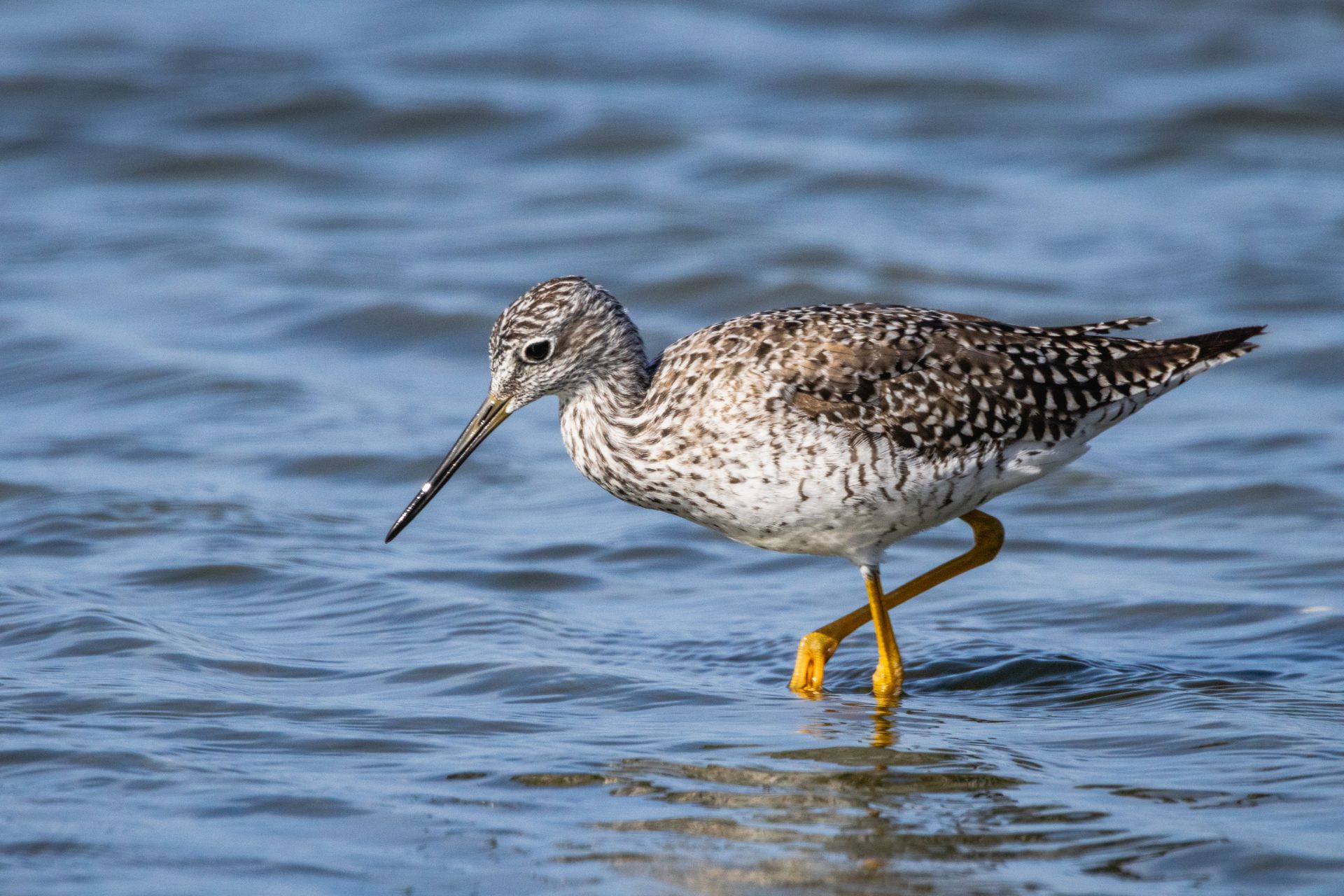
Let's take a look at some of the sandpiper species that can be found in our area:
These birds are a delight to watch, with their slender legs and pointed bills. Some species, like the Spotted Sandpiper, are quite common and can be seen in a variety of habitats, including wetlands and backyards.
The American Woodcock, a regular visitor to our area, is also a member of the Scolopacidae family. Its distinctive "peent" call is a familiar sound in the spring.
Passerellidae (New World Sparrows)
The New World Sparrows, also known as Passerellidae, are a fascinating group of birds. They're a type of small brown bird, and there are several species that can be found in our area.
One of the species is the Cassin's Sparrow, which is considered accidental. This means it's not a regular visitor, but it has been spotted here before.
The Grasshopper Sparrow is a regular visitor, and it's classified as a species of special concern (B). This is a designation that indicates it's not as common as some other species, but it's still worth noting.
For more insights, see: Sparrow Bird Identification
The Black-throated Sparrow, on the other hand, is also considered accidental. It's a bit of a rare sighting, but it's been photographed here.
The Lark Sparrow is another regular visitor, and it's classified as a species of special concern (B). It's a beautiful bird with a distinctive song.
The Chipping Sparrow, Clay-colored Sparrow, Field Sparrow, and Brewer's Sparrow are all regular visitors, but the Brewer's Sparrow is considered accidental.
Here's a list of some of the regular visitors in the New World Sparrow family:
The American Tree Sparrow, Fox Sparrow, and Vesper Sparrow are all regular visitors, and they're worth keeping an eye out for.
Discover more: White Throated Sparrow Call
What Are Small Brown Birds?
In Illinois, small brown birds can be a bit tricky to identify, but one of the most common species is the wren.
Wrens are tiny birds with a loud voice, and during the summer months, the House Wren is the most common species in Illinois backyards.
The House Wren is known for its loud, musical song, which can be a great way to identify the bird.
Carolina Wrens, on the other hand, don't migrate south and can be spotted in Illinois backyards during the winter months.
Female House Finches are another small brown bird that can be found in backyard gardens all over the Prairie State.
They have a brownish-gray color and are often seen foraging for seeds and insects in bird feeders and gardens.
If you're trying to identify a small brown bird in Illinois, be sure to check out our detailed ID guides with photos to help you narrow down the possibilities.
House Sparrow
The House Sparrow is a common urban songbird in Illinois.
They're easily recognizable by their chestnut brown upperparts with dark streaks and gray crown and rump in males.
Females, on the other hand, are more drab and mostly buff gray with dark streaks on their back.
One way to identify males is by their white wingbar on their chestnut brown wings.
The House Sparrow wasn't born in Illinois, but was brought here by European settlers.
It's amazing to see how they've successfully colonized the entire North American continent.
Now you can find them in parks and backyards, making them a familiar sight in urban areas.
Specific Bird Species
If you're new to birding in Illinois, it's essential to know which species are common and which are more elusive. The King Rail, for example, is a Regular / B species, meaning it's a common sight in the state, but it's also endangered.
One species you might spot is the Upland Sandpiper, which is a Regular / B species, but it's also endangered. The Whimbrel, on the other hand, is a Regular species, but it's not as rare as the Upland Sandpiper.
Here are some species you might encounter in Illinois:
The Northern Cardinal is another species you might see, it's a Regular / B species, but it's also not as rare as some of the other species on this list. The Indigo Bunting is also a Regular / B species, and it's a beautiful sight to see.
Recommended read: Bird Species Identification
Family: Rallidae
The Rallidae family, which includes rails, gallinules, and coots, is a fascinating group of birds. The King Rail, for example, is a regular visitor to our area and is listed as endangered.
The Virginia Rail is another common sight, often seen in wetlands and grasslands. It's also listed as regular, with a B designation.
Some rails are more rare than others, like the Clapper Rail, which is considered accidental in our region.
The Sora, on the other hand, is a regular visitor, often seen in wetlands and grasslands. It's also listed as regular, with a B designation.
Here's a list of some of the birds in the Rallidae family that can be found in our area:
- King Rail (Rallus elegans)
- Virginia Rail (Rallus limicola)
- Sora (Porzana carolina)
- Common Gallinule (Gallinula galeata)
- American Coot (Fulica americana)
- Purple Gallinule (Porphyrio martinicus)
- Yellow Rail (Coturnicops noveboracensis)
- Black Rail (Laterallus jamaicensis)
Family: Vireonidae (Vireos)
The Vireonidae family, also known as Vireos, is a fascinating group of birds. They are found in North and South America, with some species being regular visitors to backyards and gardens.
One of the most common Vireos is the White-eyed Vireo, which is a regular visitor to many areas. It's known for its distinctive white eye ring.
A unique perspective: Bird Song White Throated Sparrow
The Yellow-throated Vireo is another regular Vireo species. It's recognized by its bright yellow throat patch.
Here's a list of some of the Vireos mentioned in the article:
- White-eyed Vireo (Vireo griseus)
- Bell's Vireo (Vireo bellii)
- Yellow-throated Vireo (Vireo flavifrons)
- Philadelphia Vireo (Vireo philadelphicus)
- Warbling Vireo (Vireo gilvus)
- Red-eyed Vireo (Vireo olivaceus)
Cassin's Vireo is an Accidental (provisional) species, meaning it's not commonly seen in the area. Plumbeous Vireo is also an Accidental species, but it's not as well-known as some of the other Vireos.
The Blue-headed Vireo is a regular species, recognized by its distinctive blue head.
Take a look at this: Blue Bird Identification
Cardinalidae (Cardinals and Allies)
The Cardinalidae family, also known as Cardinals and Allies, is a fascinating group of birds that includes some of the most recognizable species in Illinois.
The Scarlet Tanager is a bright red bird with a tropical appearance, due to the bright scarlet plumage of the males, which contrasts with their coal-black wings and tail feathers.
Here are some of the species that belong to the Cardinalidae family in Illinois:
The Scarlet Tanager's bright red coloration is a striking feature of the male, but the female has a more subdued olive yellow appearance.
Northern Saw-Whet Owl
The Northern Saw-Whet Owl is a tiny bird, standing at just 7 inches tall, with a distinctive brown back spotted with white and a rust-streaked belly.
It's a winter visitor to Illinois, and some of these birds stay for the season, often returning to the same roost day after day.
You can find Northern Saw-Whet Owls roosting in evergreen trees, especially cedars, white pines, and yews, where they'll remain until dusk.
If you're lucky, you might catch a glimpse of these birds as they swoop into nearby fields to catch small prey like mice.
After eating, owls cough up pellets, which are a matted blend of bone and fur they can't digest, and you can find these pellets at the base of evergreen trees.
If you're searching for Northern Saw-Whet Owls, look for whitewash as well as pellets, and keep an eye out for the birds themselves, who often peer down at you from their roosts.
Recommended read: Northern California Bird Identification
Blackburnian Warbler
The Blackburnian Warbler is a sight to behold, especially when it comes to its vibrant throat. The male's burnt-orange color is truly indescribable.
This warbler breeds in coniferous forests of northeastern United States, parts of Canada, and the Appalachian Mountains. Illinoisans get to see it during migration, usually throughout May.
The male Blackburnian Warbler is 5 inches tall and has a dark back, large white wing patch, whitish underparts, and streaks on its sides. It's a fairly common migrant, so you can spot it anywhere you find migrating songbirds.
Look for this warbler in trees, particularly oaks, and exposed perches for singing. Good spots include Water Plant Road at Atwood Ridge and Hamburg Hill in southern Illinois.
In spring, you'll notice the male's orange and black face markings, which are quite striking. Females, immatures, and nonbreeding males have duller yellow-to-orange throats and breasts, with two small white wing bars.
Take a look at this: White Bird Identification
Eastern Bluebird
The Eastern Bluebird is a brightly colored bird that can be found in Illinois, with males sporting a rich admiral blue upperpart coloration and a prominent orange chest.
Their upperparts are a rich shade of admiral blue, which extends to their wings, tail, and the back of their heads.
Males also have a partial orange collar that creates the impression of having a cap on their head.
Females, on the other hand, have a more grayish-brown upperpart coloration, but still display blue tail feathers and wing feathers, as well as a rufous-orange chest and flanks.
The Eastern Bluebird is a migratory bird in the northern part of its range, but can be seen year-round in the southern part of the United States.
Northern populations winter in Mexico.
During their fall migration, they can be seen in flocks that like to feed on fruits and berries.
The population of Eastern Bluebirds underwent a dramatic decline at the end of last century, due to lack of nesting holes and competition with European Starlings.
However, thanks to the efforts of numerous Illinois citizens providing nest boxes for Eastern Bluebirds, these beautiful birds are regularly observed breeding in the Prairie State.
Intriguing read: Eastern Whippoorwill Call
Black-Capped Chickadee
The Black-capped Chickadee is a widespread bird species in North America.
Both sexes of Black-capped Chickadees look similar, with gray backs and buff underparts.
Their most distinguishing feature is the black cap and the black throat, which contrasts with the bright white cheeks.
These small birds are regular visitors at bird feeders, and they also accept nestboxes.
You can find Black-capped Chickadees in a variety of forest habitats, including backyards in Illinois where they are present year-round.
Broaden your view: Black Capped Chickadee Songs
House Wren
The House Wren is a small songbird with a relatively long bill.
Its long tail is a distinctive feature, often cocked up in a characteristic way.
At a distance, House Wrens appear uniformly brown, but up close, you can see subtle barring on their wings and tail.
The House Wren is a winter visitor in Illinois, where it can be found from September through April.
Curious to learn more? Check out: Long Island Bird Identification
Palm Warbler
The Palm Warbler is one of the smallest birds in North America. They're quite tiny, which makes them easy to spot in the wild.
Their upperparts are olive-brown and subtly striped, giving them a unique appearance. The wings are darker overall, with two light wingbars that add to their distinctive look.
One of the best features for identifying Palm Warblers is their bright yellow throat and yellow supercilium (eyebrow stripe). These striking markings make them stand out from other bird species.
Males tend to have a bit more vibrant coloration than females, although both sexes share many similarities.
For another approach, see: Yellow Bird Identification
Tufted Titmouse
The Tufted Titmouse is a small songbird with a distinctive crest on its head.
It's a year-round resident in Illinois, and you can spot it in deciduous forests, parks, and even backyards.
This bird isn't very shy, so bird watchers can easily observe it.
It's also a regular visitor at backyard feeders, where it feeds on small invertebrates and seeds.
The Tufted Titmouse readily breeds in nestboxes, making it a popular choice for bird enthusiasts.
It has grayish-blue upperparts with a black forehead and a crest on the back of its head, and its underparts are pale gray with buff orange flanks.
Broaden your view: Small Bird Nest Identification
Tree Swallow
The Tree Swallow is a beautiful bird species that can be found in Illinois, particularly near lakes, marshes, and ponds. It's a widespread species, and its presence is a delight to witness.
The Tree Swallow has a striking appearance, with a greenish-blue back and buff-white underparts. Their feathers are iridescent, which means they change color when viewed in direct sunlight.
In terms of nesting, Tree Swallows readily accept suitable nesting boxes, making it a great opportunity to attract them to your backyard. This is especially beneficial for those who want to provide a safe haven for these birds.
Here are some key facts about the Tree Swallow's migration patterns:
- Tree Swallows migrate long distances to winter around the Gulf of Mexico and Central America.
- They are strict insectivores, feeding exclusively on insects that they catch in the air.
Young Tree Swallows have a different appearance than adults, with a more grayish-brown color and white underside.
Downy Woodpecker
The Downy Woodpecker is the smallest woodpecker found in Illinois.
Males have a distinctive red patch on their nape, while females are entirely black and white.
Their wings have black and white bars that resemble spots when folded.
Downy Woodpeckers don't migrate, but they do move around outside of the breeding season in search of food.
You can spot them in deciduous or mixed forests, where they feed on insects and insect larvae under tree bark.
During winter, they also eat berries and seeds.
One way to tell a Downy Woodpecker apart from a Hairy Woodpecker is by its smaller size and short bill.
Common Yellowthroat
The Common Yellowthroat is a brightly colored small wood warbler.
Its bright yellow throat and chest are a striking feature of the adult male, but females lack this vibrant plumage.
A broad black mask covers the forehead and cheeks of the adult male, adding to its distinctive appearance.
The black face mask is bordered on top by a grayish white band, which transitions into the olive brown nape and back.
Females are similar to males, but without the black face mask.
This bird prefers to inhabit shrubland and grassy habitats, making it a common sight in these environments.
The Common Yellowthroat feeds on insects and other invertebrates, which it catches in its shrubland and grassy habitats.
It's a summer visitor and breeding bird in Illinois, but migrates south to spend the winter in the southern USA and Central America.
Yellow Warbler
The Yellow Warbler is a brilliant bird to spot in Illinois, especially from April through August when it's present as a breeding species.
Its vibrant yellow color is a dead giveaway - adult males have a brilliant yellow plumage, except for their slightly darker wings with two pale wingbars.
These birds are relatively easy to observe due to their preference for open habitats with low thickets and scrubland.
Adult females are similar to males but with less streaking, making them more uniformly yellow.
They're a migratory species, spending the rest of the year in Central America and South America.
White-Breasted Nuthatch
The White-Breasted Nuthatch is a common sight in Illinois, and for good reason - it's a year-round resident in the state. This bird species is the largest Nuthatch species in North America.
One of the easiest ways to identify a White-Breasted Nuthatch is by its distinctive grayish blue back and wings, as well as its white face, throat, and breast. Its striking plumage makes it a joy to spot in the wild.
These birds can often be found in deciduous or mixed forests, where they forage for food and make their homes. They're also common visitors at tube feeders, particularly those offering sunflower seeds.
Outside of the breeding season, White-Breasted Nuthatches often form small flocks with other species of songbirds. These flocks roam around, foraging together and making the most of the available food sources.
Featured Images: pexels.com