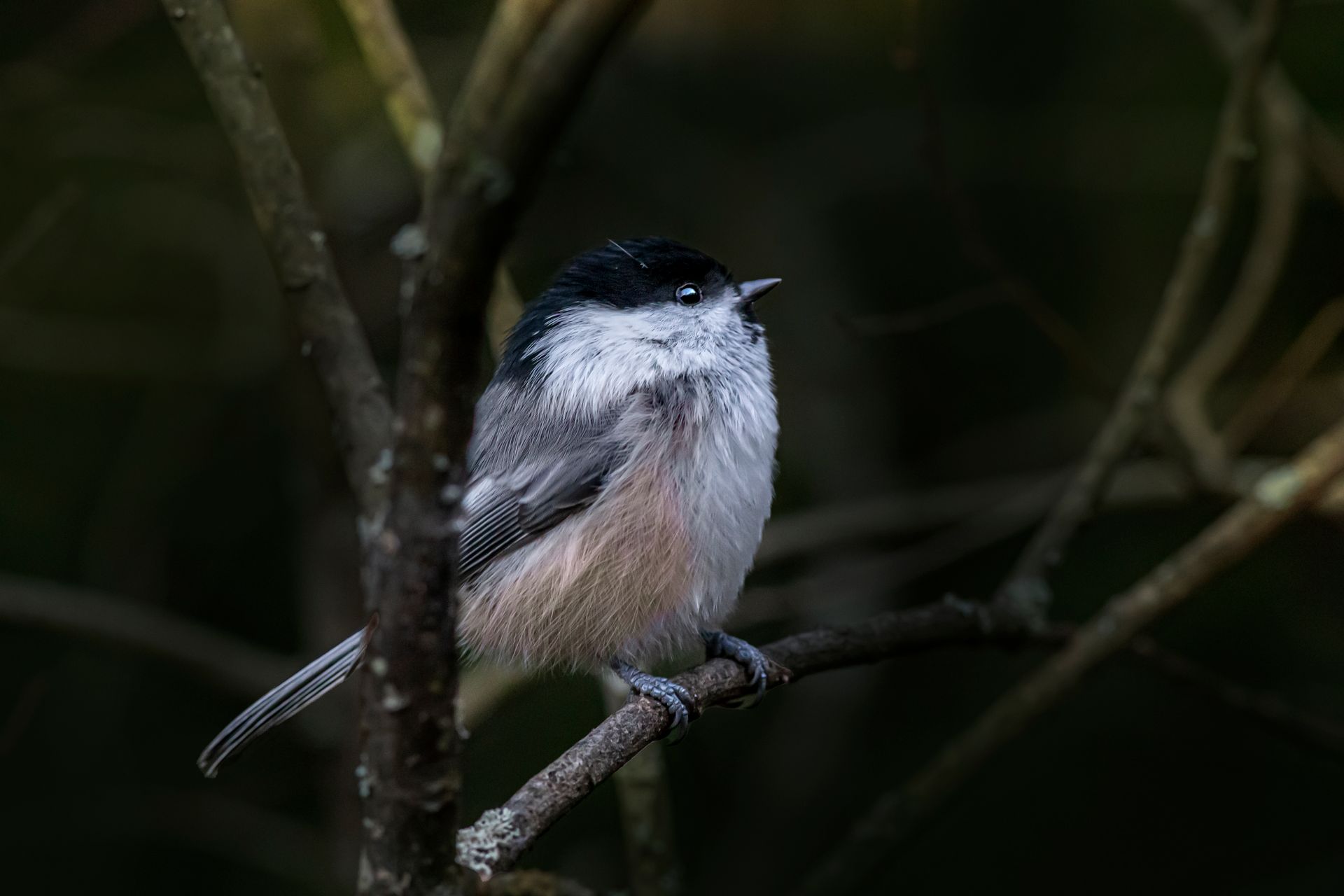
The Black Capped Chickadee's call is one of the most recognizable bird sounds in North America. The Black Capped Chickadee is known for its distinctive "fee-bee-fee" call, which is often described as a series of short, descending phrases.
This call is a key identifier for the species, and can be heard year-round in areas where they live. The Black Capped Chickadee's call is often used for communication between mates and family members.
The "fee-bee-fee" call is typically given by the male of the species, and is used to establish territory and attract a mate.
Types of Chickadee Calls
Chickadees are known for their distinctive calls, which can be categorized into different types. The Black-capped Chickadee's most common call is a clear, whistled "chick-a-dee-dee-dee" sound.
The Black-capped Chickadee's "chick-a-dee-dee-dee" call is often described as a series of five or six whistled notes. This call is typically used for contact and alarm.
The "chick-a-dee-dee-dee" call is often accompanied by a more rapid series of whistled notes, which can be used to signal alarm or warning. This call is often described as a "chick-a-dee-dee-dee-dee" sound.
Comparing Chickadee Calls
In the Pacific Northwest, you might see both Black-capped and Chestnut-backed Chickadees at your birdfeeder.
The Chestnut-backed Chickadee has a distinct call that's higher pitched, faster, and has a buzzy quality, unlike the Black-capped Chickadee.
Knowing their calls will help you identify the different species, and a good birdwatcher can even identify a bird by its call alone.
The call of the Black-capped Chickadee follows the familiar "Chick-a-dee, dee, dee" pattern, while the Chestnut-backed Chickadee's call is slightly different.
These little birds use their musical talents for more serious business - keeping their flock together.
You can see lots of dapper black-and-white chickadees this time of year, and recognizing their calls will make your birdwatching experience even more enjoyable.
Alarms
The chickadee's alarm call is a lifesaver for its flock. It's a warning system that lets other birds know if danger is near.
The number of "dees" that follow the "chick-a" in the alarm call indicates the intensity and proximity of danger. The more "dees", the bigger the threat.
If a chickadee is warning the group of a perched Great-horned Owl, it may use four "dees" after the "chick-a". This is because Great-horned Owls are not generally a predator of chickadees.
But if a Sharp-shinned Hawk, a main predator of chickadees, is perched nearby, the chickadee may use seven or more "dees" to sound the alarm. This is because Sharp-shinned Hawks are a significant threat to chickadees.
The alarm call isn't just a warning, it's also a way for the flock to stay in contact. Chickadees have been known to live near or even join flocks of other birds that have a chickadee's warning system.
In fact, researchers have found that chickadees can add anywhere from five to twenty-three "dees" to their alarm call depending on the danger. This level of detail is impressive, and it's a testament to the chickadee's sophisticated communication system.
If the danger is imminent, a high but quiet "Tseet" call may go out from a male chickadee, telling everyone to freeze in place. This call is a signal to the flock to stay still and quiet until the danger has passed.
Identifying Chickadee Calls
The Black-capped Chickadee's call is a distinctive "chick-a-dee-dee-dee" sound.
This call can be heard year-round and is often given from a perch or in flight.
Black-capped Chickadees also make a "chick" sound, often in response to their own "chick-a-dee-dee-dee" call.
The "chick" sound is often softer and more muffled than the "chick-a-dee-dee-dee" call.
In addition to these calls, Black-capped Chickadees also make a "fee-bee-fee" sound, often in the spring and summer months.
This "fee-bee-fee" call is often given by the male Black-capped Chickadee during courtship and territorial displays.
Black-capped Chickadees also make a variety of other sounds, including a low, nasal "chur" sound and a high-pitched "zeep" sound.
These sounds are often used for alarm and warning calls, and can be heard in response to predators or other threats.
Frequently Asked Questions
How to befriend a Black-capped Chickadee?
To befriend a Black-capped Chickadee, try making "squeaks" and "spishes" sounds to attract their attention. With patience and consistent attempts, these birds may visit and even respond to your calls.
What bird has a two-note whistle?
The Eastern Phoebe and the Black-capped Chickadee both have a two-note whistle, but listen closely to hear their distinct differences.
Do female Black-capped Chickadees sing?
Female Black-capped Chickadees do sing, typically using a two or three syllable whistled phrase to communicate with their partner. They may use a "Hey, Sweetie" or "Fee-bee" type song to say "Here I am!
What bird sounds like it's singing "Three Blind Mice"?
The Black-capped Chickadee is known for its distinctive song that mimics the tune of "Three Blind Mice". Listen to the video to hear the bird's unique rendition of this classic melody.
What bird call sounds like fee bee?
The "fee bee" bird call is likely a White-throated Sparrow, which has a distinctive song that starts out sounding similar to a Chickadee's call but is longer and has repeated notes. If you're trying to identify the bird making this sound, keep an ear out for the longer, more melodic song.
Featured Images: pexels.com