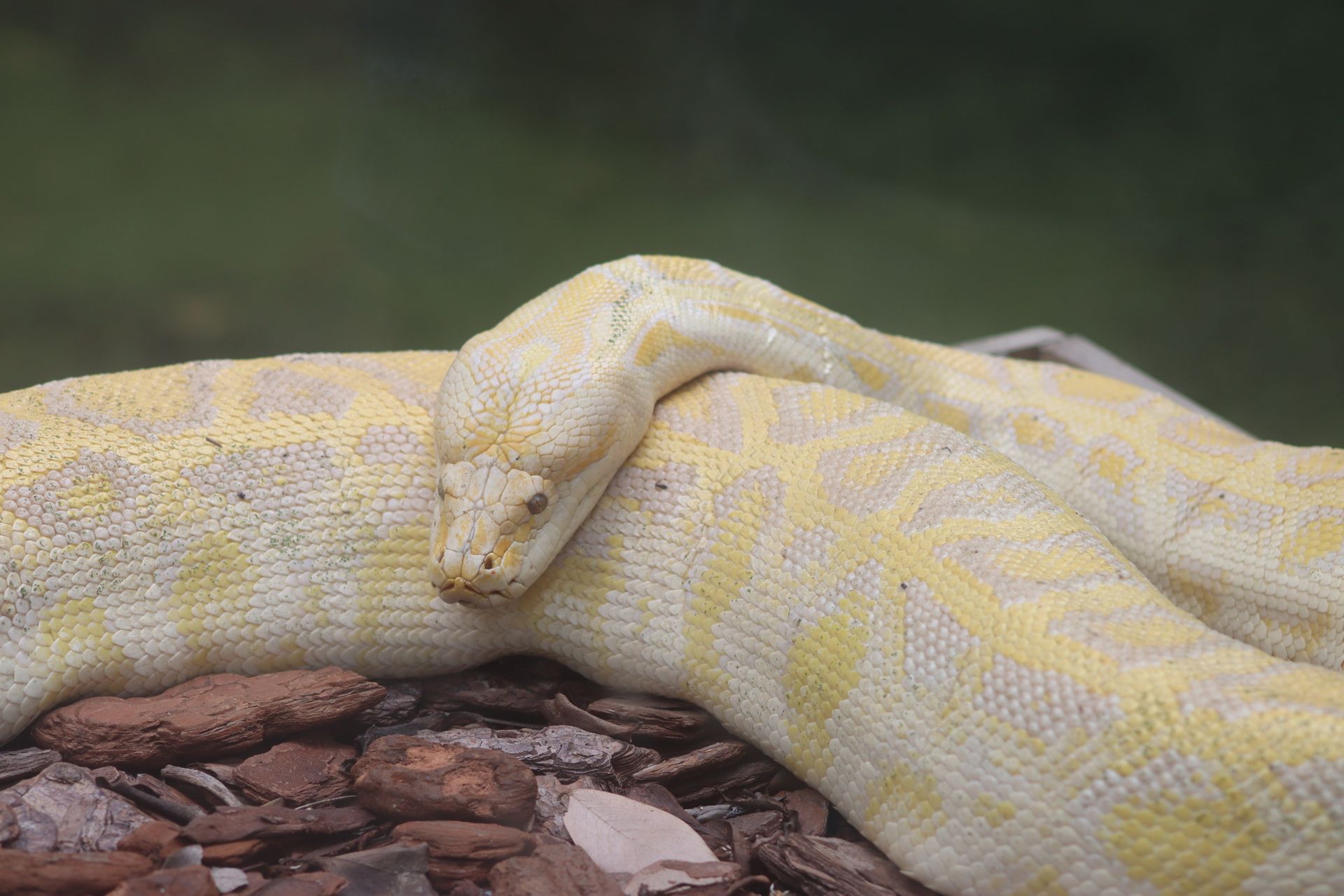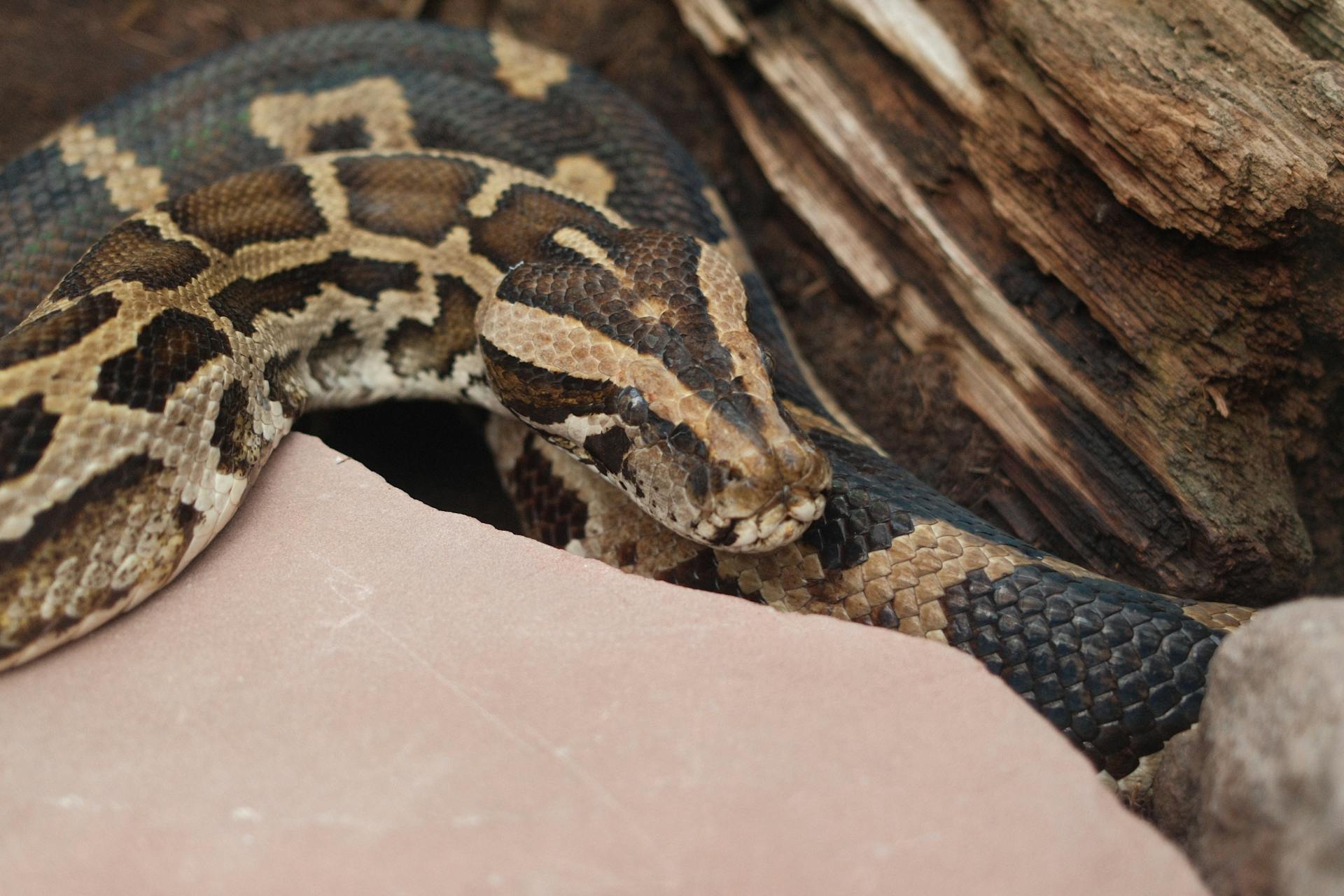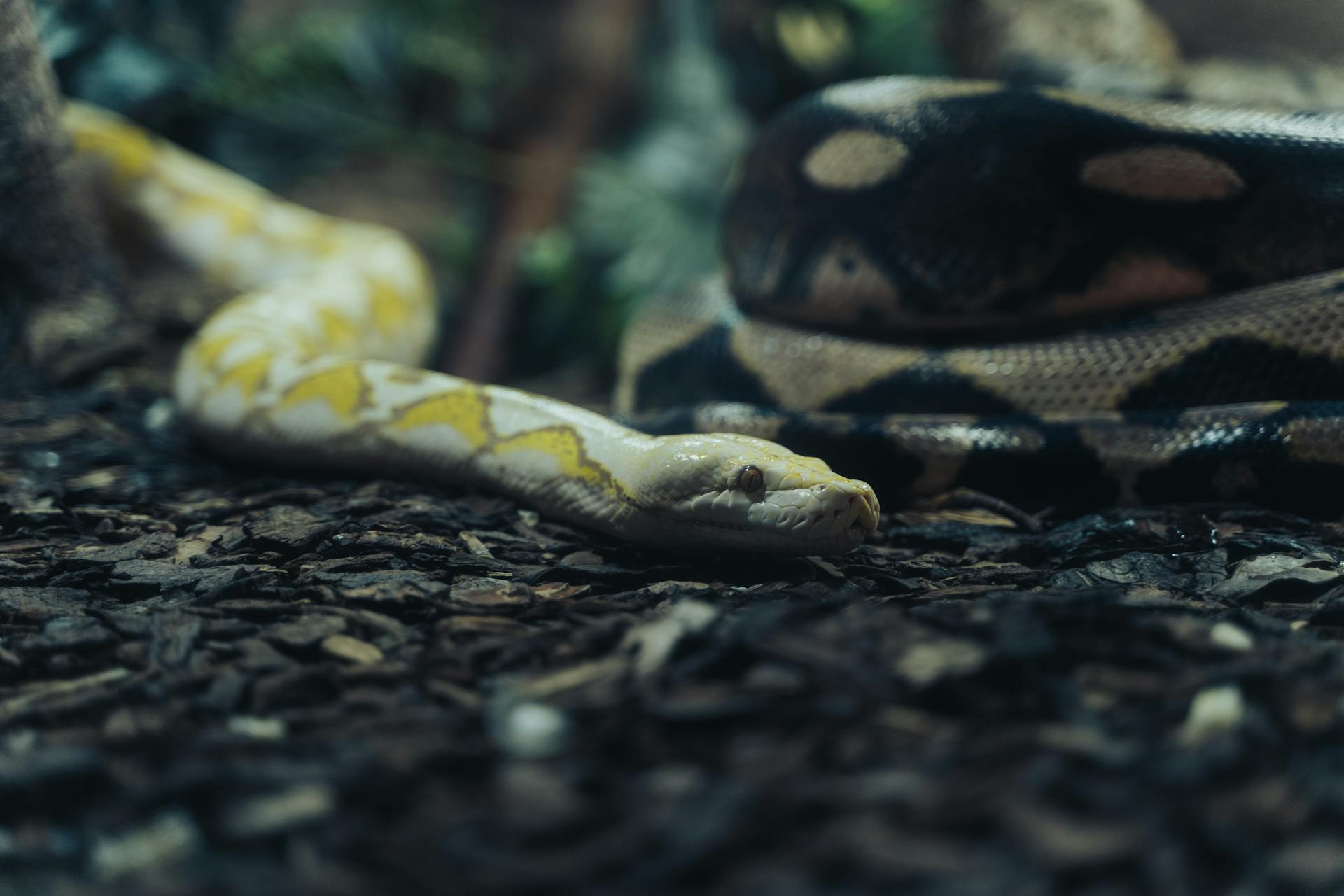
The Burmese python is an invasive species that has taken over parts of Florida, and it's a fascinating story of how they got there. The first recorded sighting of a Burmese python in the wild in Florida was in 1979.
In the early 1980s, a group of people began importing Burmese pythons as exotic pets, often without proper permits or licenses. This led to a significant population of pythons being released into the wild.
The pythons thrived in the warm and humid climate of south Florida, and their population began to grow rapidly. By the 1990s, sightings of Burmese pythons in the wild were becoming more frequent.
How Burmese Pythons Got to Florida
The exotic pet trade played a significant role in introducing Burmese pythons to Florida, with a boom in sales in the 80s and over 100,000 baby pythons imported between 1996 and 2006.
These pythons were often released into the wild as they grew too large for their owners to handle, with many ending up in the Everglades. The state of Florida banned private ownership of invasive reptiles, but by then, the damage was done.
Hurricane Andrew in 1992 also contributed to the python population, destroying a local breeding facility and releasing hundreds of snakes into the surrounding wetlands.
Introduction to the Problem
The exotic pet trade is a billion-dollar industry in the United States, with a history dating back to the 1920s. The sale of Burmese pythons in Florida saw a marked boom in the 80s.
Between 1996 and 2006, upwards of 100,000 baby Burmese pythons were imported into the U.S. Many of these snakes were destined for Florida.
Hurricane Andrew, a category 5 storm, struck southern Florida in August 1992, destroying a local breeding facility and releasing scores of Burmese pythons into the surrounding wetlands.
Native to Southeast Asia, pythons were first brought to the United States as exotic pets. Pythons can grow to such unmanageable sizes that it was inevitable some irresponsible owners would release them into the wild.
It's estimated that tens of thousands, or even hundreds of thousands, of Burmese pythons occupy the Everglades, making it difficult for authorities to conduct surveys.
Risk Assessment
The Burmese python population in the Everglades is a significant concern, with estimates suggesting that there are tens of thousands of them in the wild.
These invasive snakes have no natural predators in the Everglades, which allows their population to grow exponentially.
Their ability to thrive in the Everglades is due in part to the fact that they can eat a wide variety of prey, from small mammals to birds and even alligators.
The Burmese python's diet is so diverse that they can survive on whatever is available in their environment.
Their lack of natural predators, combined with their adaptability and ability to eat a wide variety of prey, makes them a formidable invasive species.
The Florida Fish and Wildlife Conservation Commission estimates that Burmese pythons are responsible for killing hundreds of native animals every year.
The python population's impact on the native ecosystem is a major concern, and efforts are being made to control their numbers and mitigate their effects.
Why Pythons Thrive in the Everglades
The Everglades is a subtropical region with a vast, undisturbed ecosystem that provides the perfect conditions for Burmese pythons to thrive. It's a place where snakes native to the jungles of Southeast Asia fit right in.
Florida's unique geography, with its subtropical climate and vast wetlands, makes it an ideal environment for Burmese pythons to live and breed. The Everglades' infrastructure is barely scratching the surface, allowing pythons to hide and hunt with ease.
Burmese pythons have a finely tuned ambush tactic and a voracious appetite, which allows them to consume a wide variety of prey, including small mammals, birds, and even alligators. In fact, research suggests that a single python can eat up to 72 mice in a single sitting.
Spatial Ecology
The Burmese python's spatial ecology in the Everglades is a fascinating topic. Over 2,000 pythons have been captured since 2005, providing valuable insights into their activity patterns and ecology.
These captures have included hatchling pythons, gravid females, and adults up to 17 ft 6 in (5.3 m) in length. Gut analyses show that pythons consume nearly any bird, mammal, or alligator found in the Everglades, including endangered species like the Key Largo woodrat and wood stork.
Radio telemetry studies have allowed researchers to track the movement patterns of captured and released pythons over extended periods of time. This has revealed that Burmese pythons have navigational map and compass senses, unlike many terrestrial snakes.
In a 2014 study, 12 adult pythons were tracked after being translocated from their initial locations. Five of the six snakes that were displaced 21–36 kilometres (13–22 mi) from their capture sites displayed oriented movement by returning to within 5 kilometres (3 mi) of their original location.
This homing ability is a crucial factor in predicting the future range of the python within the southern US and managing the current population within South Florida.
Success Factors
Burmese pythons have several factors that contribute to their success in the Everglades.
One key advantage is their ability to thrive in a subtropical climate, which is perfect for them. This climate, combined with the vast, undisturbed ecosystem of the Everglades, has provided a haven for the pythons.
Their diverse habitat use allows them to adapt to different environments, giving them a wide range of options for survival. This flexibility is a major factor in their ability to thrive.
Burmese pythons are also excellent swimmers, capable of traveling long distances in water. This makes them well-suited for the aquatic environment of the Everglades.
Their broad dietary preferences mean they can eat a wide variety of prey, from small mammals to birds and other reptiles. This adaptability is a significant advantage in the Everglades.
Pythons have a long lifespan, ranging from 15 to 25 years, which allows them to continue reproducing and expanding their population. This is a major factor in their ability to thrive.
Burmese python hatchlings are larger than those of native species and are less susceptible to predators. This gives them a head start in life and a better chance of survival.
Their high reproductive output means they can produce a large number of offspring, which helps to ensure the survival of their species. This is a significant factor in their ability to thrive in the Everglades.
Burmese Pythons in the Everglades
The Everglades, a vast and unique ecosystem in southern Florida, has become a breeding ground for Burmese pythons. This subtropical region is unapologetically wild, with a climate that is immune to winter.
Burmese pythons were first brought to the United States as exotic pets, and their sale in Florida saw a marked boom in the 1980s. Between 1996 and 2006, upwards of 100,000 baby Burmese pythons were imported into the U.S., many of them destined for Florida.
Hurricane Andrew, a category 5 storm that struck southern Florida in 1992, destroyed a local breeding facility, releasing scores of Burmese pythons directly into the surrounding wetlands. This event likely contributed to the establishment of a reproducing population in the Everglades.
The Everglades' unique geography, with its vast, dense, and unchecked wilderness, has allowed the python population to thrive. The region's subtropical climate and lack of natural predators have created a perfect environment for the pythons to grow and multiply.
Burmese pythons are excellent swimmers and can travel long distances in water, making them ideally suited for the environment of the Everglades. They have also been known to consume a wide variety of prey, including small mammals, birds, and reptiles.
Estimates suggest that there are anywhere from 30,000 to over 300,000 Burmese pythons living in the Everglades, although the exact number is difficult to determine due to the secretive nature of this species.
Efforts to Control the Population
In 2010, the state made python pet ownership illegal.
The state and federal authorities have been working together to eradicate the python population.
The Florida Fish and Wildlife Conservation Commission and the SFWMD introduced the Python Elimination Program in 2017.
This program hires people to hunt the swamps for snakes, paying them minimum wage plus additional fees per foot.
These "python removal agents" have removed almost 4,000 pythons from the wild since the program's inception.
Half of the removed snakes are females, which can lay 50-100 eggs per year.
Every female snake removed from the wild is a step in the right direction, according to Feeney.
The agency is also exploring more aggressive tactics, including canine detection.
They're even considering genetic warfare, which involves editing the genomes of snakes that are then released into the wild.
This could potentially knock back the population, according to Simberloff.
Burmese Pythons in Florida
Burmese pythons have taken over the southern third of Florida, specifically the Everglades, due to the exotic pet trade and Hurricane Andrew in 1992.
The exotic pet trade is a billion-dollar industry in the United States, with a boom in the sale of Burmese pythons in Florida in the 80s.
Between 1996 and 2006, over 100,000 baby Burmese pythons were imported into the U.S., many destined for Florida.
These pythons can grow up to 13 feet long and weigh over 200 pounds, making them difficult for owners to care for.
Pet owners often release their pythons into the wild when they become too large to handle.
Hurricane Andrew destroyed a python breeding facility, releasing scores of pythons into the surrounding wetlands.
The Everglades' subtropical climate and vast, undisturbed ecosystem provide the perfect conditions for pythons to thrive.
Burmese pythons have no natural predators in the Everglades and can eat a wide variety of animals, including small mammals, birds, and reptiles.
In fact, it's estimated that one python needs to eat around 30-72 mice to reach 13 feet in length.
The python population has expanded to cover over 1,000 square miles of the south, primarily in the Everglades ecosystem.
The Florida Fish and Wildlife Conservation Commission and the SFWMD have implemented the Python Elimination Program to remove pythons from the wild.
The program hires people to hunt for snakes and pays them per foot, with some snakes worth hundreds of dollars.
So far, the program has removed almost 4,000 pythons from the wild, but the estimated number of pythons still lurking in the Everglades is likely in the tens of thousands.
The agency is also exploring more aggressive tactics, including genetic warfare, to control the python population.
Frequently Asked Questions
Does Florida still pay a bounty for pythons?
Florida does not have a traditional bounty system for hunting pythons, but it offers incentives and rewards for successful python removals through various programs and events. If you're interested in learning more about these programs, keep reading.
Featured Images: pexels.com