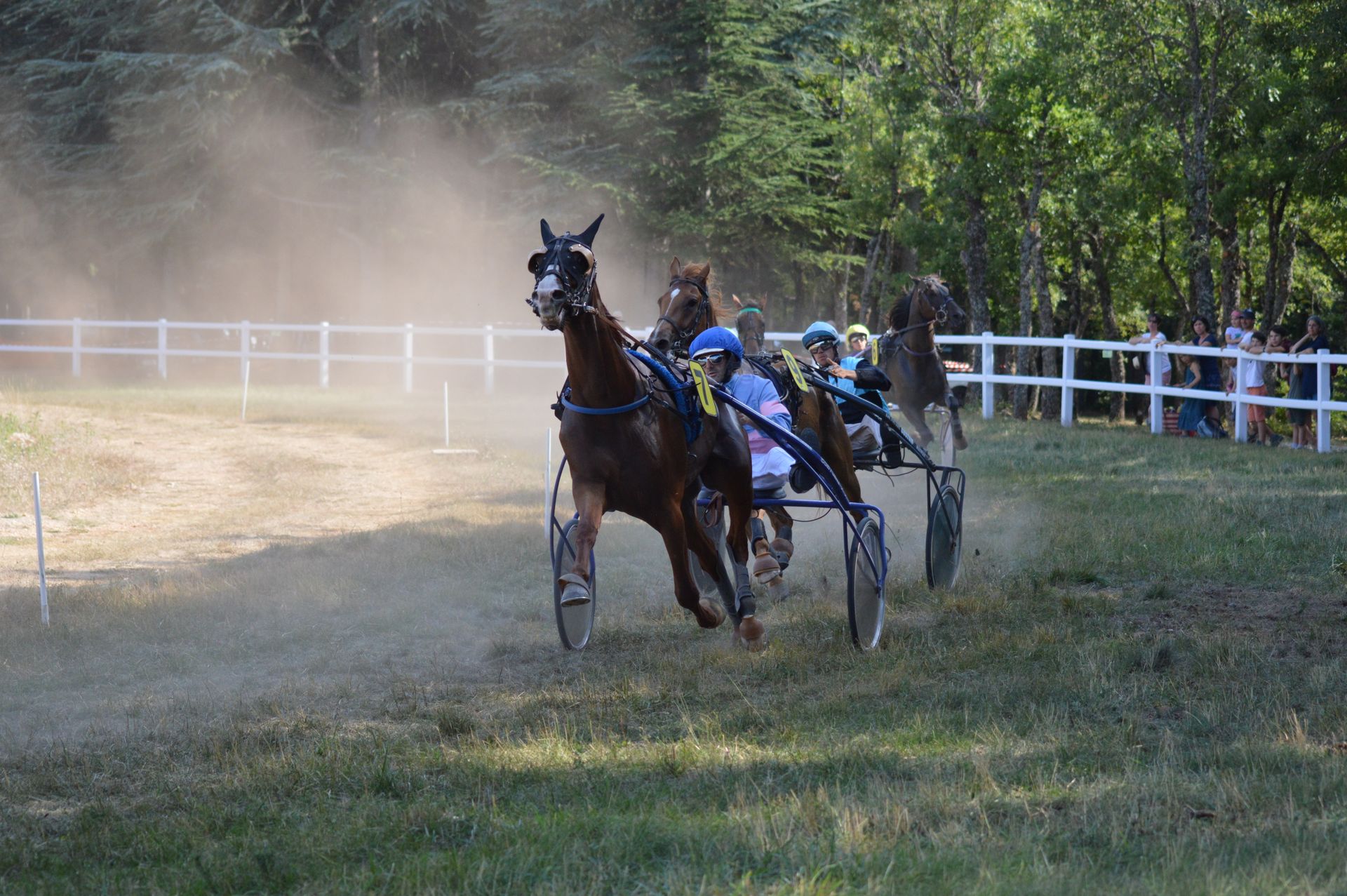
A horse driving harness is a complex system with many intricate parts.
The breastplate is a crucial component that helps distribute the load evenly across the horse's chest.
A well-fitting breastplate can help prevent galls and rubs, ensuring the horse's comfort during long drives.
The belly band is another essential part that helps keep the harness in place. It's usually made of leather or synthetic materials.
A properly adjusted belly band can prevent the harness from shifting during the drive, keeping the horse secure.
The harness's overall fit and adjustment depend on the horse's size, breed, and individual characteristics.
Discover more: Prevent Enteroliths
Harness Components
A horse driving harness consists of various components that work together to enable a horse to pull a carriage or other vehicle. Bridles are a crucial part of the harness, and they come in two main types: riding bridles and harness bridles.
Harness bridles, in particular, are designed to prevent horses from being distracted by activity behind or beside them. They usually include blinders, also called blinkers or winkers, to help keep the horse focused on the road ahead.
The communication component of a harness is typically yellow in color and plays a vital role in communicating with the horse. Here's a breakdown of the main components of a harness:
Parts
A horse's harness is made up of several key components, each serving a specific purpose. The collar is the part that the horse pushes against with its shoulders and chest, and it comes in two main designs: the breast collar harness and the full collar harness.
A horse collar, also known as a full collar, is a padded loop that fits closely around the horse's neck and rests on its shoulders. This type of collar is used for heavier pulling than a breast collar.
Breast collars, on the other hand, are padded straps that run across the front of the horse's chest in lieu of a full collar. They don't require a close fit for each individual horse and should be used with a swingletree at the carriage to avoid rubbing the horse's shoulders during movement.
Hames are required when a full collar is used. These are two metal or wooden strips that take the full force of the pull, padded by the collar, and are strapped on after putting the collar on the horse.
Worth a look: Horse Harness Collar
Here's a quick rundown of the different types of collars:
* Horse collar (full collar): a padded loop that fits closely around the horse's neck and rests on its shoulders.Breast collar: a padded strap that runs across the front of the horse's chest.Hames: two metal or wooden strips that take the full force of the pull, padded by the collar.
A bridle is also an important part of a horse's harness, and it's designed to be slightly different from a riding bridle. Harness bridles usually include blinders to prevent the horse from being distracted or frightened by the carriage or other activity behind or beside it.
What It Does
A harness is a vital tool for horse owners, and understanding its components can make a big difference in how you work with your horse.
The harness is designed to convert a single ZGB breastplate for use with Pairs/4-Up, which means you can use it with different types of horses.

The harness has several components, including the Communication Component, which is typically yellow in color.
The Draft Component, marked in green, is designed to handle the horse's movement and strength.
The Stopping and Backing Component, represented by the color red, helps control the horse's speed and direction.
The Support Component, identified by the color blue, provides additional stability and support for the horse.
You can find specific harness components, like the Biothane Kicking Straps or the Biothane Rear Check Strap, which are designed to work together to create a complete harness system.
Here's a quick rundown of the harness components and their colors:
Girth and Belly-Band
A girth is a strap that goes under the horse's belly and is buckled firmly to the saddle. It's a crucial part of the horse driving harness.
The girth can be part of a fine harness design, known as a surcingle, which combines the girth with a harness saddle. This design is often used in high-end horse driving harnesses.
A belly-band is a strap that goes over the girth, but more loosely under the belly of the horse. It prevents the shafts from rising up, especially on a two-wheeled vehicle.
This is especially important on carts where weight on the rear may tip the front up, making the belly-band a vital component for stability.
Girth and Belly-Band
The girth is a strap that goes under the horse's belly and is buckled firmly to the saddle. It's a crucial part of a horse's harness, and there are different types of girths designed for specific purposes.
A surcingle is a term used within certain fine harness designs to describe the combination of a light girth and harness saddle. This design is meant to provide a more comfortable and elegant ride for both horse and rider.
A belly-band is a strap that goes over the girth, but more loosely under the belly of the horse. It's designed to prevent the shafts from rising up, especially on a two-wheeled vehicle.
The Classic Girth is a soft, padded girth designed for the comfort of the horse. It features 25mm (1") stainless steel buckles and is made to suit Classic Harness designs.
Classic Girth Extenders are straps that buckle into each end of the girth. They're used where a little bit more length is required, and they're 25mm (1") wide.
The Classic False Belly Band feeds through the keepers of the girth and buckles onto the tug straps or Breastplate to Saddle fittings. This design is meant to provide additional support and stability for the horse.
Back Band
The back band is a crucial part of horse harnessing, designed to distribute the weight of the shafts across the horse's back.
It's typically attached to the harness saddle and joins the belly band on both sides of the horse, taking the weight of the shafts in heavy cart harness.
A sliding back band is used in two-wheeled vehicles, allowing the shafts to be fixed to the vehicle and keeping it level.
For your interest: Roach Back
On a side-slope, one shaft will be higher than the other, and the sliding back band helps the horse walk upright without strain on the harness.
In four-wheeled vehicles, a fixed back band is used, especially when the shafts are independently hinged.
This prevents one shaft from riding up higher than the other, ensuring the horse's comfort and safety.
For four-wheeled vehicles with independently hinged shafts, a sliding back band might not be necessary, but it's still an option.
However, if the shafts are hinged together, a sliding back band is needed to allow the horse to walk upright on uneven terrain.
Here are the main types of back bands:
- Sliding back band: used in two-wheeled vehicles and four-wheeled vehicles with hinged shafts.
- Fixed back band: used in four-wheeled vehicles with independently hinged shafts.
Terrets and Crupper
Terrets are metal loops that support the reins and keep them in position. They can be mounted on the saddle or collar. Extra terrets may be attached to the rear horse's harness, especially when one horse is hitched in front of another.
Terrets come in different types, including single, double, and waterhook designs. They're available in silver and gold colors, and can be used with 3/32" or 1/8" wide reins.
Here's a breakdown of the different types of terrets available:
Terrets

Terrets are metal loops through which reins pass, and they're usually mounted on the saddle or collar to support the reins and keep them in position.
Terrets can be attached to the rear horse's harness if one horse is hitched in front of another, allowing for the lines to be run to the horse ahead.
You can find terrets in various sizes, including 3/32" and 1/8" widths.
For 3/32" straps, you can choose from silver or gold-colored terrets, including single, double, and waterhook designs.
Here's a breakdown of the available options for 3/32" terrets:
For 1/8" straps, you can also choose from silver or gold-colored terrets, including single, double, and waterhook designs.
Here's a breakdown of the available options for 1/8" terrets:
Crupper
A crupper is a soft padded loop that goes under the base of the tail. It's attached to the back strap, which runs across the back and is attached to the top-rear of the saddle. This setup keeps the saddle from slipping forward. The crupper works in conjunction with the back strap to provide stability.
Rear Section

The rear section of a horse's harness is a crucial part. It's designed to hold the traces up off the ground so the horse doesn't get a leg over one.
Having the traces elevated is especially important when a horse is hitched in front of another, as it prevents the lines from getting tangled or caught. This is why extra terrets are often attached to the rear horse's harness to support the lines.
A crupper is also a key component of the rear section, providing a soft padded loop that goes under the base of the tail and is attached to the back strap. This keeps the saddle from slipping forward.
In some cases, a Biothane Rear Check Strap is used to convert a single ZGB breastplate for use with pairs or four-up. This strap is designed to fit through the slots on the side of the breastplate.
Harness Attachments
Harness attachments are a crucial part of a horse driving harness. They come in various forms, such as chain snaps and biothane straps.
Biothane straps, for example, are used for decoration on working harness, particularly with horse brasses, which are ornamental brass plaques mounted on leather straps. They're also used as a Biothane Tie Strap or a Biothane Rear Check Strap, designed for specific harness configurations.
Chain snaps, on the other hand, are used for attachment to hames on a harness, and come in two sizes: 5 3/16" and 3 3/4".
Bearing Rein
A bearing rein is a strap system that attaches to the harness saddle and goes to the top of the horse's head and downward to attach to a bit.
In English carriage harness, a bearing rein or side check travels through rings near the horse's ears and attaches to the bit. This is common in harness racing and fine harness showing.
Properly adjusted bearing reins and overchecks give the horse ample freedom of his head while prohibiting a horse from reaching to eat grass or scratching sweaty bridles on anything within reach.
Overchecks are sometimes used to attain a high head carriage; extremely high settings are considered abusive.
The primary names of these straps are bearing rein and side check (UK), overcheck (USA), but also check rein, overhead check, and overdraw.
Horse Brasses
Horse brasses are ornamental brass plaques mounted on leather straps, used for decoration, especially on working harness. They're made in a wide range of designs.
Horse brasses can be used to add a touch of personality to a horse's harness, making it stand out at shows or events. They're a great way to express your personal style and flair.
Some horse brasses are designed to match specific breeds or disciplines, such as carriage driving or horse riding.
Carriage or Van
When working with carriage or van harnesses, it's essential to consider the type of load you're pulling. A carriage or van harness is designed for lighter loads, such as buggies or carts.
These harnesses are typically lighter in weight but still strong, similar to a show harness. The traces attach either to the shafts of the vehicle or directly to the vehicle itself.
A horse collar or a breast collar may be used in a carriage or van harness, depending on the design.
Cart or Wagon
When it comes to carts or wagons, the harness is designed to handle heavier loads. A horse collar is always included in the harness for pulling these vehicles.
The traces are often made of chain and attach to loops on the shafts of the vehicle. This setup allows for a secure and stable connection.
Chain traces can be passed over the saddle to carry the weight of the vehicle. This helps distribute the load more evenly.
Reins are typically made of rope or leather, depending on the region of the world.
Plow
Plow harnesses are a type of harness used for dragging loads such as plows, harrows, canal boats, or logs.
There are two main types of plow harnesses: the New England D-Ring and the Western harness. The New England D-Ring is designed to maintain a ninety degree angle at the junction of the front trace and the hames, regardless of the height of the implement being pulled.
The New England D-Ring features a metal D-shaped ring, which provides flexibility. I've seen this type of harness in action, and it's impressive how it can handle different loads and terrain.
The Western harness, on the other hand, doesn't provide the same flexibility as the New England D-Ring, but it has its own advantages. It includes a strap that runs from the breeching to the collar, which helps prevent the pull from riding up and hitting the horses in the face when descending a steep incline.
Here are some examples of plow harnesses and their uses:
- New England D-Ring
- Western harness
These harnesses are often used in various settings, including:
- Logging
- Work horse harnesses
- Working horse in harness
Kicking Straps
Kicking Straps are a type of harness attachment designed for horses.
They come in different materials, such as Biothane, which is a durable and water-resistant material.
The Draft Size Kicking Strap, made with Biothane and stainless steel hardware, is a specific example of a kicking strap.
This type of strap is designed to be attached to the horse's harness and can help prevent kicking behavior.
Buckle Trace Coupler
A Buckle Trace Coupler is a handy attachment that combines the buckle and dee in one unit, reducing weight and making it ideal for short connections. This is particularly useful when you need to attach a harness to a vehicle.
The Buckle Combo Trace Coupler, as it's also known, is designed to be versatile and adjustable. It's a great option when you want to streamline your harness setup.
By combining the buckle and dee, this coupler eliminates the need for separate components, making it a convenient choice for many users.
Rear Check Strap
A rear check strap is designed to convert a single ZGB breastplate for use with Pairs/4-Up. It fits through the slots on the side of the breastplate.
Its purpose is to hold the traces up off the ground, preventing the horse from getting a leg over one. This is especially important when working with horses in certain situations.
The rear check strap is also used to slow or stop a wheeled vehicle, or "hold back" the vehicle against gravity when going downhill. This is a crucial safety feature when working with horses and vehicles.
Sidebacker - Rear
The Sidebacker - Rear is a versatile attachment designed to secure your harness in place.
You can choose from a pair of Sidebackers, which come in a long version that adjusts to fit your needs.
The long version of the Sidebacker - Rear adjusts to a range of 19"-28".
Stainless steel hardware is used in the construction of the Sidebacker - Rear, ensuring durability and resistance to corrosion.
Stainless Steel Chain Snap
The Stainless Steel Chain Snap is a vital component for attaching a harness to hames. It's designed to snap onto the breast chains of a harness.
You have two size options to choose from, 5 3/16" or 3 3/4", so make sure to pick the one that fits your needs.
Harness Accessories
When working with a horse driving harness, you'll want to ensure that all the parts are securely attached. A key component of this is the harness accessories.
Biothane tie straps are a popular choice for securing harness parts together. They come in a variety of sizes, including a draft size, and are often paired with stainless steel hardware for added durability.
You might enjoy: Dog Lead Parts
For a secure fit, it's essential to choose the right size of tie strap. In the case of a draft size Biothane tie strap, it's designed to accommodate larger harnesses.
Stainless steel hardware is often used in conjunction with Biothane tie straps due to its strength and resistance to corrosion. This makes it an ideal choice for harnesses that will be exposed to the elements.
Harness Sizes and Types
Harness sizes and types can be overwhelming, but understanding the basics will make it easier to choose the right one for your horse.
A cart harness is typically the most common type, used for driving a cart or carriage.
There are four main types of cart harnesses: single, double, tandem, and four-in-hand.
For another approach, see: Different Types of Horse Breeds
Show
Show harnesses for light cart driving have a breast collar instead of a horse collar and are made with strong but refined-looking leather throughout, usually black and highly polished.
In draft horse showing and combined driving, horse collars are seen, but harness leather is still highly polished and well-finished.
Show harnesses are designed for a specific purpose and have distinct features that set them apart from other types of harnesses.
Their refined-looking leather and polished finish make them a stylish choice for light cart driving.
Racing
Racing harnesses are typically breast collar harnesses, used with a lightweight two-wheeled cart called a sulky.
Horses may be raced with a standing martingale and an overcheck, which are common features in most race harnesses.
Some horses are raced in a "blind" bridle, which restricts their vision to varying degrees with the use of blinkers.
Racing in an "open" bridle is also possible, where the horse is not restricted by blinkers.
Draft Size
When choosing a harness, the draft size is an important consideration. The Biothane Shaft Loop Set - Draft Size comes in a plain version with stainless steel hardware.
You'll need 2 shaft loops, 2 billets, and 1 shaft loop belly band for this size.
Explore further: Draft Horses
Classic Harness
The Classic Harness is designed with comfort in mind, featuring a soft, padded girth.
This girth is equipped with 25mm (1") stainless steel buckles for durability and ease of use.
The Classic Harness is a popular choice for horse owners, and it's clear why - its padded design ensures a comfortable fit for the horse.
The girth is made to suit the Classic Harness, with a focus on providing a secure and comfortable fit.
You'll find 25mm (1") stainless steel buckles on the girth, a great feature for those who value durability and ease of use.
Classic Saddle Connecting Straps are also a key part of the Classic Harness, designed to loop onto the saddle dee and secure the shaft loops/tugs in place.
These straps are made to suit Classic harness saddles, making them a great addition to your driving harness setup.
The Classic Harness is a well-designed system, with each component working together to provide a comfortable and secure ride for the horse.
Frequently Asked Questions
What are the traces on a harness?
The traces on a harness are leather straps that run from the hames to the load, connecting the horse to the carriage or wagon. They are a crucial part of the harness, typically connecting directly to the load on an express harness for a single horse.
What are the tugs on a horse harness?
The tugs on a horse harness are called shaft tugs, which connect the shafts to the saddle. They transmit the force of the shafts to the saddle, allowing the harness to function properly.
Featured Images: pexels.com