Bird droppings might look harmless, but they can pose serious health risks to humans and animals. Exposure to bird droppings can lead to histoplasmosis, a fungal infection that affects the lungs.
Histoplasmosis is caused by inhaling spores of a fungus called Histoplasma capsulatum, which grows in bird droppings. This fungus thrives in warm, moist environments.
Bird droppings can also contain bacteria like E. coli and Salmonella, which can cause a range of illnesses, from mild stomach cramps to life-threatening infections.
Suggestion: Bird Droppings
Health Hazards
Bird droppings may seem harmless, but they can pose serious health risks.
Cryptococcosis is a disease caused by a fungus found in bird droppings associated with soil. It's most common in individuals with compromised immune systems.
Symptoms of cryptococcosis include meningitis, severe headache, mental disturbances, fever, blurred vision, and cough.
Histoplasmosis is another disease associated with bird droppings, and it's also caused by a fungus.
The majority of individuals who acquire histoplasmosis have no symptoms, but when symptoms do occur, they can vary widely.
Explore further: Boston Terrier Brain Tumor Symptoms
Histoplasmosis can be characterized by respiratory symptoms, general malaise, fever, chest pains, and a dry, non-productive cough.
Psittacosis is a bacterial disease found only in bird droppings and secretions. It's not associated with bats or soil.
Symptoms of psittacosis may include a low-grade fever that often becomes worse as the disease progresses, anorexia, sore throat, light sensitivity, and a severe headache.
You might like: Ferret Distemper Symptoms
Prevention and Control
To protect yourself from diseases caused by birds, it's essential to be aware of the risks posed by exposure to fowl droppings.
Wearing proper protective clothing, including gloves, a face mask, and long sleeves, can help prevent the spread of disease if you must go into an area with a lot of bird feces.
Cleaning up any bird fecal matter immediately and washing your hands thoroughly after coming into contact with them is crucial to prevent the spread of disease.
Here are some simple steps you can take to protect yourself:
- Wash your hands thoroughly with soap and water after coming into contact with birds or their droppings
- Avoid touching your face, mouth, or eyes after coming into contact with birds or their droppings
- Clean and disinfect any surfaces that come into contact with birds or their droppings
- Wear gloves and a mask when cleaning up droppings
If you've been exposed to the droppings and have developed symptoms of illness, consult with a doctor as soon as possible for early diagnosis and treatment.
How to Protect Yourself?
Protecting yourself from diseases caused by birds is crucial, especially when dealing with their droppings. You should always wear non-latex type rubber gloves when cleaning up droppings, and mix a disinfectant solution of 1 part bleach to 10 parts water to thoroughly soak them.
When cleaning up a small amount of droppings in a localized area, be sure to wear gloves and use a spray bottle or pesticide application sprayer to soak the droppings with the disinfectant solution. This will help prevent the spread of disease.
To protect yourself from diseases caused by birds, it's essential to avoid touching your face, mouth, or eyes after coming into contact with birds or their droppings. This is a simple yet effective way to prevent the spread of disease.
If you must go into an area with a lot of bird feces, wear proper protective clothing including gloves, a face mask, and long sleeves. This will help prevent you from coming into contact with the droppings.
Explore further: How to Prevent Diabetes in Dogs
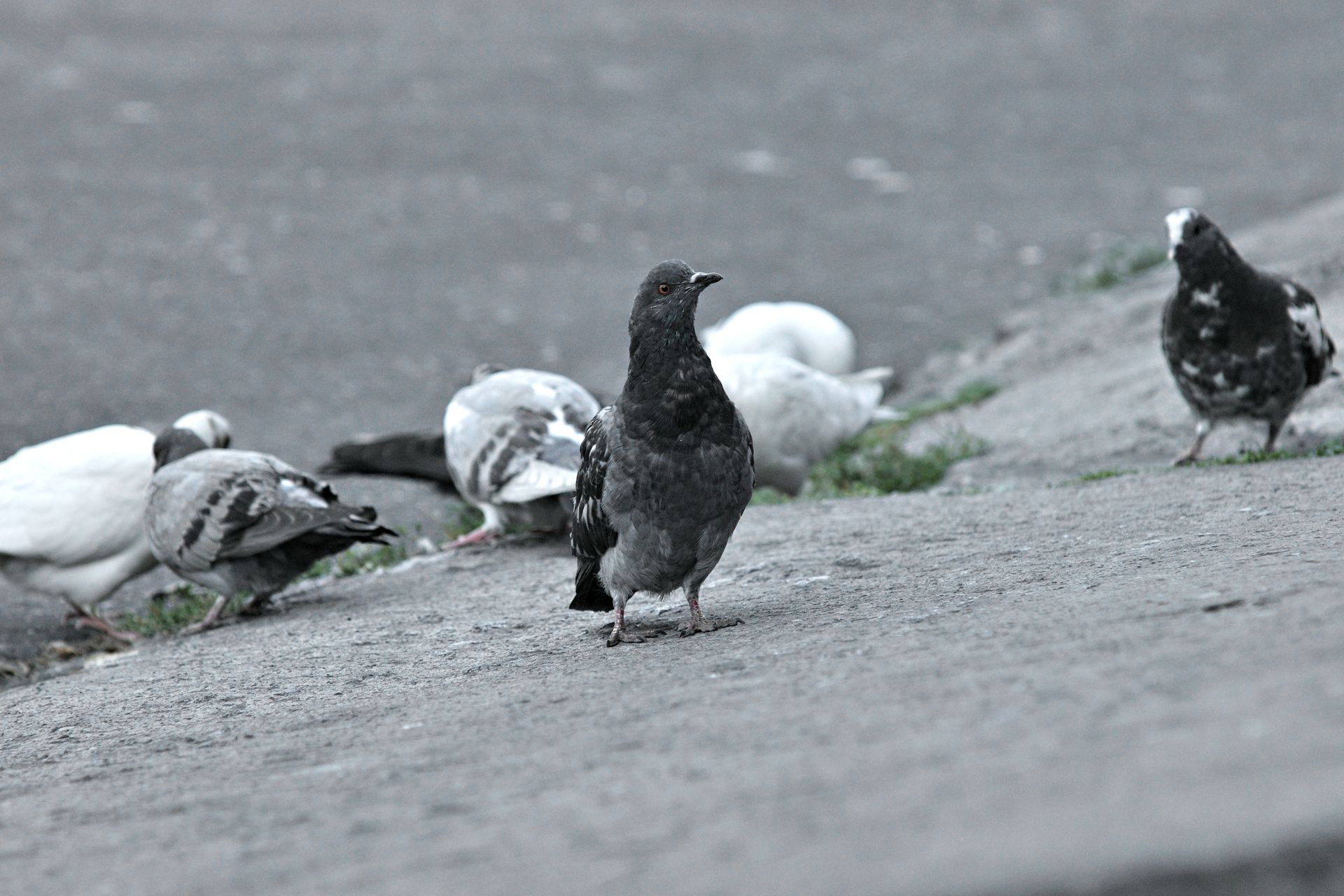
Here are some simple steps to protect yourself from diseases caused by birds:
- Wash your hands thoroughly with soap and water after coming into contact with birds or their droppings
- Avoid touching your face, mouth, or eyes after coming into contact with birds or their droppings
- Clean and disinfect any surfaces that come into contact with birds or their droppings
- Wear gloves and a mask when cleaning up droppings
By following these simple guidelines, you can protect yourself from the diseases mentioned above. If you have developed symptoms of illness after exposure, be sure to consult with a doctor as soon as possible.
Bird and Bat Control
Birds often roost in protected areas, such as entryways, where their droppings become an unsightly problem. If a colony of bats or a flock of birds is allowed to live in a building, their droppings will accumulate and create a health risk for anyone who enters the roosting area and disturbs the material.
Birds and bats can be excluded from indoor roosts and breeding places by blocking their access to these areas. This can be done by screening or plugging their entryways in enclosed areas.
Blocking entryways is a crucial step in preventing bird and bat control problems. It's essential to avoid any measures that might harm or kill birds or bats unnecessarily.
Birds and bats can be deterred from roosting in open areas using "porcupine" wire, which is made up of sharp, metal prongs attached to the roosting area.
For your interest: Diseases from Birds and Bird Droppings
Cleanup and Disposal
Cleanup and Disposal is a crucial step in dealing with bird droppings. You'll need to double bag the droppings and any associated soil in 3 mil or thicker plastic bags.
To prevent any potential health risks, close the bags securely and place them in a cardboard container. Contact the Director of Environmental Management before disposing of them in a trash dumpster.
If the droppings have been proven to contain Cryptococcus neoformans and/or Histoplasma capsulatum, they will be incinerated through the bio-hazardous waste disposal company.
For more insights, see: Bird Droppings Identification
Cleanup and Control
The department in charge of an area is responsible for all cleanup and bird/bat control measures.
This means they need to take care of any mess before maintenance personnel can enter the space. In fact, maintenance personnel aren't required to do the cleanup unless they're going to use the area.
The department assigned to a space should clean up and control bird and bat droppings before maintenance can enter. This is a crucial step to ensure a safe working environment.
If a large amount of droppings are present, the department is responsible for cleanup and control measures, not the maintenance personnel.
Check this out: Dog Illness Bay Area
Disposal
Disposal is a crucial step in the cleanup process, and it's essential to follow the proper procedures to ensure a safe and environmentally friendly disposal.
Double bag the droppings and any associated soil in 3 mil or thicker plastic bags, close the bags securely, and place them in a cardboard container.
Before disposing of the bags in a trash dumpster, contact the Director of Environmental Management for approval. This is a necessary step to ensure that the disposal process is handled correctly.
If the droppings have been proven to contain Cryptococcus neoformans and/or Histoplasma capsulatum, they will be incinerated through a bio-hazardous waste disposal company.
Do not place the bags in a dumpster without first placing them in a cardboard box to prevent damage during handling. This simple precaution can help prevent the release of potentially infectious contents.
You might enjoy: How to Prevent Twisted Stomach in Dogs
Public Safety
Protecting yourself from diseases caused by birds is a top priority. Most diseases can be treated, but some can be deadly, so it's essential to be aware of the risks.
If you must enter an area with a lot of bird feces, wear proper protective clothing, including gloves, a face mask, and long sleeves. This simple precaution can go a long way in preventing disease.
To prevent the spread of disease, clean up any bird fecal matter you come into contact with immediately. This will help prevent the spread of disease.
Washing your hands thoroughly with soap and water after coming into contact with birds or their droppings is crucial. This simple habit can help prevent the spread of disease.
Here are some essential steps to take to protect yourself from diseases caused by birds:
- Wash your hands thoroughly with soap and water after coming into contact with birds or their droppings
- Avoid touching your face, mouth, or eyes after coming into contact with birds or their droppings
- Clean and disinfect any surfaces that come into contact with birds or their droppings
- Wear gloves and a mask when cleaning up droppings
Early diagnosis and treatment are paramount for the most serious diseases caused by birds. If you have developed symptoms of illness after exposure, consult with a doctor as soon as possible.
Diseases and Risks
Bird droppings may look harmless, but they can harbor some serious diseases. Cryptococcosis, a fungal infection, can be caused by exposure to bird feces, particularly in pigeons and doves.
The symptoms of cryptococcosis include headache, fever, and chest pain, which can progress to meningitis in severe cases. Treatment typically involves a course of antifungal medication, and in severe cases, hospitalization may be necessary.
Avian influenza, on the other hand, is a viral infection that can be transmitted to humans through contact with an infected bird. Symptoms include fever, headache, and muscle aches, and in some cases, it can lead to pneumonia.
Bird droppings can also be a breeding ground for mosquitoes that carry diseases like West Nile Virus and St. Louis Encephalitis. These viruses can be transmitted to humans through mosquito bites, and symptoms include headache, fever, and muscle aches, which can be severe and even life-threatening.
To avoid these health hazards, it's essential to practice good hygiene and avoid contact with bird droppings whenever possible. If you do come into contact with bird fecal matter, be sure to wash your hands thoroughly with soap and water.
Take a look at this: Mini Pinscher Food to Avoid
Cryptococcosis
Cryptococcosis is a fungal infection that can be caused by exposure to bird feces. It's most commonly found in pigeons and doves, but can also be found in other birds.
The disease starts as pulmonary and then starts affecting the central nervous system. This can lead to some serious symptoms.
Symptoms of cryptococcosis include headache, fever, and chest pain. In severe cases, cryptococcosis can lead to meningitis, which is inflammation of the brain.
Treatment for cryptococcosis usually involves a course of antifungal medication. In some cases, hospitalization may be necessary to ensure proper treatment and recovery.
Check this out: Tracheal Collapse Natural Treatment
Diseases and Risks
Bird droppings may seem harmless, but they can harbor some serious diseases. Psittacosis, a bacterial infection, can be caused by exposure to bird fecal matter, especially from parrots and other birds kept as pets.
Symptoms of psittacosis include headache, fever, and chest pain, and in some cases, it can lead to pneumonia. Treatment usually involves a course of antibiotics, and in severe cases, hospitalization may be necessary.
West Nile Virus and St. Louis Encephalitis are two viral infections that can be transmitted to humans through the bite of an infected mosquito, which has previously come into contact with contaminated bird droppings. These viruses can cause severe symptoms, including headache, fever, and muscle aches, and in some cases, can lead to coma or even death.
There is no specific treatment for West Nile Virus and St. Louis Encephalitis, so treatment focuses on relieving symptoms and supporting the patient through the illness. In severe cases, hospitalization may be necessary.
To avoid contracting these diseases, it's essential to practice good hygiene and avoid contact with bird droppings whenever possible. If you do come into contact with bird fecal matter, be sure to wash your hands thoroughly with soap and water.
A different take: West Highland Scottish Terrier
Removal and Procedures
Removing bird infestations requires a multi-step approach.
First, it's essential to remove any bird nests on your property as soon as possible to prevent attracting more birds and increasing the risk of disease.
Leaving bird nests on your property can lead to a severe infestation, making it necessary to hire a professional to remove birds, especially if the infestation is severe.
To remove birds, you can try hazing, which involves using loud noises or water hoses to scare them away.
Bird Infestation Removal
Removing birds from your property can be a challenge, but it's essential to do so to prevent disease outbreaks. Leaving bird nests on your property can attract more birds and increase the risk of disease.
Hazing is a simple and effective way to scare birds away using loud noises or water hoses. You can also try habitat modification by making changes to the environment that make it less attractive to birds.
Exclusion is another method that involves using physical barriers to keep birds from entering the area. This can be an effective solution, especially if you have a small infestation.
In some cases, it may be necessary to hire a professional to remove birds from your property, especially if the infestation is severe.
Curious to learn more? Check out: Swim Bladder Disease
Waste Removal Procedures
Waste removal procedures are crucial to prevent the spread of pathogens and damage to surfaces. It's essential to saturate droppings with water before removal to prevent debris and pathogens from becoming airborne.
You might like: How to Avoid Ivdd in Dachshunds

Saturating droppings with water can be done using a low-velocity mist spray. This is a more effective method than using high pressure or a concentrated stream, which can scatter the droppings before they're adequately wetted.
Hosing can be used for removing small amounts of recently deposited droppings from sidewalks and pavement. A portable, hand pressurized sprayer is also suitable for applying limited amounts of water.
The tools you use are just as important as the method. When working with historic or sensitive structures, only use nonmetallic tools, such as plastic spatulas and brushes with natural fiber or nylon bristles. Coarse wire brushes can easily damage building surfaces and should be avoided.
Here's a quick rundown of the tools you should and shouldn't use:
- Use: nonmetallic tools (plastic spatulas and brushes with natural fiber or nylon bristles)
- Avoid: coarse wire brushes
Frequently Asked Questions
Should I wear a mask when cleaning bird poop?
Wearing a mask is recommended when cleaning bird poop to minimize the risk of inhaling particles.
Featured Images: pexels.com