As a pet owner, you're likely no stranger to the joys of bird ownership - but also the not-so-joyful task of cleaning up after them. If you're new to bird parenthood, or just need a refresher, this guide is for you.
The color of bird droppings can be a dead giveaway as to what type of bird you're dealing with. If you've got a parrot, for example, you can expect to see green droppings.
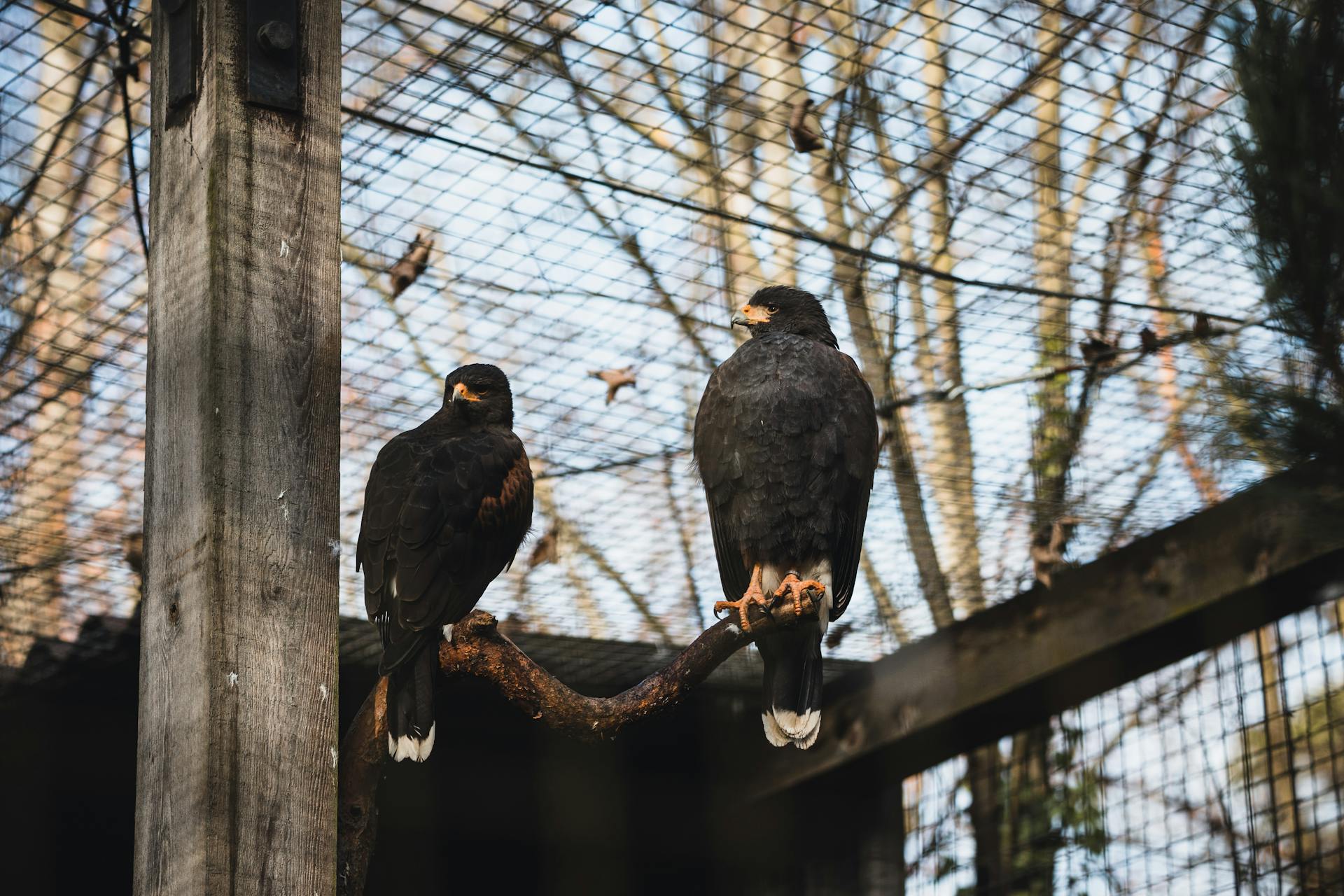
Birds of prey, like hawks and owls, tend to have a more solid, dark-colored dropping. This is because their diet consists mainly of meat, which is harder to digest than plant matter.
Some bird droppings can be mistaken for other substances, like mud or even paint. But if you take a closer look, you'll often notice a distinctive greenish tint.
On a similar theme: Diseases from Birds and Bird Droppings
Understanding Bird Droppings
Understanding bird droppings is crucial for any bird owner. Knowing what's normal and what's not can help you identify potential health issues in your feathered friend.
A normal bird dropping consists of three components: the fecal (or stool) component, the urate or solid urine component, and clear liquid urine. The fecal component is usually green or brown, and its color may vary depending on the type of food your bird is eating.
To become familiar with your bird's normal droppings, pay attention to the color, texture, and consistency of both the fecal and urate components. Note the presence or absence of clear liquid urine. This will help you identify any deviations from normal.
Here are some common signs of abnormal droppings in birds:
- Decrease or increase in the number of droppings
- Change in color or texture of either the fecal component or the urate component
- "Bubbly" looking droppings
- Increase in the watery or liquid component (called polyuria or too much urine)
- The presence of blood
- Pea soup consistency of the feces
- Large volumes of clear liquid in the droppings
What Are the Components of a Dropping?
Bird droppings may seem like a mysterious and unappealing topic, but understanding their components is crucial for a bird's health and wellness.
The first component of a normal dropping is the fecal part, which is the green or brown solid part. This part can vary in color depending on the type of food being fed to the bird.
Birds conserve water by producing a solid urate component to their dropping, which is usually white and composed of uric acid crystals. This component is often the second part of a dropping.
Clear liquid urine is the third component of a dropping, and it's essential for owners to recognize this part as it provides important clues to a bird's illness or wellness.
Causes of Abnormal Droppings
If you notice any changes in your bird's droppings, it's essential to consider the possible causes. Abnormal droppings can be influenced by diet, such as consuming a lot of fresh fruit, which can result in a large amount of urine.
Some birds may produce blue or purple droppings if they've eaten blueberries. Fresh fruit like apples, watermelon, peaches, or grapes can also cause an increase in urine.
Intestinal diseases, liver diseases, bacterial or viral infections, and parasitic infections can all affect the fecal component of droppings. Chlamydiosis, or parrot fever, may produce lime-green droppings in some birds.
Related reading: Bird Droppings
Excess urine in the droppings can be an indication of kidney disease if the fruit intake has been minimal over the last 24 hours. Some toxins can cause kidney damage with the first symptom being watery stools.
Heavy metal poisoning, often caused by lead, can produce red or black droppings due to the presence of blood in the urine or stool.
Readers also liked: Health Hazards of Bird Droppings
Prevention and Treatment
If you observe changes in your bird's droppings, consult your veterinarian right away. Some conditions can be life-threatening if left untreated.
Consenting to recommended tests is critical for your veterinarian to diagnose and treat your bird correctly. Many cases have multiple factors causing abnormal droppings, so several tests may be run.
It's common for an avian veterinarian to run several tests to determine the cause of abnormal droppings, so be prepared for a thorough examination.
Treating My Bird
If you notice any changes in your bird's droppings, it's essential to consult your veterinarian promptly. Time is of the essence, as some conditions can be life-threatening if left untreated.
Your veterinarian may run several tests to determine the cause of the abnormal droppings, as many cases have more than one factor contributing to the issue. This is why it's crucial to consent to the recommended tests for an accurate diagnosis and treatment.
Abnormal droppings can be caused by various factors, including diet, intestinal diseases, liver diseases, bacterial or viral infections, and parasitic infections. Consuming a lot of fresh fruit, for example, can result in a large amount of urine in the droppings.
Some common signs of abnormal droppings include a decrease or increase in the number of droppings, changes in color or texture, and the presence of blood. True diarrhea may occur in several types of life-threatening conditions in birds, but a more common sign is polyuria, or too much urine being expelled.
Here are some common causes of abnormal droppings:
With proper treatment and care, many birds with abnormal droppings can be successfully treated once the cause is determined.
Precautions to Prevent Exposure
When dealing with areas contaminated with droppings, it's essential to take precautions to prevent exposure. Always wear non-latex type rubber gloves when handling droppings.
To effectively disinfect contaminated areas, mix a solution of 1 part bleach to 10 parts water. This solution can be used to thoroughly soak the droppings.
Clean the droppings with a mop, sponge, or rag that has been soaked in the disinfectant solution. Dispose of the contaminated material in a plastic bag and seal it in a second plastic bag.
If you're dealing with a large area contaminated with droppings, it's crucial to take additional precautions. Prior to entering the area, wear a NIOSH-approved respirator with HEPA filter cartridges, non-latex rubber gloves, eye protection, disposable coveralls, and shoe coverings or washable clothing with rubber boots.
Here's a step-by-step guide to safely cleaning contaminated areas:
- Wear non-latex type rubber gloves.
- Mix a disinfectant solution of 1 part bleach to 10 parts water.
- Thoroughly soak the droppings with the disinfectant solution.
- Clean the droppings with a mop, sponge, or rag that has been soaked in the disinfectant solution.
- Dispose of the contaminated material in a plastic bag and seal it in a second plastic bag.
- Disinfect or throw away the gloves that were used.
- Wash hands thoroughly with soap and warm water.
Frequently Asked Questions
Is there an app for bird poop identification?
Yes, the British Trust for Ornithology has developed an app that helps identify bird species through analysis of their droppings. This innovative app uses advanced technology to aid in species identification.
Should I wear a mask when cleaning bird poop?
Wearing a mask is recommended when cleaning bird poop to minimize the risk of inhaling particles. This precaution is especially important when dry sweeping or handling dried bird droppings.
Featured Images: pexels.com