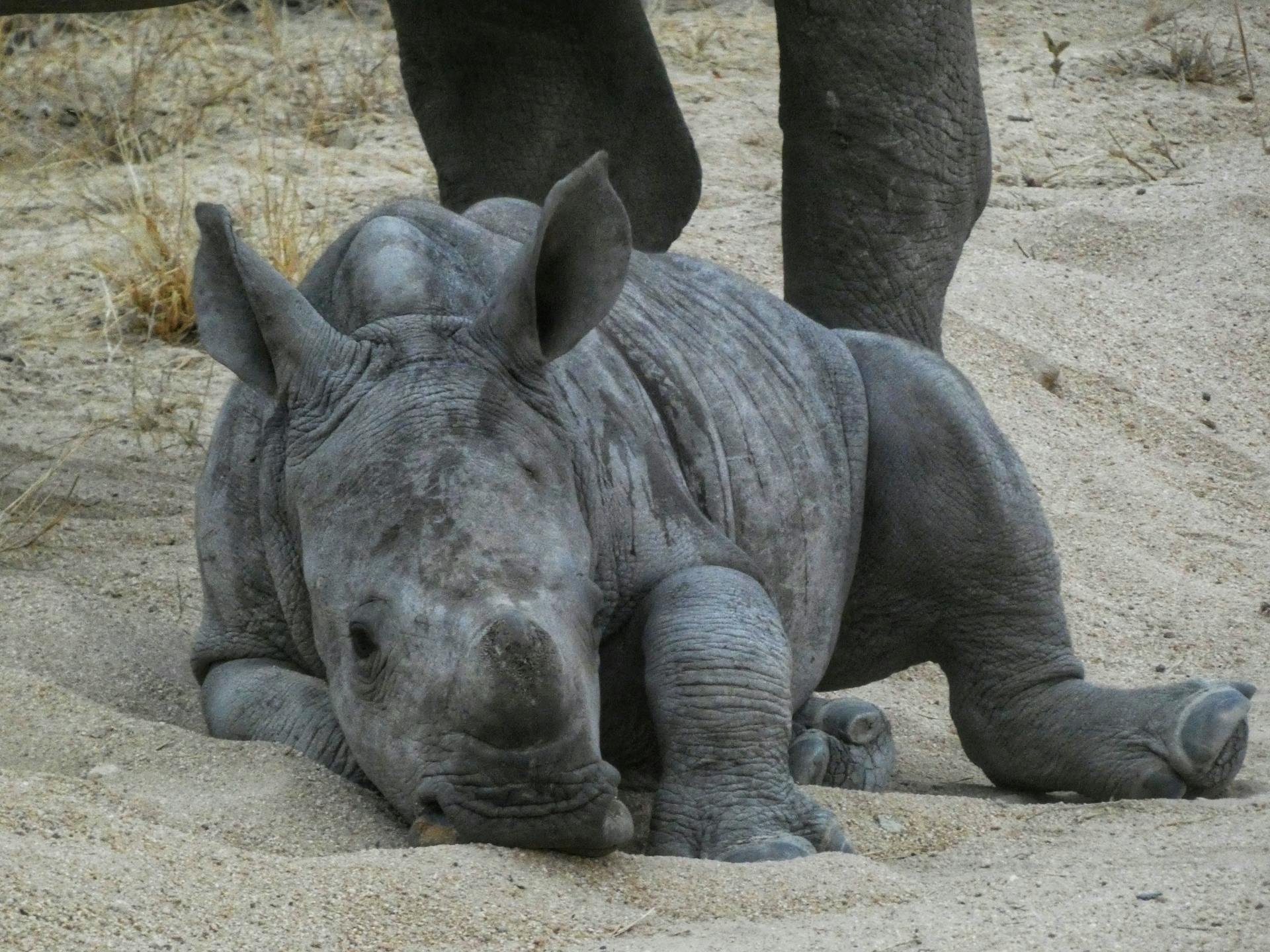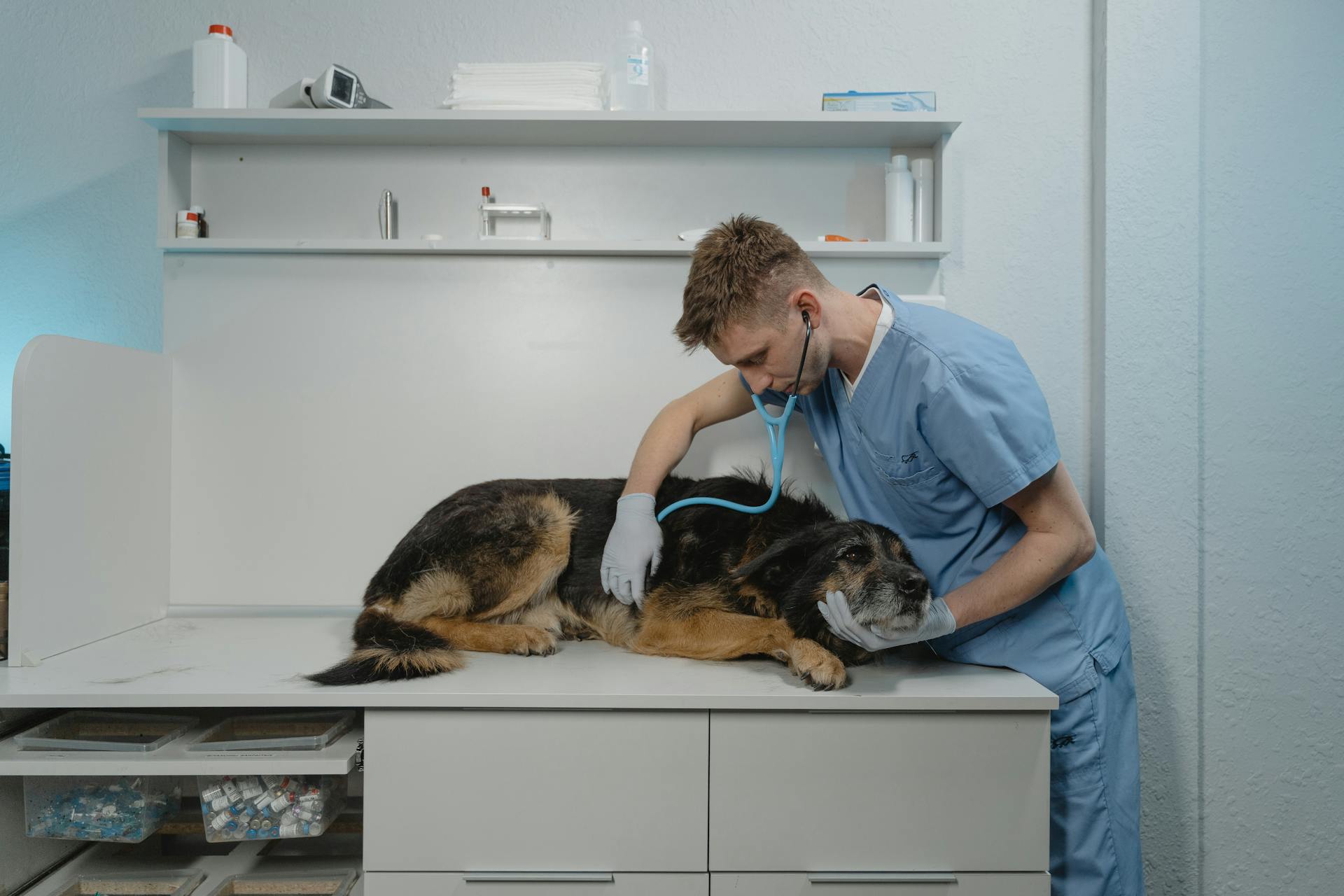
The Farm Animal Welfare Council plays a crucial role in ensuring the wellbeing of farm animals. They work tirelessly to promote and improve animal welfare standards on farms.
The council's primary goal is to provide guidance and support to farmers and the wider industry to ensure that animals are treated with respect and care.
By doing so, they help to prevent animal suffering and promote a culture of welfare on farms. This includes providing recommendations for animal housing, feeding, and health care.
Farmers can benefit from the council's expertise and resources, which can help them to improve animal welfare and reduce the risk of animal suffering.
Farm Animal Welfare Council
The Farm Animal Welfare Council was established in 1979 and was responsible for reviewing the welfare of farm animals on agricultural land, at market, in transit, and at the place of slaughter. It advised the government on necessary changes to improve animal welfare.
The council comprised a wide range of members, including farmers, veterinarians, slaughter industry representatives, animal welfarists, and consumers. This diverse membership aimed to provide a comprehensive perspective on farm animal welfare.
The council's major strength was its independence to investigate any topic within its remit and communicate freely with outside bodies, including the European Commission and the public.
Our Members
Our members are a diverse and knowledgeable group of individuals who bring their expertise to the table. They include Peter Jinman, the Chair and past President of the Royal College of Veterinary Surgeons.
Martin Barker is a pig farmer, with hands-on experience in animal care and husbandry. He understands the practicalities of keeping animals healthy and happy.
Dr Andy Butterworth is a veterinary surgeon, with a strong background in animal health and welfare. He's well-versed in the latest research and best practices.
Richard Cooper and Dr Jane Downes are also veterinary surgeons, with a wealth of experience in animal care and welfare. They're committed to ensuring the highest standards of animal treatment.
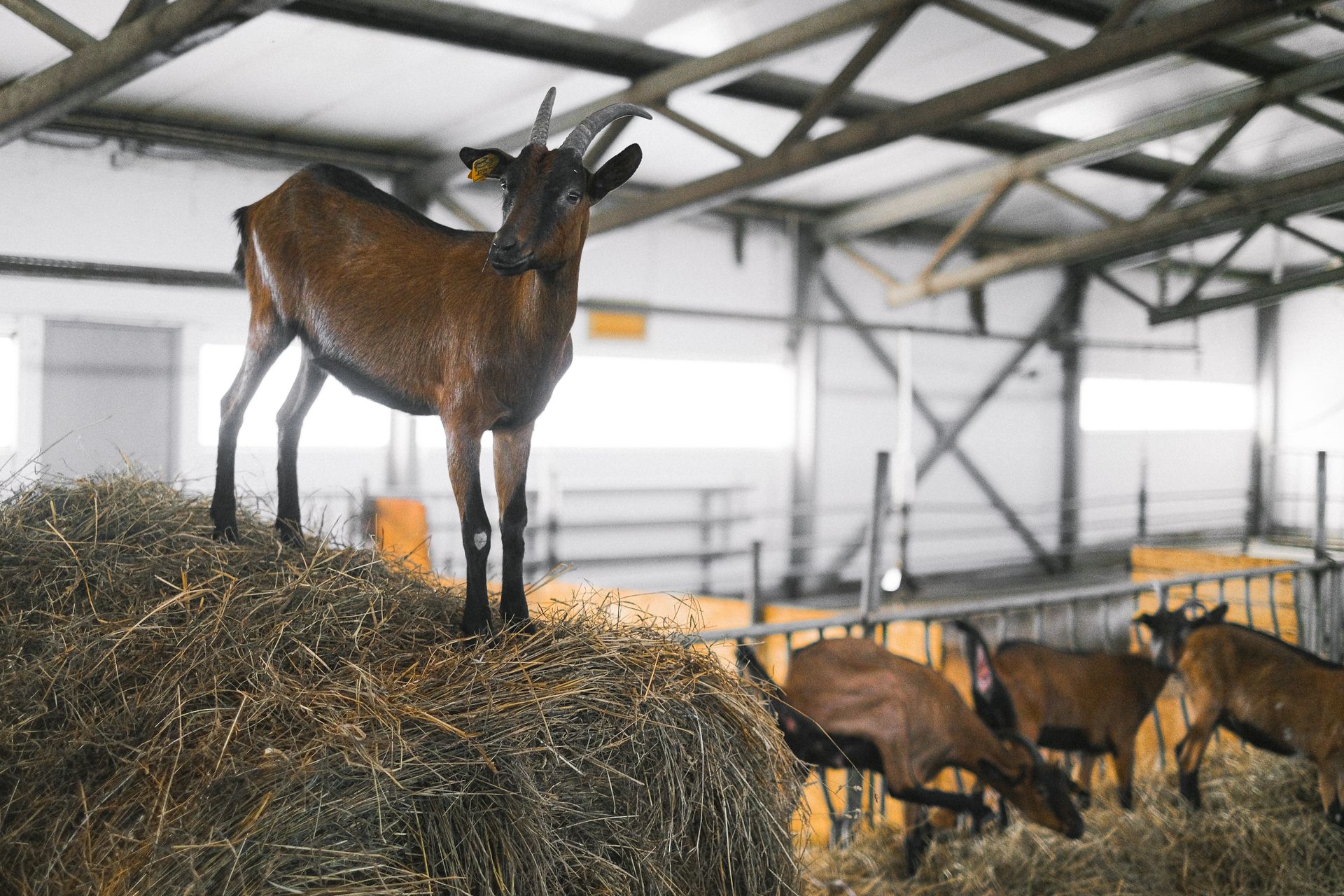
Dr Troy Gibson is a Lecturer in Animal Welfare Science at the Royal Veterinary College, where he teaches the next generation of animal welfare experts. He's passionate about improving animal welfare through education and research.
Dr David Grumett is a Senior Lecturer in Theology and Ethics at the University of Edinburgh, where he explores the complex relationships between animals, humans, and the environment. His expertise helps inform our understanding of animal welfare in a broader context.
Dr Maria Carmen Hubbard is an agricultural economist, with a keen understanding of the economic and social factors that influence animal welfare. She brings a practical perspective to our discussions.
Richard Jennison, Richard Kempsey, and Mark White are all veterinary surgeons, with a strong commitment to animal health and welfare. They're dedicated to ensuring that animals receive the best possible care.
Dr Dorothy McKeegan is a Senior Lecturer at the University of Glasgow, where she teaches and conducts research on animal welfare and behavior. She's an expert in her field and a valuable contributor to our council.
Debbie Stanton is a ruminant farmer and livestock assurance scheme manager, with a deep understanding of the challenges and opportunities facing farmers and animal producers. She brings a practical, on-the-ground perspective to our discussions.
Here's a list of our members:
- Peter Jinman, Chair, past President, Royal College of Veterinary Surgeons
- Martin Barker, pig farmer
- Dr Andy Butterworth, veterinary surgeon
- Richard Cooper, veterinary surgeon
- Dr Jane Downes, independent veterinary consultant
- Dr Troy Gibson, Lecturer in Animal Welfare Science, Royal Veterinary College
- Dr David Grumett, Senior Lecturer in Theology and Ethics, University of Edinburgh
- Dr Maria Carmen Hubbard, agricultural economist
- Richard Jennison, veterinary surgeon
- Richard Kempsey, poultry farmer
- Dr Dorothy McKeegan, Senior Lecturer, University of Glasgow
- Debbie Stanton, ruminant farmer and livestock assurance scheme manager
- Mark White, veterinary surgeon
Uses A
The Farm Animal Welfare Council (FAWC) has a rich history, established in 1979 and eventually closing in 2011 to make way for its successor, the Farm Animal Welfare Committee.
FAWC has published numerous opinions and reports on various aspects of farm animal welfare, including sheep lameness, pig mutilations and environmental enrichment, and osteoporosis and bone fractures in laying hens.
The FAWC Report on Farm Animal Welfare in Great Britain: Past, Present and Future highlights the organization's commitment to understanding the complex issues surrounding farm animal welfare.
One notable report is the FAWC opinion on dairy cow welfare, which sheds light on the specific challenges faced by dairy cows in farms.
Here are some of the key areas that FAWC has focused on:
- Sheep lameness
- Pig mutilations and environmental enrichment
- Osteoporosis and bone fractures in laying hens
- Dairy cow welfare
- Beak trimming of laying hens
- Enriched cages for laying hens
- Stockmanship and farm animal welfare
- Welfare labelling
- Welfare implications of farm assurance schemes
- Welfare of farmed animals at gatherings
- Welfare implications of breeding and breeding technologies
- Welfare of farmed animals at slaughter or killing
- Welfare of farmed fish
- Welfare of pigs kept outdoors
The World Organisation for Animal Health also considers animal welfare in a multidimensional way, including health, comfort, nutrition, and the ability to express natural behavior.
If this caught your attention, see: Animal Health Technician
The Five Freedoms
The Five Freedoms provide a logical and comprehensive framework for analyzing animal welfare. They were first introduced in a 1992 and 1993 report by the Farm Animal Welfare Council (FAWC).
The Five Freedoms ensure an animal's welfare by meeting the following five conditions: The animal is free from hunger, thirst and malnutrition, because it has ready access to drinking water and a suitable diet.The animal is free from physical and thermal discomfort, because it has access to shelter from the elements and a comfortable resting area.The animal is free from pain, injury and disease, thanks to suitable prevention and/or rapid diagnosis and treatment.The animal is able to express most of its normal behavioural patterns, because it has sufficient space, proper facilities and the company of other animals of its kind.The animal does not experience fear or distress, because the conditions needed to prevent mental suffering have been ensured.
However, the Five Freedoms have two shortcomings: they can be too generic, and there is some overlap between the five freedoms.
Assessment and Quality
Animal welfare assessments take four key questions into account, as defined by the Welfare Quality protocols. These questions focus on the basics of animal care.
The first three questions are straightforward: animals must be properly fed, housed, and healthy. Housing pigs on straw bedding, for example, allows them to express their natural foraging behaviour.
The fourth question is more nuanced: does the animal's behaviour reflect an optimised emotional state? In other words, are they free from fear, pain, frustration, and other negative emotions? This is a crucial aspect of animal welfare.
Here are the four key questions in a concise format:
- Are the animals properly fed?
- Are the animals properly housed?
- Are the animals healthy?
- Does the behaviour of the animals reflect optimised emotional states?
Assessment of Overall
Assessment of Overall Animal Welfare is crucial to ensure that animals are treated with respect and care. Four key questions must be considered, as outlined by Welfare Quality protocols.
Proper feeding is essential, and animals must receive adequate nutrition to thrive. This means providing food that meets their dietary needs and is accessible at all times.
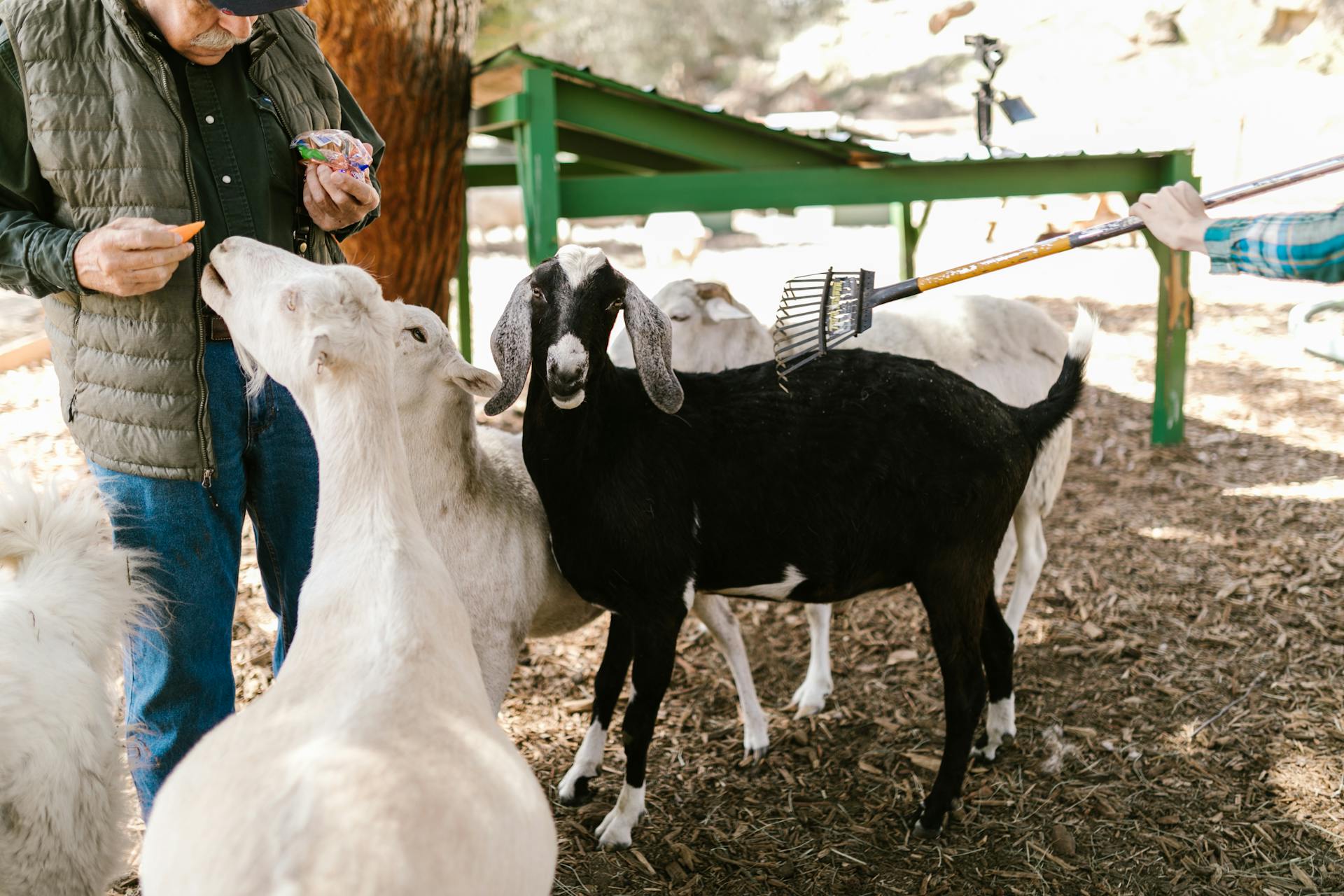
Animals must also be properly housed to prevent stress and discomfort. Housing pigs on straw bedding, for example, allows them to express their natural foraging behaviour.
The health of animals is another vital aspect of overall welfare. Animals must be free from disease and injury, and receive prompt medical attention if needed.
The final question considers the emotional state of animals, ensuring they don't experience fear, pain, frustration, or other negative emotions. This requires careful attention to their living conditions and treatment.
Quality Protocols Principles and Criteria
Quality protocols are designed to ensure consistency and reliability in assessment processes.
The principle of transparency requires that assessment criteria and procedures be clearly communicated to all stakeholders.
In the context of accreditation, the principle of accountability means that institutions are responsible for demonstrating the quality of their assessment processes.
Criteria for quality protocols include the use of clear and concise language, as well as the provision of timely and relevant feedback.
Assessment processes should be designed to minimize bias and ensure that all stakeholders are treated fairly.
Institutions must also demonstrate a commitment to continuous improvement, regularly reviewing and updating their quality protocols as needed.
Accessing Information
Consumers need a lot of information to make informed purchasing decisions, and this awareness comes from accumulated experience, education, advertising, and other forms of consumer information.
To make informed choices, consumers need to know the relevant characteristics of products, such as their environmental provenance, location of origin, and animal welfare standards.
This information is crucial for consumers who value these attributes, as it directly affects their satisfaction gained from consumption.
Product characteristics can be broadly classified into three groups: search, experience, and credence characteristics.
- Search characteristics are those that are self-evident, discoverable, and verifiable before purchase.
- Experience characteristics are those that are discovered during consumption and guide subsequent purchases.
- Credence characteristics, such as animal welfare origin and production method, require labelling to form the basis of choice.
Credence characteristics, like animal welfare standards, are essential components of consumer preferences and satisfaction, and their information should be evident prior to purchase.
The European Commission's Special Eurobarometer 229 highlights the importance of accessible, understandable, and accurate information about credence characteristics for consumers.
FAWC believes that welfare standards should be applied consistently across all countries, recognizing them as a quality characteristic of livestock products.
Reports and Opinions
The Farm Animal Welfare Council and its successor, the Farm Animal Welfare Committee (FAWC), have been providing valuable insights and recommendations on farm animal welfare through their reports and opinions.
Their publications cover a wide range of topics, from the welfare of animals during transport to the implications of breeding and breeding technologies.
FAWC has issued opinions on the welfare of animals in various situations, such as during transport, in commercial livestock agriculture, and at slaughter or killing.
Some notable examples include their opinion on the welfare of cattle kept for beef production and their report on the welfare of farmed animals at slaughter or killing.
They have also provided advice on specific issues like the cloning of farm animals and the welfare implications of breeding and breeding technologies.
In addition to these, FAWC has issued reports on various topics, including the welfare of farmed animals in Great Britain, the welfare of farmed gamebirds, and the welfare of farmed fish.
Here are some specific reports and opinions from FAWC:
- FAWC Opinion on the Welfare of Animals During Transport, April 2019
- FAWC Report on Farm Animal Welfare in Great Britain: Past, Present and Future
- FAWC Report on the Welfare of Farmed Animals at Slaughter or Killing, Part Two, White Meat Animals
- FAWC Report on the Welfare Implications of Breeding and Breeding Technologies
- FAWC Opinion on the Welfare of Farmed and Park Deer
- FAWC Report on Stockmanship and Farm Animal Welfare
- FAWC Report on Welfare Labelling
- FAWC Report on the Welfare Implications of Farm Assurance Schemes
- FAWC Report on the Welfare of Farmed Animals at Gatherings
- FAWC Report on the Welfare of Broiler Breeders
- FAWC Report on the Welfare of Farmed Fish
- FAWC Report on the Welfare of Pigs Kept Outdoors
Featured Images: pexels.com