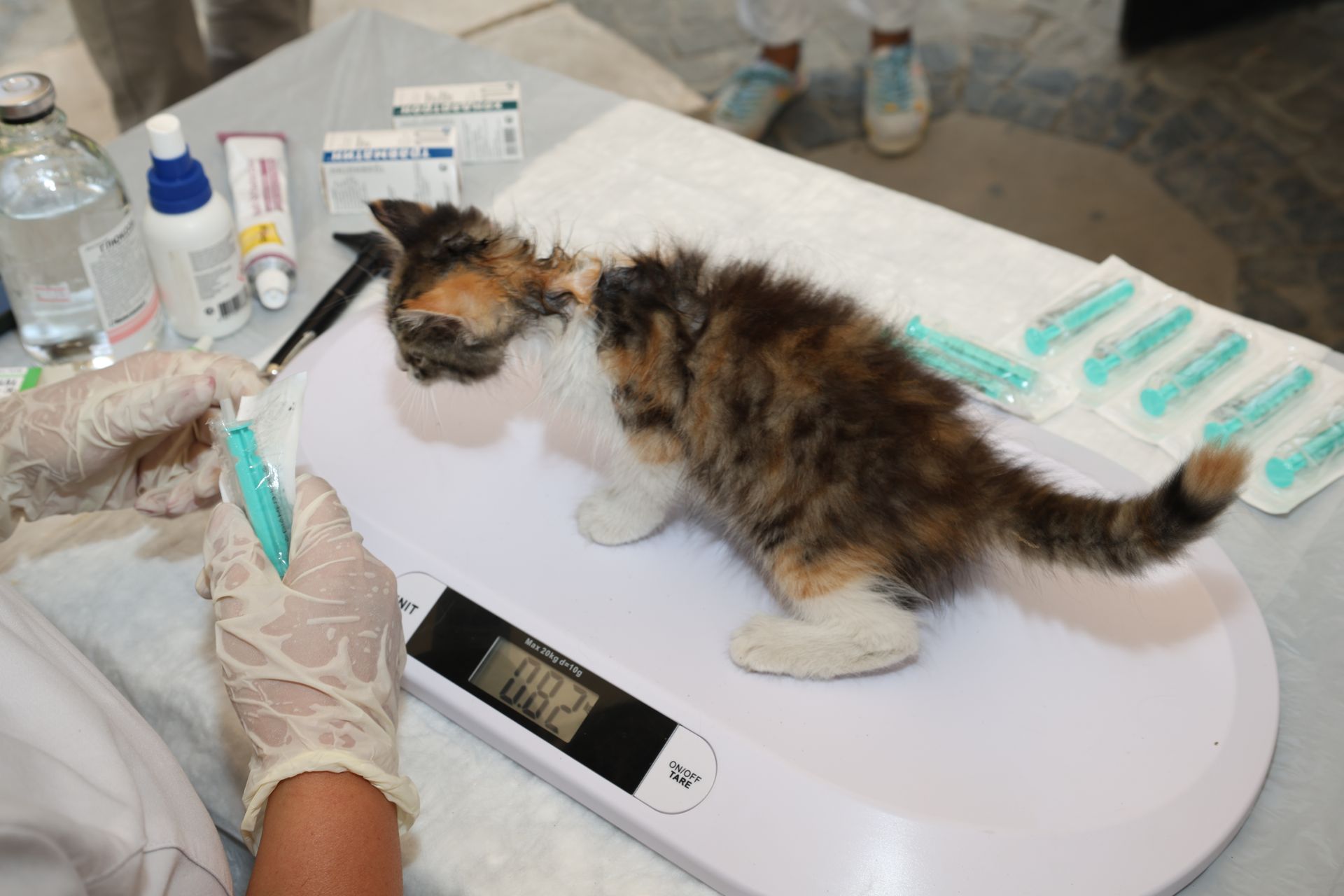
Mastering veterinary math is a crucial aspect of being a veterinary nurse or technician. You need to be able to accurately calculate medication dosages, understand body weight and volume conversions, and perform calculations for IV fluid therapy.
A common calculation you'll encounter is converting between units of measurement, such as milliliters to liters. For example, 500 milliliters is equivalent to 0.5 liters.
As you gain experience, you'll also need to calculate medication dosages for patients based on their body weight. This is often done using a formula such as the "mg/kg" method, where the medication dose is given in milligrams per kilogram of body weight.
Accurate calculations are critical in veterinary medicine, and a small mistake can have serious consequences for the patient.
Energy Requirements
Calculating a patient's energy requirements is crucial in determining whether they're eating enough or too much. This involves determining their resting energy requirement (RER), which represents the energy needed while at rest at a controlled temperature.
RER can be calculated using several formulas based on body weight in kilograms. For patients weighing between 2 kg and 45 kg, the formula 30 × (BW kg) + 70 = RER is commonly used.
However, this formula may overestimate RER for smaller patients, so for those weighing less than 2 kg or more than 45 kg, the formulas 70 × (BW kg) = RER or √(BW kg × BW kg × BW kg) × 70 = RER provide a more accurate estimate.
For example, using the formula 30 × (BW kg) + 70 = RER, a 20 kg patient would have an RER of 670 kcal/day, while a 1.36 kg patient would have an RER of 110.8 kcal/day. However, using the formula 70 × (BW kg) = RER, the RER for the 1.36 kg patient would be 88.2 kcal/day, which is a more accurate estimate.
Once RER is determined, the next step is to calculate the patient's daily energy requirement (DER). DER is calculated by multiplying RER by a coefficient based on the patient's life stage and body condition.
The difference in estimates when using the two formulas can be significant, as seen in the example of a 1.36 kg patient, where the first equation overestimates RER by 22.6 kcal per day.
Additional reading: Veterinary Technician Day
Here's a summary of the formulas for calculating RER:
Feeding and Nutrition
Calculating the amount to feed a patient is a crucial step in creating a nutritional plan. The caloric content of the food can be found on the product packaging or manufacturer's website, and dividing the patient's Daily Energy Requirement (DER) by this number will give you the amount of food needed per day.
To calculate the amount of food a patient needs, you'll also need to consider treats and their caloric content. Treats should make up no more than 10% of a pet's daily calorie intake, and you can calculate the treat allowance by dividing the patient's DER by 10.
The owner wants to feed mostly dry food, so you'll need to determine how many full cups of dry food the patient can have per day. This can be done by dividing the remaining DER by the caloric content of the dry food.
Feeding Amount Calculator
Calculating the right amount of food for your pet is crucial to ensure they're getting the nutrients they need. The first step is to find the caloric content per can or cup of the food your pet will be eating, which can usually be found on the product packaging or manufacturer's website.
To calculate the amount of food needed, divide the pet's Daily Energy Requirement (DER) by the caloric content per can or cup of food. For example, if your pet's DER is 907 kcal/day and the food contains 363 kcal/cup, you would divide 907 by 363 to get 2.5 cups/day.
Treats should make up no more than 10% of your pet's daily calorie intake, so it's essential to limit the number of treats you give them. For instance, if your pet's DER is 907 kcal/day, their daily treat allowance should be no more than 90 kcal, which is equivalent to 2.6 treats. You can round down to 2.5 treats/day for ease.
To determine how much canned food your pet can have, subtract their treat allowance from their DER. For example, if your pet's DER is 907 kcal/day and their treat allowance is 85 kcal, you would subtract 85 from 907 to get 822 kcal.
The next step is to calculate how many cups of dry food your pet can have per day. For example, if the dry food contains 363 kcal/cup, 2 cups of dry food would be 726 kcal. Subtracting this from the remaining DER would give you the amount of canned food your pet can have.
Online calculators can also help with these calculations, but it's essential to keep in mind that these calculations may need to be adjusted if your pet loses or gains weight.
As-Fed vs Dry Matter Basis
When comparing pet food labels, it's essential to understand the difference between "as-fed" and dry matter basis (DMB). As-fed basis includes moisture content, which can vary greatly between dry and canned foods.
Recommended read: What Does a Veterinary Technician Do on a Daily Basis
Dry and canned pet food both contain moisture, but in different amounts. This is why it's crucial to convert each nutrient from as-fed to DMB for accurate comparison.
To do this, you can subtract the percentage of moisture listed in the guaranteed analysis section from 100% and then divide the percentage of each nutrient by this number. For example, if a dry food label lists moisture content as 10%, you subtract 10% from 100% to get 90% DMB.
A simpler, though not as accurate, method is to multiply the percentages of nutrients listed in the guaranteed analysis by 1.1 for dry foods and by 4 for canned foods. This method can be seen in action with a canned-food label that lists protein content as 10%, which would be multiplied by 4 to get 40% protein DMB.
In practice, I've found that using the first method provides a more accurate estimate of nutrients on a DMB. However, both calculations can give you a good idea of the nutrient content in your pet's food.
Calculating Medication Doses
Calculating medication doses is a crucial skill for veterinary nurses and technicians. It requires attention to detail and a solid understanding of medication calculations.
To calculate a dose of injectable medication, you need to know the patient's weight, the medication's concentration, and the desired dose. For example, an 11-pound Yorkshire Terrier prescribed 2 mg/kg/day of metoclopramide requires 22 mg of the medication (11 pounds x 2 mg/kg).
The concentration of the medication is also essential. If the metoclopramide is a 5 mg/ml solution, you need to calculate the volume of the solution required to deliver the desired dose.
Calculating Injectable Medication Doses
Calculating injectable medication doses requires some basic math skills and knowledge of the medication's concentration. The VTNE will have questions that test your ability to perform these calculations, so it's essential to understand the process.
To calculate a dose of injectable medication, you need to know the medication's concentration, the patient's weight, and the desired dose. This can be done using a formula, but it's also helpful to have a quick review of how to do it.
A percent solution is a type of injectable medication that is a mixture of a medication and a solvent, such as water. To calculate the dose of a percent solution, you need to know the medication's concentration and the patient's weight.
The patient's Daily Energy Requirement (DER) is an essential factor in calculating the amount of food to feed them. To calculate the DER, you need to know the patient's weight, age, and activity level.
The caloric content of food can be found on the product packaging or manufacturer website. To calculate the amount of food to feed a patient, you divide their DER by the caloric content of the food.
When calculating injectable medication doses, it's crucial to consider the medication's concentration and the patient's weight. This will ensure that the correct dose is administered to the patient.
To calculate the amount of treats a patient can have per day, you need to know the treats' caloric content and the patient's DER. Treats should make up no more than 10% of a patient's daily calorie intake.
The remaining DER after accounting for treats can be used to determine the amount of canned and dry food to feed the patient. This can be done by dividing the remaining DER by the caloric content of the food.
Scenario Four
Calculating medication doses is a crucial aspect of veterinary care, and it requires attention to detail and a solid understanding of the math involved.
To calculate a constant rate infusion, we need to know the patient's weight, the medication's concentration, and the fluid rate. In the case of a Yorkshire Terrier prescribed a 2 mg/kg/day constant rate infusion of metoclopramide, the concentration of metoclopramide is 5 mg/ml and the fluid rate is 20 ml/hr.
The patient's weight is crucial in calculating the dose. For instance, an 11-pound Yorkshire Terrier is prescribed a medication based on its weight. Similarly, an 8-year-old Miniature Schnauzer, Macy, weighs 7.1 kg.
When working with medication calculations, it's essential to consider the patient's body condition score, as it can impact the dose. Macy's body condition score is 6/9, indicating that she is at the upper end of the ideal bodyweight range.
In some cases, we need to calculate the fat content of a patient's diet on a dry matter basis. For instance, we can compare the fat content of Macy's current diet (A) with a prescription weight loss diet (B).
Fluid Therapy
As a veterinary nurse or technician, you'll often need to calculate fluid rates and concentrations for patients receiving constant rate infusions (CRIs). This is especially true when equipment malfunctions or isn't available.
Calculating CRI rates involves multiplying the patient's weight by the prescribed dose per kilogram, then dividing by the concentration of the medication. For example, an 11-pound Yorkshire Terrier prescribed 2 mg/kg/day of metoclopramide would require 22 mg of the medication.
To determine the volume of medication needed, you'll need to know the fluid rate of the intravenous fluids. In the case of the Yorkshire Terrier, a 20 ml/hr rate of Lactated Ringer's (LRS) is used.
The concentration of the medication also plays a crucial role in calculating the volume needed. In the example, the metoclopramide concentration is 5 mg/ml. This means that 22 mg of the medication would require 4.4 ml of the solution.
In a pinch, you may need to calculate a drip rate manually. This can be done by dividing the prescribed volume by the time interval. For instance, if a patient requires 1000 ml of fluid over 4 hours, the drip rate would be 250 ml/hour.
Broaden your view: Veterinary Technician Classes Needed
Featured Images: pexels.com